Tag: sustainability

  • Montenegro to Modernize Mining Laws in Line with EU Standards, Focus on Sustainability and Critical Minerals

    Montenegro to Modernize Mining Laws in Line with EU Standards, Focus on Sustainability and Critical Minerals

    Montenegro is preparing a new set of mining and geological exploration laws aimed at making the sector more sustainable, investor-friendly, and aligned with European Union standards, according to Marko Vučinić, acting director general of the Directorate for Geology and Mining at the Ministry of Energy and Mining.

    “Our goal is to support the economy and simplify procedures, but also to make mining environmentally sustainable, with a special focus on rehabilitation, recultivation, and protecting the Montenegrin stone brand,” Vučinić told the Gazette of the Chamber of Commerce.

    The new law on geological exploration, expected by the end of the year, will harmonize Montenegro’s framework with EU practice while simplifying procedures. It will place particular emphasis on hydrogeology, water resource management, and seismicity, given the country’s earthquake-prone geography. A geological cadastre will also be established to provide investors with greater transparency and facilitate decision-making.

    Vučinić stressed that the mining sector is an important employer in Montenegro, with over 5,000 jobs, covering not only mines but also the extraction of technical and construction stone. Currently, 53 concessions are active for detailed geological research and mineral exploitation.

    He noted that Montenegro possesses significant resources critical to the EU, including bauxite, lead, zinc, barite, and construction stone. The Varina copper deposit and the Red Mud Basin in Podgorica, rich in rare minerals, are among the country’s key strategic assets.

    The upcoming mining law will target illegal exploitation, streamline permitting, and strengthen quality control, with Croatia’s framework serving as a model. The government hopes to see parliament debate the laws in the autumn session.

    A further challenge lies in addressing the shortage of mining and geology professionals, as Montenegro lacks a dedicated faculty. Vučinić said the government is considering establishing new academic programs and offering scholarships to attract students to the sector.

  • Almalyk Mining and Metallurgical Combine Strengthens International Ties with Czech Company Draslovka

    Almalyk Mining and Metallurgical Combine Strengthens International Ties with Czech Company Draslovka

    Almalyk Mining and Metallurgical Complex (AGMK), one of Uzbekistan’s leading industrial enterprises, is not only a cornerstone of the nation’s economy but also a key player in expanding international industrial ties. The complex is actively collaborating with foreign companies, embracing modern technologies, boosting production efficiency, and committing to environmental sustainability.

    On May 29, AGMK hosted a significant meeting with representatives from the Czech company Draslovka to explore mutually beneficial cooperation.

    Draslovka, a family-owned company founded in 1906, specialises in chemical technologies, products, and services that enhance efficiency and sustainability across the mining, agricultural, and processing industries. With business units in seven countries and a presence in over 80 nations, Draslovka is the world’s largest producer of sodium cyanide, a chemical essential for gold extraction.

    However, the company’s most notable contribution to the industry is its patented glycine leaching technology. This innovative method offers a more stable and economical approach to the leaching process. Draslovka also produces other speciality chemicals and reagents, provides leading chemical application services for mining and pest control, and offers AI-powered support services.

    During their visit, the Draslovka representatives presented an overview of their operations to AGMK’s management. Discussions focused on the potential application of glycine leaching technology at AGMK’s facilities, culminating in an agreement to commence cooperation.

    The Czech delegation also had the opportunity to visit the viewing platforms of the Kalmakyr and Yoshlik I mines.

  • EU Opens Industry Consultation on Critical Raw Materials Cooperation Amid Supply Chain Pressures

    EU Opens Industry Consultation on Critical Raw Materials Cooperation Amid Supply Chain Pressures

    As the European Union works to shore up the security and sustainability of its raw material supply chains, European Commission Executive Vice-President Teresa Ribera has launched a public consultation aimed at promoting cooperation among industry players under EU competition rules.

    The move reflects Ribera’s dual mandate as Commissioner for a Clean, Just and Competitive Transition: guiding the bloc’s competition policy through 2029 while co-leading the Clean Industrial Deal, a pillar of the EU’s green and industrial transformation. According to her 2024 Mission Letter, Ribera must “modernise the EU’s competition policy” to enable innovation, resilience, and sustainability in an era marked by geopolitical tensions and unfair subsidy-driven competition.

    Announcing the consultation, Ribera invited stakeholders in extraction, processing, and recycling to identify barriers and opportunities for collaboration across the raw materials value chain. “Together, we can build sustainable supply chains and transform challenges into opportunities for prosperity, innovation and resilience,” she stated.

    The consultation comes as companies struggle to navigate legal uncertainty around cooperation. While the EU’s 2023 Horizontal Guidelines offer some room for sustainability agreements, they caution that even modest cooperation—such as setting a joint purchase price for recyclable phones—can breach antitrust rules. Meanwhile, the 2022 Vertical Guidelines do little to clarify how sustainability considerations might enable cooperation further down the supply chain.

    The legal ambiguity stands in contrast to growing EU policy imperatives. The Draghi Report on European Competitiveness (2024) urges the Commission to ease legal pathways for joint procurement and collaborative production efforts in critical raw materials. Likewise, the Commission’s Clean Industrial Deal communication commits to providing companies with tailored antitrust guidance aligned with EU economic and security priorities.

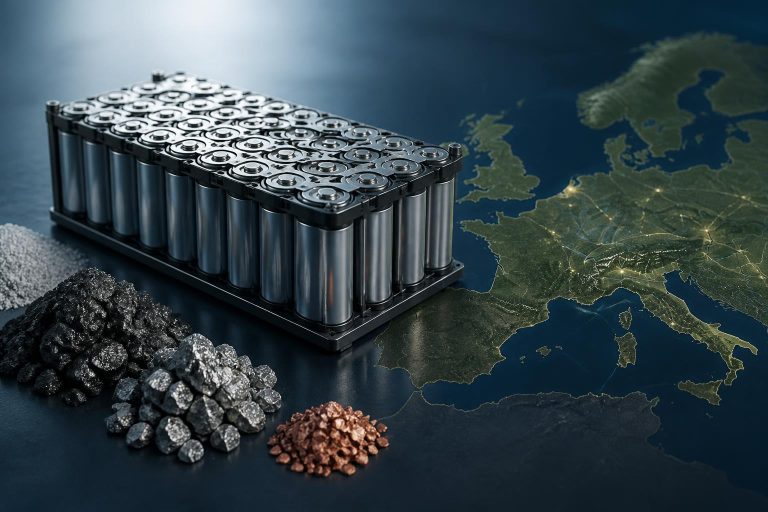
    While the EU’s 2024 Critical Raw Materials Act (CRMA) already outlines strategic public-sector projects to diversify sourcing, the CRMA stops short of addressing the private sector’s role in joint action. In March 2025, the Commission selected 25 Strategic Projects across 14 critical materials—including lithium, cobalt, nickel, graphite, and tungsten—but implementation rests largely with national governments and non-EU partners.

    Ribera’s new consultation, therefore, fills a key policy gap. The Commission is expected to initially focus on the 14 raw materials prioritized under the CRMA, particularly those essential to sectors like renewables, digital, aerospace and defence. Based on the feedback, the Commission will consider whether to issue new competition guidance—possibly by 2026—clarifying when and how companies may work together to strengthen critical supply chains without violating EU antitrust law.

  • Navoi Mining and Metallurgical Works Posts Strong Q1 Results Amid Sustainability and Efficiency Push

    Navoi Mining and Metallurgical Works Posts Strong Q1 Results Amid Sustainability and Efficiency Push

    Navoi Mining and Metallurgical Works (NGMK) reported steady operational performance for Q1 2025, with a production volume of 27.8 trillion UZS, marking a 0.7% year-on-year increase.

    Gold output reached 753,500 ounces, slightly up from 748,100 ounces in the same period of 2024, reinforcing NGMK’s position as a leading gold producer. The company invested $118.4 million under its Investment Program, while 697 new jobs were created in the quarter.

    Cost optimization efforts resulted in a 786 billion UZS reduction in production expenses. Under the Localization Program, products worth 349.8 billion UZS were sold, and inter-industry cooperation purchases exceeded 1.8 trillion UZS.

    NGMK’s flagship Muruntau deposit, the world’s largest gold reserve (101 million ounces), remains its core asset, with total company reserves estimated at 148 million ounces.

    In February, Sustainable Fitch assigned NGMK an ESG rating of “3”, the first public ESG rating in Uzbekistan’s mining sector — highlighting progress in environmental, social, and governance practices.

    Key sustainability initiatives included:

    • Planting 65,850 seedlings along the M-37 highway and at GMZ-1;

    • Over 300,000 trees planted across industrial sites, all tracked via an electronic platform as part of the “Green Space” project;

    • Ongoing “Labor Protection Month” initiative aimed at reducing workplace injuries;

    • Recognition as a national leader in cybersecurity for 2024.

    To expand the company’s resource base, NGMK is actively adopting advanced exploration and development practices.

    Corporate governance remained robust:

    • 3 meetings of the Supervisory Board, covering 11 key issues;

    • 25 meetings of the Board of Directors, resulting in 41 decisions.

    NGMK continues to balance production growth with environmental responsibility and workforce safety, setting benchmarks in Uzbekistan’s mining sector.

  • AGMK Receives ESG Rating of 3 from Sustainable Fitch

    AGMK Receives ESG Rating of 3 from Sustainable Fitch

    Sustainable Fitch has assigned JSC Almalyk Mining and Metallurgical Complex (AGMK) an ESG Entity Rating of 3 with an entity score of 56, highlighting both strengths and challenges in the company’s sustainability practices.

    The rating acknowledges AGMK’s sustainable development strategy, governance framework, and environmental policies, despite the inherent ecological impact of its mining and metallurgical operations. The assessment also considers the company’s alignment with global taxonomies, contribution to UN Sustainable Development Goals (SDGs), and integration of ESG principles into business operations.

    As one of Uzbekistan’s largest non-ferrous metals producers, AGMK exports copper, silver, and gold to over 17 countries. Its vertically integrated production covers exploration, mining, processing, and finished product creation. While essential for various industries, these activities result in high energy consumption, greenhouse gas emissions, and significant water and waste usage.

    On the environmental front, AGMK benefits from strong policies and a clean record of major incidents over the past three years, though Scope 3 emissions remain undisclosed. Socially, the company reports low employee turnover, but serious workplace accidents and limited gender diversity remain concerns. Governance-wise, AGMK is strengthened by an independent internal audit function, effective risk management, and a low CEO pay ratio in 2023, although independent directors are a minority on its board.

    Despite challenges, the rating reflects AGMK’s continued commitment to sustainability and corporate responsibility.

  • NMMC Receives ESG Rating from Sustainable Fitch, Reinforcing Industry Leadership

    NMMC Receives ESG Rating from Sustainable Fitch, Reinforcing Industry Leadership

    Navoi Mining & Metallurgical Company (NMMC), the world’s fourth-largest gold producer, has received its first Environmental, Social, and Governance (ESG) rating from Sustainable Fitch. The company was assigned a rating of ‘3’ on a 1 to 5 scale (where 1 represents low risk and 5 represents high risk) and an overall ESG score of 51 out of 100.

    The rating reflects a detailed assessment of NMMC’s sustainability initiatives, corporate governance, environmental performance, and social responsibility programs. The company’s environmental and social performance received a ‘3’ rating, acknowledging strong policies on emissions and water management, absence of major environmental incidents, and a low gender pay gap. Meanwhile, its corporate governance scored a ‘2’, recognizing adherence to international financial reporting standards, systematic internal audits, and structured risk management.

    NMMC’s ESG rating is consistent with global mining industry peers, reflecting the sector’s inherent environmental challenges, including high energy and water consumption, greenhouse gas emissions, and industrial waste generation. Importantly, NMMC is the first company in Uzbekistan’s mining sector to receive a public ESG rating, highlighting its commitment to transparency and sustainability leadership.

    “Sustainability is a key pillar of our business strategy and crucial for long-term growth and investor confidence,” stated Eugene Antonov, First Deputy CEO and Head of Transformation at NMMC. He emphasized that the company’s ESG principles are central to its transformation program, aligning with Uzbekistan’s 2025 ‘Year of Environmental Protection and the Green Economy’ initiative and the national ‘Uzbekistan-2030’ strategy.

    Boris Samoylenko, Head of ESG at NMMC, reinforced that the rating validates NMMC’s ongoing sustainability efforts and serves as a benchmark for further improvements in line with global best practices.

  • Harnessing Nature’s Elements: Magnesium’s Role in Planetary Restoration and Sustainable Investing

    Harnessing Nature’s Elements: Magnesium’s Role in Planetary Restoration and Sustainable Investing

    Amid the global climate crisis—marked by rising temperatures, ocean acidification, pollution, and land degradation—nature itself may hold solutions to address these challenges. Minerals like magnesium play a crucial role in planetary restoration efforts, offering potential benefits across ecosystems, agriculture, oceans, and human health.

    Magnesium, a cornerstone of photosynthesis, is vital for agriculture and forest health. It enhances plant nutrient uptake, bolsters soil fertility, and strengthens plant immunity. In oceans, magnesium hydroxide may help mitigate ocean acidification, preserving marine ecosystems like coral reefs. Magnesium is also essential for over 300 enzymatic processes in humans, supporting bone strength, nerve function, and cardiovascular health.

    Beyond magnesium, minerals such as olivine, lithium, cobalt, nickel, copper, and rare earth elements play pivotal roles in advancing sustainability. Olivine’s ability to sequester carbon when spread across beaches and exposed to ocean waves exemplifies nature’s potential to mitigate greenhouse gas emissions. Meanwhile, critical minerals fuel clean energy innovations like electric vehicles and renewable energy storage, which are essential for reducing carbon emissions.

    However, mineral extraction poses significant challenges, from environmental degradation to water contamination and CO2 emissions. Investors must consider not only a mineral’s quality and location but also environmental safeguards, geopolitical risks, regulatory frameworks, and local community relations. Collaboration across multiple sectors is key to responsible mining practices that prioritize both profits and planetary health.

    Strategic mineral investments represent an opportunity not only for financial returns but also for contributing to sustainable solutions for global challenges. With careful planning, investors can help shape a future where natural resources drive positive environmental change.

  • NMMC Receives First-Ever ESG Rating, Reinforcing Sustainability Commitment

    NMMC Receives First-Ever ESG Rating, Reinforcing Sustainability Commitment

    Navoi Mining & Metallurgical Company (NMMC), the world’s fourth-largest gold producer, has received its debut ESG Entity rating from Sustainable Fitch, marking a significant milestone in its sustainability journey. The company was assigned an ESG rating of ‘3’ (on a scale from 1 to 5, where 1 represents low risk and 5 represents high risk) and an overall entity score of 51 out of 100.

    The rating was based on a comprehensive assessment of NMMC’s sustainability strategy, corporate governance, environmental impact, and social responsibility programs. The company’s environmental and social performancereceived a favorable ‘3’ rating, highlighting strong internal policies on emissions and water management, the absence of major environmental incidents, and a low gender pay gap. Additionally, corporate governance was rated at ‘2’, recognizing adherence to international financial reporting standards, systematic internal audits, and structured risk management.

    NMMC’s ESG rating aligns with global mining industry standards, acknowledging the sector’s inherent environmental challenges, such as high energy and water consumption, greenhouse gas emissions, and industrial waste generation. Notably, NMMC is the first company in Uzbekistan’s mining sector to receive a public ESG rating, reinforcing its industry leadership and commitment to international sustainability principles.

    The company’s ESG efforts are part of a large-scale transformation program, in line with Uzbekistan’s national strategy “Uzbekistan-2030”. With 2025 declared the “Year of Environmental Protection and the Green Economy”in Uzbekistan, NMMC aims to further enhance its sustainability practices and strengthen investor confidence.

  • Navoi Mining Secures ESG Rating, Reinforcing Sustainability Commitment

    Navoi Mining Secures ESG Rating, Reinforcing Sustainability Commitment

    Navoi Mining & Metallurgical Company (NMMC), the world’s fourth-largest gold producer, has received its first Environmental, Social, and Governance (ESG) Entity rating from Sustainable Fitch. The company was assigned a rating of ‘3’ on a five-point scale, where ‘1’ indicates low risk and ‘5’ represents high risk, with an overall entity score of 51 out of 100.

    The rating reflects an in-depth evaluation of NMMC’s sustainability initiatives, corporate governance standards, and environmental and social performance. The company’s environmental and social metrics earned a rating of ‘3,’ acknowledging strong internal policies on emissions and water management, an absence of major environmental incidents, and a low gender pay gap. Its corporate governance received a rating of ‘2,’ highlighting adherence to international financial reporting standards, robust internal audits, and a structured risk management framework.

    NMMC’s ESG rating aligns with global mining industry standards, considering the sector’s environmental footprint, high resource consumption, and waste generation. Notably, NMMC is the first mining company in Uzbekistan to secure a public ESG rating, reinforcing its leadership in sustainability and transparency.

    Eugene Antonov, First Deputy CEO and Head of Transformation at NMMC, emphasized the company’s commitment to ESG principles as part of its ongoing transformation program. He also noted that Uzbekistan’s designation of 2025 as the “Year of Environmental Protection and the Green Economy” aligns with NMMC’s sustainability goals under the national “Uzbekistan-2030” strategy.

    Boris Samoylenko, Head of ESG at NMMC, stated that the rating validates the company’s efforts to integrate sustainable practices while setting a benchmark for future improvements in ESG performance.

  • Euro Manganese Secures Mining Lease for Chvaletice Project

    Euro Manganese Secures Mining Lease for Chvaletice Project

    Euro Manganese, through its subsidiary Mangan Chvaletice, has achieved a critical milestone by obtaining the Determination of Mining Lease permit for the Chvaletice Manganese Project in the Czech Republic. The permit, effective as of January 23, 2025, was issued by the District Mining Authority and provides exclusive, unrestricted mineral extraction rights within the project area without an expiry date.

    The Chvaletice Project is unique within the European Union, as it reprocesses waste tailings from a decommissioned mine into valuable manganese resources. Touted as the EU’s only sizeable manganese source, this initiative aligns with the global shift toward a low-carbon economy. It plays a pivotal role in supplying critical raw materials for battery manufacturing, supporting the continent’s green energy transition and circular economy goals.

    Martina Blahova, Euro Manganese’s interim CEO, highlighted the importance of the achievement, crediting successful collaboration with regulators and local communities. She underscored the project’s contribution to advancing the production of high-purity manganese for the decarbonization of industries worldwide.

    This milestone follows Euro Manganese’s November 2023 announcement of $100 million in non-dilutive financing from OMRF (BK), enabling the company to further its commitment to sustainable resource development and innovative waste-to-value processes.