Tag: sustainability

  • Europe’s Critical Raw Materials Strategy: From Regulation to Implementation

    Europe’s Critical Raw Materials Strategy: From Regulation to Implementation

    In the latest edition of the Critical Matters Newsletter, the focus is on the evolving landscape of critical raw materials in Europe, particularly in light of the Critical Raw Materials Act (CRMA). This legislation aims to enhance the continent’s competitiveness and resilience by securing a reliable supply of essential raw materials necessary for the transition to a sustainable economy. The CRMA sets ambitious targets for 2030, including increasing domestic extraction, processing, and recycling of critical raw materials, while reducing dependence on single suppliers. However, as Europe transitions from setting these goals to actual implementation, significant challenges remain.

    One of the primary hurdles is the lengthy and complex process of mineral exploration and mine development, which can take over a decade in Europe. Despite the CRMA’s provisions to expedite permitting for strategic projects, the reality is that many critical mineral resources have yet to be discovered. The article highlights the need for substantial investment in exploration, with estimates suggesting that the EU requires around €2 billion annually over the next five years to rebuild its exploration capacity. Currently, Europe accounts for only 3% of global exploration budgets, lagging significantly behind leaders like Canada and Australia.

    The newsletter also underscores that investment alone is insufficient; a coordinated approach involving policies, institutions, and industry collaboration is essential for building a resilient critical raw materials ecosystem. Examples from countries like Ireland and Canada illustrate how long-term investment and supportive policies can enhance exploration and development capabilities. Ultimately, Europe’s success in securing critical raw materials will depend on how effectively it can integrate policy, investment, and innovation to create sustainable and circular value chains.


  • Finland’s Critical Materials Industry: Navigating Bottlenecks for Sustainable Growth

    Finland’s Critical Materials Industry: Navigating Bottlenecks for Sustainable Growth

    Finland’s critical materials industry is at a crossroads, facing significant challenges in capital investment, processing capacity, and regulatory approval that hinder its ability to meet rising demand for essential minerals. Despite having ample deposits, the European Union (EU) currently attracts only a fraction of global mineral exploration investment, which is a stark contrast to countries like Canada and Australia. A recent study by the European Investment Bank (EIB) highlights that to achieve the EU’s 2030 domestic supply targets, exploration spending must increase tenfold. This indicates that the real bottleneck lies not in the availability of resources but in the capability to develop them effectively.

    The industry must shift its focus from merely increasing extraction volumes to strategically positioning itself around critical bottlenecks in the value chain. Companies that can manage these bottlenecks—such as financing, permitting, and processing—will be better equipped to capture value and mitigate risks associated with commodity price fluctuations and regulatory challenges. For instance, firms like Terrafame and Outokumpu are redefining their business models by moving beyond raw material extraction to producing high-value battery chemicals and lower-carbon steel, respectively. This transition reflects a broader trend where the emphasis is on processing capabilities and customer integration rather than just resource ownership.

    Moreover, the Finnish mining sector is grappling with two significant tensions: the need for capital and legitimacy, and the relationship between processing and performance. While strategic relevance is crucial for attracting investment, it does not guarantee acceptance for new mining projects. Companies must demonstrate environmental and social credibility to secure permits and financing. The path forward for Finland’s critical materials industry lies in developing capabilities that address these tensions, ensuring that operations remain viable and competitive in an increasingly complex market. The long-term winners will be those who can navigate these challenges and turn constraints into opportunities for sustainable growth.


  • Unlocking Europe’s Geological Potential for Critical Raw Materials

    Unlocking Europe’s Geological Potential for Critical Raw Materials

    As Europe strives to secure its future in critical raw materials, a recent study underscores the urgent need for increased investment in mineral exploration. Currently, the European Union attracts a mere 3% of global mineral exploration investment, a stark contrast to Canada’s 20% and Australia’s 16%. This disparity highlights the challenges Europe faces in meeting its strategic objectives for the green and digital transitions, which are heavily reliant on a stable supply of critical raw materials.

    To align with these objectives, the study indicates that annual mineral exploration spending in the EU must surge from approximately €0.2 billion to €2 billion over the next five years. This tenfold increase is essential for Europe to enhance its role in securing the necessary resources for clean technologies, energy security, and industrial competitiveness. The geological potential within Europe is promising, with countries like Finland and Sweden already demonstrating that increased exploration activity is feasible and beneficial.

    However, unlocking this potential will necessitate a concerted effort involving long-term investments, supportive policies, and a collective commitment to establishing resilient and sustainable value chains. By fostering a more robust exploration environment, Europe can not only meet its current demands but also position itself as a leader in the global market for critical raw materials, essential for the future of its economy and environmental goals.


  • Nordic Innovation Launches Call for Proposals on Secondary Critical Raw Materials Value Chains

    Nordic Innovation Launches Call for Proposals on Secondary Critical Raw Materials Value Chains

    Nordic Innovation has announced a call for proposals aimed at developing industry-driven value chains for secondary critical raw materials (CRMs) in the Nordic region. With a budget of 10 million NOK ( €915,219.99), the initiative seeks to enhance the recycling and domestic supply of CRMs, which are essential for the green and digital transitions. The deadline for submission is set for 23 September 2026, with project funding ranging from 2 to 5 million NOK per project. The funding decision will be made in November 2026, with projects expected to commence in the fourth quarter of 2026 and run for a maximum of 36 months.

    The call for proposals is part of the Nordic Innovation programme, Innovative Solutions for 2030, which aims to accelerate the introduction of solutions for the green transition. The Nordic region is estimated to have around 900,000 tonnes of CRMs embedded in waste and industrial side streams, highlighting the untapped potential for recycling and resource recovery. However, the lack of functioning value chains poses a significant challenge, as many initiatives fail to progress beyond early-stage development. This funding opportunity aims to address these barriers by supporting projects that validate key assumptions in the value chain and bring together relevant actors across the industry.

    Eligible projects must focus on developing concrete value chains for secondary CRMs, such as those derived from batteries, electronic waste, and construction waste. The evaluation criteria for proposals will consider the project’s impact, relevance to Nordic Innovation’s mission, and the competence of the consortium involved. Strong industrial involvement and access to relevant material streams will be crucial for successful applications. The initiative is expected to contribute to strengthening Nordic competitiveness, resource security, and the development of circular value chains for critical raw materials.


  • European Metals Day 2026: Shaping the Future of Europe’s Metals Sector

    European Metals Day 2026: Shaping the Future of Europe’s Metals Sector

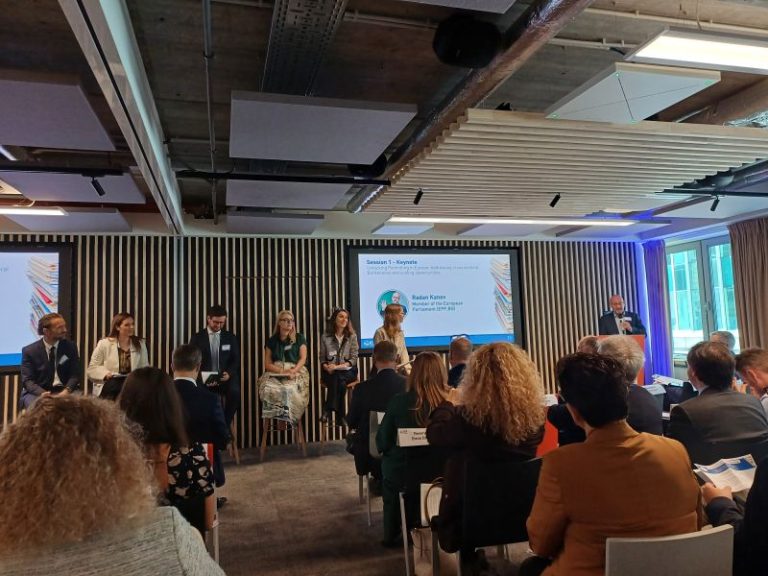
    On 29 September 2026, the European Metals community will convene at the European Parliament in Brussels for the highly anticipated #MetalsDay26. This flagship event will bring together members of the European Metals sector, invited guests, policymakers, and industry leaders to engage in critical discussions about the future of Europe’s metals value chains. The event, hosted by prominent Members of the European Parliament (MEPs) including Radan Kanev, Prof. Yannis Maniatis, and Bruno Tobback, promises to be a significant platform for dialogue and collaboration.

    The agenda for #MetalsDay26 includes panel discussions featuring contributions from notable MEPs such as Hildegard Bentele, Sara Matthieu, and Christophe Grudler. Together, these industry leaders and policymakers will address Europe’s key industrial priorities, focusing on competitiveness, sustainability, circularity, and the strategic role of metals in facilitating the green and digital transitions. As Europe strives to enhance its industrial resilience and achieve strategic autonomy, this event aims to foster meaningful dialogue across the metals value chain, contributing to the shaping of the European metals sector’s future.

    European Metals Day 2026 is expected to play a vital role in aligning the interests of various stakeholders within the metals industry, ensuring that Europe remains at the forefront of global metal production and innovation. By addressing pressing issues and exploring collaborative opportunities, the event seeks to strengthen the position of European metals in a rapidly evolving industrial landscape.


  • Nordic Region’s Role in Strengthening Europe’s Supply of Critical Raw Materials

    Nordic Region’s Role in Strengthening Europe’s Supply of Critical Raw Materials

    A recent report highlights the Nordic region’s significant potential to enhance Europe’s supply of critical and strategic raw materials amid rising global demand and geopolitical uncertainties. As competition for these essential resources intensifies worldwide, the interplay between the green and digital transitions, along with evolving geopolitical dynamics, is reshaping both demand and supply systems. In this context, the ability to deliver reliable, scalable, and timely supplies of metals and minerals has become paramount, alongside ensuring resource availability.

    The report identifies the Nordic region as a selective yet strong contributor to Europe’s raw material supply chain. Its strengths lie in its strategic role within global value chains, characterised by a selective, complementary, and long-term contribution that supports diversification and resilience rather than merely replacing existing global networks. The analysis underscores the connection between EU and global geopolitical strategies and the strengthening of national and EU supply chains, suggesting a future where mineral value chains are more sustainable and secure.

    The Nordic region boasts significant geological potential for various critical raw materials, including lithium, copper, cobalt, graphite, nickel, and rare earth elements. However, the challenge lies not in the existence of these resources but in the ability to develop and coordinate them efficiently and sustainably to mitigate vulnerabilities in European supply chains. The report calls for sustained investment in geological knowledge, coordinated development efforts, and long-term policy support to unlock the full potential of the Nordic region as a key component of a more resilient European raw materials system.


  • Eurasian Resources Group Commits $1 Billion to Kazakhstan’s Industrial Future

    Eurasian Resources Group Commits $1 Billion to Kazakhstan’s Industrial Future

    Eurasian Resources Group (ERG) has announced a significant investment of approximately $1 billion in Kazakhstan, aimed at bolstering the country’s industrial potential and long-term competitiveness. This investment strategy is rooted in the belief that the most impactful investments are those that continue to create value well beyond the initial capital commitment. ERG’s development program is designed not only to expand its business operations but also to enhance regional economies and contribute to the overall economic landscape of Kazakhstan.

    The investment initiative is set to modernise mining operations and production facilities, promote cleaner energy solutions, and accelerate the digital transformation within the industry. By the end of next year, ERG anticipates creating over 1,100 new jobs, while also contributing an estimated $1.3 billion annually to Kazakhstan’s GDP through direct production and associated economic activities. Key projects under this initiative include the Bolashak Mine, ERG Green, Spetskoks, and various renewable energy ventures, all of which reflect a commitment to industrial performance and environmental responsibility.

    Kudrat Shamiyev, CEO of ERG Kazakhstan, emphasised that effective leadership is about making decisions that will positively impact future opportunities, not just immediate financial results. He highlighted the extraordinary industrial potential of Kazakhstan and the necessity for strategic partnerships, continuous innovation, and responsible environmental practices to unlock this potential. The projects currently underway are viewed as foundational steps towards a more robust industrial future for Kazakhstan, reinforcing the notion that investment should focus on building a stronger future for the nation.


  • Serbia adopts draft minerals strategy for 2025–2040, sets focus on sustainability and critical raw materials

    Serbia adopts draft minerals strategy for 2025–2040, sets focus on sustainability and critical raw materials

    The Serbian government has adopted a draft Strategy for the Management of Mineral and Other Geological Resources for the period from 2025 to 2040, with projections extending to 2050, sending the document to the National Assembly for a final vote. The strategy aims to balance economic development with environmental protection while strengthening state oversight and ensuring a stable supply of critical and strategic raw materials.

    Minister of Mining and Energy Dubravka Đedović Handanović said the strategy was shaped through a lengthy and at times contentious public consultation process, during which dozens of objections and proposals were fully or partially incorporated. Although the final text has yet to be published, the government confirmed that sustainability, climate neutrality, and the use of energy-efficient and low-carbon technologies are among its central pillars.

    According to the Ministry of Mining and Energy, the strategy establishes a long-term framework for responsible resource management, enhanced planning and supervision, and improved governance of the mining and geology sector in the interests of citizens and local communities. Particular attention is given to critical and strategic raw materials, geothermal energy, and the rational use of natural resources.

    An accompanying environmental impact assessment notes that Serbia has significant deposits of metallic, non-metallic, and energy raw materials, as well as groundwater and geothermal resources. At the same time, it acknowledges that decades of mining have led to air, water, and soil pollution, especially in areas such as Bor and Majdanpek, as well as the Kolubara and Kostolac lignite basins. The report also highlights abandoned mines, tailings dumps, and obsolete facilities as a major challenge requiring remediation and rehabilitation.

    Đedović Handanović said the strategy defines concrete programmes to secure raw material supplies for domestic companies and the energy system, create jobs, increase the participation of Serbian industry in value chains, reduce import dependence, and strengthen economic stability. She added that strict environmental and safety standards, along with transparent planning and decision-making processes, are intended to protect protected areas, improve workplace safety, and reduce risks to public health and quality of life.

  • Rio Tinto Mothballs Controversial $2.95bn Jadar Lithium Project in Serbia

    Rio Tinto Mothballs Controversial $2.95bn Jadar Lithium Project in Serbia

    The Rio Tinto Group has placed its contested $2.95-billion Jadar lithium project in Serbia into “care and maintenance”, according to an internal memo this week. The move, confirmed by a company spokesperson, effectively halts active development on what was slated to be Europe’s largest lithium mine, capable of supplying an estimated 90% of the continent’s current lithium demand.


    Key Takeaways and Context

    The decision is a direct consequence of a “lack of progress in permitting” and sustained fierce local opposition and political volatility in Serbia. CEO Simon Trott’s focus on simplifying the company’s sprawling portfolio and cutting spending also played a role, especially given the project’s high capital allocation with no immediate production in sight.

    What does “Care and Maintenance” mean for Jadar?

    “Care and maintenance” is a mining industry term for a temporary suspension of operations. It means that while the site is not actively being developed, it is being managed to ensure it remains in a safe, stable, and environmentally compliant condition so that operations could be recommenced at a later date if regulatory, economic, or social conditions improve.

    Rio Tinto reiterated that it “remains in Serbia” and continues to view Jadar as an “exceptional quality” deposit with the potential to play a “significant role in the energy transition” of Serbia and Europe. Their immediate focus will be on supporting employees and fulfilling legal obligations as responsible landowners in the Jadar valley.


    🇪🇺 Critical Hit to EU’s Raw Materials Strategy

    The mothballing of Jadar is a significant setback for the European Union’s ambitions for self-sufficiency in key battery metals, as outlined in the Critical Raw Materials Act (CRMA).

    • Strategic Project Loss: Jadar was designated as one of the EU’s few Strategic Projects outside of its borders, specifically for lithium. At its estimated full capacity of 58,000 tonnes of lithium carbonate annually, it was considered a cornerstone for establishing a secure, diversified, and domestic European battery supply chain, reducing reliance on dominant suppliers like China.
    • A Warning on Governance: The project’s failure underscores a critical dilemma for the EU. As Peter Tom Jones highlights, attempts to increase self-sufficiency through projects in third countries must not lead to “uncritical support for autocratic regimes”. The sustained local opposition, environmental concerns, and political instability in Serbia—an EU candidate country—demonstrate that effective governance and a democratization process are as critical as the resource itself.
    • Alternative Lithium Projects: The focus will now intensify on accelerating other European lithium projects, such as those in Portugal, France, and Finland, to meet the CRMA’s targets.

    This situation calls for the EU to demand robust ecological and social standards—potentially through collaboration with third-party verification bodies like the Initiative for Responsible Mining Assurance (IRMA)—to rebuild confidence in such projects in the Western Balkans and beyond.

  • Aurubis Upgrades Avellino Shaft Furnace to Boost Copper Wire Rod Production and Sustainability

    Aurubis Upgrades Avellino Shaft Furnace to Boost Copper Wire Rod Production and Sustainability

    Aurubis AG, one of the world’s largest copper recyclers and a leading provider of non-ferrous metals, has completed the modernization of its shaft furnace at the Avellino site in Italy. The €5 million investment marks a key milestone in enhancing the efficiency, sustainability, and long-term competitiveness of copper wire rod production.

    Copper wire, essential for data centers, renewable energy, electrification, and e-mobility, is a strategic material at the core of Europe’s energy transition. The modernization has increased production capacity at Avellino by nearly 20% while lowering energy use and reducing CO₂ emissions.

    The shaft furnace, central to wire rod production, operates by feeding copper cathodes and high-purity scrap from the top, where they are preheated by rising hot gases before melting at the bottom. This process maximizes energy efficiency and throughput.

    Upgrades included extending the furnace shaft, installing a new shell, modernizing the refractory lining, optimizing the charging system, and preparing the site for a future-ready burner and combustion setup. These improvements lay the foundation for further decarbonization and sustainable energy solutions.

    “Modernizing the shaft furnace provides the foundation for more energy-efficient and future-ready production in Avellino. At the same time, it strengthens our market position and ensures the long-term supply of strategically important copper wire rod for our customers,” said Bernardino Greco, Site Manager at Aurubis Avellino.

    Tim Kurth, Chief Operations Officer for Custom Smelting and Products, added: “The investment secures an advanced supply of copper wire, a key product for the major transformation trends, and plays a decisive role in strengthening Europe’s competitiveness.”

    Aurubis plans a second upgrade phase in August 2026, which will introduce a new natural gas combustion system expected to lower gas consumption by up to 10%. Once completed, the full production capacity increase will take effect.

    The Avellino site is also the first in Italy to begin the process of securing The Copper Mark certification, an independent assurance framework promoting responsible copper value chain practices.