Tag: Kazakhstan

  • Kaznikel Extends Nickel-Cobalt Mining Contract at Gornostayevskoye Deposit Until 2026

    Kaznikel Extends Nickel-Cobalt Mining Contract at Gornostayevskoye Deposit Until 2026

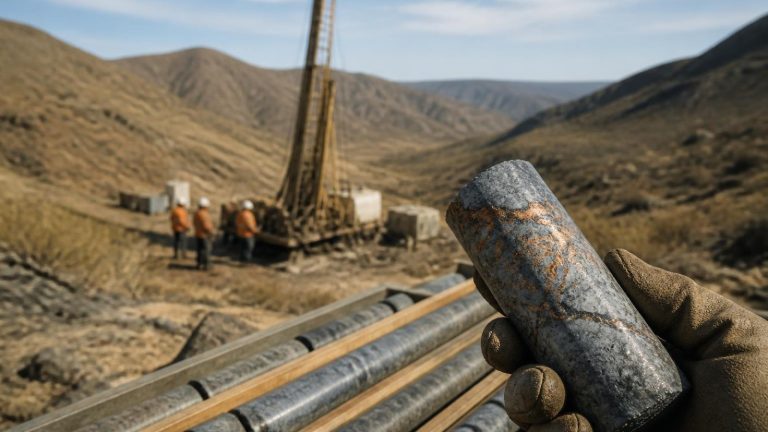
    Kaznikel has successfully extended its mining contract for the Gornostayevskoye nickel-cobalt deposit located in the Beskaragay district of the Abai region until 2026, as reported in its financial documentation for the previous year. The company initially sought an extension of the exploration period in 2018, which was granted by the authorities of Kazakhstan, allowing for a transition to pilot industrial extraction for three years to assess commercial viability. The latest amendment to the contract, signed on December 1, 2023, extends the period for underground leaching operations until February 26, 2026.

    The management of Kaznikel considers December 1, 2023, as the date of commercial discovery at the Gornostayevskoye site. However, prior to signing the latest contract amendment, the company had suspended operations due to insufficient funding. Following the signing of the contract amendment, Kaznikel has yet to commence extraction activities. On September 30, 2025, the company signed an additional amendment to extend the contract until February 26, 2046.

    The underground leaching method, which is also used in uranium extraction, allows for the dissolution of metals using a weak sulfuric acid solution without bringing ore to the surface. However, rising costs of sulfuric acid and a surplus in the global nickel market pose challenges for the project’s viability. According to Kaznikel’s reports, the state commission on reserves approved the estimated reserves of silicate cobalt-nickel ores at the Gornostayevskoye deposit in October 2023, with nickel reserves of 616.1 thousand tonnes at an average grade of 0.65% and cobalt reserves of 41.1 thousand tonnes at an average grade of 0.042%.

    In 2025, it was reported that the reserves at the Levoberezhny site, which was planned to be developed first, were estimated at 138.51 million tonnes of ore, containing 793.6 thousand tonnes of nickel and 54.27 thousand tonnes of cobalt. The maximum production capacity was projected at 20 thousand tonnes of nickel per year, with an 18-year development timeline for Gornostayevskoye. Pilot industrial tests of the technology at the site have been ongoing since 2018.

    Despite the optimistic projections, Kaznikel did not meet its production targets for December 2023 and the subsequent years. According to the work programme associated with the latest contract amendment, the cumulative production of nickel and cobalt by December 31, 2025, was expected to reach 2.3 thousand tonnes and 76 tonnes, respectively. The company reported an uncovered loss of 4.4 billion tenge by the end of 2025, with a negative income of 387 million tenge for the previous year.

    Kaznikel has relied on interest-free loans from related parties to fund its operations, with debts reaching nearly 202 million tenge by the end of the previous year. The company faced financial difficulties, including frozen accounts due to overdue trade debts. In the first quarter of 2026, Kaznikel managed to settle part of its creditor obligations, while the ownership structure remains dominated by BMT NiCo Ltd and Mining Technologies Company, with recent changes in the ownership structure indicating a shift in control through Fincraft Resources.


  • Altai Resources Secures Subsoil Use Licence in Kazakhstan

    Altai Resources Secures Subsoil Use Licence in Kazakhstan

    Altai Resources Limited has announced a significant regulatory achievement with the receipt of a formal notification of intent from the Ministry of Industry and Construction of the Republic of Kazakhstan. This notification paves the way for the company to be granted a subsoil use licence adjacent to the Maksut South copper-nickel mine. This development is crucial for Altai Resources as it expands their exploration footprint within the highly prospective magmatic sulphide belt located in East Kazakhstan.

    The acquisition of this licence represents a strategic move for Altai Resources, allowing the company to enhance its exploration activities in a region known for its rich mineral deposits. The magmatic sulphide belt is particularly noted for its potential to yield significant copper and nickel resources, which are essential for various industries, including electric vehicle manufacturing and renewable energy technologies.

    As the demand for these metals continues to rise globally, particularly in the context of the green energy transition, Altai Resources is positioning itself to capitalize on the growing market. The expansion into this new area not only increases the company’s resource potential but also strengthens its overall portfolio in the mining sector.

    This milestone is expected to attract further investment and interest in the region, highlighting Kazakhstan’s role as a key player in the global mining industry. The company is now poised to advance its exploration initiatives, which could lead to new discoveries and contribute to the sustainable development of the local economy.

    Overall, the granting of the subsoil use licence marks a promising step forward for Altai Resources Limited, reinforcing its commitment to exploring and developing mineral resources in Kazakhstan’s rich mining landscape.


  • Kazakhstan’s Industrial Growth Highlights Diverging Trends in Manufacturing and Mining Sectors

    Kazakhstan’s Industrial Growth Highlights Diverging Trends in Manufacturing and Mining Sectors

    Kazakhstan’s industrial landscape is undergoing significant changes, as recent reports reveal a divergence in growth trajectories between the manufacturing and mining sectors. While the mining industry, a cornerstone of the Kazakh economy, continues to face challenges, the manufacturing sector is witnessing a robust expansion driven by increased domestic demand and foreign investment. This shift is indicative of broader economic trends in the region, where countries are increasingly focusing on diversifying their economies away from traditional resource dependence.

    The mining sector, which has historically been a major contributor to Kazakhstan’s GDP, is grappling with fluctuating global commodity prices and regulatory hurdles. Despite these challenges, the sector remains vital, particularly in the extraction of critical minerals essential for modern technologies. However, the lack of investment in infrastructure and technology has hindered its potential growth.

    In contrast, the manufacturing sector is thriving, bolstered by government initiatives aimed at fostering innovation and attracting foreign capital. This growth is evident in various industries, including machinery, food processing, and textiles, which are benefiting from improved supply chains and a skilled workforce. The government’s focus on industrialisation is expected to continue, with plans to enhance production capabilities and expand export markets.

    As Kazakhstan navigates these divergent paths, the interplay between mining and manufacturing will be crucial. Policymakers are urged to create a balanced approach that supports both sectors, ensuring sustainable economic growth. The future of Kazakhstan’s industrial landscape will depend on how effectively these sectors can adapt to changing global dynamics and local demands. Stakeholders in the mining industry are particularly encouraged to innovate and invest in sustainable practices to remain competitive in an evolving market.

    In conclusion, Kazakhstan’s industrial growth narrative is one of contrasts, with the mining sector needing to adapt to a rapidly changing environment while the manufacturing sector capitalises on new opportunities. This duality presents both challenges and opportunities for the nation’s economic future, highlighting the importance of strategic planning and investment in both areas.


  • Kazakhstan Aluminium Producer Faces Billions in Tax Adjustments

    Kazakhstan Aluminium Producer Faces Billions in Tax Adjustments

    Kazakhstan’s leading aluminium producer, the Kazakhstan Electrolysis Plant (KEZ), part of the Eurasian Resources Group (ERG), has been hit with substantial tax adjustments amounting to billions of tenge. This follows a thematic inspection by the Kazakh tax authorities concerning transfer pricing practices for transactions conducted between 2018 and 2021. The tax authorities concluded their investigation in February 2024, resulting in a demand for additional tax payments totalling 2.448 billion tenge, excluding penalties and interest. The company has contested these findings through the judicial system, but initial court decisions did not favour KEZ.

    As of February 2026, KEZ paid the additional taxes, alongside penalties and fines totalling approximately 5.5 billion tenge, which included 2.4 billion tenge in additional taxes, 1.4 billion tenge in penalties, and 1.7 billion tenge in fines. Despite these payments, KEZ maintains that its transfer pricing policies comply with Kazakh legislation and OECD guidelines, prompting further appeals in higher courts. A subsequent ruling from the cassation court supported KEZ’s position, declaring the tax authority’s notification illegal and ordering the return of the paid amounts.

    Transfer pricing in Kazakhstan typically involves setting prices for goods and services in international transactions that differ from market rates, often leading to profit redistribution to more favourable tax jurisdictions. This practice poses significant risks, particularly in sectors like aluminium production, where costs can vary greatly due to transportation and additional expenses.

    The KEZ produces approximately 265,000 tonnes of primary aluminium annually, sourced from bauxite mined in Kazakhstan’s Kostanay region. In 2024, ERG exported 180,000 tonnes of aluminium to the European Union and Turkey. For the fiscal year 2025, KEZ reported revenues nearing 360 billion tenge, with a profit of 79.4 billion tenge.

    In June 2025, ERG announced plans to issue three-year securities from KEZ worth up to $100 million, backed by the Development Bank of Kazakhstan. The company has also engaged in significant lending activities, providing short-term loans totalling over $313,000 in 2025. Additionally, KEZ has been active in debt operations, securing various credit lines and refinancing existing debts, indicating a robust financial strategy amidst regulatory challenges.

    The financial report underscores KEZ’s commitment to maintaining liquidity and generating sufficient cash flow to support its operations and obligations, even as it navigates the complexities of tax compliance and international trade dynamics.


  • Chinese Company to Extract 20 Tonnes of Silver Annually in Kazakhstan

    Chinese Company to Extract 20 Tonnes of Silver Annually in Kazakhstan

    The Liaoning Hongda Group, a Chinese mining company, has commenced the construction of the Burabay-Zhalgyzagas mining and processing plant in the Janakorgan district of Kazakhstan’s Kyzylorda region. The facility is set to produce 20 tonnes of silver and 210,000 tonnes of lead-zinc concentrate annually upon its completion in 2028. The project represents a significant investment in the region, with a total cost of 138 billion tenge, and is expected to create over 550 new jobs.

    During the groundbreaking ceremony, regional akim Murat Yergeshbayev highlighted the project’s potential to stimulate economic growth and diversify the local economy. He expressed gratitude to Liaoning Hongda Group for their commitment to such a large-scale and modern initiative. The project aligns with President Kassym-Jomart Tokayev’s directive to transition Kazakhstan to a new investment cycle, focusing on modern production and optimising regional economic potential.

    Currently, drilling works are underway to expand the mineral resource base of the site, alongside the construction of access roads and the establishment of construction sites. The project also includes plans for connecting the plant to electrical grids to ensure a reliable power supply.

    Liaoning Hongda Group has previously announced plans to invest $1.3 billion in the development of two lead and zinc deposits in the Janakorgan district, which will include two underground mines and two processing plants with a combined capacity of 8 million tonnes of ore per year, as well as a full-cycle metallurgical plant.

    Exploration activities at the deposits date back to the 1980s, with detailed surveys conducted between 2010 and 2012. The reserves are classified as C2 category, with forecast resources rated as P1. The average content of the deposits is reported at 2.01% zinc and 1.62% lead, with geologists noting the potential for resource growth at greater depths.

    Once operational, the new complex is projected to produce 420,000 tonnes of zinc and 220,000 tonnes of lead annually, which would significantly surpass the output of Kaz Zinc, making it potentially the largest producer of lead and zinc in Central Asia. The Chinese company has already invested approximately 9 billion tenge in geological exploration, utilising 15 drilling rigs during the process.


  • East Star Resources Partners with Kazakhstan’s Nova Ltd for Major Copper Project Development

    East Star Resources Partners with Kazakhstan’s Nova Ltd for Major Copper Project Development

    East Star Resources (EST), a British company operating in Kazakhstan, has announced a significant partnership with local firm Nova Ltd to establish a joint venture aimed at developing the Rulikha copper project in the East Kazakhstan region. The project will be operated by Orion Development Ltd, which has been tasked with the technical execution of the project, including resource confirmation, feasibility studies, permitting, construction, and the eventual commencement of production. This strategic collaboration is noteworthy as it allows East Star to advance the project without requiring additional funding from its side.

    Nova Ltd, specifically registered in the Astana International Financial Centre (AIFC) to finance the joint venture, boasts shareholders that include prominent figures in Kazakhstan’s natural resources sector. While the identities of these shareholders have not been officially disclosed, speculation suggests they may include notable entrepreneur Aigazy Kusaikov and businessman Askhat Omarov, the latter being associated with billionaire Aydin Rakhimbaev.

    Orion Development, also registered in the AIFC, brings a wealth of experience in the construction and operation of copper mines and processing facilities in Kazakhstan. This team is expected to leverage its expertise to ensure the successful development of the Rulikha project.

    The Nova and Orion teams have previously developed two copper assets in Kazakhstan: the Karshyga and Kamkor projects. The Karshyga site was acquired in February 2017 from British firm Orsu Metals, which had reported reserves of approximately 4.6 million tonnes of ore with an average copper content of 3.02%. Following the acquisition, the team designed, financed, and constructed a copper processing plant, which began operations in 2018, leading to a significant increase in annual revenue.

    The Kamkor project, acquired in 2021, contained around 15.7 million tonnes of copper ore with an average metal content of 0.65%. Construction of its processing facility commenced in January 2022, and it was operational by April 2023, with capital expenditures amounting to $14 million. The facility’s capacity was later increased by approximately 50%, resulting in a substantial rise in project revenues.

    With the Rulikha project, the initial phase requires the partner to drill at least 3,000 meters or fund $1.5 million worth of work. East Star has already secured drilling permits for the main site and plans to initiate operations in the third to fourth quarters of 2026. As the project progresses, Nova’s stake in the joint venture will increase, potentially resulting in a final structure where Nova holds either 75% or 65% of the venture, depending on the financial arrangements.

    Located about 33 km from the Upper Uba project, another copper initiative by East Star, the Rulikha project’s geological exploration target is estimated at a maximum of 23 million tonnes of ore with an average copper equivalent grade of 2.4%. This development marks East Star’s second copper project in Kazakhstan, following the entry of Chinese investors into the Upper Uba project, where East Star aims to retain a 30% stake post-production commencement, while for Rulikha, it aims for a stake between 25% and 35%.


  • China Discovers Major Uranium Deposit but Continues to Rely on Kazakhstan Supplies

    China Discovers Major Uranium Deposit but Continues to Rely on Kazakhstan Supplies

    China has announced the discovery of a significant uranium deposit in the Jingchuan area of Inner Mongolia, estimated to contain up to 30 million tonnes of uranium. This find could potentially bolster China’s domestic resource base for nuclear energy, reducing its reliance on foreign supplies in the long run. However, despite this promising discovery, China remains one of the largest purchasers of uranium from Kazakhstan, accounting for 44% of Kazatomprom’s revenue from natural uranium sales in 2025.

    Kazatomprom, Kazakhstan’s national atomic company, reported a revenue of 1.803 trillion tenge for 2025, showing little change from the previous year. The company experienced a decline in net profit, dropping from 1.13 trillion to 807 billion tenge, while the average selling price of uranium fell from $69.5 to $65.3 per pound due to a 14% decrease in the average annual spot price. However, the volume of natural uranium sales increased by 11%, with China being the primary buyer, contributing 797 billion tenge to Kazatomprom’s revenue.

    In comparison, uranium sales to the United States rose from 143 billion to 204 billion tenge, while sales to Russia decreased from 253 billion to 218 billion tenge. China’s interest in Kazakhstan’s uranium extends beyond mere purchases; Chinese entities are actively participating in several uranium projects within Kazakhstan, including the Zarichnoye and Khorasan-U projects, the latter located in the Kyzylorda region and notable for its Chinese involvement.

    Kazakhstan’s status as a leading global uranium producer with one of the largest resource bases makes it a crucial partner for China. Despite a decrease in net profit and average selling prices, Kazatomprom’s operational cash flow increased from 516 billion to 810 billion tenge in 2025. Shareholders received dividends of 1,264 tenge per share, up from 1,213 tenge the previous year, while capital expenditures rose from 190 billion to 256 billion tenge. Additionally, the uranium extraction tax in Kazakhstan increased from 6% to 9% as of January 2025, with a differentiated scale based on extraction volumes and uranium prices set to be implemented in 2026.


  • Digital Transformation in Central Asian Geology: Platforms, AI, and Workforce Challenges

    Digital Transformation in Central Asian Geology: Platforms, AI, and Workforce Challenges

    The mining industry is increasingly recognising the importance of digitalisation, particularly in the field of geology, which is one of the most knowledge-intensive sectors. However, the pace of digital transformation in Central Asia is lagging behind the demands of the business and global investment markets. This article explores how Kazakhstan and Uzbekistan are addressing this issue through strategic programmes aimed at expanding their mineral resource bases.

    In the competitive landscape of critical minerals, the integration of digital technologies is essential for success. From forecasting and assessing mineral reserves to product exportation, the mining industry must embrace digital solutions. Despite the existence of scientific literature and discussions at strategic business forums, the application of AI, big data, and machine learning remains limited to isolated practices. A systematic approach is needed to harness geological information effectively, and both Kazakhstan and Uzbekistan are developing their own transformation scenarios.

    Kazakhstan has made significant strides since the launch of a unified subsoil use platform in 2025. By August 2026, the country completed the digitisation of geological information, processing over 4.8 million archival materials, marking a revolutionary step that could serve as a model for other Central Asian nations. Meanwhile, Uzbekistan announced the creation of a National Geological Data Base, aiming to digitise 36,000 reports and establish a Centre for Technological Transformation, which is expected to double the quality and speed of geological data generation and modelling.

    Experts at the MINEX Kazakhstan 2026 forum highlighted that the digitalisation of geology is a matter of survival rather than prestige for Central Asian countries. Traditional methods are no longer sufficient to ensure growth or replenish mineral resources, especially as older deposits are depleted and ore quality declines. The key challenge is not just the quantity of reserves but the effective management of geological data and decision-making based on that data. Currently, only 21% of geologists in Kazakhstan have access to modern data transmission networks, significantly delaying project timelines.

    A critical barrier to digitalisation is the skills gap, particularly in the intersection of IT, big data, and geology, which are essential for quality predictive analysis. The reliance on foreign software and the lack of local intellectual resources hinder the rapid development of homegrown solutions. The competition for skilled professionals in IT and data science is fierce, with companies vying for talent by offering lucrative salaries.

    Another significant obstacle is the absence of unified standards for geological information, although Kazakhstan has made progress in this area. Without the integration of historical data, its value diminishes, and investors are less inclined to engage. To improve the situation, experts suggest a shift in focus towards innovative priorities within the industry.

    The Ministry of Industry and Infrastructure Development of Kazakhstan has begun practical steps to implement neural network models in geology, collaborating with the National Geological Service and Astana Hub. This initiative is supported by EPAM Kazakhstan and aims to address the skills shortage by training geologists in big data and machine learning techniques.

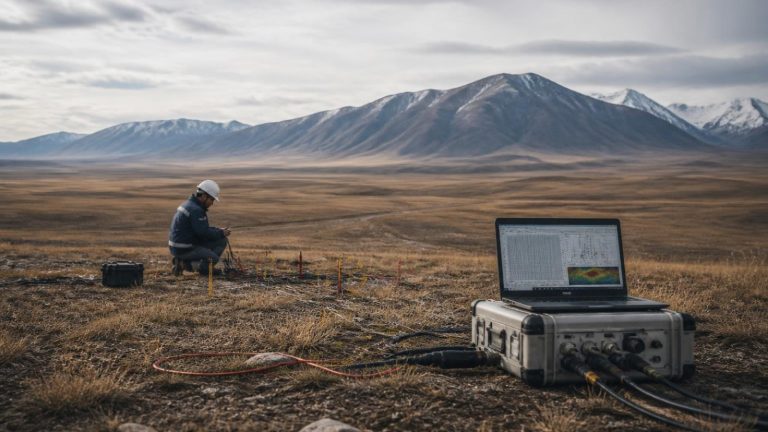
    The article also discusses various applications of AI in modelling mineral deposits and the use of digital tools in geophysical exploration across Kazakhstan and beyond. Companies are employing advanced methods such as 3D modelling and machine learning to enhance the accuracy of geological assessments and streamline operations. As Kazakhstan embarks on a state programme to study 20 areas for detailed geological surveys, the integration of IT tools will be crucial for achieving its resource potential.

    In conclusion, Central Asia is undergoing a significant transformation in its geological sector, which will ultimately determine the success of the entire mining industry in the region. The future of geology in Central Asia hinges on the successful implementation of digital technologies and the establishment of an open ecosystem for geological information, positioning countries like Kazakhstan and Uzbekistan as high-tech hubs in the Eurasian landscape.


  • Advancements in Geological Exploration and Risk Management in Central Asia

    Advancements in Geological Exploration and Risk Management in Central Asia

    The demand for critical minerals is reshaping the role of Central Asia, particularly Kazakhstan and Uzbekistan, in global supply chains, while highlighting the urgent need for verified geological information. Many raw materials in the region remain unexplored, and the extent of its mineral wealth is still largely speculative, based on historical data and limited new findings. Leaders from the five Central Asian countries agree on the necessity to explore, balance, and utilise natural resources efficiently and economically for national interests.

    Central Asia is not only rich in copper, uranium, tungsten, lithium, graphite, titanium, and rare earth elements but also holds over 38% of the world’s manganese ore reserves and significant quantities of other critical minerals. Uzbekistan alone boasts reserves of over 30 types of critical minerals, with plans for 76 projects worth $2.6 billion aimed at developing 28 rare minerals by 2030. In Kyrgyzstan, the Kyzyl-Ompol deposit holds an estimated 20 million tonnes of titanomagnetite, while the Kutessai-2 site contains approximately 60,000 tonnes of various critical minerals.

    Kazakhstan is actively mining and integrated into global raw material supply chains, with rare earth exports quadrupling by early 2025 compared to 2020. The country joined the Minerals Security Partnership in 2024 and plans to invest nearly $5.3 billion in the development of its rare metals and minerals sector by 2028, including geological research.

    Experts believe that with detailed geological exploration using new technological solutions, the overall reserves of critical minerals in Central Asia could increase significantly. Recent geological exploration at the Kuiraktykol deposit in Kazakhstan saw resource estimates rise from 20 million tonnes to 282 million tonnes, illustrating the potential for discovery through modern methods. The rapid global economic changes and the rise of green energy and high-tech industries have intensified the demand for strategic raw materials, making extensive geological surveys essential for development.

    At the MINEX Kazakhstan 2026 forum, discussions highlighted the need for innovative approaches in geological exploration, emphasising a shift from traditional methods to systematic targeting based on modern capabilities. The reliance on archival data for over 55% of geological information underscores the importance of verifying historical data to mitigate exploration risks. The forum also addressed the balance between speed and quality in geological surveys, advocating for investments in reliable data rather than merely land.

    The implementation of advanced technologies, such as geophysical methods and remote sensing, has transformed the landscape of geological exploration, enabling the identification of previously inaccessible mineral deposits. The integration of these technologies is crucial for enhancing the efficiency and accuracy of geological assessments, ultimately leading to more successful exploration outcomes. As Central Asia continues to evolve its approach to resource exploration, the MINEX forum serves as a vital platform for international dialogue on the future of the mining industry in the region.


  • Altai Resources Secures Subsoil Use Licence in Kazakhstan

    Altai Resources Secures Subsoil Use Licence in Kazakhstan

    Altai Resources Limited has announced a significant regulatory achievement with the receipt of a formal notification of intent from the Ministry of Industry and Construction of the Republic of Kazakhstan. This notification paves the way for the company to be granted a subsoil use licence adjacent to the Maksut South copper-nickel mine. This development is a pivotal moment for Altai Resources, as it not only enhances their operational capabilities but also expands their exploration footprint within the highly prospective magmatic sulphide belt located in East Kazakhstan.

    The acquisition of this licence is expected to bolster the company’s position in the region, which is known for its rich mineral deposits, particularly in copper and nickel. The magmatic sulphide belt in East Kazakhstan has been identified as a significant area for exploration, and Altai Resources aims to leverage this opportunity to enhance its resource base and contribute to the local mining sector.

    As the demand for copper and nickel continues to rise globally, driven by the transition to renewable energy and electric vehicles, Altai Resources is strategically positioning itself to meet this demand. The company’s expansion into this area aligns with broader industry trends, where mining companies are increasingly seeking to secure access to critical minerals that are essential for modern technologies.

    This development not only reflects Altai Resources’ commitment to growth and exploration but also highlights the supportive regulatory environment in Kazakhstan, which is working to attract foreign investment in its mining sector. The successful acquisition of the subsoil use licence is a testament to the company’s strategic planning and operational execution, setting the stage for future exploration and potential discoveries in the region.