Region: Europe

  • Eldorado Gold Achieves First Ore Crushing Milestone at Skouries Project

    Eldorado Gold Achieves First Ore Crushing Milestone at Skouries Project

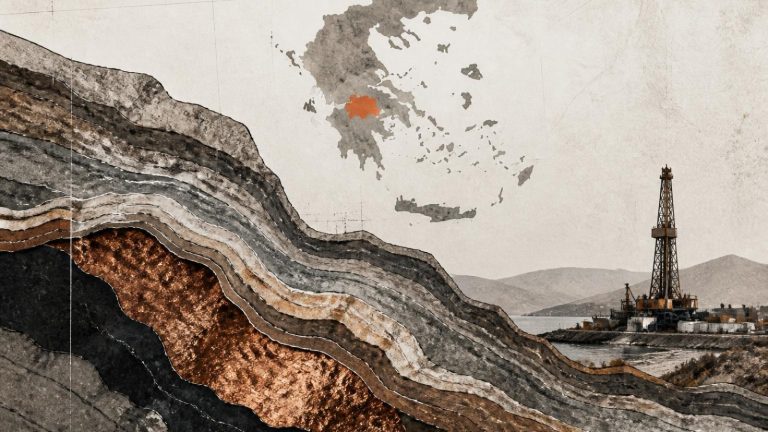
    Eldorado Gold Corporation has announced a significant milestone at its Skouries copper-gold project located in Northern Greece, with the first ore successfully processed through the newly commissioned crushing circuit. This development marks the transition of the project into the commissioning phase, which is a crucial step towards full production. The company is targeting the production of copper-gold concentrate in the third quarter of 2026, with plans for commercial production to commence in the fourth quarter of the same year, contingent on the completion of final site energization and commissioning activities.

    The successful crushing of the first ore is a testament to the effective operation of the front-end processing systems at Skouries. The company has reported that commissioning activities are progressing across various operational areas, including crushing, grinding, flotation, and concentrate handling. Eldorado Gold has also taken proactive measures to ensure that commissioning readiness is maintained, including the addition of supplemental generators to provide interim power while awaiting final site energization from the Greek power authority.

    With an ore stockpile of approximately 3.9 million tonnes, the open pit mining operations at Skouries are running ahead of schedule, allowing for a steady ramp-up of the processing plant. This stockpile is expected to support the commissioning and first year of production, reducing risks associated with the initial operational phase. Eldorado Gold’s CEO, George Burns, expressed confidence in the project’s progress, highlighting the team’s commitment to completing the remaining steps safely and methodically as they work towards the first concentrate production.


  • EU-Africa Critical Minerals Cooperation

    EU-Africa Critical Minerals Cooperation

    As the European Union accelerates its green and industrial transitions, securing reliable access to critical raw materials has become a strategic imperative. The continent faces significant supply chain vulnerabilities, with China controlling approximately 70% of global mineral processing and refining capacity. Global demand for lithium alone is projected to surge by more than 350% by 2040, intensifying competition among major economies for secure sources. The European Critical Raw Materials Act represents the EU’s comprehensive response to these challenges, with Africa emerging as a central pillar of the bloc’s diversification strategy.

    The EU has already established critical minerals partnerships with several African nations, including South Africa, Rwanda, Namibia, the Democratic Republic of the Congo, and Zambia, backed by substantial financing commitments through the Global Gateway initiative, which aims to mobilise €300 billion in public and private investments. However, current cooperation frameworks remain heavily focused on extraction rather than value-added activities such as processing and manufacturing. This approach creates tension with sustainability objectives and fails to deliver the mutual economic benefits that African governments increasingly demand. Mining operations risk driving deforestation, water and soil pollution, whilst their substantial energy requirements may divert critical resources from domestic electrification in a region where approximately 600 million people lack access to affordable energy.

    To achieve genuine supply chain diversification and ensure commercially viable partnerships, the EU must fundamentally reshape its approach. This requires closing coordination gaps across fragmented EU and member state initiatives, introducing demand aggregation and non-price public procurement criteria, and expanding circular economy cooperation including battery recycling and mine tailings reprocessing. Critically, the EU should adopt phased public-private partnership models that combine upfront infrastructure investment with binding commitments to mining, processing and refining activities. Development cooperation must be aligned with critical mineral initiatives to strengthen local infrastructure, skills and regulatory capacity. Long-term purchasing and offtake agreements for processed or refined minerals, coupled with robust environmental, social and governance safeguards and meaningful community engagement, are essential to prevent the perpetuation of the resource curse and ensure that African countries derive tangible, lasting benefits from their mineral wealth.

  • Europe’s Raw Materials Strategy Under Pressure as China Tightens Supply Control

    Europe’s Raw Materials Strategy Under Pressure as China Tightens Supply Control

    Europe’s security of supply for critical raw materials is deteriorating, according to a new International Energy Agency report, raising serious questions about the effectiveness of the European Union’s Critical Raw Materials Act launched two years ago. The continent remains heavily dependent on a small number of countries, particularly China, which dominates the market for cobalt, lithium, manganese, and raw material processing, while Indonesia leads in nickel production. Together, these nations accounted for more than three-quarters of global refining growth between 2023 and 2025.

    The vulnerability became apparent when Chinese export restrictions on magnets forced some European car manufacturers to cut production last year, while the number of Chinese products requiring export licenses tripled. Compounding these challenges, global investments in critical minerals fell by 9 percent in 2025, further jeopardizing Europe’s raw materials security.

    Peter Tom Jones, Director of the Institute for Sustainable Metals and Minerals at KU Leuven, argues the strategy is fundamentally flawed. He contends that Europe’s approach of dividing the raw materials chain into separate components is inadequate in a world where China actively restricts exports and expands its monopoly. Jones advocates for comprehensive European investment across the entire value chain—from mining and processing to refining and manufacturing batteries and electric vehicles—requiring billions in state-backed funding.

    The bankruptcy of Swedish battery manufacturer Northvolt in 2025 has deterred private investment, underscoring the need for major government intervention. Jones also recommends implementing an export ban on metal and battery waste to keep high-quality materials within Europe for recycling rather than shipping them to China.

    Andor Lips, strategic advisor on critical raw materials at TNO, suggests Europe should pursue resilience through diversification and partnership rather than complete independence. He recommends building relationships with countries like Australia and Canada, which produce critical materials like rare earth ores for wind turbine magnets. While acknowledging that new European mines and recycling infrastructure require time to develop, Lips believes the Critical Raw Materials Act represents progress, though Europe must absorb supply shocks in coming years before the strategy fully materializes.


  • Energy Transition Minerals Claims Greenland Expropriated Kvanefjeld Rare Earth Project Through Uranium Ban

    Energy Transition Minerals Claims Greenland Expropriated Kvanefjeld Rare Earth Project Through Uranium Ban

    Energy Transition Minerals (ASX: ETM) has accused Greenland of effectively seizing one of the world’s largest rare earth deposits outside China by blocking development of the Kvanefjeld project and refusing to renew its exploration licence.

    The Australian-listed company has invested approximately $150 million in the project since 2013, advancing it through resource definition, environmental studies, and public consultation before submitting a mining licence application in late 2020. However, Greenland’s coalition government subsequently enacted Act 20, legislation banning projects with uranium concentrations exceeding 100 parts per million, effectively halting Kvanefjeld’s application. Managing director Daniel Mamadou contends the legislation was specifically designed to stop the project after the government campaigned against its development. The dispute has escalated into a legal battle spanning more than three years of arbitration and court proceedings, with the central question being whether Act 20 applies retroactively to Kvanefjeld and whether such application constitutes expropriation. ETM argues that exploration results from 2025 identify rare earth mineralization with uranium levels well below the legal limit in unexplored areas, and proposes separating uranium from rare earth concentrate and permanently returning it underground. Kvanefjeld hosts critical rare earth elements including neodymium, praseodymium, dysprosium, and terbium, essential for permanent magnets used in electric vehicles, wind turbines, and defence technologies.

    ETM previously estimated the project could supply up to 15% of global rare earth production, potentially providing Europe with a significant non-Chinese source of critical minerals. While pursuing Kvanefjeld through legal channels, ETM has diversified by acquiring the Penouta brownfield project in Spain, aiming to restart Europe’s only producing tantalum mine.


  • Sociopolitical Geology and the Energy Transition: Navigating Paradoxes in Critical Raw Materials Supply

    Sociopolitical Geology and the Energy Transition: Navigating Paradoxes in Critical Raw Materials Supply

    A group of researches from Finland, Portugal, France and Greece published a new research on paradoxes and challenges of the energy transition analysed through sociopolitical geology perspective. This academic paper examines the complex sociopolitical challenges surrounding Europe’s energy transition through the lens of sociopolitical geology, a transdisciplinary field addressing the intersection of geology, environment, and society. The authors identify a critical paradox: while the environmental movement has long advocated for energy transition away from fossil fuels, opposition to mining for critical raw materials (CRM) needed for this transition has emerged from both radical environmental groups and right-wing populist movements, creating what the authors describe as a “political shear zone” in society.

    The paper traces how geopolitical shifts, including China’s dominance in CRM production, Russia’s resource-focused strategy, and the rise of populist movements, have complicated Europe’s path toward energy independence. The EU’s Critical Raw Materials Act (2024) aims to accelerate domestic mineral extraction, yet this conflicts with simultaneous commitments to nature conservation, as mineral deposits often overlap with protected areas.

    The authors highlight specific case studies, particularly European lithium projects in Serbia (Jadar) and Portugal (Barroso), where opposition has become entangled with broader political agendas unrelated to mining itself. They note that communities in southern and eastern Europe view these projects as “sacrifice zones” for northern European consumers, raising legitimate concerns about unequal distribution of transition costs and benefits.

    Crucially, the paper argues that known global mineral resources may be insufficient for the energy transition, and limited new supply can be ramped up in the short term. The authors contend that the energy transition requires profound societal change that cannot be achieved through technology or top-down regulation alone. They advocate for legally binding community development agreements, responsible project siting, genuine stakeholder engagement, and cross-disciplinary collaboration between industry, governments, scientists, and activists to build trust and achieve sustainable solutions.


  • Europe’s Race for Lithium: An EIB Group Documentary on Strategic Raw Materials and the Clean Tech Era

    Europe’s Race for Lithium: An EIB Group Documentary on Strategic Raw Materials and the Clean Tech Era

    As the world pivots towards renewable energy and electric vehicles, one critical material has emerged as the linchpin of this transformation: lithium. This soft, silvery metal powers the batteries that drive electric cars, store renewable energy, and fuel the technologies of tomorrow. Yet Europe – the continent that ignited the green energy revolution – finds itself in an unexpected position: dangerously dependent on distant suppliers for a resource it urgently needs. The stakes are high, and Europe’s response could reshape global supply chains for decades to come.

    The Lithium Imperative: Why This Element Matters

    Clean technologies are revolutionising global economies. Solar panels harness the sun’s energy, wind turbines spin on hillsides, and electric vehicles replace combustion engines on roads worldwide. Behind each of these innovations lies lithium, the critical raw material that makes energy storage possible.

    The scale of Europe’s ambition is staggering. The continent has committed to becoming carbon neutral by 2050 – a target that requires unprecedented quantities of lithium. According to projections, Europe’s demand for lithium could increase more than 20-fold by mid-century compared to current levels. This surge in demand reflects the sheer volume of batteries needed for electric vehicles, renewable energy storage systems, and grid stabilisation.

    However, this explosive growth in demand has created a crisis of supply. Global prices for lithium have become highly volatile, swinging wildly with market sentiment and geopolitical tensions. For Europe to achieve its climate goals, it must solve a fundamental challenge: how to secure access to lithium when other countries have already locked in their supply chains?

    Understanding Critical Raw Materials

    The concept of “critical raw materials” emerged gradually in European policy circles. In 2011, the European Commission adopted its first list of 14 materials and material groups that merited close monitoring. Every three years, regulators revisited this list as global circumstances shifted.

    The turning point came around 2019. Critical raw materials – once relegated to technical spreadsheets in Brussels – suddenly became a political priority of the highest order. The timing was significant: by 2020, lithium was added to the critical raw materials list just as Europe was launching its most ambitious climate initiative yet.

    Modern economies run on raw materials. But some resources are so essential to maintain and so risky to secure that their absence could cripple entire industries. These are the materials that now define strategic competition in the 21st century.

    The European Green Deal: Ambition Meets Reality

    The European Green Deal represented a transformative vision: to reconcile Europe’s economy with its planet. Launched with the promise of turning the transition to a climate-neutral economy into Europe’s “next engine of growth,” the initiative encompassed everything from renewable energy investments to algorithmic innovations.

    But the Green Deal revealed an uncomfortable truth: building clean technology at scale requires enormous quantities of raw materials. To power the continent’s clean energy future, Europe needs substantial amounts of lithium, copper, cobalt, and rare earth elements. The irony became starkly apparent – Europe, the champion of climate action, barely produces most of these materials itself.

    Lithium exemplifies this predicament. While Europe excels in many sectors, lithium mining and processing remain almost entirely absent from the continent. Currently, Europe accounts for less than 0.1% of global lithium mine production, making it almost entirely dependent on imports.

    The Global Lithium Landscape: Who Holds the Power?

    Understanding Europe’s vulnerability requires examining the global lithium supply chain. Three countries dominate upstream production, each controlling different segments of the market.

    Australia leads in hard rock mining, shipping most of the world’s spodumene concentrate – concentrated lithium extracted from mining ore. Chile dominates the production of lithium carbonate through massive evaporation ponds in the Atacama Desert, where vast salt flats are transformed into lithium repositories. And China, perhaps most significantly, controls approximately 70% of global battery-grade lithium hydroxide refining – the processed form essential for electric vehicle batteries and energy storage systems.

    This concentration creates dangerous dependencies. When one country controls such a large portion of a critical supply chain, geopolitical risks multiply. Supply disruptions, trade disputes, or policy changes in any one nation can reverberate across the entire global economy.

    For years, Europe overlooked an obvious solution: its own lithium deposits. Deep beneath European soil lie resources that were long considered economically unviable or technically challenging to extract. But as competition for lithium intensified, Europe began reconsidering these deposits. New extraction methods and new mine projects – ones that experts believe could cut Europe’s lithium imports by half – suddenly moved from the margins to the centre of strategic planning.

    Project Lionheart: Europe’s Flagship Lithium Initiative

    In December 2025, Cris Moreno, Managing Director and CEO of Vulcan Energy, announced a historic moment for the continent: comprehensive financing to fully fund the construction of Project Lionheart. This facility represents more than just another mining project – it embodies Europe’s determination to reshape its relationship with critical raw materials.

    Located in Germany’s Palatinate region, Lionheart sits atop Europe’s largest lithium resource: a vast underground reservoir of lithium-rich, hot geothermal brine. The project’s brilliance lies not merely in the resource beneath the ground, but in how it extracts that resource.

    Innovation in Extraction

    The Lionheart process represents a significant leap forward in sustainable lithium production. Rather than simply pumping brine and abandoning it, Vulcan Energy operates an elegant closed-loop system:

    1. Geothermal Energy Extraction: Hot brine is pumped to the surface, and the thermal energy is harvested as a renewable energy product.
    2. Heat Distribution: This renewable heat feeds into local district heating grids, providing genuine utility beyond lithium extraction.
    3. Lithium Concentration: Only after energy extraction does the lithium separation process begin. The brine passes through extraction columns where lithium is concentrated into a 40% lithium chloride concentrate.
    4. Brine Reinjection: Crucially, the brine is re-injected into the reservoir, creating a closed-loop system with minimal waste.
    5. Final Processing: The lithium chloride concentrate travels to downstream facilities where green power converts it into battery-quality lithium hydroxide suitable for electric vehicle batteries.

    This process is revolutionary because it achieves dual benefits: generating renewable energy while extracting lithium, all with a minimal environmental footprint. When fully operational by 2028, Lionheart will produce 24,000 tonnes of battery-grade lithium annually – enough to power approximately half a million electric vehicles per year.

    Europe’s Broader Resilience Strategy

    Project Lionheart represents one crucial piece of Europe’s larger strategic puzzle. The continent’s approach to critical raw materials extends far beyond a single project or even domestic extraction.

    Regional Cooperation

    The financing structure of Lionheart exemplifies European cooperation. Germany’s raw materials fund acted as a minority investor, attracting additional equity investors to the project. Simultaneously, the European Investment Bank provided a substantial debt portion, demonstrating how public and private capital can align around strategic objectives.

    Industrial Partnerships

    Companies like Umicore, a Belgian battery materials leader and one of Europe’s largest battery players, have become off-takers for Lionheart’s lithium. Umicore’s commitment reflects three compelling reasons for a European supply chain:

    1. Cost Competitiveness: Local sourcing reduces transportation costs and improves margin efficiency in the battery supply chain.
    2. Geopolitical Risk Reduction: Diversified, local supply chains insulate Europe from political disruptions in distant suppliers.
    3. Sustainable Sourcing: A European supply chain enables transparent oversight of environmental and labor standards, ensuring low-carbon, responsibly sourced lithium.

    International Partnerships

    Europe also recognizes that complete autonomy in raw materials is neither achievable nor necessary. Instead, the strategy emphasizes risk management through diversification. The European Investment Bank, for example, provides technical assistance to a lithium mining project in Namibia, creating secured supply chains for European manufacturers while supporting development in Africa.

    The Critical Raw Materials Act: Policy Framework for Action

    The turning point in European policy came with the Critical Raw Materials Act, which entered into force in 2024. Built on decades of analysis starting with the original 14-material list from 2011, this legislation translates strategic thinking into legal reality.

    The Act’s core principle is straightforward yet powerful: reduce dependency to build resilience and competitiveness. Specifically, the regulation states that Europe should not rely on any single supplier for more than 65% of any critical raw material.

    To operationalise this vision, the European Commission designated 47 strategic projects across the EU, with 18 specifically focused on lithium. These projects receive concrete benefits:

    • Accelerated Permitting: Regulatory timelines are compressed, allowing faster project development.
    • Improved Financing Access: Projects gain preferential access to European investment capital.
    • Comprehensive Scope: Initiatives span the entire value chain – extraction, processing, recycling and substitution technologies.

    Project Lionheart stands as one of these designated strategic projects, recognized as “the first green mine in Europe.” The European Commission has committed to ramping up support for critical raw materials to €2 billion annually, with additional funding rounds already underway.

    Impact on Europe’s Electric Vehicle Revolution

    The timing of Lionheart’s development aligns perfectly with Europe’s electric vehicle boom. In 2025 alone, close to 1.9 million fully electric cars were sold across the EU—a figure that reflects the continent’s genuine shift away from internal combustion engines.

    Each of these vehicles requires a battery, and each battery requires lithium. Without securing domestic or closely-partnered sources of lithium, Europe risks becoming a captive consumer, dependent on suppliers who may not prioritize European interests.

    By providing 24,000 tonnes of battery-grade lithium annually, Lionheart removes this vulnerability. The lithium produced can be woven directly into European battery supply chains, powering the next generation of electric vehicles manufactured in German, French and Swedish factories.

    Lessons in Strategic Resilience

    Europe’s approach to lithium offers important lessons in strategic thinking for the 21st century:

    First, diversification matters. Rather than seeking 100% autonomy – an impossible goal – Europe embraces multiple sources: domestic extraction, international partnerships and investments in processing capabilities.

    Second, policy must align with industrial realities. The Critical Raw Materials Act did not emerge from theoretical exercises; it reflected genuine business needs articulated by manufacturers and investors. Government policy created conditions that entrepreneurs could seize.

    Third, innovation becomes strategic. Lionheart’s success depends on novel extraction technologies that previous generations dismissed as uneconomical. As climate urgency mounts, what was once marginal becomes central.

    Fourth, finance follows frameworks. Once the European Commission established strategic designations and committed public capital, private investors followed. The project attracted equity investors, bank financing and international development partners because policy created certainty.

    Looking Forward: Momentum Building

    The momentum is undeniable. Projects are breaking ground across the continent. Financing deals are taking shape. The second call for critical raw materials projects has closed, with the pipeline full of new initiatives spanning extraction, processing, and recycling.

    Recycling deserves particular attention as an emerging opportunity. As electric vehicles reach end-of-life, their batteries represent not waste but resources. Recovering lithium, cobalt, and other materials from spent batteries can significantly reduce dependence on virgin extraction while creating new industrial capabilities within Europe.

    Conclusion: The Green Supply Chain Revolution

    The clean energy transition requires more than renewable power and efficient vehicles. It requires secure, sustainable supply chains for the materials that make this transition possible. For decades, Europe outsourced this responsibility, concentrating on technology and consumer markets while others controlled raw materials.

    The lithium story represents Europe’s course correction. Through Project Lionheart and initiatives like it, Europe is building a different future: one where clean technology and responsible sourcing go hand in hand, where geopolitical resilience aligns with climate commitments, and where a continent leads not just in environmental vision but in strategic execution.

    With €2 billion annually supporting critical raw materials development, with the first green mine in Europe approaching completion, and with companies like Umicore securing local supply for their batteries, Europe is gaining genuine momentum. The clean tech era will be built on critical raw materials, and increasingly, those materials will have a European origin.

    This is not just about lithium. It is about whether Europe can translate its climate ambitions into economic reality – and whether it can build the resilient, sustainable supply chains that future generations will depend upon.

    About This Documentary

    This article is based on a documentary-style video produced by the European Investment Bank Group (EIB Group) as part of a new series exploring the topics driving Europe’s biggest conversations. The EIB Group is actively supporting Europe’s transition to a competitive, resource-secure future through strategic investments in critical raw materials and clean technology infrastructure.

    To stay competitive globally and strengthen its tech leadership, Europe is investing in the resources needed for the technologies of tomorrow. Critical raw materials, especially lithium, are key to powering this transition. The documentary features interviews with key industry and policy leaders shaping Europe’s lithium strategy.

    Featured Contributors

    The video includes insights from industry and policy experts who are driving Europe’s critical raw materials agenda:

    • Cris Moreno, Managing Director and Chief Executive Officer of Vulcan Energy, discussing the innovative geothermal extraction methods at Project Lionheart
    • Francis Wedin, Founder and Executive Chair of Vulcan Energy, sharing the strategic vision behind Europe’s first green lithium mine
    • Dr. Jan Klasen, Director of the KfW German Raw Materials Fund, explaining how public investment catalyses private sector participation in strategic projects
    • Stephan Jannis, Chief Operating Officer of Battery Cathode Materials at Umicore, detailing why European battery manufacturers are prioritising local lithium supply chains

    These contributions highlight the collaborative effort between private enterprises, government institutions and development banks working to secure Europe’s raw materials future.

    More episodes in this documentary series are available on the EIB Group’s YouTube channel, exploring additional topics central to Europe’s economic and environmental transformation.

  • Europe’s Energy Metals Crisis: Between Policy Ambition and Market Reality

    Europe’s Energy Metals Crisis: Between Policy Ambition and Market Reality

    Europe faces an unprecedented raw materials crisis that policy targets systematically underestimate. By 2030, demand for energy metals will explode. Lithium demand will increase five-fold. Cobalt will rise nine-fold. Nickel, manganese, and graphite will need twelve to fifteen times current supply levels. Yet Europe produces zero rare earth elements, controls less than one per cent of global lithium output and depends on a single country (China) for all rare earth processing and 90 per cent of permanent magnets. In February 2026, the European Court of Auditors warned directly: under current plans, Europe’s 2030 critical raw materials targets “appear out of reach.” Many strategically designated projects, the Court found, will struggle to secure supply by 2030.

    The crisis is not geological. Europe possesses abundant ore deposits. The crisis is not financial. The EU has committed 3 billion euros in 2026 alone. The crisis is political, regulatory, and social. It is a crisis of will, not of resources.

    Europe’s Energy Metals Demand: The Trajectory (2025-2035)


    Current Demand (2025) and Forecast Growth:

    Lithium: Current global mining supply is dominated by Australia (approximately 50 per cent), Chile (25 per cent), and China (10 per cent), with additional production from Argentina, Indonesia, and other countries. Europe’s domestic mining share is less than 1 per cent. For EU imports, Chile is the dominant source, accounting for roughly 78 per cent of European lithium needs (2020-2025). European companies with significant lithium projects include Imerys (France-headquartered, EMILI project in France targeting 34,000 tonnes annually), Savannah Resources (UK-listed, operating the strategically designated Barroso Project in Portugal), and Vulcan Energy (developing Direct Lithium Extraction in Germany’s Upper Rhine Valley using geothermal brines, targeting 24,000 tonnes annually).

    Rare Earth Elements: Europe’s domestic production is zero. Global supply shows China at 100 per cent of processing; 98 per cent of magnet demand is met by Chinese imports (as of 2024). Secondary suppliers include Malaysia and Russia. European producers include LKAB (Sweden, largest known European deposit), Rare Earths Norway (Fen Carbonatite Complex), and REMHub project (24-partner Horizon Europe initiative) still in early stage. Geopolitical exposure: China imposed rare earth export controls in 2009, 2012, and expanded controls 2023-2025.

    Cobalt: Current global supply comes from Democratic Republic of Congo (largest, approximately 50 per cent global), Russia, Australia, and China. Europe’s share is less than 1 per cent production. EU import dependency focuses on DRC (major source); refining is concentrated in China. European producers include Boliden’s Harjavalta smelter (Finland, largest nickel/cobalt refinery in Western Europe, 60,000+ tonnes annual output) and Eurobattery Minerals (Hautalampi mine, Scandinavia, development stage).

    Nickel: Current global supply comes from Indonesia and Philippines (laterite ore) and Russia and Australia (sulfide ore). Europe’s share is less than 1 per cent. Refining concentration shows significant Chinese capacity; some European refining at Boliden and Norway’s Glencore Nikkelverk. Chemical shift risk: Low-nickel and cobalt-free battery chemistries (LFP) are gaining share to reduce supply risk, but absolute nickel demand is still rising.

    Copper: Current global supply comes from Chile (23 per cent of EU imports), Democratic Republic of Congo (17 per cent), and Brazil (15 per cent). Europe’s share is approximately 1 per cent production (Boliden’s Aitik mine in Sweden, 90,000+ tonnes annually). Global supply risk shows IEA projects 30 per cent supply deficit by 2035; mined supply from announced projects falls short of 2035 demand, and structural deficit is emerging. Forecast shortfall is 19 million tonnes by 2050 if new mines and recycling capacity are not developed.

    Graphite: Current supply shows China dominates natural graphite (60 per cent) and synthetic graphite (90 per cent). Europe’s share is trace (less than 1 per cent). Future concentration risk: China is expanding synthetic graphite capacity, locking in control. Geopolitical exposure: China has export-restricted graphite since 2023.

    Manganese: Current supply comes from South Africa, Australia, and China. Europe’s share is less than 1 per cent. Dependency is high, concentrated in South Africa with geopolitical instability risk.

    Battery consumption in EU: 2025 shows 400 GWh; 2040 forecasts 4 times more (1,600 GWh). E-mobility share is 60 per cent (2025), rising to 80 per cent (2040).

    Global Demand Growth Rates (2024): Lithium shows 30 per cent annual increase. Nickel, cobalt, graphite, and rare earths show 6-8 per cent annual increase.

    Bottom line: Demand will outstrip supply for all raw materials beyond 2029-2030 unless new capacity is urgently built. Europe’s current domestic production covers less than one per cent of this demand. For copper and lithium specifically, structural deficits are already projected for the early 2030s.

    Europe’s Mineral Dependency: The Uncomfortable Map


    Europe possesses one of the world’s richest geological endowments of energy metals. Yet across the continent, projects representing years of exploration, millions in investment, and genuine transformational potential sit stalled at the threshold of development. The continent has become dangerously dependent on a handful of countries for critical minerals.

    Lithium: Current global supply comes from Australia (53 per cent), Chile (21.5 per cent), and China (10 per cent). Europe’s share is less than 1 per cent. EU import source shows Chile dominates at 78 per cent of 2020 EU lithium needs. Non-European producers with European investment include Imerys (France-headquartered, operates globally), Savannah Resources (UK-listed, Portugal projects), and Vulcan Energy (Germany, Turkish geothermal partnerships).

    Rare Earth Elements: Europe’s domestic production is zero. Global supply shows China at 100 per cent of processing; 98 per cent of magnet demand is met by Chinese imports (as of 2024). Secondary suppliers include Malaysia and Russia. European producers include LKAB (Sweden, largest known European deposit), Rare Earths Norway (Fen Carbonatite Complex), and REMHub project (24-partner Horizon Europe initiative) still in early stage. Geopolitical exposure: China imposed rare earth export controls in 2009, 2012, and expanded controls 2023-2025.

    Cobalt: Current global supply comes from Democratic Republic of Congo (largest, approximately 50 per cent global), Russia, Australia, and China. Europe’s share is less than 1 per cent production. EU import dependency focuses on DRC (major source); refining is concentrated in China. European producers include Boliden’s Harjavalta smelter (Finland, largest nickel/cobalt refinery in Western Europe, 60,000+ tonnes annual output) and Eurobattery Minerals (Hautalampi mine, Scandinavia, development stage).

    Nickel: Current global supply comes from Indonesia and Philippines (laterite ore) and Russia and Australia (sulfide ore). Europe’s share is less than 1 per cent. Refining concentration shows significant Chinese capacity; some European refining at Boliden and Norway’s Glencore Nikkelverk. Chemical shift risk: Low-nickel and cobalt-free battery chemistries (LFP) are gaining share to reduce supply risk, but absolute nickel demand is still rising.

    Copper: Current global supply comes from Chile (23 per cent of EU imports), Democratic Republic of Congo (17 per cent), and Brazil (15 per cent). Europe’s share is approximately 1 per cent production (Boliden’s Aitik mine in Sweden, 90,000+ tonnes annually). Global supply risk shows IEA projects 30 per cent supply deficit by 2035; mined supply from announced projects falls short of 2035 demand, and structural deficit is emerging. Forecast shortfall is 19 million tonnes by 2050 if new mines and recycling capacity are not developed.

    Graphite: Current supply shows China dominates natural graphite (60 per cent) and synthetic graphite (90 per cent). Europe’s share is trace (less than 1 per cent). Future concentration risk: China is expanding synthetic graphite capacity, locking in control. Geopolitical exposure: China has export-restricted graphite since 2023.

    Manganese: Current supply comes from South Africa, Australia, and China. Europe’s share is less than 1 per cent. Dependency is high, concentrated in South Africa with geopolitical instability risk.

    The Geopolitical Chokepoint: How One Country Controls the Transition


    China’s dominance is not a detail in Europe’s minerals story; it is the story. Consider the architecture: Rare earths show 100 per cent of global processing with China holding over 98 per cent of magnet production. Graphite shows 60 per cent of natural graphite and 90 per cent of synthetic graphite capacity. Lithium processing shows substantial refining capacity with Chinese battery makers building supply chains inside the EU (gigafactories in Hungary, Germany, Spain; cell-to-cathode chains in Morocco targeting European carmakers under free-trade terms). Export controls have been weaponised: 2009 rare earth restrictions, 2012 repeat, 2023-2025 minerals and magnets. China’s expanded export controls continue to draw scrutiny from trading partners and may face re-examination. Pricing power is decisive: when the market is concentrated this severely, producers set terms. When one country controls 90+ per cent of processing, it controls supply security, not scarcity.

    Europe’s minerals strategy is not a strategy for independence. It is a strategy for managed interdependence. Yet that interdependence is not being managed. It is being weaponised by others.

    Portugal holds 60,000 tonnes of lithium reserves and hosts Savannah Resources’ strategically designated Barroso Project, poised for final investment decision by end of 2026. France’s EMILI project (Imerys) is positioned to deliver 34,000 tonnes of lithium hydroxide annually. The Cínovec project in the Czech Republic represents Europe’s largest hard-rock lithium resource (7.45 million tonnes) with an annual target of 29,380 tonnes of battery-grade lithium hydroxide. Slovakia has announced a commercial lithium refinery (Volt Resources) for 2026. Norway’s Fen Carbonatite Complex hosts a March 2026 resource upgrade of 15.9 million rare earth oxide tonnes. Sweden is home to Europe’s largest known rare earth deposit (over one million tonnes of oxides) sitting with LKAB. Finland, Norway, and Sweden hold 104 cobalt deposits under exploration, with the Hautalampi mine representing one of Scandinavia’s largest undeveloped cobalt and copper assets. The Balkans, particularly Serbia, contain substantial copper and nickel resources, while Austria and Ukrainian partners are examining titanium and graphite joint ventures.

    This is not a geological problem. It is a political, financial, and social one.

    The Uncomfortable Truth


    The European Commission’s Critical Raw Materials Act (which entered force May 2024) designated 47 strategic projects in its first round. The second wave, closing recently, received over 160 applications, doubling the portfolio. Strategic status promises much: expedited permitting, priority access to RESourceEU financing, single contact points, UNFC classification for bankability. Yet ask developers privately: does the label move money or permitting timelines?

    Germany’s Rock Tech Lithium secured all regulatory approvals and strategic designation. Yet it failed to secure the decisive subsidies from the German government. The pattern repeats across Europe. Policy creates narratives. Reality creates friction.

    Here is what will determine whether Europe builds a minerals industry or assembles a filing cabinet of strategic designations:

    The China Dilemma Will Not Wait. Europe now depends on a single country for all of its rare-earth processing and 90 per cent of its permanent magnets. As of 2026, Europe produces zero rare earth elements domestically; 98 per cent of rare earth magnet demand is met by Chinese imports. RESourceEU projections suggest that even if every strategic project delivers, Europe will sit near 80 per cent dependent on China for magnets in 2030. The bottleneck is not the mine. It is the mill. European ore is shipped to China for refining, for want of domestic capacity, then reimported as finished material. The Rare Earth Industry Association (REIA) and the REMHub Horizon Europe project are building digital platforms and exploring new extraction technologies, but these initiatives are in their infancy. Parallel to this, Chinese battery manufacturers are building the supply chain inside the EU (gigafactories in Hungary, Germany, Spain, and a full cell-to-cathode chain in Morocco aimed at European carmakers under free-trade terms). The timer is running.  China’s expanded export controls on magnets, precursors, and rare-earth materials face re-examination. Easing restrictions invites dependence; narrowing them invites retaliation. This is not a technical problem. It is a strategic choice that Europe has not yet made honestly.

    Social Licence Remains the Real Constraint. It is standard practice in European discourse to blame permitting delays and regulatory ambiguity. The real answer is more uncomfortable. Domestic projects continue to encounter resistance even when policymakers agree that critical raw materials are essential for climate, defence, and industry. Zinnwald, Jadar (Rio Tinto’s Serbian lithium project), and Cínovec have each faced or continue to face organised opposition, environmental scepticism, and community resistance. No permit timeline, no strategic label, no subsidy will materially shift that opposition unless mining regains public legitimacy on the ground. This requires radical rethinking: not communications management, but genuine commitment to shared value, transparency that admits unknowns rather than asserting certainty, and local participation that shapes projects from the earliest stages, not merely absorbs complaints at the end. Some European jurisdictions (Ireland among them) have moved further down this path than others. The question is whether the model can scale.

    Financing Remains the Decisive Test. European mining and processing projects are being evaluated by investors on a fundamentally different calculus than their Australian, Canadian, or Chinese equivalents. Permitting uncertainty, cost inflation, timeline risk, commodity price exposure, power costs, technical complexity, and political durability are all on the table. Does strategic designation reduce that risk enough to attract institutional capital at scale? Evidence suggests it does not, at least not yet. Yet without that capital, without clear offtake agreements or government co-investment, projects advance to pilot stage and stall. The gap between a resource and a mine is not measured in metres of rock. It is measured in billions of euros and the willingness to risk them on European soil.

    The Mid-Stream Is the Actual Constraint. Few commentators acknowledge this directly. Europe can develop lithium, cobalt, nickel, copper, and rare earths. It can build the mines. What it has not built, and what the Critical Raw Materials Act, for all its ambition, has not adequately addressed, is the refining, beneficiation, and mid-stream infrastructure. The European Court of Auditors confirmed this gap explicitly: planned European refining capacity will fall dramatically short of demand. Current plans show only 110,000 tonnes of lithium compounds annually on the drawing board, against demand of 3 million tonnes by 2030.

    This gap is the market opportunity. The companies that move fastest on three fronts will dominate European battery material supply through the 2030s: securing permits in 36 months rather than 8 years, reaching cost parity with China through renewable energy or Direct Lithium Extraction, and locking in multi-year ore supplies from Australia and Chile. Green Lithium in the UK has announced UK refinery commissioning for 2026 (50,000 tonnes per year). Volt Resources refinery in Slovakia is timed for 2026. Vulcan Energy’s geothermal DLE project targets first production in 2026-2027. These are beginnings. The developers moving fastest in 2026 and 2027 will capture long-term offtake agreements with European gigafactory planners and build competitive moats that second and third movers cannot replicate. The battery gigafactories ramping across Europe will demand reliable, adjacent processing capacity to hit cost targets. The first wave of refiners that succeed will supply the continent’s entire gigafactory ecosystem for the next decade.

    The Regulatory Trap Europe Is Walking Into

    Europe is simultaneously accelerating mining projects whilst tightening environmental constraints and now proposing chemical hazard classifications that will make those same projects difficult to permit and uncompetitive. This paradox will define the next 18 months.

    The Lithium Toxic Classification Crisis. In April 2026, the European Chemicals Agency (ECHA) released a scientific assessment proposing to classify lithium carbonate, hydroxide, and chloride as Toxic for Reproduction, Category 1A. The International Lithium Association responded publicly that it is “gravely concerned,” having lobbied privately against the proposal for two years. The concern is not scientific pedantry. An overly stringent classification would make EU member states substantially less attractive for lithium mining and refining projects compared with non-EU competitors. Australia, Canada, Chile, Argentina, and the UK have all submitted assessments disagreeing with ECHA’s classification, demonstrating there is no global scientific consensus on the hazard. Yet the public consultation period runs April to June 2026, with ATP 22 implementation post-2026.

    The timing is devastating. European projects have not yet begun production. Capital markets are already sceptical of timelines and costs. A chemical classification that elevates occupational exposure limits or triggers new regulatory requirements for handling and transport could easily tip investment decisions toward non-European sources, especially when competitors offer lower-cost jurisdictions without such restrictions. This is not environmental regulation. This is competitive disadvantage encoded in hazard classification.

    The Battery Regulation Timeline. By February 2027, every battery in the EU market must carry a digital product passport (QR code) containing supply chain information, carbon footprint data, and conflict minerals disclosures. By end of 2027, recycling recovery rates must hit 50 per cent. By 2031, recycled lithium content in new batteries must reach 6 per cent; by 2036, 12 per cent. These targets are mechanically demanding and require supply-chain transparency that many mining projects have not yet built.

    The Self-Sufficiency Illusion. A peer-reviewed study in Nature npj Materials Sustainability (Nykvist, June 2026) assesses Europe’s lithium self-sufficiency targets with rigour. The findings are sobering: recycled batteries will contribute only modestly to self-sufficiency targets, falling far short of policymaker expectations. Even assuming all designated strategic projects commence as planned, by 2036 European self-sufficiency ranges from 31 per cent to 78 per cent, a wide range reflecting sensitivity to battery lifetime assumptions. The implication is uncomfortable: Europe will remain heavily import-dependent, and policy targets on recycling content will not substantially close that gap.

    The Environmental Standards Conflict. The European Commission’s push to accelerate permitting for strategic projects directly conflicts with the strict environmental protections Europe also prizes. The Commission is, in effect, lowering the same environmental standards it built its reputation on. The European Court of Auditors identified “lengthy and complex permitting” as a decisive bottleneck constraining Europe’s minerals strategy. As of 2026, 11 of the EU’s strategic mining projects overlap land within one kilometre of Natura 2000 biodiversity-protected areas, with three projects directly overlapping protected land. Eighty-five per cent of known European mineral deposits lie within or near environmentally protected areas. Strategic designation does not grant permits, weaken environmental standards, or override rights protections. What it does is create expectations that permitting will accelerate, expectations that collide directly with the legal obligations under the Habitats Directive, Birds Directive, and national environmental law.

    Community Opposition as Regulatory Reality. Community opposition has emerged as the decisive constraint on new mining projects, not legislation, not finance, not geology. The Portuguese Barroso lithium project is strategically designated, was granted a mining concession in 2020, and has become the subject of a European Court challenge on environmental grounds. Serbia’s Jadar project, backed by Rio Tinto’s capital and strategic designation, has encountered such sustained resistance that its feasibility is genuinely in question. These are not failures of regulation or finance. They are failures of legitimacy.

    Supply Chain Due Diligence Requirements. By August 2025 (now passed), companies were required to disclose their corporate strategy on social and environmental risks in lithium, graphite, cobalt, and nickel supply chains, aligned with UN Guiding Principles and OECD Due Diligence frameworks. Miners will come under increasing scrutiny regarding operations, water use, tailings management, and community engagement. This is correct policy. It is also the kind of regulatory rigour that makes capital conservative and timelines uncertain.

    The bitter irony: Europe has the geology, the strategic projects, the finance mechanisms, and the regulatory framework to build a domestic minerals industry. What it does not have is a coherent strategy for resolving the collision between the speed required to meet 2030 targets and the environmental rigour that European voters and courts demand.

    Where Technology Might Break the Deadlock


    Direct Lithium Extraction (DLE) offers a potential pathway through this regulatory trap. Unlike evaporation ponds, which consume roughly 500,000 gallons of water per tonne of lithium, DLE technologies aim to reduce water usage by up to 90 per cent, operating in closed-loop systems with zero liquid discharge. Vulcan Energy’s 250 million euro EIB-funded project in Germany’s Upper Rhine Valley exemplifies the model: extracting lithium from geothermal brines whilst co-producing renewable heat and power, lowering both carbon footprint and surface impact.

    Yet DLE carries a critical caveat: the technology remains largely unproven at commercial scale. Fresh water consumption requirements, which some DLE methods may demand in larger volumes than evaporative alternatives, have not been adequately quantified. In water-scarce regions, this could replicate the environmental problems DLE was designed to solve. Projects in Alsace, France, and the Upper Rhine Valley offer early evidence of viability, but evidence alone will not satisfy permitting authorities or community concerns.

    The point for developers is clear: technology can matter. But it matters only when the case for it is made transparently, when uncertainty is acknowledged rather than asserted away, and when communities see benefit in participating in its development. The International Lithium Association (lithium.org), established in 2021 as the industry’s voice on ESG and sustainability, has rightly prioritised uniform standards and sustainable practice across the global supply chain. The question is whether that commitment will translate into the kind of radical transparency and local engagement that European permitting now demands.

    More importantly: the developers who move fastest on three fronts will dominate European battery material supply through the 2030s. These are the companies that simultaneously compress permitting timelines, reach cost parity with China through renewable energy or Direct Lithium Extraction, and secure long-term feedstock from Australia and Chile. The first wave of refiners that succeed in these three domains will capture long-term offtake agreements with European gigafactory planners and build competitive moats that second and third movers cannot replicate.

    These are not comfortable questions. They require intellectual honesty from policymakers, capital providers, and developers alike.

  • Finnvera Issues Letter of Interest for €100M Avalon Lithium Processing Facility in Ontario

    Finnvera Issues Letter of Interest for €100M Avalon Lithium Processing Facility in Ontario

    Finnish export credit agency Finnvera has issued a nonbinding letter of interest regarding potential financing for equipment and services to be supplied to Avalon Advanced Materials’ proposed Lake Superior lithium processing facility in Thunder Bay, Ontario, Canada. The letter follows an application by Metso, a Finland-based provider of sustainable technologies for minerals processing, relating to an anticipated commercial contract valued at approximately €100 million.  Finnvera confirmed sufficient Finnish interest to consider supporting the contract through an export credit financing structure. Subject to due diligence and credit approval, Finnvera may provide a buyer credit guarantee for an eligible arranging commercial bank, with its subsidiary Finnish Export Credit potentially acting as lender.

    Avalon President and CEO Scott Monteith called the letter an important initial milestone in developing a comprehensive financing strategy for the facility, noting that Metso’s global recognition and potential Finnish export credit support provide a credible pathway to finance a significant equipment package while advancing a secure North American lithium supply chain. Under Finnvera’s framework, an export credit may finance up to 85% of eligible Finnish goods and services, along with certain local costs and capitalized interest. Avalon CFO Lorin Crenshaw emphasized that this development enhances the company’s ability to pursue an integrated financing structure combining export credit support with Canadian and US government programs, commercial project debt, strategic investment, and offtake-related financing. The company aims to minimize blended cost of capital by maximizing institutional and project-level financing while reducing reliance on parent-level equity. Avalon will work with Metso and Finnvera to define the eligible equipment package and financing process. A 2024 preliminary economic assessment outlines the use of Metso proprietary technologies including calcination, pressure leaching, conversion, purification through ion exchange, and crystallization to produce high-quality lithium hydroxide monohydrate. The plant is expected to produce approximately 30,000 tonnes per year of battery-grade LHM.


  • EU Forms Emergency Task Force to Mitigate Risks of China Rare Earths Trade Disruption

    EU Forms Emergency Task Force to Mitigate Risks of China Rare Earths Trade Disruption

    The European Commission is establishing a cross-departmental emergency task force to prepare for potential disruptions in rare earths supply from China, as current export arrangements are set to expire in October. This proactive measure underscores the EU’s growing concern over strategic dependencies on critical materials essential for manufacturing, including rare earths, chips, and other industrial inputs. China dominates the global rare earths market, supplying 66% of mined and 88% of refined supply, leaving European industries highly vulnerable to any trade restrictions. The task force, which will bring together staff from departments covering industry, trade, financial services, development aid, and the economy, aims to improve the EU’s ability to identify problems early and respond swiftly. Its work will include finding alternative supply sources and potentially deploying EU funding to maintain access to critical materials. The first meeting is expected in September, coinciding with the Commission’s anticipated proposal on supply chain dependencies. This proposal may include an export tax on aluminium scrap to boost domestic recycling, measures to expand rare earth magnet recycling within the EU, and a diversification law requiring companies to reduce reliance on single suppliers for key inputs. The move comes amid broader trade tensions with China, as EU Trade Commissioner Maroš Šefčovič has warned Beijing that the bloc will act unless progress is made in reversing the EU’s €1 billion-a-day trade deficit. The EU’s dependence on Chinese suppliers extends beyond rare earths to semiconductors used in automotive and other sectors, with a recent chip supply squeeze forcing temporary sanctions adjustments. While officials remain hopeful that the current one-year truce on rare earth exports, agreed after a meeting between Chinese President Xi Jinping and U.S. President Donald Trump, will be renewed, the licensing system imposed by China adds uncertainty. The task force represents a strategic shift toward greater resilience and self-sufficiency in critical mineral supply chains, aligning with broader EU efforts to decarbonize industry and secure raw material access.

  • Spain Accelerates Critical Minerals Strategy with €414 Million Investment

    Spain Accelerates Critical Minerals Strategy with €414 Million Investment

    Spain is strengthening its position in the European critical minerals supply chain through a new 2026-2030 Action Plan for the Sustainable Management of Mineral Raw Materials, backed by €414 million in public investment to support exploration, mining, processing and innovation.

    The initiative includes the launch of the National Mineral Exploration Program (PNEM), with €182 million allocated to mineral exploration aimed at unlocking the country’s resource potential and supporting exploration companies. The strategy also introduces 34 measures covering regulatory reform, institutional coordination, research, innovation and the development of the domestic mining value chain.

    The plan aligns with the EU Critical Raw Materials Act (CRMA), which seeks to increase domestic extraction, processing and recycling of strategic minerals to reduce Europe’s dependence on external suppliers.

    Tin project advances in Andalucía

    Among the projects expected to benefit is Elementos’ Oropesa Tin Project in the Andalucía region, Spain’s largest mining jurisdiction, which accounts for around 90% of the country’s metallic mining production.

    The project has been designated as being of “Overriding Public Interest” by the regional government and has been included in Andalucía’s Project Accelerator Unit, recognising its economic, environmental and social importance.

    Elementos believes Oropesa could eventually supply around 10% of the European Union’s tin demand, while a proposed domestic smelting facility would allow more than 10% of EU tin consumption to be processed within Spain. The company has signed an option agreement to acquire up to a 50% interest in the nearby Robledallano tin smelter, supporting downstream processing and reducing transport costs and emissions.

    The Oropesa project hosts an ore reserve of 15.9 million tonnes grading 0.36% tin and a mineral resource of 19.6 million tonnes at 0.39% tin, with a definitive feasibility study outlining a projected 12-year mine life.

    Tungsten production expands

    EQ Resources is also strengthening Spain’s strategic minerals sector through its Barruecopardo tungsten mine, one of the largest tungsten operations outside China, Russia and North Korea.

    The company produced approximately 1,680 tonnes of tungsten trioxide (WO₃) concentrate during FY2025 and aims to increase annual production to 3,000-3,500 tonnes across its operations in Spain and Australia.

    In June 2026, EQ Resources launched a 36-hole drilling programme at Barruecopardo to extend the mine’s life and evaluate deeper mineralisation. The project currently hosts a 22.9 million tonne resource grading 0.2% WO₃ with an estimated mine life of approximately nine years.

    With around 85% of global tungsten supply currently originating from China, Spain’s expanding production is expected to contribute to efforts to diversify global supply chains for this critical mineral.

    Spain’s new investment programme, together with ongoing permitting reforms and support for downstream processing, is expected to strengthen the country’s role as a strategic supplier of critical minerals within the European Union.