Tag: investment

  • Leveraging Public Finance to Enhance Responsible Critical Mineral Supply Chains

    Leveraging Public Finance to Enhance Responsible Critical Mineral Supply Chains

    Based on “How Public Finance Can Help Scale Responsible Critical Mineral Supply” by Isabel Munilla, Luke Balleny and Ke Wang, published by the World Resources Institute, 19 August 2026.

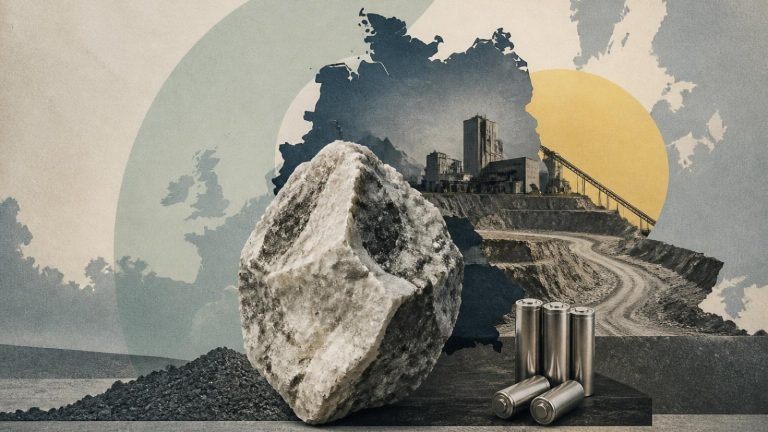
    The European Union is testing whether grants, guarantees and equity stakes can succeed where markets have failed — rewarding critical mineral producers for meeting environmental and social standards rather than simply undercutting them on price.

    As demand for cobalt, copper, lithium and nickel accelerates, the bloc’s policymakers are wrestling with a familiar tension: how to scale supply quickly without repeating the environmental and social failures that have dogged mining elsewhere. The underlying problem, according to a recent analysis by Isabel Munilla, Luke Balleny and Ke Wang published on the World Resources Institute platform, is that markets have not reliably rewarded stronger performance. Lower-cost, lower-standard supply has remained competitive even as certification schemes such as the Initiative for Responsible Mining Assurance and the Copper Mark have proliferated. Europe’s answer is to put public money behind the gap.

    The CRMA as the organising framework

    The EU Critical Raw Materials Act has become the central mechanism through which Brussels is trying to align finance with responsible production. Projects seeking “strategic project” status under the CRMA — and the financing and permitting benefits that come with it — must demonstrate sustainable implementation, including environmental impact minimisation, respect for human rights and indigenous and labour rights, and transparent business practices that guard against corruption. The European Commission has not yet mandated adherence to a specific certification scheme, but plans to open a recognition process in 2027, which would give the framework more teeth.

    Strategic project status also acts as a funnel into EU and national financing programmes, and the European Investment Bank has moved to back that pipeline directly. In March 2025 the EIB adopted a Critical Raw Materials Strategic Initiative targeting €2 billion ($2.3 billion) in financing for critical raw material investments, with projects assessed against an 11-point Environmental and Social Sustainability Framework covering environmental, social, climate, community and health criteria. Mining projects must additionally comply with EU environmental directives and member-state law.

    A parallel equity channel has opened through the EU and the European Bank for Reconstruction and Development, which launched a joint facility in July 2024 aiming to mobilise €100 million ($115.5 million) for equity investments in critical mineral exploration. Projects financed through it must meet the EBRD’s Environmental and Social Policy 2024, built around ten environmental and social requirements.

    Blended finance and the Lionheart test case

    Perhaps the clearest illustration of how Brussels intends these tools to work in practice is Vulcan Energy Resources’ €2 billion Lionheart project in Germany — billed as Europe’s first commercial integrated lithium and renewable energy project, and expected to supply around 12 per cent of the continent’s projected lithium hydroxide demand by 2030. Lionheart draws on geothermal brines to build an integrated, battery-grade lithium supply chain, and was designated an EU Strategic Project under the CRMA.

    Its first phase was financed through a blended structure: the EIB provided €250 million ($287.8 million) in debt, alongside twelve other lenders including five export credit agencies and seven commercial banks. The model reflects the logic set out in the WRI analysis — that InvestEU-style structures, which combine EU budget guarantees with EIB and national promotional bank financing, allow Brussels to absorb the riskiest tranche of capital and crowd in private lenders who would otherwise avoid early-stage exploration or unproven extraction technologies. Projects backed through InvestEU must clear environmental, social and governance screening aligned with the EU Taxonomy and the EIB’s own standards.

    Why Europe’s approach differs from elsewhere

    The report’s broader argument is that no single financial instrument fits every mineral market, and Europe’s own toolkit reflects that. For copper and lithium, where production is spread across jurisdictions with comparatively strong governance, the authors suggest conditional financing tied to existing certification systems can be applied fairly directly — which is broadly the CRMA’s approach. That contrasts with more concentrated, weaker-governance markets such as nickel, dominated by Indonesia, where the authors argue financial levers need to be paired with diplomatic and trade engagement rather than deployed alone — a reminder that Europe’s toolkit, built for its own regulatory environment, may not transfer easily to the jurisdictions that actually supply many of the minerals it needs.

    The tension between tightening and oversupplied markets also matters for how Brussels calibrates its tools. Lithium demand is currently outpacing supply, which the analysis suggests argues for ensuring new entrants — like Lionheart — build in strong ESG performance from the outset, tying access to concessional finance to compliance with recognised standards. Nickel, by contrast, is described as already oversupplied but often falling short on environmental and social performance, suggesting European finance directed there should prioritise retrofitting and emissions upgrades over expanding output.

    An unproven bet

    Brussels’s wager is that public money can shift market norms beyond the individual projects it touches — that conditioning access to grants, guarantees and equity on verifiable performance will eventually make responsible production the commercial default rather than a cost handicap. The clearest precedent for that kind of spillover comes not from Europe but from the United States: the now-expired Section 30D clean vehicle tax credit, which required automakers to prove mineral provenance and comply with restrictions on Foreign Entities of Concern, is credited with pushing traceability and chain-of-custody systems into permanent use across supply chains, even after the credit itself lapsed.

    Whether the CRMA, the EIB’s sustainability framework and the EU-EBRD equity facility can produce a comparable, lasting shift remains untested. Most of the instruments are too recent to assess on outcomes, and the report’s authors caution that public finance works only in combination with other levers — trade agreements, procurement mandates, price support — rather than as a standalone fix. For Europe, which is simultaneously trying to secure supply, cut dependency on China and hold itself to higher ESG standards than most of its competitors, the coming years of CRMA implementation will be the first real test of whether that combination adds up.


  • Neo Performance Materials Finalises Transfer of Sarfartoq Interest to Greenland Mines

    Neo Performance Materials Finalises Transfer of Sarfartoq Interest to Greenland Mines

    Neo Performance Materials Inc. has successfully completed the transfer of its interest in the Sarfartoq Project to Greenland Mines Ltd., following the approval from the Government of Greenland. The transaction, valued at US$35 million, includes US$20 million in cash and US$15 million in shares of Greenland Mines. Neo retains a significant equity stake and offtake rights for up to 60% of the ore or mineral concentrate produced from the Sarfartoq Carbonatite Complex, located in Southwest Greenland.

    The merger, involving Neo’s wholly-owned subsidiary Neo North Star Holdings LLC and other shareholders of NNSR Holdings Inc., allows Greenland Mines to advance its leadership and investment in the Sarfartoq Project. Rahim Suleman, President and CEO of Neo, expressed confidence in the project’s future, highlighting Neo’s commitment as both a shareholder and an offtake partner. This strategic move aligns with Neo’s broader midstream and downstream growth strategy, ensuring that capital is effectively allocated to generate maximum value for customers and shareholders.

    Neo Performance Materials is known for manufacturing advanced industrial materials that are essential for various technologies, particularly those aimed at enhancing efficiency and sustainability. The company’s product portfolio includes magnetic powders, rare earth magnets, specialty chemicals, and alloys, which are critical for the performance of many everyday products and emerging technologies. With operations spanning multiple countries, including Canada, Estonia, China, Germany, Thailand, and the UK, Neo is well-positioned to contribute to the global transition towards net-zero technologies.

    This transaction marks a significant step for both Neo and Greenland Mines, as they look to leverage the potential of the Sarfartoq Project, which is expected to play a crucial role in the supply of critical minerals. The completion of this deal not only strengthens Neo’s position in the mining sector but also underscores the growing importance of sustainable practices in mineral extraction and processing. As the industry evolves, partnerships like this will be vital in meeting the increasing demand for rare earth elements and other critical materials necessary for modern technologies.


  • Tungsten Price Surge Highlights Supply Crisis and Future Demand Challenges

    Tungsten Price Surge Highlights Supply Crisis and Future Demand Challenges

    The tungsten market is experiencing a significant price surge, with prices increasing by 310% from January to July 2026, driven by Chinese export controls and rising military demand. According to a recent report from S&P Global, global first-use tungsten demand is projected to rise from approximately 162,000 tonnes of WO₃ in 2025 to 180,000 tonnes by 2030 and 202,000 tonnes by 2035. China remains the dominant player in the tungsten market, having produced 67,000 tonnes of the total 85,000 tonnes mined globally in 2025 and controlling about 85% of APT refining capacity.

    Despite the announcement of 11 new projects that could add about 20,000 tonnes of annual mine capacity outside China by 2030, S&P Global estimates a primary mine supply gap of 16,000 tonnes ex-China by 2030. This gap is concerning, especially as the price of tungsten APT has surged from approximately US$83/kg WO₃ in January 2026 to US$340/kg in July 2026. While the price increase has surpassed the theoretical investment hurdle for new supply, the real challenge lies in the development bottlenecks related to financing, permitting, and construction.

    The report highlights several key projects that could potentially deliver new tungsten supply, including the Sangdong project in South Korea, Hemerdon in the UK, and Northern Katpar in Kazakhstan. However, the timeline for these projects remains uncertain, and their success is contingent upon various factors, including financing and regulatory approvals.

    Tungsten is classified as a critical mineral due to its unique properties, which make it essential for various applications, including defence, industrial tools, and technology. The rising prices reflect a complex interplay of supply chain issues, geopolitical tensions, and strategic stockpiling, particularly in the context of US-China relations. As the US prepares to impose significant restrictions on tungsten imports from certain countries in 2027, the market is likely to face further challenges in meeting demand.

    While the current price levels may incentivise new tungsten supply, the industry faces significant hurdles in terms of project financing and development timelines. The tungsten market is at a critical juncture, with supply constraints likely to persist unless substantial investments and regulatory support are provided to facilitate new production.


  • IntelliSense.io Secures Major Investment from Scottish Equity Partnersto Enhance AI Solutions in Mining and Critical Minerals

    IntelliSense.io Secures Major Investment from Scottish Equity Partnersto Enhance AI Solutions in Mining and Critical Minerals

    A UK based IntelliSense.io, a leader in Industrial Decision Intelligence for the mining and minerals processing sector, has announced a significant investment from SEP, a prominent enterprise technology investor, alongside strategic contributions from Mitsubishi Corporation and Hitachi Construction Machinery. This investment is set to accelerate product development, expand into new markets, and enhance go-to-market operations, positioning IntelliSense.io to further its impact across the global mining landscape.

    The company’s AI-native platform is designed to help mining operators and asset owners identify and automate optimisation opportunities that have traditionally been challenging to capture. By integrating real-world physical process constraints with site-specific data, the platform enables real-time decision-making through autonomous execution agents across critical operational processes, including material tracking, stockpile management, and various stages of mineral processing. In fully operational deployments, IntelliSense.io has reported impressive outcomes, including a 5% increase in throughput and an 8% reduction in reagent consumption, even in operations already recognised for their optimisation.

    IntelliSense.io’s technology is currently deployed across more than 24 projects at Tier 1 mining companies in eight countries and across multiple commodities. The recent investment has also led to the formation of a Strategic Advisory Board, which includes mining veterans such as Mark Cutifani, former CEO of Anglo American, and Nev Power, former CEO of Fortescue Metals Group. Their extensive experience is expected to guide the company in delivering AI-enabled decision systems that meet the rigorous demands of industrial-scale operations.

    As the demand for critical minerals rises amid geopolitical shifts, the need for operational intelligence in mining has never been more pressing. IntelliSense.io is strategically positioned to support governments and producers in achieving AI sovereignty and ensuring critical minerals security. The company’s proprietary architecture, known as Owned Inference, differentiates it from competitors by focusing on domain-specific models that leverage the underlying science of industrial processes rather than relying solely on statistical patterns.

    The investment from SEP, led by Keith Davidson and Daniel Muranda, aligns with the firm’s strategy of partnering with innovative technology founders to address complex challenges faced by global enterprises. With a strong foundation and a commitment to international expansion, IntelliSense.io is poised to enhance its role as a trusted partner in the mining sector, driving sustainable practices and operational efficiencies in an increasingly competitive market.


  • Mkango Resources Completes Acquisition of Remloy Rare Earth Magnet Recycling Business

    Mkango Resources Completes Acquisition of Remloy Rare Earth Magnet Recycling Business

    Mkango Resources Ltd. has successfully finalised its acquisition of the Remloy rare earth magnet recycling business from Heraeus Amloy Technologies GmbH for €8 million (approximately US$9.3 million). This transaction, which was first announced on 20 May 2026, includes an initial payment of €5 million (around US$5.8 million) upon closing, with the remaining €3 million (approximately US$3.5 million) due on 28 August 2028, marking the second anniversary of the deal’s completion.

    Remloy operates a recycling facility in Bitterfeld, Germany, which employs a melting process to recycle end-of-life rare earth magnets. This process produces neodymium-iron-boron (NdFeB) alloy powders, catering to the bonded and hot-deformed magnet markets. The Remloy recycling method complements the short loop recycling process of HyProMag, which focuses on producing sintered magnets, and Mkango Rare Earths UK’s long loop recycling process aimed at generating mixed rare earth carbonates and oxides. The facility aims for a production capacity of at least 500 tonnes of NdFeB alloy powder annually.

    The acquisition comes with several advantages, including a fully commissioned production facility bolstered by substantial investments in equipment and feedstock. At the time of completion, Remloy had a significant stockpile of approximately 345 tonnes of end-of-life rare earth magnets and alloys, which will provide essential feedstock for both Remloy and HyProMag, supporting their growth strategies and creating future trading opportunities.

    Mkango’s CEO, William Dawes, expressed optimism about the acquisition, highlighting the potential to enhance the rare earth supply chain and recycling ecosystem in Germany and surrounding regions. He noted that Mkango is now strategically positioned across the entire rare earth supply chain in Europe and North America, with operations spanning recycling, magnet and alloy manufacturing in the UK, Germany, and the USA, as well as rare earth separation in Poland and mining activities in Malawi.

    David Bender, the newly appointed Managing Director of Remloy, emphasised the company’s readiness to scale up production and recycling capacities for rare-earth magnets. He believes that the integration into Mkango will significantly bolster supply chain resilience and security of supply in Europe, allowing Remloy to better serve its customers through enhanced synergies within the Mkango Group.

    Overall, this acquisition marks a significant step for Mkango Resources as it aims to solidify its position in the rare earth sector, particularly in the context of increasing demand for sustainable recycling solutions and the growing importance of rare earth materials in various industries.


  • Uzbekistan’s Technological Metals Complex: A Strategic Vision for Critical Raw Materials

    Uzbekistan’s Technological Metals Complex: A Strategic Vision for Critical Raw Materials

    In a recent presentation, Khikmatullaev introduced the Uzbekistan Technological Metals Complex (TMK), outlining a state-backed strategy aimed at unlocking the country’s potential in critical raw materials. He emphasised Uzbekistan’s advantageous geographic position, providing access to major global markets including the EU, the United States, and Asia. The country has experienced consistent economic growth of approximately 5–7% annually, driven by structural reforms that liberalise the economy and enhance the investment climate, making it an attractive destination for foreign capital. The mining sector plays a crucial role, contributing about 24% to the country’s industrial output, indicative of a robust natural resource base and significant industrial potential.

    Khikmatullaev highlighted the immense mineral resource base of Uzbekistan, estimated at around $3 trillion under the C2 category, supported by a national register of over 2,500 distinct deposits. This positions Uzbekistan among the top global holders of key reserves, including being the third-largest globally for one resource category and eighth for copper reserves. Notably, only about a third of the country’s territory has been geologically explored, suggesting substantial untapped discovery potential. The country also boasts significant reserves of uranium, lithium, tungsten, and molybdenum, reinforcing its strategic importance as a supplier of critical raw materials.

    The presentation detailed TMK’s institutional history and mandate, tracing its roots back to 1956 with a legacy in molybdenum production. Established as a modern corporate entity in 2024, TMK aims to integrate exploration and downstream processing to produce higher value-added products. The company’s strategic objective is to become a trusted global leader in the secure and responsible supply of critical raw materials, aligning with the standards demanded by Western buyers and financiers.

    Khikmatullaev elaborated on TMK’s resource bases and active projects, particularly focusing on tungsten, where Uzbekistan’s resource base includes 14 deposits with proven reserves of approximately 188,000 tons. Ongoing exploration is expected to increase total tungsten reserves significantly by 2030. TMK operates a fully integrated supply chain, encompassing geological exploration, refining, and processing, rather than merely functioning as an upstream extraction company.

    Looking ahead, TMK plans to implement over 70 distinct investment projects between 2026 and 2030, with an estimated investment of $1.6 to $2 billion, strongly supported by the Uzbek government. A critical aspect of this strategy is the development of a critical raw materials hub connecting mining projects to processing centres in Tashkent and Samarkand, aimed at transforming raw ore into high-purity metals. The government has announced incentives for investors who establish full-cycle operations, including a 10-year tax refund and additional benefits for projects located in special economic zones.

    Several flagship projects were highlighted, including a $151 million hydrometallurgical plant in the Samarkand region for processing tungsten concentrate, and plans for a molybdenum cluster with a $25 million investment. Other significant projects include the preparation of the Muskon copper deposit, the Nurkum lithium deposit, and the Tosin graphite deposit, with investments planned in the hundreds of millions. Collectively, these initiatives position TMK as a rapidly scaling industrial operator with a defined project pipeline, government-aligned incentives, and specific production targets across multiple critical minerals, establishing Uzbekistan as a leading opportunity in the global mining landscape.


  • EIT RawMaterials Proposes Strategic Model for European Critical Raw Materials Centre

    EIT RawMaterials Proposes Strategic Model for European Critical Raw Materials Centre

    The European Commission’s recent decision to establish a European Critical Raw Materials (CRM) Centre marks a significant step towards enhancing Europe’s raw materials policy framework and transforming it into industrial capability. EIT RawMaterials has expressed strong support for this initiative and is poised to take a leading operational role in its implementation, working under the strategic authority of the European Commission and Member States.

    In a newly published position paper, EIT RawMaterials outlines its vision for the CRM Centre, detailing how it can assist in translating Europe’s raw materials strategy into tangible industrial outcomes. The paper proposes a practical operating and delivery model for the CRM Centre, positioning EIT RawMaterials as a strategic partner and market-facing operational arm.

    Europe has already laid much of the necessary policy groundwork, with initiatives such as the Raw Materials Mechanism, CRMA Strategic Projects, RESourceEU, and the G7 Critical Minerals Action Plan amplifying the urgency for coordinated implementation. EIT RawMaterials emphasises that the CRM Centre should not merely add another layer of policy or data but should instead connect strategic intelligence with markets, projects, and finance. This connection is essential for executing European priorities into concrete industrial actions.

    The proposed model is structured around four interconnected pillars: strategic intelligence, market formation, strategic value-chain delivery, and stage-gated finance and de-risking. Strategic intelligence will focus on combining market, project, technology, and geopolitical insights to identify vulnerabilities and set action priorities. Market formation aims to qualify supply and demand, aggregate buyer requirements, and develop independent price references to encourage investment. Strategic value-chain delivery seeks to address the ‘missing middle’ in Europe’s processing and refining capabilities, while stage-gated finance will align project stages with appropriate funding mechanisms.

    Additionally, strategic stockpiling and preparedness are highlighted as crucial components that would enhance Europe’s resilience against disruptions and foster more robust supply chains in the long term. EIT RawMaterials already possesses a solid foundation for delivery, with its Metal & Mineral Platform M2i integrating over 2.5 million verified data points for informed decision-making. The investment pipeline managed by EIT RawMaterials exceeds €25 billion, and the organisation has successfully deployed more than €700 million across over 800 projects and startups, mobilising an additional €8.3 billion in investment.

    With these existing capabilities, Europe is not starting from scratch in building a new delivery ecosystem. EIT RawMaterials is prepared to facilitate a swift transition from strategy to implementation for the CRM Centre, should it receive the mandate from the European Commission and Member States.


  • UK Export Finance’s Role in Supporting Critical Minerals Projects in Central Asia and Eastern Europe

    UK Export Finance’s Role in Supporting Critical Minerals Projects in Central Asia and Eastern Europe

    In a recent presentation, Alp from UK Export Finance (UKEF) elucidated the agency’s operations and its pivotal role in financing critical minerals projects across Turkey, Central Asia, and Eastern Europe. UKEF, established over a century ago, serves as the UK government’s official export credit agency, aiming to bolster UK companies’ export growth while also extending its support to non-UK sellers supplying UK buyers. This dual approach is particularly significant in the context of critical minerals, where funding is essential for developing project pipelines and scaling investments.

    Alp highlighted UKEF’s impressive financial capacity, noting that in the last financial year, the agency provided £14.5 billion in support for export contracts, which generated over 70,000 jobs in the UK and contributed to GDP growth. UKEF’s guarantees can cover up to 85% of a contract’s value, enabling companies to secure financing with tenors of up to 22 years, significantly more favourable than standard commercial loans. Although UKEF’s presence in Central Asia has been limited, its overall lending capacity for the region has reached £40 billion, a substantial resource for the burgeoning critical minerals sector.

    The agency’s support is designed to foster economic development in host countries, with past projects including railways, hospital development, and mining equipment. Alp’s role encompasses a wide geographical area, from Mongolia to Moldova, ensuring that transactions across this region are routed through her team. UKEF can collaborate with sovereign counterparts or directly with the private sector, assessing the bankability of projects and offering tailored financing solutions.

    Alp explained how UKEF-backed guarantees alter borrowing economics, allowing lenders to price transactions based on the UK government’s credit rating rather than the borrower’s financial strength. This leads to more competitive interest rates and longer repayment terms. The mechanics of a UKEF-guaranteed transaction involve the agency issuing guarantees to approved lenders, who then extend these guarantees to borrowers, facilitating a smoother financing process.

    Focusing on critical minerals, UKEF maintains a list of minerals it supports, with a key requirement being the existence of an offtake agreement with a UK company. This policy aims to bolster the use of critical minerals in UK manufacturing destined for export. Notably, funding accessed through UKEF does not have to be strictly tied to the export contract; it can also assist with broader working capital needs. The agency’s financing can have a multiplier effect, allowing companies to access significantly more funding than the value of their export contracts.

    Alp also shared case studies showcasing UKEF’s diverse support across various sectors, while clarifying that the agency does not finance fossil fuel-related transactions. Furthermore, UKEF is increasingly collaborating with other export credit agencies and multilateral development banks to co-finance larger regional projects and is open to supporting cross-border partnerships, provided they meet a minimum UK content threshold. The presentation concluded with an invitation for further discussions on how specific projects could be structured to access UKEF support, emphasising the agency’s commitment to fostering ongoing engagement with potential partners in the region.


  • IntelliSense.io Secures Major Investment to Enhance AI Solutions for Mining Operations

    IntelliSense.io Secures Major Investment to Enhance AI Solutions for Mining Operations

    IntelliSense.io, a leader in Industrial Decision Intelligence for the mining sector, has announced a significant investment led by SEP, with additional contributions from Mitsubishi Corporation and Hitachi Construction Machinery. This funding aims to accelerate product development, expand into new markets, and enhance go-to-market strategies. The investment comes at a pivotal time as the mining industry increasingly seeks advanced AI solutions to optimise operations and improve efficiency.

    The AI-native platform developed by IntelliSense.io is designed to help mining operators and asset owners identify and automate optimisation opportunities that have historically been challenging to capture. By integrating real-world physical process constraints with site-specific data, the platform enables real-time decision-making through autonomous execution agents across critical operational processes, including material tracking, stockpile management, and metal recovery. Notably, deployments of this technology have reported impressive outcomes, such as a 5% increase in throughput and an 8% reduction in reagent consumption.

    The company’s technology is currently operational across more than 24 deployments at Tier 1 mining companies in eight countries, covering a diverse range of commodities. To further bolster its strategic direction, IntelliSense.io has formed a Strategic Advisory Board that includes prominent figures from the mining industry, such as Mark Cutifani, former CEO of Anglo American, and Nev Power, former CEO of Fortescue Metals Group. Their extensive experience is expected to provide invaluable insights into the requirements for AI-enabled decision systems at an industrial scale.

    As demand for critical minerals rises, driven by geopolitical factors and the need for sustainable practices, IntelliSense.io positions itself as a key player in the sector. The company’s proprietary architecture, known as Owned Inference, differentiates it from competitors by focusing on domain-specific models that are rooted in the underlying science of industrial processes rather than merely statistical patterns. This approach ensures that all data and learnings remain within the customer’s infrastructure, enhancing data sovereignty and operational intelligence.

    The investment from SEP, which has a strong track record in supporting enterprise technology firms, aligns with the growing recognition of mining as a strategic infrastructure sector. As global supply chains for essential minerals like copper and lithium undergo transformation, IntelliSense.io’s platform is set to play a crucial role in helping governments and producers achieve both AI sovereignty and critical minerals security. The firm’s commitment to delivering measurable outcomes through its AI solutions positions it well for future growth in the mining industry.


  • Evaluating ‘Mining Is Dead. Long Live Geopolitical Mining’ Against Real-World Mining Narratives

    Evaluating ‘Mining Is Dead. Long Live Geopolitical Mining’ Against Real-World Mining Narratives

    Eduardo (Ed) Zamanillo and Marta Rivera Muñoz’s book, “Mining Is Dead. Long Live Geopolitical Mining,” presents a compelling narrative about the evolving landscape of the mining industry. The author of this review, who has been running the MINEX Forums across Europe and Central Asia for over two decades, took the time to critically assess the book’s arguments against the backdrop of live discussions at various mining events. This approach allowed for a thorough examination of the book’s seven strategic lessons, particularly in the context of recent forums held in Lisbon, Astana, and Ankara.

    The first lesson from the book posits that speed is a form of geopolitical power, suggesting that countries that streamline permitting and financing processes are more likely to win mining projects. This was echoed at MINEX Europe 2025 in Lisbon, where the European Commission highlighted its commitment to faster permitting for strategic projects under the Critical Raw Materials Act. However, the review notes that while the intention is clear, the actual outcomes have yet to materialise, indicating a persistent speed problem within the EU.

    The second lesson emphasises that narrative builds legitimacy in mining. This was reinforced by discussions at the forums, where industry experts argued that mining must be framed within broader narratives of energy transition and sustainability. The review cites a media analysis from MINEX Kazakhstan 2026, which revealed that countries like Kazakhstan struggle to assert their narratives in the global media landscape, often overshadowed by narratives surrounding Chinese dominance in the sector.

    The review also highlights the importance of industrialisation in extraction, as illustrated by initiatives in Kazakhstan, Uzbekistan, and Turkey, which are all moving towards processing rather than merely extracting raw materials. This shift is seen as essential for reducing strategic vulnerability in these nations.

    Furthermore, the review critiques the book’s framing of alliances as a means to achieve strategic resilience, noting that investor appetite for early-stage exploration is dwindling. The forums revealed that while there is a need for alliances, the speed and risk appetite for frontier projects remain significant hurdles.

    The review concludes that while the book provides a solid framework for understanding the current mining landscape, it misses some nuances, particularly regarding Turkey’s emerging role as a processing hub. The author suggests that the narrative around mining is not just crafted for external audiences but is actively negotiated in forums, reflecting the dynamic and evolving nature of the industry.

    As the mining sector continues to transform, the upcoming MINEX Europe 2026 in Ireland presents an opportunity to further explore these themes, particularly in the context of European mining history and the challenges of establishing legitimacy in a mature democracy. The review ultimately asserts that mining is not dead; rather, it is undergoing significant transformation, necessitating ongoing dialogue and adaptation within the industry.