Tag: sustainability

  • Erdenet Mining Corp Embraces Digital Transformation for Sustainable Operations

    Erdenet Mining Corp Embraces Digital Transformation for Sustainable Operations

    Erdenet Mining Corp, located on the outskirts of Mongolia’s second-largest city, Erdenet, is undertaking a significant digital transformation to enhance its operations at one of the country’s largest porphyry-copper deposits. With an annual processing capacity of 32 million tons of ore, producing 130,000 tons of copper concentrate and over 10,000 tons of molybdenum concentrate, the company is focused on optimising its operations through innovative technology. The chief operations officer, Batmunkh, emphasises the necessity for innovation within the mining sector, stating that the company has established an Innovation Center aimed at modernising its practices to match global standards.

    Historically reliant on paper-based data, Erdenet faced challenges in resource estimation and decision-making due to the cumbersome nature of managing vast amounts of information. The introduction of Seequent software in 2018 marked a turning point, enabling the exploration department to model geology using Leapfrog Geo and process geophysical data with Oasis montaj. This transition to digital has significantly improved efficiency, allowing for near real-time access to insights and models via Seequent Central, a cloud-based data management solution.

    The digitisation of historical data has streamlined operations, reducing the time required for 3D design and resource estimation from months to mere hours. This advancement has fostered collaboration among the 32 departments within Erdenet, breaking down silos and ensuring that all teams can work together effectively. Senior geologist Amarzaya notes that the quality of work has improved, with manual errors reduced and tasks completed in a fraction of the time previously required.

    As a government-run entity, Erdenet is committed to providing accurate information to stakeholders, including investors and regulatory authorities. The integration of advanced mining software has enhanced the company’s ability to deliver precise data, facilitating better decision-making processes. Looking ahead, Erdenet is not only focused on operational efficiency but is also preparing for future challenges, including mine closure and environmental remediation. The Innovation Center is exploring advanced solutions for tailings and dam modelling, ensuring that Erdenet is well-equipped for sustainable mining practices in the years to come. With a projected operational lifespan of another 60 years, the future of Erdenet Mining Corp appears promising, driven by its commitment to innovation and sustainability.


  • UK Launches £50 Million Critical Minerals Accelerator Programme

    UK Launches £50 Million Critical Minerals Accelerator Programme

    The UK government has unveiled the Critical Minerals Accelerator, a £50 million initiative aimed at bolstering domestic production, processing, and recycling of critical minerals as part of its Vision 2035 strategy. On 1 September, the Department for Business and Trade (DBT) hosted an information session detailing the programme’s funding structure, eligibility criteria, and application process, chaired by Grace Humphries, Head of Critical Minerals (Strategy and Domestic).

    The programme allocates £25 million in competitive grants across two funding streams. Projects classified as Pilot to Pre-Commercial, which are at Technology Readiness Level (TRL) 6 and above, can receive between £1 million and £3 million over an 18 to 36-month period. Meanwhile, Demonstrator to Commercialisation projects, which are further along at TRL 8 and above, can secure grants ranging from £150,000 to £1 million over a shorter timeframe of 6 to 18 months. Importantly, applicants must be UK-registered companies, and even if extraction occurs overseas, the funded activities must take place within the UK.

    The application process is designed to be accessible, with match funding requirements varying based on company size—ranging from 50% for small firms to 70% for larger organisations. Notably, applicants are not required to have full funding secured at the application stage, only sufficient evidence to sustain project delivery for the first six months.

    During the session, Wilkie Briggs, Policy Advisor on the Critical Minerals Team, and Alice Kaiser, Scheme Delivery Manager, addressed various questions from potential applicants, clarifying aspects such as TRL definitions, project structuring, and funding intensity. The application window closes on 30 September 2026, with funding decisions expected by December and grant agreements signed by January 2027.

    The programme is framed around three strategic priorities: driving economic growth, enhancing economic security, and fostering domestic resilience. This aligns with broader UK and European goals concerning critical raw materials. The Accelerator particularly encourages projects that build on existing UK value chains and demonstrate commercial viability through partnerships and collaborations.

    The Q&A session revealed ongoing uncertainties among applicants regarding TRL thresholds, consortium structures, and grant funding limits. The DBT has indicated a willingness to assist applicants in navigating these complexities, emphasising the importance of aligning projects with the programme’s objectives.

    As the UK seeks to establish a robust critical minerals sector, the Critical Minerals Accelerator represents a significant step towards achieving self-sufficiency and sustainability in this vital industry. The conversation surrounding these initiatives will continue at the upcoming MINEX Europe Forum in Ireland, where industry stakeholders will discuss the intersection of UK and European critical minerals policies and the necessary investment frameworks to support them.


  • Lithium Ark Secures European Patent for Innovative Lithium Refining Process

    Lithium Ark Secures European Patent for Innovative Lithium Refining Process

    Lithium Ark, a pioneering technology company in the lithium refining sector, has successfully obtained a European patent for its innovative “Ark Loop” process. This proprietary technology is designed to produce battery-grade lithium hydroxide directly from lithium chloride, whether in solution or crystal form. The significance of this patent lies in its ability to simplify the lithium value chain by eliminating the need to produce, transport, and reconvert lithium carbonate, while still allowing for the production of battery-grade lithium carbonate as required by customers.

    The Ark Loop process not only streamlines operations but also enhances sustainability. By employing a closed-loop system that recycles potassium and eliminates the need for external reagents, the process contributes to a more self-sustaining refining pathway. According to Peter Ehren, co-founder and CTO of Lithium Ark, the re-engineered refining process results in up to 89% lower carbon emissions, a 75% reduction in water consumption, and a 49% decrease in energy use. Additionally, it can cut operational and capital expenditure costs by up to 50%, facilitating faster and more scalable deployment.

    Lithium Ark has also secured patents for its technology in the United States and Chile, making the European patent a crucial milestone as the company progresses towards commercial deployment. The first commercial facility is set to be developed in Antwerp, Belgium, where the Ark Loop technology will be demonstrated at an industrial scale, paving the way for future global expansion.

    The naming of the technology as Ark Loop not only reflects its connection to Lithium Ark but also highlights the circular nature of its underlying chemistry. The removal of soda ash from the refining process is a key factor in achieving significant emissions reductions, further solidifying the importance of this innovation in the lithium refining landscape. As Lithium Ark moves closer to commercial deployment, the Ark Loop process is poised to deliver cleaner, lower-cost, and more efficient lithium refining solutions on a global scale.


  • Turkey’s Strategic Role in the Global Critical Minerals Landscape

    Turkey’s Strategic Role in the Global Critical Minerals Landscape

    In the August 2026 issue of Ekonomi-Analiz, a new article titled “The New World’s Oil: Critical Minerals and Turkey’s Strategic Position” by Selçuk Bostancı, Corporate Communications Coordinator at MAPEG  explores the evolving significance of critical minerals in the global economy and Turkey’s potential to emerge as a key player in this arena. The article argues that critical minerals, including lithium, cobalt, nickel, graphite, and rare earth elements, have transcended their traditional roles as mere inputs for the mining sector. Instead, they are now viewed as essential components of energy security, industrial capacity, and national defence, positioning them at the forefront of global competition akin to oil and natural gas.

    Why these minerals matter so much

    The reasoning given is straightforward: nearly every piece of modern technology — from smartphones and electric vehicles to wind turbines, defense systems, space technology, and data centers — depends on these raw materials. Being “critical” isn’t just about scarcity; it’s about how essential a mineral is to the economy, energy, defense, or advanced technology, and how disruptive it would be if supply were interrupted. Lithium, nickel, cobalt, and graphite are singled out for battery technology; rare earths for electric motors and high-performance magnets; and copper for everything from power grids to electric vehicles. The piece frames this as a value chain running from mining through refining, advanced materials, and finished products — arguing that while advanced technology is the visible face of the energy and tech transition, mining is its invisible foundation.

    A global race is underway

    Citing the International Energy Agency’s 2026 projections under its “Stated Policies” scenario, the article notes that demand for critical minerals is expected to nearly double by 2040. But the bigger issue, it argues, isn’t rising demand itself — it’s that production and especially processing capacity are concentrated in a small number of countries, turning critical minerals into a matter of supply security. This is pushing the US, China, and the EU, among others, to pursue new mining investment, processing facilities, recycling, and strategic stockpiles. The EU’s Critical Raw Materials Act, for instance, sets 2030 targets for extraction, processing, and recycling. The underlying point: future competition won’t just be between countries that hold mineral resources, but between those that can actually process those resources into high-value products.

    Turkey’s strategic standing

    Turkey’s geological diversity is presented as a real opportunity in this new landscape. A Critical and Strategic Minerals Report published by the Ministry of Energy and Natural Resources identifies 37 mineral types considered critical or strategic for the country.

    One standout example cited is the rare earth element site at Eskişehir-Beylikova. More than 125,000 meters of drilling there identified an estimated resource of around 694 million tons of rare earth material, and a pilot production facility is already running. Work is now underway to build out full industrial-scale capacity, including separation and processing. The article uses Beylikova to make a broader point: strategic value today isn’t just about owning a deposit — it depends equally on extracting, separating, and processing the ore into high-value products that industry can actually use. It notes that Turkey’s mineral assets — boron chief among them — along with its rare earth work and other critical minerals initiatives, show mining increasingly being tied together with technology and industry.

    Giving back to nature while extracting

    Growing demand for critical minerals comes with a responsibility, the article argues: sustainable mining. Today’s approach to mining isn’t just about extracting economic value from the ground — it also means restoring sites back to nature and the community once operations end.

    It points to concrete evidence of this in Turkey through MAPEG’s (General Directorate of Mining and Petroleum Affairs) nationwide project tracking rehabilitated mining sites and mining-related social responsibility work, known as TÜRMES. As of August 2026, the project has documented 205 rehabilitated mining sites across 35 provinces, covering roughly 13,252 hectares of restored land, with close to 23.9 million trees and plants replanted, and 185 mining-related social responsibility projects recorded. This data is made publicly available and transparent through a TÜRMES information map on MAPEG’s website, letting anyone see how sites across different regions of Turkey have been returned to nature after mining activity. The article presents these figures as proof that a mining model which “produces while also giving back to nature” is achievable with the right planning and rehabilitation practices.

    Turning underground value into future value

    The closing section argues that as electrification, defense technology, digitalization, and AI continue to advance, mineral raw materials will only grow more strategically important. Turkey, with its mineral diversity, mining experience, industrial base, and geostrategic location, is well positioned for this shift. But the article stresses that future value in mining won’t be measured by reserve size alone — it will come from combining resources with science and technology, converting them into high-value products, and doing so sustainably. It suggests this is exactly why the “new world’s oil” comparison for critical minerals keeps gaining resonance: what will ultimately determine future wealth isn’t simply what lies underground, but what we’re able to turn that underground value into — above ground, and with nature in mind.


  • Europe’s Battery Future: Closing the Gap on Raw Materials, Manufacturing and Innovation

    Europe’s Battery Future: Closing the Gap on Raw Materials, Manufacturing and Innovation

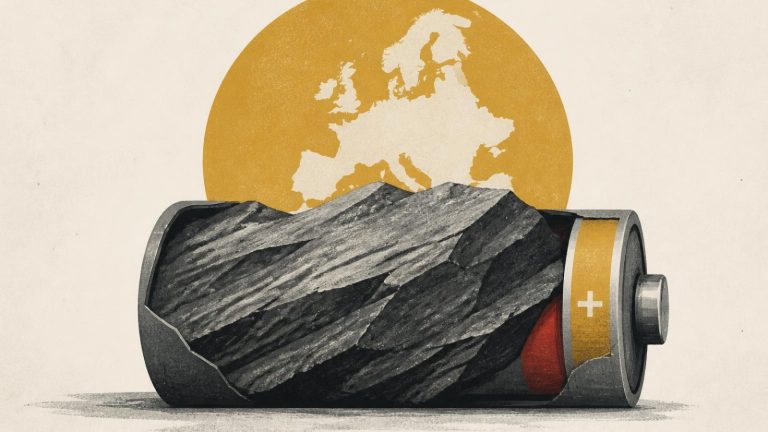
    Europe’s battery sector stands at a decisive juncture, caught between real opportunity and mounting exposure to external dependencies. The Battery R&I Blueprint sets out a roadmap for the continent to build genuine leadership in battery technology — a capability now central not just to automotive, but to energy systems, defence, and electronics alike. With demand accelerating on the back of transport electrification and renewable energy integration, Europe faces a hard truth: it remains heavily reliant on non-European supply chains and continues to lag Asian producers on cost, nowhere more acutely than at the raw materials stage.

    Michael Lippert, Chairman of the Batteries European Partnership Association (BEPA), frames unity — across research, industry and policymakers — as the precondition for progress, warning that fragmented effort will only deepen Europe’s disadvantage. The Blueprint organises the challenge around four interlinked pillars: scope, scale, speed and sustainability, each demanding a coordinated R&I response that spans the full value chain, from mining and refining through to end-use deployment.

    Raw materials and critical minerals sit at the sharpest edge of this challenge. China currently controls more than 90% of global refining capacity for many battery-critical materials, and the IEA estimates that a single month’s disruption to Chinese battery supply exports could wipe out roughly USD 17 billion in EV production globally — with European factories bearing the brunt. Yet this same segment is also where Europe’s opportunity is greatest: raw and advanced materials account for around half of the projected EUR 450 billion global battery value pool by 2030, and upstream margins (20–40% EBITDA) dwarf the thin 5–10% margins typical of cell manufacturing. Europe’s established chemicals and materials base gives it a genuine foundation to compete here, provided R&I investment follows.

    The report calls for deliberate diversification — of both chemistries and applications — to reduce Europe’s overreliance on automotive as its sole commercial anchor. Sodium-ion chemistry, for instance, is highlighted as a route to cobalt-free, lower-cost batteries that eases pressure on critical mineral demand. On the materials side, the Blueprint pushes for low-footprint lithium extraction, refining processes for next-generation raw materials, and flexible recycling capable of handling mixed and low-value feedstocks — alongside design-for-recycling principles that improve recovery rates at end of life. It also flags a specific policy obstacle: the current regulatory classification of black mass restricts its cross-border movement within Europe, hampering the recycling economy the sector needs.

    To carry this forward, the Blueprint proposes a dedicated Batteries Partnership under the next Multiannual Financial Framework (MFF), building on BATT4EU, to close gaps in both production capacity and technological readiness. It also identifies industrial-scale recycling and refining facilities — particularly for black mass processing and critical material recovery — as priority targets for the European Competitiveness Fund and Innovation Fund, given the scale of capital required and the strategic supply-chain sovereignty at stake. National consultations across 13 countries reinforce this: refining and battery-waste processing rank as “High” to “Very High” priorities in most surveyed markets, with Sweden, Denmark, Portugal and Finland placing particular emphasis on this segment.

    Beyond materials, the Blueprint underscores the need for Europe to build domestic manufacturing capacity to meet demand without deepening import reliance — while pursuing next-generation technologies in parallel with scaling today’s production. This dual sprint-and-marathon approach, the report argues, is what will let Europe close the competitiveness gap while building lasting technological independence.


  • Belgian Initiative Aims to Recover Critical Minerals from Zinc Production Residues

    Belgian Initiative Aims to Recover Critical Minerals from Zinc Production Residues

    A new research initiative in Belgium is set to explore the recovery of critical minerals (CRMs) from industrial residues, particularly zinc production waste. The project, known as VLAIO O&O, is a collaborative effort involving Meclex (ZMI), the SOLVOMET Research and Technology Centre at KU Leuven, and the metal processing company Nyrstar. This innovative approach aims to develop a hydrometallurgical flowsheet that can effectively extract valuable by-products from zinc leach residues.

    As Europe faces increasing pressure to reduce its reliance on imported critical minerals, this project highlights the importance of innovation in metallurgical processing and resource recovery. By focusing on the recovery of CRMs from existing industrial waste, the initiative not only seeks to bolster Europe’s supply of these essential materials but also promotes strategic autonomy in resource management. The project underscores the potential of utilising resources already available within Europe, thus contributing to a more sustainable and self-sufficient industrial landscape.

    The collaboration between academic institutions and industry players exemplifies a proactive approach to addressing the challenges posed by the global demand for critical minerals. With the ongoing transition towards greener technologies and renewable energy, the need for a reliable and local supply of CRMs has never been more crucial. This Belgian-led initiative is a significant step towards achieving that goal, showcasing how innovative research can lead to practical solutions in the mining and metallurgical sectors.

    As the project progresses, it will be interesting to see the outcomes of the research and how it may influence future policies and practices regarding resource recovery in Europe. The focus on hydrometallurgical processes could pave the way for similar initiatives across the continent, further enhancing Europe’s capabilities in critical mineral production and sustainability efforts.

  • Building Trust: The Key to Successful Mining Projects in Europe

    Building Trust: The Key to Successful Mining Projects in Europe

    In a recent interview with Aspermont’s Mining IQ, John Heasley, Chief Financial Officer of Anglo American, emphasised the critical role of trust in the successful development of mining projects in Europe. He highlighted that while the mining industry has made significant strides in improving safety, social, and environmental standards, many projects still face challenges due to a lack of public support. Heasley pointed out that the industry is often perceived negatively, particularly in regions where mining has not been a recent activity, such as Europe. In contrast, countries like Chile, where mining is deeply integrated into the economy, demonstrate higher levels of public trust and support for mining operations.

    Heasley noted that public attitudes towards mining can vary significantly, with communities that have direct interactions with mining operations generally expressing more support. He cited Anglo American’s successful operations in Chile, where the company has been recognised as one of the most attractive employers, as an example of how positive engagement can lead to improved perceptions of the industry. The Leadership Insights 2026 report, which features insights from 13 industry executives, reveals that half of mining professionals rate overall trust in the sector as low, highlighting the need for continued efforts to build and maintain trust.

    The report also discusses the economic implications of negative public perceptions, including delays in project approvals and challenges in securing community support. Heasley stressed that a positive reputation is essential for obtaining and sustaining a licence to operate, as demonstrated by the successful launch of the Quellaveco mine in Peru, which benefited from extensive community engagement.

    As the demand for critical minerals rises due to the energy transition, Heasley expressed hope that public awareness of the importance of mining will improve perceptions of the industry. However, he cautioned against compromising environmental and social standards in the rush to accelerate mining approvals, emphasising that maintaining high standards is crucial for rebuilding public trust. He concluded by reiterating the importance of demonstrating the advancements in modern mining practices, which are significantly different from those of the past, as a means of fostering trust and support for future projects in Europe and beyond.


  • EU’s Strategic Investment in Critical Raw Materials: A Pathway to Economic Security and Enlargement

    EU’s Strategic Investment in Critical Raw Materials: A Pathway to Economic Security and Enlargement

    The European Union (EU) is urged to link its economic security objectives with its enlargement strategy through strategic investments in critical raw materials (CRM) projects. This approach aims to achieve dual goals: enhancing the EU’s economic security while fostering development in enlargement partners. To ensure the success of these projects, public financing is deemed essential, alongside strict adherence to environmental, social, and governance (ESG) standards, as well as governance reforms in partner countries. While these initiatives may not eliminate the EU’s critical dependencies immediately, they are viewed as long-term investments crucial for the EU’s economic stability.

    The EU’s commitment to high standards is positioned as a means to maintain its credibility as a transformative actor in the region, countering narratives of neo-colonialism. The EUISS  study highlights the competitive landscape, noting that China has already established a significant presence in the Western Balkans’ mining sector, particularly through Zijin Mining’s control of major copper deposits in Serbia. Meanwhile, the US is expanding its mining interests in Ukraine, including the Dobra lithium project. The article warns that a short-sighted approach could lead to strategic failures for the EU.

    Moreover, the EU is encouraged to support projects that develop localized value chains, integrating mining, clean processing, advanced manufacturing, and recycling. This strategy aims to foster sustainable development in enlargement partners, moving beyond mere resource extraction to broader industrial development. The EU-Ukraine Strategic Partnership on Raw Materials, initiated in 2021, serves as a foundation for this approach, with an emphasis on localizing key stages of production to enhance value creation.

    Investing in local value chains is presented as a means to counter perceptions that the EU seeks to exploit partner societies for its own gain. By demonstrating that CRM partnerships can lead to sustainable development and shared economic security, the EU can strengthen its position in the region. The article also points out the importance of addressing processing monopolies held by external actors, which could leave Europe reliant on third parties despite increased extraction capacities.

    The EUISS  study concludes by reiterating that both economic security and enlargement are strategic objectives that must be approached with foresight. Given that new mines typically take over 16 years to reach production, the focus should be on long-term outcomes. Support for strategic CRM projects should be integrated into broader governance reform efforts, ensuring that the same standards of transparency and environmental protection that apply within the EU are upheld in partner countries. Only through this comprehensive approach can CRM partnerships bolster Europe’s economic security and the rationale for enlargement.


  • Savannah Resources Gains Local Support for Controversial Barroso Lithium Project in Portugal

    Savannah Resources Gains Local Support for Controversial Barroso Lithium Project in Portugal

    Savannah Resources has secured new backing from local landowners for its Barroso lithium project in northern Portugal, which is set to become Europe’s largest lithium mine. This development comes as the company seeks to navigate years of community opposition and legal challenges that have delayed the project. The Barroso project, with a capital expenditure of $417 million, has been designated as strategic by the EU, highlighting its importance in establishing a European lithium supply chain critical for the electric vehicle industry.

    The company announced three new benefit-sharing agreements with local communal land managers, known as baldios, which aim to ensure that the communities have a stake in the project and its benefits. CEO Emanuel Proença emphasised that these agreements are not just about land access but also about recognising the rights of local communities that have managed these lands for generations. Savannah is optimistic about receiving its final environmental licence in the third quarter of this year, with plans to make a final investment decision by the end of the year and commence production by 2028.

    Despite the backing from local landowners, the Barroso project has faced significant opposition from residents and environmental groups concerned about its potential impact on agriculture, water resources, and biodiversity in the region, which is recognised by the UN as a Globally Important Agricultural Heritage System. The project’s feasibility study, released in July, indicated that it could produce an average of 183,000 tonnes of spodumene concentrate annually, enough to supply batteries for approximately 500,000 electric vehicles.

    Savannah’s study also projected a robust after-tax net present value of $913 million and an internal rate of return of 43%, with a payback period of less than two years. The project is positioned competitively within the global hard-rock lithium cost curve, with average operating costs estimated at $473 per tonne of concentrate.

    To address environmental concerns, Savannah has proposed measures such as dry-stack tailings, a lined storage facility, and a water recycling system. The new agreements with local baldios include provisions for community participation in project oversight, local reinvestment of project benefits, and inflation-indexed rental payments. Additionally, a partnership with the regional baldios secretariat aims to support forest management and wildfire prevention in the area.

    Portugal has a history of lithium production for the ceramics industry, but the Barroso project represents a significant step towards developing a large-scale battery materials sector in the country. Earlier this year, the Portuguese government awarded Savannah a €110 million grant to support the advancement of the Barroso project, further underscoring the official backing for this initiative. The project has also seen a 40% increase in its mineral reserve estimates, reinforcing its economic viability as it aims to become western Europe’s first major lithium mine.


  • Europe Advances in Circular Advanced Materials with New Funding Initiatives

    Europe Advances in Circular Advanced Materials with New Funding Initiatives

    In a move to enhance its leadership in advanced materials, Europe has initiated several national calls for expressions of interest as part of the Important Projects of Common European Interest (IPCEI) on Circular Advanced Materials. This initiative, launched by multiple EU Member States, aims to foster innovation, sustainability, and circularity across strategic industrial value chains, thereby strengthening European industrial ecosystems. The announcement follows the 2024 EU Strategy on Advanced Materials for Industrial Leadership, which seeks to bolster the continent’s competitiveness and strategic autonomy in the global market.

    The calls for expressions of interest are designed to prepare for the future IPCEI, which will be submitted for notification to the European Commission. Currently, national calls are open in several countries, including Italy, Austria, Spain, and Poland Additionally, Belgium and Slovenia have also launched calls, signalling a broad commitment across the region to enhance capabilities in advanced materials.

    This initiative is expected to play a crucial role in the development of advanced materials that are not only innovative but also sustainable, aligning with the EU’s broader goals of environmental responsibility and economic resilience. By encouraging collaboration among nations and industries, the IPCEI aims to create a robust framework for advancing technology and materials that can meet the demands of a rapidly changing industrial landscape.

    As Europe continues to position itself at the forefront of advanced materials technology, these funding opportunities represent a pivotal step towards achieving a more sustainable and circular economy. Stakeholders in the mining and materials sectors are encouraged to engage with these initiatives to leverage potential funding and collaboration opportunities that can drive innovation and growth in their respective fields.