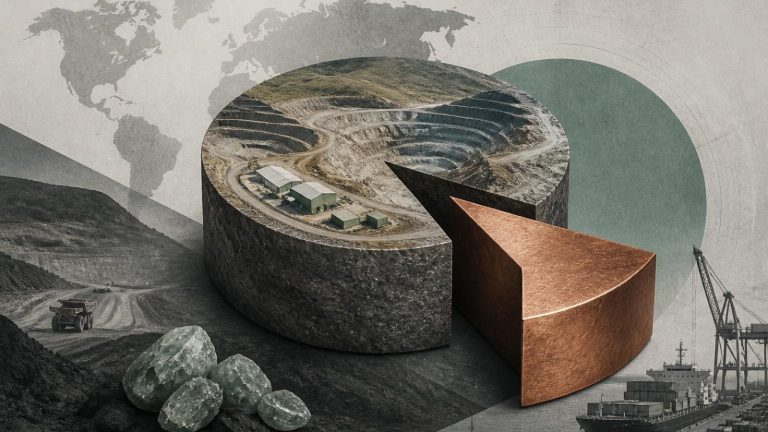
Europe’s security of supply for critical raw materials is deteriorating, according to a new International Energy Agency report, raising serious questions about the effectiveness of the European Union’s Critical Raw Materials Act launched two years ago. The continent remains heavily dependent on a small number of countries, particularly China, which dominates the market for cobalt, lithium, manganese, and raw material processing, while Indonesia leads in nickel production. Together, these nations accounted for more than three-quarters of global refining growth between 2023 and 2025.
The vulnerability became apparent when Chinese export restrictions on magnets forced some European car manufacturers to cut production last year, while the number of Chinese products requiring export licenses tripled. Compounding these challenges, global investments in critical minerals fell by 9 percent in 2025, further jeopardizing Europe’s raw materials security.
Peter Tom Jones, Director of the Institute for Sustainable Metals and Minerals at KU Leuven, argues the strategy is fundamentally flawed. He contends that Europe’s approach of dividing the raw materials chain into separate components is inadequate in a world where China actively restricts exports and expands its monopoly. Jones advocates for comprehensive European investment across the entire value chain—from mining and processing to refining and manufacturing batteries and electric vehicles—requiring billions in state-backed funding.
The bankruptcy of Swedish battery manufacturer Northvolt in 2025 has deterred private investment, underscoring the need for major government intervention. Jones also recommends implementing an export ban on metal and battery waste to keep high-quality materials within Europe for recycling rather than shipping them to China.
Andor Lips, strategic advisor on critical raw materials at TNO, suggests Europe should pursue resilience through diversification and partnership rather than complete independence. He recommends building relationships with countries like Australia and Canada, which produce critical materials like rare earth ores for wind turbine magnets. While acknowledging that new European mines and recycling infrastructure require time to develop, Lips believes the Critical Raw Materials Act represents progress, though Europe must absorb supply shocks in coming years before the strategy fully materializes.
Finnish export credit agency Finnvera has issued a nonbinding letter of interest regarding potential financing for equipment and services to be supplied to Avalon Advanced Materials’ proposed Lake Superior lithium processing facility in Thunder Bay, Ontario, Canada. The letter follows an application by Metso, a Finland-based provider of sustainable technologies for minerals processing, relating to an anticipated commercial contract valued at approximately €100 million. Finnvera confirmed sufficient Finnish interest to consider supporting the contract through an export credit financing structure. Subject to due diligence and credit approval, Finnvera may provide a buyer credit guarantee for an eligible arranging commercial bank, with its subsidiary Finnish Export Credit potentially acting as lender.
Avalon President and CEO Scott Monteith called the letter an important initial milestone in developing a comprehensive financing strategy for the facility, noting that Metso’s global recognition and potential Finnish export credit support provide a credible pathway to finance a significant equipment package while advancing a secure North American lithium supply chain. Under Finnvera’s framework, an export credit may finance up to 85% of eligible Finnish goods and services, along with certain local costs and capitalized interest. Avalon CFO Lorin Crenshaw emphasized that this development enhances the company’s ability to pursue an integrated financing structure combining export credit support with Canadian and US government programs, commercial project debt, strategic investment, and offtake-related financing. The company aims to minimize blended cost of capital by maximizing institutional and project-level financing while reducing reliance on parent-level equity. Avalon will work with Metso and Finnvera to define the eligible equipment package and financing process. A 2024 preliminary economic assessment outlines the use of Metso proprietary technologies including calcination, pressure leaching, conversion, purification through ion exchange, and crystallization to produce high-quality lithium hydroxide monohydrate. The plant is expected to produce approximately 30,000 tonnes per year of battery-grade LHM.
China is exploring the recovery of critical minerals from coal waste, with researchers highlighting fly ash and coal gangue as potential sources of strategic metals including germanium, gallium, lithium and aluminum.
According to a new report, China’s extensive coal mining and power generation infrastructure could be leveraged to recover valuable metals from by-products that have traditionally been treated as industrial waste.
“The coal refuse contains a variety of metal elements and could become an important source of critical metal supply,” said Dai Shifeng, a member of the Chinese Academy of Sciences and professor at the China University of Mining and Technology-Beijing.
Coal gangue refers to the rock separated from coal during mining, while fly ash is the fine mineral residue left after coal combustion. Although typically disposed of or used in construction materials such as cement, both materials can contain economically valuable concentrations of critical minerals and rare earth elements.
Researchers argue that China’s integrated coal industry provides a strong foundation for resource recovery. Existing coal washing, chemical processing and power generation facilities could potentially be adapted to extract strategic metals from waste streams, reducing the need for additional mining.
The approach could support China’s growing demand for critical minerals used in semiconductors, batteries, electric vehicles, renewable energy technologies and defence applications, while also improving resource efficiency and reducing industrial waste.
However, the report notes that commercial recovery remains technically challenging. Metal concentrations vary significantly depending on the geological characteristics of individual coal deposits, and fly ash from different coal sources is often blended during power generation, resulting in inconsistent feedstock quality that can affect the economic viability of extraction.
Researchers nevertheless believe rising demand for critical minerals will continue to improve the prospects for recovering metals from coal waste, building on China’s existing experience in extracting germanium from coal-related resources.
Central Asia and Mongolia will remain resilient to geopolitical shocks and record the highest growth rates of the EBRD countries of operation in 2026 and 2027, according to the latest Regional Economic Prospects report published on 3 June 2026, by the European Bank for Reconstruction and Development (EBRD). The combined economies of Kazakhstan, the Kyrgyz Republic, Mongolia, Tajikistan, Turkmenistan, and Uzbekistan are projected to grow by 5.6% in 2026 and 5.3% in 2027.
These are compelling headline figures. Yet beneath them lies a more consequential story—one that the OECD’s March 2026 report, Advancing Security and Transparency for the Governance of Critical Raw Materials in Central Asia, articulates with rare precision: the region is not merely growing; it is repositioning itself at the very heart of the global critical raw materials race.
The mining sector is no longer a background variable in Central Asia’s development story. It is the plot itself.
MINEX Asia 2026 is where it gets real. Join EBRD and OECD peers presenting on Kazakhstan’s scale, Tajikistan’s green pivot, Uzbekistan’s processing ambitions—and the governance gaps that determine success.
The Regional Narrative: Resilience With Structural Depth
Growth prospects remain robust but are increasingly dependent on the pace of domestic reforms and efforts to strengthen resilience to external shocks. Strong domestic consumption, rising real wages, and robust capital investment are real. But so are the fault lines: downside risks include energy price volatility, supply-chain disruptions, economic sanctions, and slower growth in the region’s largest trading and economic partners, Russia and China.
The OECD note adds a structural dimension that the growth forecasts alone cannot convey. Central Asia’s substantial yet untapped resource base, combined with its location between major markets in Europe and Asia, raises the region’s relevance in CRM geopolitics and efforts to diversify global supply chains. This is a geostrategic statement. The region holds extraordinary assets: Kazakhstan, already the world’s largest producer of uranium, produces and processes around twenty of the 34 CRMs included on the European Union’s official list. The Kyrgyz Republic and Tajikistan both host some of the world’s largest antimony reserves. Uzbekistan possesses some of the largest copper reserves globally and is advancing lithium and molybdenum production.
Taken together, these endowments amount to a critical minerals portfolio of exceptional strategic depth. Whether the region can translate that portfolio into durable prosperity is the central question of the coming decade.
Country by Country: Where the Headlines Don’t Tell the Full Story
Tajikistan: Gold and Strategic Minerals
Tajikistan’s economic performance continues to confound those who underestimate it. In March 2026, Moody’s upgraded Tajikistan’s sovereign credit rating to B2 with a stable outlook, citing the country’s continued economic resilience. The EBRD projects growth easing to 7.9 per cent in 2026 — still remarkable for a landlocked, remittance-dependent economy navigating elevated regional volatility.
The mining dimension is crucial. Gold remains the cornerstone of export revenue and fiscal stability, and Tajikistan’s antimony sector is poised for a structural step-change. Tajikistan possesses the world’s second largest antimony reserves, and China’s effective ban on antimony exports to the US and EU provides a significant window of opportunity. Together, France and Belgium accounted for 77% of Tajikistan’s antimony exports in 2024. With TALCO nearing completion of a new antimony metallurgical plant, Dushanbe is finally beginning to capture processing value rather than simply shipping raw material.
But what I find most intriguing about Tajikistan’s trajectory is the emerging convergence of green energy and artificial intelligence with its mining ambitions. The Rogun Hydropower Project — set to have an annual capacity of over 3,600 megawatts once fully operational — would cover most of Tajikistan’s domestic consumption and create the conditions for green aluminium production, with approximately 70 per cent of output earmarked for export to Kazakhstan and Uzbekistan. Cheap, clean electricity is not merely an industrial asset — it is the foundation for competitive mining, smelting, and increasingly, data infrastructure.
Tajikistan has initiated groundbreaking infrastructure projects, including the launch of “Area AI” — the world’s first dedicated AI Zone — a technopark and cluster designed to serve as a hub for research, development, and application of AI technologies. The country has forged partnerships with international tech firms including Perplexity AI, Google DeepMind, Yotta and Presight to accelerate technology transfer and innovation. The government has declared 2025–2030 the “Years of Digital Economy and Innovation Development.” Taken alongside the Rogun-powered industrial ambitions, this is Tajikistan’s bid to become not just a minerals supplier but a genuinely integrated green industrial economy — using AI and clean energy together to escape the extractive trap.
The key vulnerability remains Tajikistan’s dependence on Russia, where a slowdown would depress the remittance inflows that underpin household incomes. That risk is real and should not be minimised. But the strategic direction of travel is clear — and it is more ambitious than most Western observers appreciate.
Kyrgyzstan: The Kumtor Imperative and Exploration Needs
Kyrgyzstan remains the region’s most dramatic case study in resource-dependent growth. Kumtor Gold Company — nationalised in 2022 after nearly three decades of Canadian stewardship — generated net profit exceeding USD 706 million in 2025, contributes 10–15 per cent of GDP, and represents nearly two-thirds of the country’s mineral exports. The March 2025 discovery of an additional 147 tonnes of gold reserves extended the mine’s productive life to at least another 17 years.
Underground mining operations, launched in August 2025, are transformative. At current gold prices hovering above USD 4,500 per ounce, Kumtor’s economics are exceptional — and the government’s plan to process tailings estimated to contain over 100 tonnes of gold adds further upside. Fixed capital investment rose by 25.5 per cent year on year thanks to strong investment in infrastructure, energy and housing.
Yet the near-term outlook has darkened. The European Union’s 20th sanctions package, announced in late April, restricts exports of dual-use goods to Kyrgyzstan and tightens controls on its financial and logistics sectors. The EBRD has revised its 2026 growth forecast down to 8.7 per cent as a result. This is a significant geopolitical constraint on what would otherwise be an exceptionally strong growth story — and it underscores the OECD’s broader finding that regulatory unpredictability and governance gaps impose real costs on the region’s investment attractiveness.
The OECD note also flags a structural vulnerability that sits beneath the Kumtor euphoria: limited exploration since independence means that the Kumtor mine, accounting for 90% of the Kyrgyz gold exports, is set to close in 2031 due to reserves depletion — and the lack of exploration since independence will make it harder to offset this decline quickly. The reserve discovery of 2025 has bought time but not resolved the underlying fragility.
Kazakhstan: Scale, Strategy, and Industrial Output
Kazakhstan’s mining profile is defined by scale and global strategic significance. The country holds the world’s largest chromium reserves, accounts for roughly 40 per cent of global uranium output, and produces massive quantities of refined copper, largely exported to major industrial buyers like China and Türkiye.
Graphite is a high-potential sector for Kazakhstan. With the exploitation of its Sarytogan deposit — added to the EU’s list of strategic raw material projects and reported to contain 30% of the world’s graphite reserves — Kazakhstan is expecting to become a crucial player on the world graphite market.
The tungsten story is equally striking. Kazakhstan holds roughly 2 million tonnes of tungsten resources out of approximately 3.6 million tonnes of global reserves. A joint venture between Kazakhstan’s Tau-Ken Samruk and US-based Cove Kaz Capital Group has been formed to develop the Severniy Katpar tungsten project, with the US International Development Finance Corporation issuing Letters of Interest for up to USD 700 million in potential financing — marking Washington’s most significant entry yet into the region’s critical minerals sector.
Yet the near-term picture carries a real cautionary note. In Kazakhstan, the extractive industry contracted by 11.4 per cent year on year in Q1 2026 following disruptions to the Caspian Pipeline Consortium pipeline and an incident at the Tengiz oil field. The EBRD projects Kazakhstan’s GDP growth moderating to 4.7 per cent in 2026 and 4.5 per cent in 2027 — the lowest in the region, reflecting the inherent vulnerability of commodity-led economies to infrastructure and logistics shocks.
Uzbekistan: The Ambitious Reformer
Uzbekistan’s ambitions deserve particular attention. The country is the world’s fifth-largest uranium supplier, a top-ten gold producer, and is rapidly positioning itself as a critical minerals investment destination. Uzbekistan has actively signed Memorandums of Understanding with Western partners, including the United States, for securing supply chains in the mining and processing of Critical Minerals and Rare Earths. The government has also launched massive industrial initiatives to bolster its critical minerals sector.
The Almalyk Mining and Metallurgical Complex (AMMC) and its specialised subsidiaries targeting tungsten, molybdenum, rhenium, lithium, and graphite signal a genuine strategic shift from raw extraction towards value-added processing. Whether governance and transparency standards keep pace with ambition will be the decisive variable.
The Structural Challenge: From Resource Extraction to Value Creation
Both the EBRD and the OECD converge on a single, uncomfortable truth: Central Asia’s growth is impressive, but its mining sectors remain structurally exposed. The OECD note identifies several systemic vulnerabilities that macro-growth figures obscure.
On reserves reporting: Most countries still operate on Soviet-era GKZ classification systems that differ fundamentally from international CRIRSCO standards — creating information asymmetries that deter sophisticated investors and complicate due diligence. Kazakhstan has made progress through its KAZRC system; other regional peers have barely started.
On foreign investment dynamics: Foreign actors, predominantly Chinese, actively invest in Central Asia’s mining industry. China has been a primary investor in the mining sectors of the Kyrgyz Republic and Tajikistan, and is increasing its presence in Kazakhstan and Uzbekistan, not only by investing in extraction facilities but also by supporting the development of initial processing capabilities. This creates a strong strategic dependency that the region’s governments are increasingly aware of — and that Western partners, including the EU, UK, and US, are now actively looking to balance through alternative commercial partnerships.
On the Trans-Caspian International Transport Route (TITR): Traffic along the corridor (the Middle Corridor) has increased dramatically as exporters seek reliable East–West trade alternatives. Kazakhstan in particular has long relied on the corridor for its mineral, chemical, and agricultural exports, with a substantial portion of its uranium exports to Western markets utilising this bypass route. This corridor is central to the region’s ability to diversify export markets.
On ESG and governance: The OECD is frank: mining in the region is still heavily influenced by large state-owned enterprises with overlapping regulatory and commercial roles, needing stronger occupational health and safety oversight and remediation of legacy environmental risks. These are not peripheral concerns — they are the conditions on which Western investment and international supply chain partnerships will ultimately be conditioned.
The Strategic Opportunity
The OECD projects global demand for many critical raw materials to increase multifold over the coming decades to meet the needs of the green and digital transitions. Central Asia sits atop a significant share of the reserves that will need to come online to meet that demand. The region holds massive global shares of manganese ore, chromium, lead, zinc, titanium, aluminium, copper, cobalt, and molybdenum.
That is an extraordinary endowment. Translating it into durable prosperity requires three things that remain in genuinely short supply across the region: transparent governance, world-class ESG practice, and the institutional capacity to negotiate from strength with both regional and global partners.
This is precisely why platforms like the MINEX Forum matter. The conversation between producers, investors, policymakers, and development finance institutions that happens at these gatherings is not peripheral to the critical minerals agenda. It is where the terms of engagement are shaped.
Conclusion: Cautious Optimism, Clear Conditions
The EBRD’s projection of robust regional growth is credible. The OECD’s assessment of the region’s critical minerals potential is genuinely exciting. But both institutions are equally clear-eyed about the conditions that must be met for that potential to be realised responsibly.
Central Asia’s mining sectors are not simply economic contributors. They are strategic assets in the most consequential industrial transformation of our era. Their management — balancing extraction with environmental stewardship, concentrating revenue into productive capital formation, building institutional capacity, and securing diversified partnerships — will determine whether current growth translates into sustainable prosperity or rehearses the resource curse that has constrained other commodity-rich regions.
The next chapter will be written in mining offices, government ministries, and international forums across Dushanbe, Bishkek, Astana, Tashkent, and Ulaanbaatar. We should be not merely watching — we should be in the room.
References:
Central Asia and Mongolia to see highest economic growth in the EBRD regions
Arthur Poliakov is the Managing Director of the United Kingdom-based company Advantix Ltd and the Executive Chairman and founder of the MINEX Forum. He has over 30 years of experience in international business communications, event management, and natural resource markets.
He is currently organising the upcoming 12th MINEX Asia Forum (24–25 June 2026, Ankara, Turkey), the 10th MINEX Europe Forum (28–30 October 2026, Trim, Ireland), and the 14th MINEX Eurasia Conference (30 November 2026, London, United Kingdom).
Cornish Tin has closed a funding round of over £2.2 million ($3 million), exceeding its target and valuing the privately held minerals explorer at £29 million ($38 million) pre-money, as the company presses ahead with exploration at two critical mineral projects in Cornwall that it believes could play a meaningful role in securing domestic UK supply.
The raise was supported by a combination of existing shareholders and new investors. Proceeds will be directed toward the company’s flagship Great Wheal Vor tin project and the Tregonning South lithium project, funding priority target advancement and further resource definition across both sites.
Great Wheal Vor, located in the Breage mining district, encompasses 26 former producing sites with a history of exceptionally high-grade tin output. Historic records cited by the company indicate average production grades of 3% tin, with peak grades exceeding 5.5% — figures that Cornish Tin says would rank the project among the top three tin mines in the world by grade if it were in production today.
At Tregonning South, initial exploration in 2022 identified a potential new lithium field underlain by what the company describes as G5 granite, also known as topaz granite — a rare geological formation accounting for approximately 1.4% of all outcropping granites across Cornwall. The region has historically been one of England’s most significant mining areas, and its geology is increasingly attracting attention in the context of European critical mineral supply chain diversification.
Chief Executive Sally Norcross Webb said the funding marked an important milestone for the company. “We believe Cornwall has the potential to play a significant role in securing domestic supply of critical minerals, and this capital enables us to accelerate our progress towards that goal,” she said.
Savannah Resources has slightly revised the timeline for its flagship Barroso lithium project in northern Portugal, now expecting to complete its definitive feasibility study and environmental compliance process in July.
The updated schedule represents a minor delay from the company’s previous target of end-June completion. Despite this, Savannah maintains its broader development timeline, with the final environmental licence anticipated in the third quarter of 2026, a final investment decision by year-end, and first production targeted for 2028.
Chief executive Emanuel Proença stated that the company can meet required technical and environmental standards without waiting for additional geotechnical and resource data from ongoing fieldwork. Instead, this data will be incorporated into future engineering phases. The decision follows validation from independent technical consultants and project finance advisers.
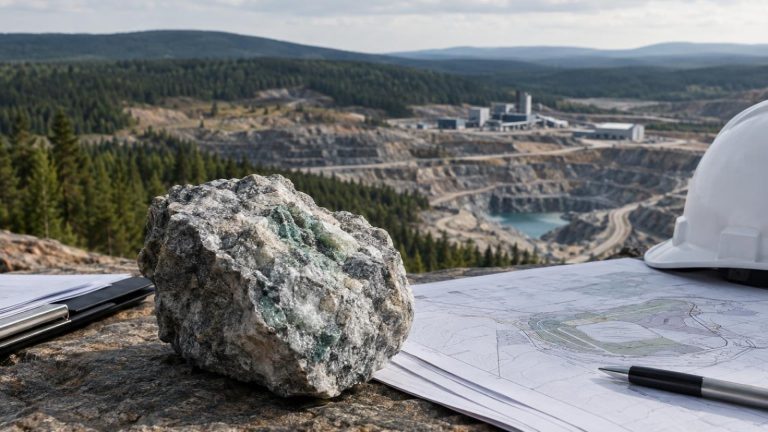
The Barroso project has been designated as a “strategic” asset under the European Critical Raw Materials Regulation and is considered by Savannah to be Europe’s largest spodumene lithium deposit. The company is currently finalising metallurgical testing and conducting environmental studies, including noise modelling, as part of the permitting process.
Savannah plans to develop four open-pit mines at the site, with projected annual output sufficient to supply lithium for approximately 500000 electric vehicles. According to the company, the project is economically viable at lithium prices of around $600 per tonne, positioning it as a competitive source of supply for European battery manufacturers seeking shorter and more secure supply chains.
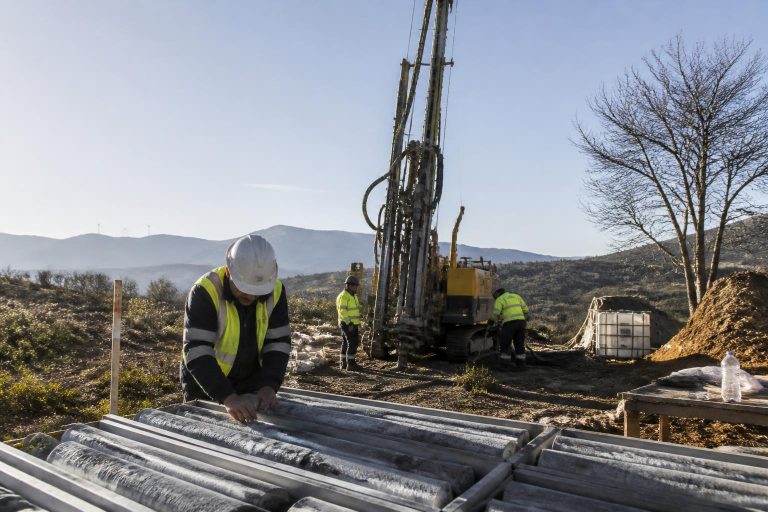
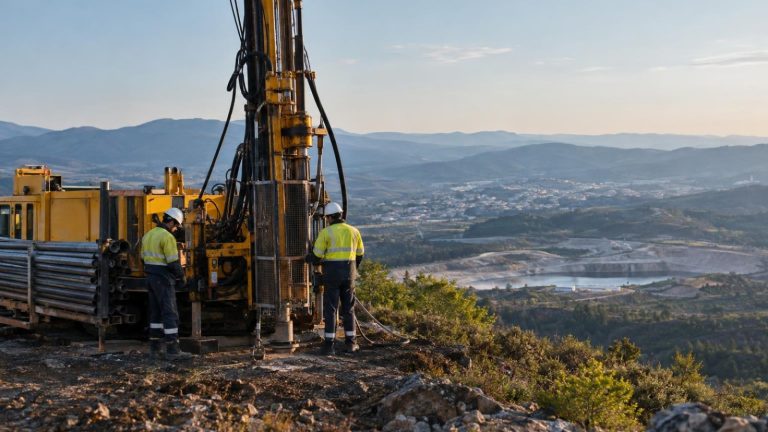
The company is also progressing procurement, with a tender underway for detailed engineering services and a contractor expected to be selected in the coming weeks. Additional fieldwork is pending approval for temporary land access and will inform subsequent project stages.
Portugal has historically produced lithium for ceramic applications but has yet to establish large-scale battery-grade production. The government has recently awarded Savannah a €110 million grant to support the project’s development.
However, the Barroso project continues to face opposition from local communities and environmental groups, particularly given the area’s designation as a World Heritage agricultural landscape since 2018.
Lithium is increasingly being treated as a strategic resource in Europe, prompting efforts to develop domestic mining and processing capacity and reduce reliance on China’s dominant position in global supply chains.
China currently accounts for roughly two-thirds of global refined lithium production, a concentration that has raised geopolitical and industrial concerns within the European Union. With demand for lithium expected to grow significantly by 2030, driven by electric vehicles, energy storage and digital technologies, European policymakers are seeking to strengthen supply security.
Mining companies are advancing lithium projects across several European countries, including Portugal, Germany and Serbia. Portugal’s Barroso project has been designated as “strategic” under the EU’s Critical Raw Materials Act (CRMA), with production potentially starting later this decade. However, the project has faced opposition from local communities and environmental groups.
Serbia’s Jadar project, located outside the EU but of strategic interest to the bloc, is considered one of the most significant lithium developments in Europe. Industry estimates suggest it could supply a substantial share of regional demand, though progress has been delayed by political uncertainty and environmental concerns.
Germany is also exploring lithium extraction from geothermal brine resources, which could offer a lower-impact alternative to conventional mining methods. Recent discoveries in Saxony-Anhalt have been described by analysts as potentially significant, though further validation is required.
In parallel with mining development, European officials are considering broader policy measures, including the potential creation of strategic stockpiles of critical raw materials. The approach mirrors existing systems for oil and gas reserves.
The Critical Raw Materials Act, adopted in 2024, is central to the EU’s strategy. The legislation aims to accelerate permitting and investment in projects deemed strategic, including mining, processing and recycling. A significant proportion of the projects identified under the framework involve lithium.
Despite these efforts, industry experts note that Europe’s main challenge lies in building sufficient processing and refining capacity. Without this, domestically mined lithium may still need to be processed abroad, limiting the effectiveness of supply chain diversification.
Recycling is expected to play an increasingly important role in meeting future demand, particularly as battery waste volumes grow.
The push to secure lithium reflects broader concerns about supply chain resilience and industrial competitiveness. As global demand for battery materials continues to rise, Europe’s ability to develop a fully integrated lithium value chain will be a key factor in its energy transition and long-term economic strategy.
Australia’s Core Lithium has secured approximately $205 million in funding to fully finance the restart of its Finniss lithium project, with the company’s board approving a final investment decision to proceed.
The funding package comprises a $70 million convertible note from Glencore’s Australian unit and InfraVia, a $50 million senior secured debt facility from Nebari, and an equity raising of A$120 million (approximately $85.3 million) before costs. The placement will be priced at A$0.21 per share, representing a 4.5% discount to the company’s previous closing price.
Core Lithium stated that the financing will support construction activities and provide working capital during the ramp-up phase. The company is targeting first production of spodumene concentrate from the Finniss project in the September quarter.
Additional liquidity is expected from a binding agreement signed in February with Glencore International AG for the sale of the project’s remaining spodumene concentrate stockpile at a price of $2023 per tonne. Proceeds from this sale are intended to support the restart and early-stage operations.
The restart decision comes amid early indications of stabilisation in lithium markets following a prolonged period of price declines driven by weaker-than-expected electric vehicle demand and oversupply.
Other producers have also signalled potential production increases. Pilbara Minerals has announced plans to restart output at its Western Australia operation, while Liontown Resources is reviewing a possible expansion of its Kathleen Valley project in anticipation of improved market conditions.
Core Lithium’s decision reflects a broader trend among producers positioning for a potential recovery in lithium demand, particularly in battery and energy storage markets.
ASX-listed Vulcan Energy has secured a key regulatory milestone for its Lionheart project, receiving a lithium production licence in Germany’s Upper Rhine Valley Brine Field.
The licence, granted in the state of Rhineland-Palatinate, is the first of its kind issued in the region. Known as LiThermEx, it covers Vulcan’s Insheim geothermal production area, where renewable heat and electricity are already being generated.
The permit has been awarded for an initial six-year period, with the company planning to extend it in line with the project’s targeted 30-year operational life.
⚡ Lithium meets geothermal power Lionheart is not a typical mining project. It blends lithium extraction with geothermal energy production, creating a hybrid model where hot underground brines are used both to generate renewable energy and extract lithium.
The project is designed to produce around 24000 tonnes per year of lithium hydroxide monohydrate — a key battery material used in electric vehicles — while simultaneously supplying electricity and heat to local communities.
CEO Cris Moreno described the licence as a major step forward.
“Securing the first lithium production licence within the Lionheart project marks another important milestone,” he said, adding that the project supports Europe’s ambition to build a fully domestic lithium supply chain powered by renewable energy.
💶 De-risked and funded The licence further de-risks the project, which is already fully financed and under construction following a €2.2 billion funding package completed in December.
Vulcan expects additional production licences to be granted across the broader project area as development progresses.
🧭 Strategic timing With Europe racing to secure battery raw materials and reduce dependence on external suppliers, projects like Lionheart sit at the crossroads of energy transition and resource security.
Production is currently targeted to begin in 2028 — when lithium demand is expected to be even more electrified, quite literally.
The United Kingdom has begun operations at its first commercial-scale lithium production facility, marking a significant step toward securing domestic supplies of critical minerals essential for electric vehicle batteries and energy storage.
The plant, developed by Geothermal Engineering Ltd (GEL) in Redruth, Cornwall, will initially produce 100 tonnes of lithium annually, sufficient to supply approximately 2,000 electric vehicles. The company plans to expand production to 1,500 tonnes per year within the next few years and ultimately exceed 18,000 tonnes annually over the coming decade through an investment programme estimated at £640 million.
Lithium extraction at the site relies on geothermal technology, with mineral-rich underground fluids used to recover the metal. GEL has also commissioned the UK’s first geothermal power plant to supply energy to the lithium operation, with surplus electricity to be sold to Octopus Energy.
The project forms part of a broader push among Western countries to establish domestic critical mineral supply chains amid growing geopolitical concerns. China currently dominates lithium processing, accounting for around 60 percent of global production in 2025 and maintaining strong control over downstream battery supply chains.
The UK government has set a target of producing 50,000 tonnes of lithium domestically by 2035, although market volatility following a sharp decline in lithium prices has delayed or reshaped several Western projects.
GEL founder Ryan Law said geothermal integration enables the company to produce lithium competitively, adding that the operation could rival imports from China on cost.
Other UK-based developers are progressing parallel initiatives. Cornish Lithium continues testing battery-grade lithium hydroxide samples from its demonstration plant and aims to commission a commercial facility by 2029, while Green Lithium has postponed its Teesside refinery start date to around 2029 under a phased development strategy.
Industry analysts caution that European lithium projects must still prove cost competitiveness against established Asian supply chains. While lithium represents a relatively small share of total EV production costs, experts warn that building a fully Western-based battery supply chain could introduce higher costs at multiple stages.
Additional challenges remain, including limited European cathode active material manufacturing capacity, which continues to link regional producers to Asian processing networks.