Tag: supply chains

  • EU to Offer US Critical Minerals Partnership to Counter China’s Dominance

    EU to Offer US Critical Minerals Partnership to Counter China’s Dominance

    The European Union is set to offer the United States a critical minerals partnership designed to curb China’s influence over global supply chains, according to people familiar with the matter.

    Brussels is preparing a memorandum of understanding to create a “Strategic Partnership Roadmap” within three months, which would guide joint efforts to source and refine essential materials for modern technologies—ranging from batteries to semiconductors—without heavy reliance on Beijing.

    The proposal includes initiatives such as joint mineral projects, price support mechanisms, and safeguards against market manipulation. It also encourages building reciprocal supply chains between the two economies while maintaining mutual respect for territorial integrity—a pointed reference after tensions rose when U.S. President Donald Trump signaled interest in purchasing Greenland, an autonomous territory of Denmark.

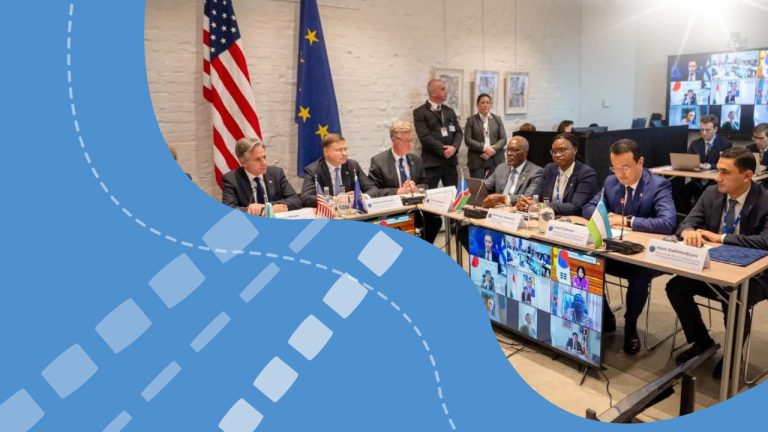
    The renewed cooperation effort comes ahead of a major U.S.-led meeting of foreign ministers and senior officials this week aimed at forming global alliances to reduce Chinese mineral dominance. Washington’s sense of urgency follows Beijing’s export restrictions on rare earth elements last year, temporarily eased under a deal between Trump and Chinese President Xi Jinping.

    Underlining its seriousness, the Trump administration this week launched a $12 billion national critical mineral stockpile. The EU’s draft mirrors this approach, suggesting both sides could coordinate stockpiling and rapid response measures to supply disruptions.

    Key pillars of the EU proposal include cooperation on securing supply chains, developing international premium markets, and sharing information to boost market transparency. It also envisions exemptions from mutual export restrictions, collaboration on innovation and research, and the creation of a joint EU-U.S. response group to manage potential shortages.

    Despite concerns over the pace of negotiations, EU officials called the talks “vital to diversify our supplies away from any single country,” indicating that the transatlantic allies are increasingly aligned in reshaping critical mineral dependencies.

  • France’s Carester and Malaysia’s Malaco Join Forces on Rare Earth Processing

    France’s Carester and Malaysia’s Malaco Join Forces on Rare Earth Processing

    French rare earth technology company Carester and Malaysia’s Malaco Mining Group have agreed to cooperate on the development of a rare earth separation plant and to explore broader collaboration in rare earth mining, marking a new step in international efforts to diversify critical mineral supply chains.

    The partnership, currently at a pilot stage, will focus on building a rare earth separation facility in Malaysia. According to Benjamin Gallezot, adviser to French President Emmanuel Macron on strategic minerals, the agreement предусматривает передачу технологий Malaco, а также поддержку в вопросах экологического соответствия и соблюдения международных стандартов.

    The project comes as Western economies intensify efforts to reduce dependence on China, which dominates global rare earth production and processing. Rare earth elements are essential inputs for electric vehicles, renewable energy technologies, smartphones and other high-tech applications.

    Malaysia holds an estimated 16.1 million tonnes of rare earth resources but has so far lacked the technological capability to mine and process them domestically. Cooperation with Carester is expected to help close this gap, particularly in separation technologies required before rare earths can be used in permanent magnets and clean technology manufacturing.

    Gallezot said Malaco is already in discussions with several European magnet manufacturers, though specific companies were not named. He also noted interest from Japan, suggesting the project could attract a wider group of international partners.

    In parallel, Gallezot said G7 countries plan to engage with partners outside the group on critical minerals during meetings this year, underlining the growing role of international cooperation in securing diversified and resilient supply chains.

  • Critical Mineral Stockpiles Would Last Only Weeks in a Global Supply Shock

    Critical Mineral Stockpiles Would Last Only Weeks in a Global Supply Shock

    Most economies would struggle to keep industry running for more than a few weeks if global supplies of critical minerals were suddenly disrupted, highlighting a major vulnerability at the heart of the modern economy.

    Critical minerals underpin everything from electric vehicles and renewable energy systems to electronics and defence equipment. Yet their production and processing are highly concentrated in a small number of countries, leaving supply chains exposed to geopolitical tensions, trade restrictions and conflict, according to the International Energy Agency.

    In response, governments have begun building strategic stockpiles intended to buffer industries against shocks. However, a review of publicly disclosed reserves shows that most countries remain poorly prepared. Outside a small group of exceptions, stockpiles are generally insufficient to sustain even priority sectors for more than a few months during a major disruption. In several cases, governments do not publish data at all, citing national security concerns.

    China stands out as the most resilient player. It not only dominates mining and processing for many critical minerals but also holds the world’s largest known state reserves. Industry estimates suggest China could support domestic demand for months in minerals such as rare earths and battery metals. Recent export controls on materials including gallium, germanium and graphite demonstrated how quickly this leverage can be exercised.

    Among major importers, Japan and South Korea are the most advanced. Japan overhauled its approach after a rare earth supply crisis in 2010 and now maintains reserves covering several months of demand for minerals such as cobalt and nickel. South Korea has built stockpiles equivalent to roughly two months of consumption, with systems designed for rapid release during emergencies.

    By contrast, the United States and Europe appear more exposed than commonly assumed. US reserves are largely focused on defence needs and would likely cover only weeks of broader economic demand in a large-scale disruption, despite recent efforts to rebuild stocks of rare earths, cobalt and antimony. Europe is still debating coordinated stockpiling under the Critical Raw Materials Act, leaving its industrial base vulnerable in the near term.

    Australia is pursuing a producer-led strategy, developing reserves based on domestically mined materials such as rare earths, antimony and gallium, both to improve national resilience and support allied supply chains. India, meanwhile, has acknowledged the need for stockpiles in its critical minerals strategy but remains at an early stage of implementation.

    The reality is stark: if global production halted tomorrow, most economies would be counting their remaining buffer in weeks rather than years. Governments would be forced to prioritise defence, energy and essential manufacturing, while other sectors would face immediate shortages.

    Stockpile size alone, however, does not determine resilience. Effectiveness depends on how well reserves match real demand, how quickly they can be released, and whether alternative supplies or substitutes are available. Small but targeted stockpiles, combined with diversified sourcing, can sometimes offer more protection than large but poorly aligned reserves.

    For mining companies and investors, this shift underscores a broader change. Critical minerals are no longer viewed solely as commodities but as strategic assets, with their value increasingly shaped by geopolitics, security and resilience as much as by traditional supply and demand dynamics.

  • EU steps up critical minerals policy but risks falling behind the US and China

    EU steps up critical minerals policy but risks falling behind the US and China

    The European Union has intensified efforts to strengthen critical mineral supply chains that underpin the energy transition, but analysts warn that Europe is moving more slowly and offering weaker support than the United States, leaving it exposed to China’s dominant position in global markets.

    China already controls much of the global supply of solar power components and dominates processing capacity for key battery and clean energy materials, including lithium, nickel, cobalt, manganese, graphite, rare earths and permanent magnets. According to Eurostat, 95% of EU rare earth imports in 2024 came from just three countries: China, Malaysia and Russia. Data from Wood Mackenzie shows China accounts for 32% of global lithium production and controls a further 18% through overseas projects, while holding 81% of global critical minerals processing capacity.

    This concentration creates significant risks for European clean energy developers, as over-reliance on a small group of suppliers increases exposure to licensing delays, export controls and sudden supply disruptions. Industry experts note that despite growing awareness among policymakers, Europe’s response remains fragmented and underpowered.

    To accelerate investment, the EU adopted the ResourceEU action plan in December 2025. Backed by €3 billion from the Critical Raw Materials Act, the plan aims to expand domestic extraction and refining, promote recycling, reduce dependence on dominant suppliers, speed up permitting and restrict scrap exports. The EU has set targets to extract 10% of its critical minerals needs domestically, host 40% of processing capacity within the bloc and reach a 15% recycling rate by 2030.

    However, analysts say the funding and policy tools fall short of a fully fledged industrial strategy. Investment momentum has weakened amid low commodity prices, and existing regulations have not yet made most European projects sufficiently bankable. Several high-profile projects, including the Chvaletice manganese project in the Czech Republic, have stalled due to permitting delays and grid access issues, despite being labelled strategic.

    By contrast, the United States has adopted a more aggressive, security-driven approach. Through measures such as the Inflation Reduction Act, the One Big Beautiful Bill and the use of the Defense Production Act, Washington offers tax credits, grants, loans, price guarantees and offtake support to accelerate mine-to-battery and mine-to-magnet supply chains. As a result, the US is advancing diversification faster than Europe.

    While projects such as LKAB’s rare earth and phosphorus processing plant in Sweden signal progress, experts caution that Europe’s public tools for de-risking investments remain limited compared with those of the US and China. Without stronger financial instruments, streamlined permitting and a greater focus on processing and recycling, Europe risks remaining vulnerable in the global race for critical minerals.

  • Germany calls for stronger cooperation on critical raw materials ahead of Washington talks

    Germany calls for stronger cooperation on critical raw materials ahead of Washington talks

    German Finance Minister Lars Klingbeil on Sunday urged closer international cooperation on critical raw materials as he prepared to travel to Washington for high-level talks with counterparts from major industrialized nations.

    Speaking before his departure from Berlin, Klingbeil, who also serves as vice chancellor and leader of the Social Democratic Party (SPD), said Germany and the European Union remain committed to fair, rule-based and reliable trade. He emphasized that access to critical raw materials such as lithium, cobalt and rare earths is essential for economic growth, technological development and job security.

    The United States has invited finance ministers from several leading economies to discuss securing access to these materials, whose global supply chains are highly concentrated and largely dependent on a small number of countries, including China.

    “Access to critical raw materials and reliable supply chains is of utmost importance for the economy and jobs,” Klingbeil said, adding that Germany has a strong interest in expanding international cooperation to strengthen supply security, reduce strategic dependencies and ensure stable economic conditions. He stressed that joint action should be taken wherever possible.

  • Serbia Zijin Copper Cleans Up Bor’s Legacy Pollution Through Smelter Modernisation and Dust Control

    Serbia Zijin Copper Cleans Up Bor’s Legacy Pollution Through Smelter Modernisation and Dust Control

    A new phase in Kazakhstan–European Union cooperation on critical raw materials was formally launched with the inauguration of the Kazakhstan–EU Gateway’s cooperation platform and its first flagship event, Strategic Partnership on Critical Raw Materials.

    The event, attended by Eureflect, was hosted at the Brussels headquarters of TÜSİAD, one of Turkey’s leading business associations, underscoring the Eurasian dimension of the initiative and its relevance for both European and regional industrial stakeholders. The choice of venue reflected the high-level political and business focus of the platform.

    Held on December 9, 2025, at Av. des Gaulois 13 in Brussels, the conference brought together policymakers, industry leaders and subject-matter experts from across Europe and Central Asia. Discussions centred on strengthening cooperation along the full critical raw materials value chain, from geological exploration and mining to processing, refining and downstream industrial integration.

    The Kazakhstan–EU Gateway is intended to serve as a structured platform to align Kazakhstan’s vast mineral resource base with Europe’s growing demand for secure, diversified and responsibly sourced critical raw materials. The initiative comes as the EU accelerates efforts to reduce strategic dependencies and deepen partnerships with resource-rich, politically aligned countries.

    Participants highlighted the importance of long-term frameworks, transparent governance and investment-friendly conditions to translate political alignment into tangible projects. The launch event marked an initial step toward building sustained collaboration between Kazakh institutions, European policymakers and industrial players seeking resilient supply chains.

  • REsourceEU Puts Europe’s Critical Minerals Strategy Into Action With Early Molybdenum and Lithium Backing

    REsourceEU Puts Europe’s Critical Minerals Strategy Into Action With Early Molybdenum and Lithium Backing

    Europe’s newly launched €3-billion REsourceEU funding package marks a decisive shift in the continent’s approach to securing resilient, competitive supply chains for critical and strategic raw materials. The first wave of support targets a select group of molybdenum and lithium projects, signalling that Brussels is moving beyond policy blueprints toward tangible industrial capacity.

    As reported by euromining.news, these early selections demonstrate that the EU’s critical raw materials agenda is entering an execution phase, focused on easing bottlenecks in alloy production, battery manufacturing and clean-technology deployment.

    Molybdenum moves into the strategic spotlight
    While it attracts far less attention than battery metals, molybdenum is essential to Europe’s industrial backbone. As a key alloying element in high-performance steels, it underpins defence manufacturing, energy infrastructure, petrochemicals and advanced engineering.

    Europe’s heavy reliance on imported molybdenum leaves these sectors exposed to geopolitical risk and price volatility. By prioritising European molybdenum projects under REsourceEU, the Commission is acknowledging that strategic vulnerability extends well beyond lithium and rare earths. Industrial resilience depends on securing the full spectrum of critical alloying materials that modern manufacturing requires.

    Lithium funding reinforces battery-chain ambitions
    Lithium remains central to Europe’s push to build a competitive battery ecosystem. Conversion plants across Germany, France, Portugal and the Nordic region are racing to scale production of battery-grade lithium chemicals, aiming to establish domestic midstream hubs in a market still dominated by fragmented and geopolitically sensitive global supply chains.

    REsourceEU funding is expected to reduce financing risk, unlock delayed investments and accelerate project timelines. This support is arriving at a critical moment, as European gigafactory capacity expands rapidly and automakers seek stable, low-carbon lithium supply.

    From policy vision to industrial reality
    The broader ambition of REsourceEU is to translate Europe’s raw-materials strategy into operational infrastructure. As highlighted in recent euromining.news analysis, long-term industrial competitiveness now hinges on secure, diversified and environmentally responsible material flows.

    By backing early leaders in molybdenum and lithium development, the EU is sending a clear signal: Europe intends to anchor strategic materials production at home rather than rely on volatile external suppliers. The challenge now lies in delivery. Projects must still overcome permitting hurdles, secure long-term offtake agreements and reach commercial scale.

    As construction advances and policy support deepens, euromining.news will continue to track both progress and remaining gaps to assess whether Europe’s strategic-materials ambitions translate into lasting industrial strength.

  • Germany Reports “Constructive” Signals from China on Rare Earth Supplies

    Germany Reports “Constructive” Signals from China on Rare Earth Supplies

    German Foreign Minister Johann Wadephul says China has shown willingness to cooperate on rare earth exports to Europe, offering a rare moment of optimism amid deepening geopolitical and trade tensions. Speaking during a two-day visit to Beijing, Wadephul said Chinese officials indicated they would work “constructively” with European importers seeking general licences to secure supplies of rare earths — metals critical to electronics, defence technologies and electric vehicles.

    The minister met with Commerce Minister Wang Wentao, Foreign Minister Wang Yi and Vice President Han Zheng, using the talks to address Beijing’s recent export restrictions on rare earths, as well as concerns over industrial overcapacity in China’s EV and steel sectors. In a message posted following the meetings, Wadephul said Germany and China remained committed to “balanced economic relations,” while acknowledging the need to confront “imbalances” such as market-access barriers and trade controls.

    China introduced new export restrictions on several rare earth products this year, forcing global manufacturers to confront their dependence on Chinese supply. Wadephul said Beijing reassured him that it had “no intention” of burdening German companies with additional hurdles and encouraged them to apply for general licences under China’s evolving export framework. Wang Wentao also emphasised that the licensing system was designed to keep supply chains “stable and smooth.”

    The discussions come at a time of heightened strain in German-Chinese relations. Chancellor Friedrich Merz has pledged a firmer stance toward Beijing, and Wadephul previously cancelled an earlier trip after criticising China’s activities around Taiwan. German officials have repeatedly warned that the country — long one of China’s closest European trading partners — is now highly exposed to Beijing’s leverage over critical raw materials.

    Last month, Finance Minister Lars Klingbeil left China with only informal assurances regarding rare earth supplies, highlighting the limits of European influence. The European Union is preparing to mobilise at least €3 billion over the next year to reduce its dependency on China for strategic raw materials, including through mining, processing and recycling initiatives.

    Wadephul also used the Beijing meetings to press China to exert pressure on Russia to engage in “serious negotiations” over its war against Ukraine. He said European expectations were clearly conveyed: “If there’s one country that has influence on Russia, it’s China.”

  • EU and Australia Deepen Cooperation on Critical Raw Materials Amid Western Push to Reduce Reliance on China

    EU and Australia Deepen Cooperation on Critical Raw Materials Amid Western Push to Reduce Reliance on China

    The European Investment Bank (EIB) and the Australian government announced on Monday that they will expand their collaboration on critical raw materials, marking a significant move as Western nations accelerate efforts to reduce dependence on China.

    According to their joint statement, the initiative aims to strengthen financing and development across the entire critical minerals value chain—from exploration and extraction to processing, recycling, and innovation. The announcement comes as the European Union prepares to unveil a broad economic security package on December 3, reflecting growing concern over supply-chain vulnerabilities.

    Despite longstanding recognition of the issue, European officials and industry representatives say that financing continues to be a major obstacle in securing stable access to strategic minerals. Even projects listed as strategic by the EU currently receive no special financial advantages.

    The EIB has already taken steps by forming a dedicated task force earlier this year to boost support for critical materials projects, with plans to double its financing capacity. The new declaration is described as a key step toward enabling the bank to fund mineral projects in Australia, one of the world’s most resource-rich nations.

    International efforts are also intensifying. The G7, chaired by Canada in 2025, has established a Critical Minerals Production Alliance to mobilize public and private investment in fast-tracking production of graphite, scandium, and rare earth elements. Australia has offered G7 members the opportunity to purchase shares in its new strategic mineral stockpile.

    In parallel, the United States and Australia pledged $3 billion last month to support mining and processing projects, while also introducing a price floor for critical minerals—a measure long requested by Western mining companies. Additionally, Canada has secured offtake agreements for scandium and graphite with Australian producer Rio Tinto and Quebec-based Nouveau Monde Graphite, further reinforcing global attempts to diversify supply chains.

  • Ferroglobe PLC Suspends Silicon Metal Production in Europe, Citing Market Pressures and Need for Fair Competition

    Ferroglobe PLC Suspends Silicon Metal Production in Europe, Citing Market Pressures and Need for Fair Competition

    Ferroglobe PLC, a leading producer of silicon metal, has revealed plans to temporarily halt all silicon production in France and Europe beginning this October. This decision follows severe challenges impacting the European silicon industry, as highlighted by Benjamin Crespy, Chief Operating Officer at Ferroglobe PLC, in a recent interview with Les Echos. The suspension is driven by collapsing demand from key sectors and falling prices, which are largely attributed to less constrained and more carbon-intensive low-cost imports.

    Benjamin Crespy emphasised the critical need to restore fair competition in the European silicon market. Without immediate and decisive action, Europe risks losing its sovereign silicon production capacity, falling short of its carbon emission targets, and forfeiting access to a strategic material essential for the energy transition, green mobility, defense technologies, and other key industries.

    High-purity silicon metal is used by many industries. In the chemical industry it is used for producing silicon compounds as well as silicon wafers used in photovoltaic solar cells and electronic semiconductors. And aluminum manufacturers use it to improve the already useful properties of aluminum. When used with aluminum, silicon improves its castability, hardness and strength.

    Besides, aluminum demand has been growing steadily in recent years, as a reflection of the economic activity in both the developed and developing word. This demand of lighter and more economical material has triggered a growth in Silicon metal consumption by aluminum manufacturers.

    Ferroglobe PLC remains committed to producing high-quality silicon metal and collaborating with customers and partners to innovate and enhance competitiveness. However, Crespy stressed that securing Europe’s future in silicon requires collective efforts and decisive measures to address the current market pressures and restore a level playing field. The company’s decision serves as a stark reminder of the challenges facing the European silicon industry and the importance of safeguarding its strategic interests.