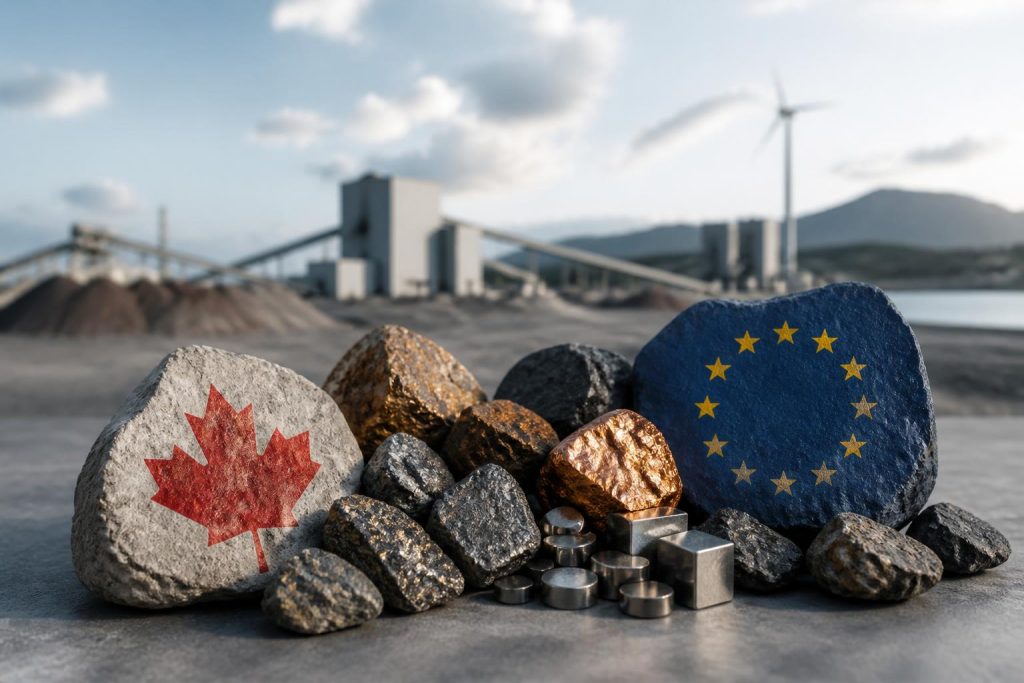
In recent years, Canada and the European Union have significantly enhanced their transatlantic relationship, particularly in the realm of critical minerals supply chains. This collaboration gained momentum following the implementation of the EU’s Critical Raw Materials Act (CRMA) in May 2024, which set ambitious targets for the EU to meet its own strategic raw materials needs. By 2030, the EU aims to ensure that at least 40% of its annual consumption of these materials is processed within its borders, alongside goals for domestic extraction and recycling. This benchmark highlights the importance of the midstream sector, where processing and refining activities bridge the gap between raw mining and manufacturing.
The EU’s heavy reliance on imports for refined materials, which rose from 83% in 2011 to 90% by 2023, underscores the urgency of developing a more resilient supply chain. China’s dominance in the processing of critical minerals, controlling 19 out of 20 energy-transition minerals, has raised concerns in Europe, particularly as Chinese export controls have led to production stoppages in European factories. Despite these challenges, Europe possesses a robust base of metals smelters that can be modernised and expanded with targeted investments.
The CRMA aims to foster economic and social development by encouraging processing in developing countries, while also ensuring that Europe can source value-added materials directly from its partners, rather than relying on Chinese processing. The EU’s strategy includes prioritising essential materials for future technologies, streamlining project permitting, facilitating finance, and establishing strategic partnerships with non-EU countries.
While the 40% benchmark is not legally binding, it serves as a guiding principle for the EU’s efforts to enhance its refining capacity. Progress has been mixed, with notable advancements in lithium and nickel refining, but significant gaps remain in areas like magnesium and titanium. Canada, with its own Critical Minerals Strategy, is well-positioned to become a leader in the global mining sector, leveraging its processing capabilities and access to low-cost, low-carbon energy.
The bilateral relationship between Canada and the EU is further strengthened by the Comprehensive Economic and Trade Agreement (CETA) and the 2021 strategic partnership on critical raw materials. However, both parties must focus on solidifying projects and co-investments to secure minerals and refined metals. Collaborative efforts, such as the G7 Critical Minerals Production Alliance and NATO’s initiative on critical raw materials, highlight the potential for Canada and the EU to work together in building resilient supply chains.
As the global landscape evolves, Canada and the EU must address the challenges posed by export controls and price volatility in the critical minerals market. By focusing on midstream cooperation, shared projects, and predictable offtake agreements, they can establish a stable foundation for the materials essential to clean technology, digital innovation, and defence industries. The midstream sector represents a crucial area for building resilience and ensuring secure supply chains, where Canada’s strengths in extraction and Europe’s processing expertise can create a mutually beneficial partnership.