Tag: supply chains

  • Uzbekistan Signs Critical Minerals Investment Deals with U.S. Companies

    Uzbekistan Signs Critical Minerals Investment Deals with U.S. Companies

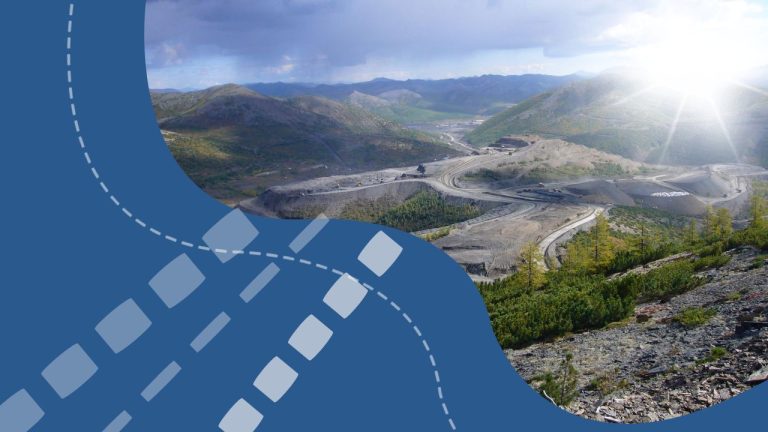
    Uzbekistan announced on Wednesday, April 9, 2025, that it has signed a series of agreements with U.S. companies to boost investment in its critical minerals sector. The deals come as global demand for essential minerals like copper, lithium, and cobalt continues to soar due to their key role in electric vehicle batteries, solar panels, and other high-tech industries.

    According to a statement from Uzbekistan’s trade ministry, the agreements—signed during a government delegation’s visit to Washington—cover investments in both the exploration and extraction of mineral resources. They also include plans for building grinding machinery and training Uzbek specialists.

    The move aligns with broader efforts by the United States and the European Union to reduce their dependence on China, which currently dominates the global critical minerals market.

    Uzbekistan, a former Soviet republic, has drawn increasing interest from Western nations looking to diversify their supply chains amid ongoing geopolitical tensions. President Shavkat Mirziyoyev has made liberalizing the economy a central priority of his administration. In March, he unveiled a $2.6 billion investment plan aimed at modernizing and expanding the country’s mineral sector.

  • EU’s Pro-Business Roadmap Emphasises Mining Amid Economic Shift

    EU’s Pro-Business Roadmap Emphasises Mining Amid Economic Shift

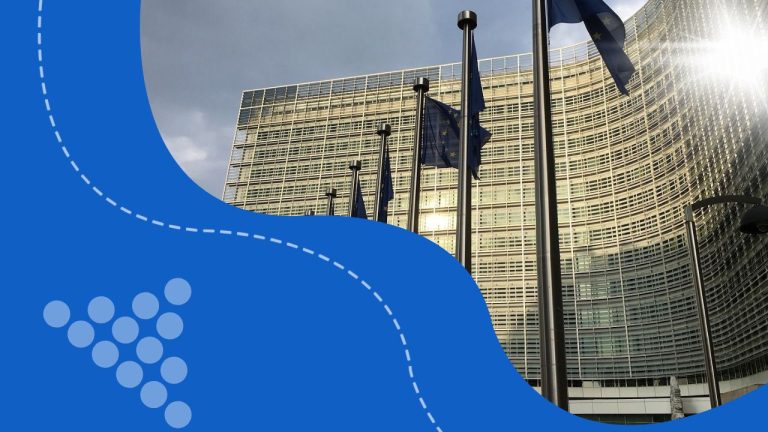
    On Wednesday  29 January 2025, the European Union introduced a pivotal roadmap aimed at making Europe more business-friendly after years of prioritising green goals. With US President Trump’s aggressive trade policies and China’s technological advancements, the EU seeks to bolster growth by alleviating corporate burdens.

    “We need to reignite Europe’s innovation engine,” EU chief Ursula von der Leyen told a news conference to present the “competitiveness compass” — the first major initiative of her second mandate.

    Specific measures proposed:

      • Creating a new legal regime for innovative companies across the EU
      • Facilitating long-term energy agreements and grid investments
      • Providing targeted aid for industrial decarbonisation
      • Revising competition rules to allow creation of European tech giants
      • Promoting more mining in Europe for critical raw materials
      • Removing barriers in the EU single market for key sectors
      • Creating a “European savings and investments union” to boost startup funding

    The plan aims to streamline regulations, reduce energy costs for businesses, and support the development of green technologies. To achieve this, the EU will revise numerous laws, including those related to environmental standards and supply chains, to reduce the burden on companies.

    A key element of the strategy is to increase the EU’s self-sufficiency in critical raw materials, such as rare earths, which are essential for many advanced technologies. The EU currently relies heavily on imports from China and other countries for these materials.

    To address this dependency, the EU plans to encourage more mining within its borders. The European Commission has already received 170 mining projects and aims to facilitate the permitting process. The plan also includes provisions for joint purchases of critical raw materials and international partnerships to secure supply lines.

    This initiative has sparked concerns from environmental groups, who worry that it could lead to the weakening of environmental protections. However, the EU maintains that it remains committed to its climate goals, including achieving carbon neutrality by 2050.

    The EU’s new plan reflects the growing global competition for resources and technological dominance. By focusing on mining and streamlining regulations, the EU aims to strengthen its industrial base and secure its position in the global economy.

  • State Bank Advises Germany to Diversify Copper, Lithium, and Rare Earth Supplies

    State Bank Advises Germany to Diversify Copper, Lithium, and Rare Earth Supplies

    KfW, the government-owned financing institution, urges Germany to adopt a “balanced catalogue of measures” to secure its essential raw material supply amid the global shifts of decarbonization and digitalization. A research report by IW Consult and Fraunhofer ISI, commissioned by KfW, highlights supply risks in the production and supply chains of key raw materials: copper, lithium, and rare earth minerals. The analysis identifies significant dependencies in sectors like automotive manufacturing, emphasizing the need for diversification at the core of any resilience strategy. With limited suppliers posing supply risks, the report suggests a comprehensive approach, including promoting technological progress for substitution and material efficiency. Germany’s transition to renewable energy faces challenges in sourcing resources for “green” technologies, necessitating strategic measures to avoid environmental and social impacts.

  • Explained: The EU’s handicap in the global race for critical raw materials

    Explained: The EU’s handicap in the global race for critical raw materials

    The EU is highly dependent on third countries for the raw materials needed to engineer its energy transition and digital transformation.

    Russia’s war in Ukraine and the need to wean itself off fossil fuels in order to reach climate targets have prompted the EU to accelerate its green transition in recent months but also forced it to acknowledge its dependencies over access to critical raw materials.

    In the global race for raw materials, the EU faces multiple challenges.

    The first one is China, which recently started restricting exports of gallium and germanium, two metals essential for the production of semiconductors, in response to Western curbs on Beijing’s access to micro-processing technology.

    The EU considers both materials of high strategic importance. As well as semiconductors and other electronic devices, they are used for military applications such as missile defence and radar systems.

    Beijing’s restrictions come as a stark warning as the EU attempts to diversify and boost domestic supply of raw materials to reduce dependency on third countries.

    Reliance on ‘low-governance’ countries

    But diversifying supply chains could mean the EU has to source these materials from countries that don’t adhere to the same standards.

    Recent data suggests the EU’s supply is highly dependent on countries that have a low governance level, based on indicators including political stability, rule of law and corruption control.

    The EU’s Critical Raw Materials Act (CRMA), adopted in March this year, stipulates that EU strategic projects to scale up supply must be assessed taking into account all aspects of sustainability, including environmental protection, socially responsible practices and respect for human rights such as the rights of women.

    But many countries feeding EU supply are not aligned with European values. This raises concerns about the impact on the local communities where materials are mined, as well as the potential exploitation of natural resources.

    For example, the Democratic Republic of Congo, whose governance indicators are among the lowest in the world, supplies 63% of the EU’s cobalt, which is essential for manufacturing batteries for electrical vehicles.

    Diversifying supply a challenge

    The EU is also highly dependent on single countries for key materials such as Magnesium (China, 97%), Lithium (Chile, 97%), Iridium (South Africa, 93%) and Niobium (Brazil, 92%). These dependencies make supply chains vulnerable.

    The Critical Raw Materials Act aims to ensure no third country provides more than 65% of the Union’s annual consumption of any raw material.

    But diversifying supply is complex when refineries of many essential materials are monopolised by one or more global powers. China dominates the refining market for many critical raw materials.

    Russia’s invasion of Ukraine and the ensuing energy crisis has shown the acute dangers of over-reliance for supplies of raw materials. China’s increasingly antagonistic stance and the political instability in many African countries have also served as reminders of the fragility of the EU’s trading relationships.

    A spiralling global demand

    The demand for raw materials is growing steeply, as developed countries race to digitalise and decarbonise their economies. This can only happen with sufficient supply of raw materials, meaning countries must scale up extracting, refining and recycling operations.

    The global demand for lithium, for example, is set to increase a staggering 89-fold by 2050, according to the European Commission. Demand for gallium will multiply 17-fold during the same time.

    The Critical Raw Materials Act sets targets for the Union to extract 10%, process 40% and recycle 15% of its annual consumption of raw materials by 2030.

    To meet these targets and compete on the global stage, European Commission President Ursula von der Leyen has said the EU needs to speed up investments in research and development, recognising that the bloc’s global share of R&D expenditure has fallen 10% in the last 20 years.