Tag: supply chains

  • Uzbekistan’s Critical Minerals Move to the Center of US Geoeconomic Strategy

    Uzbekistan’s Critical Minerals Move to the Center of US Geoeconomic Strategy

    Uzbekistan’s critical mineral resources have become part of a broader US geoeconomic strategy aimed at reducing dependence on China, according to analysis by the Bloomsbury Intelligence & Security Institute (BISI).

    The recently signed memorandum between Tashkent and Washington coincided with a US-hosted ministerial meeting on critical minerals attended by more than 40 countries. At the same time, Washington announced the launch of two new mechanisms: FORGE (Forum on Resource Geostrategic Engagement) and Project Vault, a $12 billion strategic reserve fund for purchasing and stockpiling critical minerals.

    BISI assesses that the agreement with Uzbekistan fits into a wider network of bilateral partnerships designed to diversify supply chains away from China.

    Uzbekistan holds reserves of tungsten, lithium, vanadium, titanium, germanium and graphite — materials considered essential for defense industries, battery technologies and advanced manufacturing. According to BISI, the country could become a “preferred partner” for the United States within the emerging global raw materials architecture.

    However, analysts caution that diplomatic engagement must translate into tangible investment. Without financing mechanisms through institutions such as EXIM, the US International Development Finance Corporation (DFC), and private capital channels, the memorandum risks remaining largely symbolic.

    China’s role remains a critical variable. While experts consider it unlikely that Beijing will escalate tensions directly, increased commercial competition and diplomatic pressure cannot be ruled out. For Tashkent, this creates the need to position cooperation with Washington as commercial and non-exclusive, preserving existing economic ties with China.

    BISI also highlights potential sensitivities in relations with Russia, which could view deeper US-Uzbek cooperation through a geopolitical lens. Possible pressure points may include migration policy or information campaigns.

    In the short term, attention will focus on defining concrete projects and operational rules under the FORGE platform. Over the longer term, the success of the initiative will depend on Uzbekistan’s regulatory environment — including licensing stability, tax predictability and investor protection.

    Ultimately, these factors will determine whether Uzbekistan becomes an integrated player in a new global minerals system or remains primarily a raw material supplier outside major capital flows.

  • UK and US Sign Critical Minerals Partnership to Strengthen Supply Chains

    UK and US Sign Critical Minerals Partnership to Strengthen Supply Chains

    The United Kingdom and the United States have signed a new partnership aimed at securing critical mineral supply chains and boosting investment in domestic mining and processing projects.

    The Memorandum of Understanding was signed in Washington DC by UK Foreign Office Minister Seema Malhotra and US Under Secretary of State Jacob Helberg during a meeting attended by representatives from more than 50 countries. The agreement is designed to accelerate efforts to secure supplies of critical minerals essential for industries ranging from automotive and defence to clean energy and electronics.

    The partnership supports the UK’s Critical Minerals Strategy, published last November and backed by up to £50 million in new funding to strengthen domestic production and processing capacity. Under the strategy, the government aims to ensure that by 2035 no more than 60 percent of the UK’s supply of any single critical mineral comes from one country.

    The new UK-US framework seeks to encourage greater private investment in mining and processing projects, while enhancing cooperation between the two allies to build more resilient and diversified global supply chains.

    Minister Seema Malhotra said the agreement reflects a shared commitment to strengthening supply chain resilience and safeguarding long-term economic growth. Industry Minister Chris McDonald added that the partnership would help stimulate new investment into British mineral projects and support sectors reliant on secure access to raw materials.

    The agreement adds to the UK’s expanding network of bilateral critical minerals partnerships, which already includes Australia and Canada.

    The UK critical minerals sector contributes £1.79 billion to the economy and supports more than 50,000 jobs. There are currently over 50 domestic projects focused on extracting and refining critical materials.

  • Lithuania Signals Willingness to Strike Bilateral Critical Minerals Deal With US

    Lithuania Signals Willingness to Strike Bilateral Critical Minerals Deal With US

    Lithuania may pursue a bilateral agreement with the United States on critical minerals if the European Union fails to move swiftly on a joint partnership, the country’s foreign minister has said.

    Speaking on the sidelines of the Munich Security Conference, Kestutis Budrys emphasized that while Vilnius prefers a coordinated European approach, time is becoming a decisive factor. “We have the intention to go forward at the European level,” he said, adding that if consensus within the EU proves too slow, “the way forward is bilaterally.”

    The EU has been working on a critical minerals partnership with the United States and other like-minded countries to reduce dependence on China, which dominates global supply chains for many rare earth elements and strategic materials essential for advanced technologies. Member states have granted the European Commission a mandate to negotiate on behalf of the bloc. However, some capitals, including Vilnius, have voiced concerns over the pace of negotiations.

    At the same time, the administration of Donald Trump has encouraged individual EU member states to consider direct bilateral agreements.

    The urgency of securing alternative supply chains has intensified amid ongoing trade tensions between Washington and Beijing. China’s export restrictions on rare earths last year heightened concerns among Western governments about supply-chain vulnerabilities and the risk of political leverage through mineral exports.

    Last week, the United States and 55 other countries agreed to introduce new policy tools, including price floors, aimed at stabilizing supply chains and countering market distortions.

    For Lithuania, the issue carries particular strategic weight. The country’s engineering sector and rapidly expanding defense industry rely on stable access to critical minerals. According to Budrys, Vilnius seeks to diversify imports and reduce exposure to what it considers unreliable suppliers, particularly China, which Lithuania accuses of using trade as a political instrument.

    As geopolitical competition over strategic resources deepens, Lithuania’s position highlights growing pressure within the EU to balance collective action with national urgency in securing critical mineral supply chains.

  • US Launches Project Vault to Secure Critical Minerals and Deepens Engagement With Central Asia

    US Launches Project Vault to Secure Critical Minerals and Deepens Engagement With Central Asia

    The United States has stepped up efforts to secure independent supply chains for critical minerals with the launch of Project Vault, a new initiative designed to establish a US Strategic Critical Minerals Reserve and reduce reliance on China. The project, formally approved on February 2 by the Export-Import Bank of the United States, is backed by up to $10 billion in long-term public financing and an additional $2 billion in expected private-sector participation.

    Project Vault will operate as a public-private stockpile, creating reserves of essential minerals and metals used in aerospace, defence, semiconductors, advanced manufacturing, renewable energy, and electric vehicles. Planned storage sites across the United States are intended to buffer domestic industries against global supply shocks, mirroring the role of the Strategic Petroleum Reserve in energy markets.

    The initiative reflects Washington’s broader strategy to diversify critical mineral supply chains away from China, which currently dominates global mining, refining, and processing capacity for rare earths. US officials have increasingly framed this dominance as a strategic vulnerability, citing past export restrictions imposed by Beijing as evidence of how mineral supply can be used as a geopolitical tool.

    While Project Vault focuses on domestic resilience, its success depends on diversified upstream supply. In this context, mineral-rich Central Asia has emerged as a key region in US policy thinking. Kazakhstan and Uzbekistan were invited to participate prominently in the 2026 Critical Minerals Summit, underscoring growing US interest in the region as an alternative source of strategic materials.

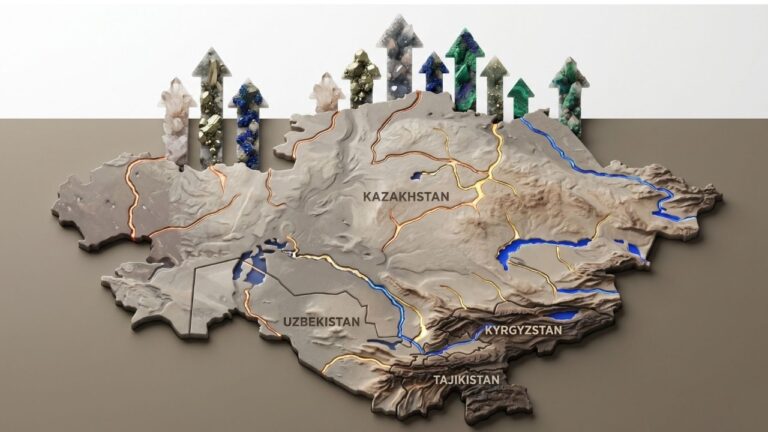
    Central Asia collectively hosts deposits of more than 25 minerals classified as critical by the United States Geological Survey, including rare earth elements, tungsten, antimony, manganese, chromium, and titanium. Despite Kazakhstan’s long-standing role as the world’s largest uranium supplier and the region’s significant reserves, much of Central Asia’s mineral output remains underdeveloped or exported as raw material, primarily to China and Russia.

    Washington has signalled a shift from purely diplomatic engagement toward commercially driven cooperation. Alongside the traditional C5+1 framework, the US has increasingly relied on business-focused mechanisms such as the B5+1 platform to connect private capital with Central Asian projects. This approach is supported by US agencies including the US International Development Finance Corporation, the US Trade and Development Agency, and EXIM, all of which are expanding financing and technical support for critical minerals projects in the region.

    US officials argue that stockpiling alone cannot resolve supply vulnerabilities without parallel investment in downstream processing and refining capacity, much of which remains concentrated in China. As a result, future cooperation is expected to focus not only on extraction but also on building value-added processing capabilities in partner countries.

    Taken together, Project Vault and the intensified engagement with Central Asia mark a decisive shift in US critical minerals policy. Washington now views the region not just as a geopolitical partner, but as a potential long-term contributor to diversified, market-based supply chains that underpin US economic and national security.

  • DFC Highlights Major Investments at US Critical Minerals Ministerial

    DFC Highlights Major Investments at US Critical Minerals Ministerial

    Senior US and international officials gathered in Washington as the United States reinforced its push to secure critical minerals supply chains at a high-level ministerial hosted by US Secretary of State Marco Rubio. The meeting, held at the US Department of State, brought together government leaders committed to building secure, resilient, and transparent global supply chains for critical minerals.

    The US International Development Finance Corporation (DFC) was represented by Conor Coleman, Chief of Staff and Head of Investments, who took part in discussions focused on mobilising public and private capital for strategic mineral projects. DFC Chief Executive Officer Ben Black said the administration had demonstrated strong leadership in safeguarding access to resources vital to US economic growth and national security, adding that DFC would continue working closely with the White House, Congress, and interagency partners.

    Coleman participated in a plenary session outlining US government funding tools available to support investment in critical minerals. He was joined by senior officials from the Departments of Commerce and Energy, the Export-Import Bank, and the Office of Strategic Capital. The session highlighted how coordinated financing mechanisms can strengthen supply chain security while encouraging private sector participation.

    DFC also outlined a series of recent and ongoing investments. In the Democratic Republic of Congo, state-owned miner Gécamines, through its joint venture with commodity trader Mercuria, has begun shipping around 100000 tonnes of copper committed to the United States, with additional volumes planned for Saudi Arabia and the United Arab Emirates.

    In Brazil, DFC signed a financing agreement with SVRE Holdings Ltd. for a $565 million loan to expand the Pela Ema rare earths mine operated by Serra Verde, supporting the development of a Western-aligned source of heavy rare earth elements. In Kazakhstan, DFC issued letters of interest for up to $700 million in financing linked to Cove Kaz Capital Group’s investment in the Severniy Katpar tungsten mine.

    The corporation has also closed a $600 million investment in the Orion Critical Mineral Consortium, a $1.8 billion public-private partnership established with Orion Resource Partners and ADQ, designed to deploy flexible capital across critical minerals projects in eligible jurisdictions. In addition, DFC committed $75 million in equity to the United States-Ukraine Reconstruction Investment Fund, matched by the Ukrainian government, to support investment in critical minerals and other strategic sectors.

    DFC said securing diversified and reliable supplies of critical minerals remains central to its investment strategy, as these resources underpin advanced technologies, energy systems, and long-term economic security.

  • United States Strengthens Rare Earth Supply Chains Through Partnership With Kazakhstan

    United States Strengthens Rare Earth Supply Chains Through Partnership With Kazakhstan

    The United States is moving to reinforce its supply of rare earth elements through cooperation with Kazakhstan, following the signing of non-binding long-term partnership agreements between US-based  and Kazakh mining company .

    The agreements were disclosed by , which is currently in the process of combining its business with REAlloys. Further details of the cooperation were reported by Mining Technology.

    The partnership is aimed at securing Kazakh raw materials for REAlloys’ processing facilities. The two companies plan to jointly explore and develop rare earth element deposits in Kazakhstan, with extracted material to be processed and refined before being shipped to REAlloys’ production sites in North America.

    Following around six months of negotiations, the partners identified several promising sites. A central element of the agreement relates to offtake from Altyn Group’s Kokbulak project. More than 350 million tonnes of iron ore are located across an area of roughly 127,000 square kilometres in Kazakhstan’s Karaganda and Kostanay regions. Processing of iron ore tailings is expected to yield concentrates rich in both light and heavy rare earth elements, including terbium and dysprosium.

    To support future deliveries, Altyn Group plans to invest in expanding REAlloys’ processing capacity in the United States, including the country’s only rare earth metallisation facility. The plant supplies a number of government-linked customers and supports demand from high-technology industries.

    Altyn Group Qazaqstan is registered in Kurchatov, Abai Region, and is a subsidiary of UK-based . The company is active in the exploration and mining of gold, silver and rare metal ores.

    From 2025, Altyn Group has also planned to begin development of the Ulken-Karashoky gold-copper deposit in the Abai Region, alongside reported plans to extract gold-silver ores at the Mailikara deposit in Pavlodar Region.

  • Why Central Asia Must Lead on Critical Minerals Cooperation

    Why Central Asia Must Lead on Critical Minerals Cooperation

    Senior officials from more than 50 countries gathered at the White House on February 4 for the United States’ first Critical Minerals Ministerial, marking a symbolic moment for Central Asia’s engagement in global resource diplomacy. Delegations from Kazakhstan and Uzbekistan underscored the region’s long-standing “multi-vector” foreign policy ambitions, but the meeting also highlighted a persistent challenge: turning diplomatic visibility into tangible industrial outcomes.

    While Washington’s message focused on openness and coordination, the imbalance between intent and execution remains stark. China has consistently converted engagement into financed, operational mining and processing projects, typically combining contractors, concessional financing, and long-term offtake agreements. By contrast, Western engagement has largely taken the form of memoranda of understanding and strategic frameworks that signal political alignment but stop short of delivering mines, refineries, or downstream capacity.

    Uzbekistan offers a contrasting model of what project readiness can look like. In March 2025, Tashkent unveiled a $2.6 billion, three-year programme encompassing 76 projects across 28 minerals, with a clear objective of moving beyond extraction toward processing and finished products. The initiative is structured for partners capable of execution at scale, rather than symbolic cooperation.

    The evolving US approach further complicates expectations. Washington is increasingly pursuing techno-economic sovereignty, integrating supply chain security, energy systems, advanced manufacturing, and artificial intelligence into a tightly coordinated industrial policy. Dependencies are reframed as vulnerabilities, and resilience has become a central organising principle. In this context, US engagement abroad is likely to be selective, focusing on de-risked, compliant projects that directly support domestic resilience goals rather than driving industrialisation in partner regions.

    This creates both a constraint and an opportunity for Central Asia. High-level political gestures, including the first-ever C5+1 Presidential Summit in Washington in 2025, have raised the region’s profile. Yet momentum will not emerge automatically from diplomacy alone. To shape outcomes, Central Asian governments and companies must proactively present bankable, project-ready opportunities, particularly through direct business-to-business engagement with US firms.

    Developing midstream capabilities is critical. Exporting raw ore is capital-intensive, logistically exposed, and low-margin. By contrast, refined metals and intermediate products can anchor value locally, create skilled employment, and reduce vulnerability to external supply chain shocks. Without this shift, the region risks deeper path dependency and gradual absorption into China-centric production networks.

    Ultimately, the future of Central Asia’s critical minerals sector will not be decided in Washington or Beijing alone. Strategic autonomy depends on the region’s ability to define priorities, structure viable projects, and act as the primary driver of its own industrial transformation.

  • A Strategic Assessment of Promise vs. Reality in Central Asia’s Mineral Development

    A Strategic Assessment of Promise vs. Reality in Central Asia’s Mineral Development

    Central Asia’s role in global critical minerals took a decisive turn at the 4 February 2026 Critical Minerals Ministerial in Washington, where officials from more than 50 countries acknowledged the region as a strategic hub rather than a geopolitical buffer.

    While Washington presented an ambitious framework to advance mineral sovereignty, analysts caution that the region—not the U.S.—must drive implementation to avoid becoming a passive arena for major‑power competition.

    U.S. Strategy: A Vertical Integration “New Order”

    The U.S. vision, centred on the FORGE initiative and the concept of “Pax Silica,” positions minerals and energy as shared strategic assets among trusted partners and offers an alternative to dependency on China.
    Washington differentiates its value proposition in three areas:

    1. Market Stability Through Price Floors
      Proposed tariff‑backed price floors aim to counter predatory market dumping and protect investments in assets such as Kazakhstan’s rare earth reserves.
    2. Vertical Value Integration
      The U.S. framework prioritises domestic processing and refining over raw‑ore exports, enabling Central Asian states to capture more value across the supply chain.
    3. Connectivity Autonomy
      By incorporating the Middle Corridor into initiatives like TRIPP, the West presents routes that bypass Russia and China, reducing geopolitical transit pressures.

    Kazakhstan and Uzbekistan have responded quickly—Kazakhstan has declared critical minerals the “new oil” and joined the Abraham Accords to strengthen supply‑chain integration, while Uzbekistan has pursued strategic MOUs to modernise mining and secure battery‑metal supply chains.

    Reality Check: Gaps Between Intent and Implementation

    Despite strong rhetoric, Western engagement has largely taken the form of frameworks and MoUs—not operational projects.

    Three challenges persist:

    • Operational Disparity – China continues to deliver turnkey, financed projects backed by contractors and long‑term offtake agreements, while Western partners emphasise declarations.
    • U.S. Inward Focus – Washington’s drive for techno‑economic sovereignty favours selective, de‑risked engagements rather than proactive industrial development in the region.
    • Execution Gaps – Uzbekistan’s $2.6bn program covering 76 projects illustrates regional ambition, but real progress requires partners capable of building at scale.

    Strategic Imperative: Central Asian Agency

    Experts argue that relying on future U.S. demand is a strategic mistake.
    To convert high‑level dialogue into economic gains, Central Asia must prioritise:

    1. Midstream Capabilities

    Refining and producing intermediary products offer higher margins and reduce reliance on long‑distance transport of low‑value raw ore.

    2. Direct Private‑Sector Engagement

    Regional firms should proactively present project‑ready opportunities to U.S. companies rather than depending on government‑to‑government frameworks.

    Conclusion

    The U.S. “New Order” provides Central Asia with a potential pathway to diversify away from Beijing and Moscow while improving price stability and long‑term sovereignty.
    But success hinges on regional execution. Astana and Tashkent must convert diplomatic signals into tangible midstream capacity—and do so quickly—to secure their strategic autonomy before the current window closes.

  • Germany Seeks Deeper Partnership With Australia on Critical Raw Materials

    Germany Seeks Deeper Partnership With Australia on Critical Raw Materials

    Germany is looking to strengthen its cooperation with Australia on the supply and development of critical raw materials, German Foreign Minister Johann Wadephul said on Thursday during an official visit to Canberra.

    Following talks with Australian Foreign Minister Penny Wong, Wadephul described Australia as a key partner for Germany in diversifying global supply chains. He highlighted the strategic importance of minerals extracted in Australia, particularly lithium, and said Berlin is keen to expand collaboration in the raw materials sector.

    Australia hosts some of the world’s most significant mineral resources, including the largest hard-rock lithium mine, located near the town of Greenbushes south of Perth. The site spans more than 2000 hectares and is responsible for roughly 20% of global lithium production. Lithium is a crucial component in lithium-ion batteries used in consumer electronics and electric vehicles.

    In addition to lithium, Australia holds substantial reserves of rare earth elements such as neodymium and terbium, which are essential for manufacturing permanent magnets used in electric motors and other advanced technologies.

    Wadephul acknowledged that closer cooperation in developing and exploiting mineral resources would require significant financial investment. He noted that extraction and processing of critical raw materials can be costly, but emphasised that Germany’s economy is particularly reliant on secure access to these resources.

  • EU Moves to Forge Critical Minerals Partnership with US to Counter China’s Dominance

    EU Moves to Forge Critical Minerals Partnership with US to Counter China’s Dominance

    The European Union is preparing to propose a formal critical minerals partnership with the United States, seeking to align with the Trump administration’s renewed push to secure global supply chains and reduce reliance on China.

    According to sources familiar with the discussions, Brussels is ready to sign a memorandum of understanding with Washington that would launch work on a “Strategic Partnership Roadmap,” with a draft framework expected within three months. Negotiators on both sides are aiming to conclude initial talks within 30 days, with a joint statement by the European Commission and the US expected this week.

    The proposed partnership is designed to coordinate sourcing, pricing and market safeguards for critical minerals that underpin modern technologies ranging from clean energy systems to defence equipment. Both the EU and the US remain heavily dependent on Chinese production and processing, a concentration that has given Beijing significant leverage over global supply chains.

    Under the proposal, the EU and US would explore joint mining and processing projects, develop secure transatlantic supply chains, and consider price-support mechanisms to protect Western producers from cheaper imports. The draft also highlights tools to prevent market manipulation and manage oversupply, including coordinated stockpiling and shared response mechanisms in the event of disruptions.

    Notably, EU officials insist the partnership explicitly include respect for territorial integrity. This provision follows recent strains in transatlantic relations after Donald Trump publicly floated the idea of acquiring Greenland, an autonomous territory within the Kingdom of Denmark and part of the EU.

    The initiative coincides with a US-led ministerial meeting this week, bringing together foreign ministers and senior officials from allied countries to advance agreements aimed at cutting dependence on Chinese critical minerals. A draft statement seen by Bloomberg indicates the EU, the US and partners are considering a broader plurilateral trade initiative involving like-minded nations.

    Potential measures under discussion include coordinated trade policies such as standards-based markets, price-gap subsidies, border-adjusted price floors and long-term offtake agreements. While the text remains subject to change, it reflects Washington’s interest in shielding domestic producers from undercutting by Chinese exports.

    China’s role looms large in the background. Beijing dominates both mining and refining of many critical minerals, and its export restrictions on rare earths last year elevated the issue to the top of Washington’s strategic agenda. Although some restrictions were temporarily eased following talks between Trump and Chinese leader Xi Jinping, US officials remain focused on accelerating diversification.

    In parallel, the Trump administration has placed renewed emphasis on stockpiling. Earlier this week, the US announced a $12 billion critical minerals reserve aimed at protecting manufacturers from sudden supply shocks, a move closely aligned with elements of the EU proposal.

    The European Commission has described the talks as essential to reducing dependence on any single supplier, though officials privately caution that reaching a comprehensive agreement on complex pricing and trade mechanisms within weeks will be challenging. Still, the EU’s willingness to table a detailed proposal signals momentum toward closer transatlantic coordination on one of the most strategically sensitive areas of the global economy.