Tag: supply chains

  • Leveraging Public Finance to Enhance Responsible Critical Mineral Supply Chains

    Leveraging Public Finance to Enhance Responsible Critical Mineral Supply Chains

    Based on “How Public Finance Can Help Scale Responsible Critical Mineral Supply” by Isabel Munilla, Luke Balleny and Ke Wang, published by the World Resources Institute, 19 August 2026.

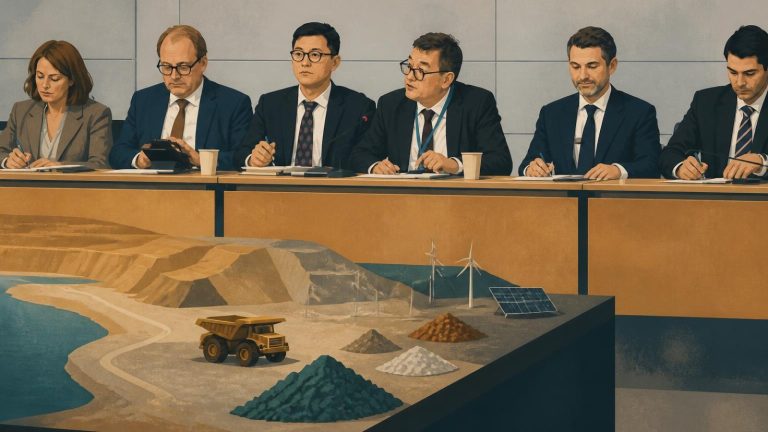
    The European Union is testing whether grants, guarantees and equity stakes can succeed where markets have failed — rewarding critical mineral producers for meeting environmental and social standards rather than simply undercutting them on price.

    As demand for cobalt, copper, lithium and nickel accelerates, the bloc’s policymakers are wrestling with a familiar tension: how to scale supply quickly without repeating the environmental and social failures that have dogged mining elsewhere. The underlying problem, according to a recent analysis by Isabel Munilla, Luke Balleny and Ke Wang published on the World Resources Institute platform, is that markets have not reliably rewarded stronger performance. Lower-cost, lower-standard supply has remained competitive even as certification schemes such as the Initiative for Responsible Mining Assurance and the Copper Mark have proliferated. Europe’s answer is to put public money behind the gap.

    The CRMA as the organising framework

    The EU Critical Raw Materials Act has become the central mechanism through which Brussels is trying to align finance with responsible production. Projects seeking “strategic project” status under the CRMA — and the financing and permitting benefits that come with it — must demonstrate sustainable implementation, including environmental impact minimisation, respect for human rights and indigenous and labour rights, and transparent business practices that guard against corruption. The European Commission has not yet mandated adherence to a specific certification scheme, but plans to open a recognition process in 2027, which would give the framework more teeth.

    Strategic project status also acts as a funnel into EU and national financing programmes, and the European Investment Bank has moved to back that pipeline directly. In March 2025 the EIB adopted a Critical Raw Materials Strategic Initiative targeting €2 billion ($2.3 billion) in financing for critical raw material investments, with projects assessed against an 11-point Environmental and Social Sustainability Framework covering environmental, social, climate, community and health criteria. Mining projects must additionally comply with EU environmental directives and member-state law.

    A parallel equity channel has opened through the EU and the European Bank for Reconstruction and Development, which launched a joint facility in July 2024 aiming to mobilise €100 million ($115.5 million) for equity investments in critical mineral exploration. Projects financed through it must meet the EBRD’s Environmental and Social Policy 2024, built around ten environmental and social requirements.

    Blended finance and the Lionheart test case

    Perhaps the clearest illustration of how Brussels intends these tools to work in practice is Vulcan Energy Resources’ €2 billion Lionheart project in Germany — billed as Europe’s first commercial integrated lithium and renewable energy project, and expected to supply around 12 per cent of the continent’s projected lithium hydroxide demand by 2030. Lionheart draws on geothermal brines to build an integrated, battery-grade lithium supply chain, and was designated an EU Strategic Project under the CRMA.

    Its first phase was financed through a blended structure: the EIB provided €250 million ($287.8 million) in debt, alongside twelve other lenders including five export credit agencies and seven commercial banks. The model reflects the logic set out in the WRI analysis — that InvestEU-style structures, which combine EU budget guarantees with EIB and national promotional bank financing, allow Brussels to absorb the riskiest tranche of capital and crowd in private lenders who would otherwise avoid early-stage exploration or unproven extraction technologies. Projects backed through InvestEU must clear environmental, social and governance screening aligned with the EU Taxonomy and the EIB’s own standards.

    Why Europe’s approach differs from elsewhere

    The report’s broader argument is that no single financial instrument fits every mineral market, and Europe’s own toolkit reflects that. For copper and lithium, where production is spread across jurisdictions with comparatively strong governance, the authors suggest conditional financing tied to existing certification systems can be applied fairly directly — which is broadly the CRMA’s approach. That contrasts with more concentrated, weaker-governance markets such as nickel, dominated by Indonesia, where the authors argue financial levers need to be paired with diplomatic and trade engagement rather than deployed alone — a reminder that Europe’s toolkit, built for its own regulatory environment, may not transfer easily to the jurisdictions that actually supply many of the minerals it needs.

    The tension between tightening and oversupplied markets also matters for how Brussels calibrates its tools. Lithium demand is currently outpacing supply, which the analysis suggests argues for ensuring new entrants — like Lionheart — build in strong ESG performance from the outset, tying access to concessional finance to compliance with recognised standards. Nickel, by contrast, is described as already oversupplied but often falling short on environmental and social performance, suggesting European finance directed there should prioritise retrofitting and emissions upgrades over expanding output.

    An unproven bet

    Brussels’s wager is that public money can shift market norms beyond the individual projects it touches — that conditioning access to grants, guarantees and equity on verifiable performance will eventually make responsible production the commercial default rather than a cost handicap. The clearest precedent for that kind of spillover comes not from Europe but from the United States: the now-expired Section 30D clean vehicle tax credit, which required automakers to prove mineral provenance and comply with restrictions on Foreign Entities of Concern, is credited with pushing traceability and chain-of-custody systems into permanent use across supply chains, even after the credit itself lapsed.

    Whether the CRMA, the EIB’s sustainability framework and the EU-EBRD equity facility can produce a comparable, lasting shift remains untested. Most of the instruments are too recent to assess on outcomes, and the report’s authors caution that public finance works only in combination with other levers — trade agreements, procurement mandates, price support — rather than as a standalone fix. For Europe, which is simultaneously trying to secure supply, cut dependency on China and hold itself to higher ESG standards than most of its competitors, the coming years of CRMA implementation will be the first real test of whether that combination adds up.


  • EIT RawMaterials Proposes Strategic Model for European Critical Raw Materials Centre

    EIT RawMaterials Proposes Strategic Model for European Critical Raw Materials Centre

    The European Commission’s recent decision to establish a European Critical Raw Materials (CRM) Centre marks a significant step towards enhancing Europe’s raw materials policy framework and transforming it into industrial capability. EIT RawMaterials has expressed strong support for this initiative and is poised to take a leading operational role in its implementation, working under the strategic authority of the European Commission and Member States.

    In a newly published position paper, EIT RawMaterials outlines its vision for the CRM Centre, detailing how it can assist in translating Europe’s raw materials strategy into tangible industrial outcomes. The paper proposes a practical operating and delivery model for the CRM Centre, positioning EIT RawMaterials as a strategic partner and market-facing operational arm.

    Europe has already laid much of the necessary policy groundwork, with initiatives such as the Raw Materials Mechanism, CRMA Strategic Projects, RESourceEU, and the G7 Critical Minerals Action Plan amplifying the urgency for coordinated implementation. EIT RawMaterials emphasises that the CRM Centre should not merely add another layer of policy or data but should instead connect strategic intelligence with markets, projects, and finance. This connection is essential for executing European priorities into concrete industrial actions.

    The proposed model is structured around four interconnected pillars: strategic intelligence, market formation, strategic value-chain delivery, and stage-gated finance and de-risking. Strategic intelligence will focus on combining market, project, technology, and geopolitical insights to identify vulnerabilities and set action priorities. Market formation aims to qualify supply and demand, aggregate buyer requirements, and develop independent price references to encourage investment. Strategic value-chain delivery seeks to address the ‘missing middle’ in Europe’s processing and refining capabilities, while stage-gated finance will align project stages with appropriate funding mechanisms.

    Additionally, strategic stockpiling and preparedness are highlighted as crucial components that would enhance Europe’s resilience against disruptions and foster more robust supply chains in the long term. EIT RawMaterials already possesses a solid foundation for delivery, with its Metal & Mineral Platform M2i integrating over 2.5 million verified data points for informed decision-making. The investment pipeline managed by EIT RawMaterials exceeds €25 billion, and the organisation has successfully deployed more than €700 million across over 800 projects and startups, mobilising an additional €8.3 billion in investment.

    With these existing capabilities, Europe is not starting from scratch in building a new delivery ecosystem. EIT RawMaterials is prepared to facilitate a swift transition from strategy to implementation for the CRM Centre, should it receive the mandate from the European Commission and Member States.


  • UK-Kazakhstan Strategic Partnership: A New Era of Economic Cooperation

    UK-Kazakhstan Strategic Partnership: A New Era of Economic Cooperation

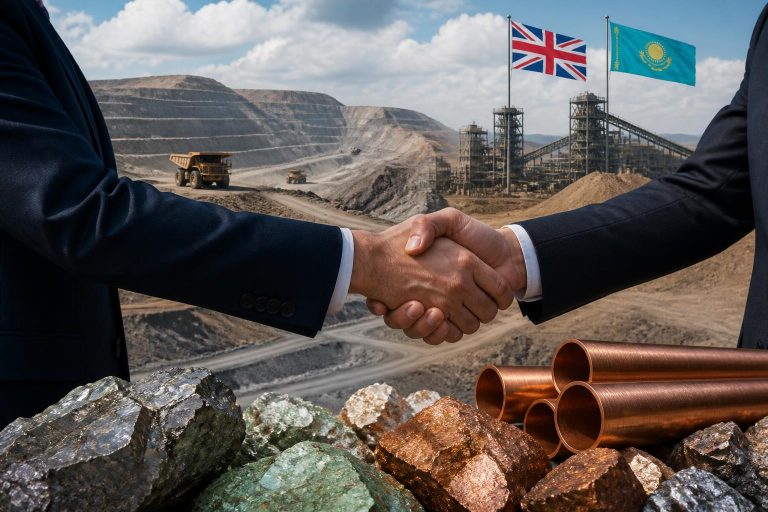
    The recent entry into force of the Strategic Partnership and Cooperation Agreement (SPCA) between the United Kingdom and Kazakhstan marks a significant evolution in their bilateral relationship. This agreement, which was formalised in July 2026, is not merely a diplomatic formality but rather a strategic framework designed to enhance collaboration across various sectors, including critical minerals, energy, education, and technology. British Ambassador to Kazakhstan, Sally Axworthy, emphasised that the SPCA is a ‘signal of intent’ that positions the UK as a proactive partner ready to engage in meaningful investments and initiatives in Kazakhstan.

    Kazakhstan’s rich mineral resources and its growing role in Eurasian connectivity make it a focal point in the global race for critical minerals. The SPCA aims to transition the dialogue from mere resource extraction to value creation, highlighting the importance of processing and technological advancement. Recent projects, such as a $107 million agreement for rhenium recycling, illustrate this shift towards industrial cooperation, where both countries can leverage their strengths to create higher-value products rather than simply exporting raw materials.

    Moreover, the partnership extends beyond economic dimensions, with education playing a crucial role in fostering long-term ties. The Bolashak Scholarship programme has facilitated the education of thousands of Kazakh students in the UK, and British universities are increasingly establishing campuses in Kazakhstan. This educational exchange not only builds human capital but also aligns with the broader economic strategy of enhancing skills and technology transfer. As both nations look to solidify their partnership, the SPCA could serve as a pivotal foundation for a more mature and resilient economic relationship, contingent on the successful implementation of collaborative projects and initiatives.


  • Strengthening Transatlantic Ties: Canada and the EU’s Critical Minerals Strategy

    Strengthening Transatlantic Ties: Canada and the EU’s Critical Minerals Strategy

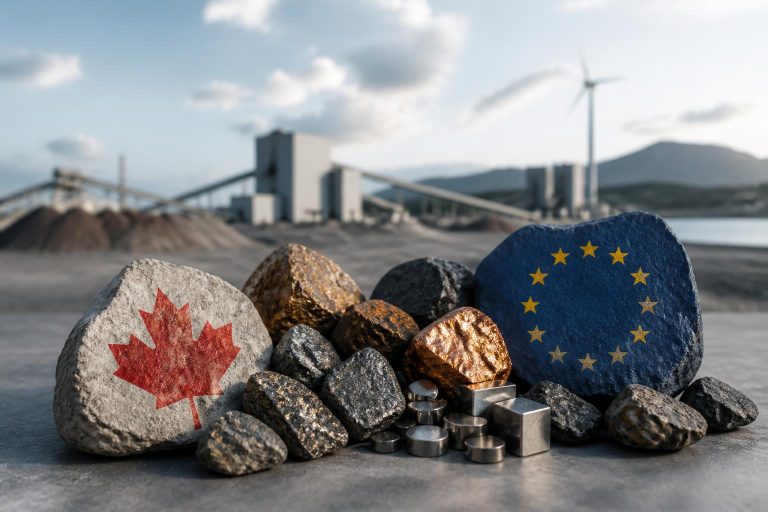
    In recent years, Canada and the European Union have significantly enhanced their transatlantic relationship, particularly in the realm of critical minerals supply chains. This collaboration gained momentum following the implementation of the EU’s Critical Raw Materials Act (CRMA) in May 2024, which set ambitious targets for the EU to meet its own strategic raw materials needs. By 2030, the EU aims to ensure that at least 40% of its annual consumption of these materials is processed within its borders, alongside goals for domestic extraction and recycling. This benchmark highlights the importance of the midstream sector, where processing and refining activities bridge the gap between raw mining and manufacturing.

    The EU’s heavy reliance on imports for refined materials, which rose from 83% in 2011 to 90% by 2023, underscores the urgency of developing a more resilient supply chain. China’s dominance in the processing of critical minerals, controlling 19 out of 20 energy-transition minerals, has raised concerns in Europe, particularly as Chinese export controls have led to production stoppages in European factories. Despite these challenges, Europe possesses a robust base of metals smelters that can be modernised and expanded with targeted investments.

    The CRMA aims to foster economic and social development by encouraging processing in developing countries, while also ensuring that Europe can source value-added materials directly from its partners, rather than relying on Chinese processing. The EU’s strategy includes prioritising essential materials for future technologies, streamlining project permitting, facilitating finance, and establishing strategic partnerships with non-EU countries.

    While the 40% benchmark is not legally binding, it serves as a guiding principle for the EU’s efforts to enhance its refining capacity. Progress has been mixed, with notable advancements in lithium and nickel refining, but significant gaps remain in areas like magnesium and titanium. Canada, with its own Critical Minerals Strategy, is well-positioned to become a leader in the global mining sector, leveraging its processing capabilities and access to low-cost, low-carbon energy.

    The bilateral relationship between Canada and the EU is further strengthened by the Comprehensive Economic and Trade Agreement (CETA) and the 2021 strategic partnership on critical raw materials. However, both parties must focus on solidifying projects and co-investments to secure minerals and refined metals. Collaborative efforts, such as the G7 Critical Minerals Production Alliance and NATO’s initiative on critical raw materials, highlight the potential for Canada and the EU to work together in building resilient supply chains.

    As the global landscape evolves, Canada and the EU must address the challenges posed by export controls and price volatility in the critical minerals market. By focusing on midstream cooperation, shared projects, and predictable offtake agreements, they can establish a stable foundation for the materials essential to clean technology, digital innovation, and defence industries. The midstream sector represents a crucial area for building resilience and ensuring secure supply chains, where Canada’s strengths in extraction and Europe’s processing expertise can create a mutually beneficial partnership.


  • Strengthening Europe’s Defence Supply Chains Through Resilient Raw Materials

    Strengthening Europe’s Defence Supply Chains Through Resilient Raw Materials

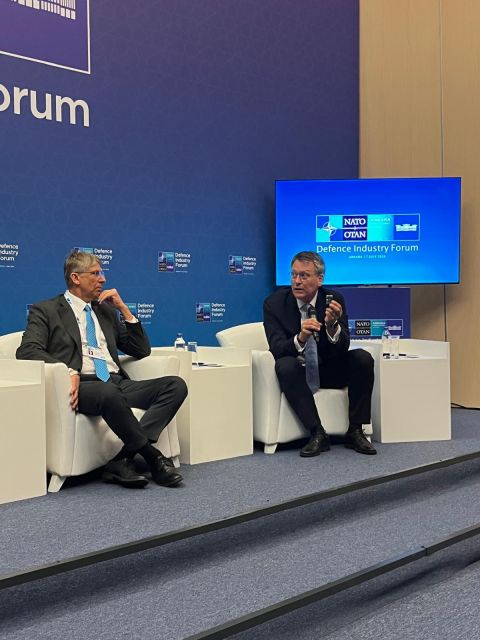
    At the NATO Summit Defence Industry Forum held in Ankara, Euromines President Jan Moström emphasised the critical role of raw materials in ensuring resilient supply chains for Europe’s defence and industrial sectors. The forum brought together leaders from various industries, including semiconductors and automotive, to discuss strategies for future-proofing supply chains amidst rising geopolitical tensions. Moström highlighted that secure access to critical raw materials is essential for maintaining Europe’s industrial competitiveness and technological leadership, particularly in the context of increasing strategic competition.

    During the panel discussion titled “Resilient by Design: Future-proofing Allied Supply Chains,” Moström outlined four key policy priorities aimed at bolstering Europe’s industrial preparedness. Firstly, he advocated for a shift from “just-in-time” to “just-in-case” supply chains, which would better equip industries to handle crises. Secondly, he called for stable and predictable investment conditions, stressing that mining projects require long-term certainty to thrive. Thirdly, he urged the importance of building and maintaining supply chains during peacetime to ensure readiness in times of crisis. Lastly, he emphasised the need to reduce legislative fragmentation and administrative burdens to accelerate the development of strategic projects that Europe urgently needs.

    The discussion underscored that a secure industrial base begins well before the manufacturing stage, rooted in a competitive and responsible mining sector. Moström’s insights reflect a growing recognition that coherent policies and long-term investment certainty are vital for strengthening Europe’s security and industrial base. As NATO and its allies work towards reinforcing industrial resilience, the role of raw materials in this equation cannot be overstated. The forum concluded with a call for strategic prioritisation of secure access to these materials, which are foundational to the continent’s defence capabilities.


  • Central Asia’s Economic Ascent: The Mining Industry at the Heart of Regional Growth

    Central Asia’s Economic Ascent: The Mining Industry at the Heart of Regional Growth

    Central Asia and Mongolia will remain resilient to geopolitical shocks and record the highest growth rates of the EBRD countries of operation in 2026 and 2027, according to the latest Regional Economic Prospects report published on 3 June 2026, by the European Bank for Reconstruction and Development (EBRD). The combined economies of Kazakhstan, the Kyrgyz Republic, Mongolia, Tajikistan, Turkmenistan, and Uzbekistan are projected to grow by 5.6% in 2026 and 5.3% in 2027.

    These are compelling headline figures. Yet beneath them lies a more consequential story—one that the OECD’s March 2026 report, Advancing Security and Transparency for the Governance of Critical Raw Materials in Central Asia, articulates with rare precision: the region is not merely growing; it is repositioning itself at the very heart of the global critical raw materials race.

    The mining sector is no longer a background variable in Central Asia’s development story. It is the plot itself.


    Article content

    MINEX Asia 2026 is where it gets real. Join EBRD and OECD peers presenting on Kazakhstan’s scale, Tajikistan’s green pivot, Uzbekistan’s processing ambitions—and the governance gaps that determine success.

    🗓️ 24-25 June | Ankara: https://2026.minexasia.com


    The Regional Narrative: Resilience With Structural Depth


    Growth prospects remain robust but are increasingly dependent on the pace of domestic reforms and efforts to strengthen resilience to external shocks. Strong domestic consumption, rising real wages, and robust capital investment are real. But so are the fault lines: downside risks include energy price volatility, supply-chain disruptions, economic sanctions, and slower growth in the region’s largest trading and economic partners, Russia and China.

    The OECD note adds a structural dimension that the growth forecasts alone cannot convey. Central Asia’s substantial yet untapped resource base, combined with its location between major markets in Europe and Asia, raises the region’s relevance in CRM geopolitics and efforts to diversify global supply chains. This is a geostrategic statement. The region holds extraordinary assets: Kazakhstan, already the world’s largest producer of uranium, produces and processes around twenty of the 34 CRMs included on the European Union’s official list. The Kyrgyz Republic and Tajikistan both host some of the world’s largest antimony reserves. Uzbekistan possesses some of the largest copper reserves globally and is advancing lithium and molybdenum production.

    Taken together, these endowments amount to a critical minerals portfolio of exceptional strategic depth. Whether the region can translate that portfolio into durable prosperity is the central question of the coming decade.

    Country by Country: Where the Headlines Don’t Tell the Full Story


    Tajikistan: Gold and Strategic Minerals

    Article content


    Tajikistan: Gold and Strategic Minerals

    Tajikistan’s economic performance continues to confound those who underestimate it. In March 2026, Moody’s upgraded Tajikistan’s sovereign credit rating to B2 with a stable outlook, citing the country’s continued economic resilience. The EBRD projects growth easing to 7.9 per cent in 2026 — still remarkable for a landlocked, remittance-dependent economy navigating elevated regional volatility.

    The mining dimension is crucial. Gold remains the cornerstone of export revenue and fiscal stability, and Tajikistan’s antimony sector is poised for a structural step-change. Tajikistan possesses the world’s second largest antimony reserves, and China’s effective ban on antimony exports to the US and EU provides a significant window of opportunity. Together, France and Belgium accounted for 77% of Tajikistan’s antimony exports in 2024. With TALCO nearing completion of a new antimony metallurgical plant, Dushanbe is finally beginning to capture processing value rather than simply shipping raw material.

    Article content


    But what I find most intriguing about Tajikistan’s trajectory is the emerging convergence of green energy and artificial intelligence with its mining ambitions. The Rogun Hydropower Project — set to have an annual capacity of over 3,600 megawatts once fully operational — would cover most of Tajikistan’s domestic consumption and create the conditions for green aluminium production, with approximately 70 per cent of output earmarked for export to Kazakhstan and Uzbekistan. Cheap, clean electricity is not merely an industrial asset — it is the foundation for competitive mining, smelting, and increasingly, data infrastructure.

    Tajikistan has initiated groundbreaking infrastructure projects, including the launch of “Area AI” — the world’s first dedicated AI Zone — a technopark and cluster designed to serve as a hub for research, development, and application of AI technologies. The country has forged partnerships with international tech firms including Perplexity AI, Google DeepMind, Yotta and Presight to accelerate technology transfer and innovation. The government has declared 2025–2030 the “Years of Digital Economy and Innovation Development.” Taken alongside the Rogun-powered industrial ambitions, this is Tajikistan’s bid to become not just a minerals supplier but a genuinely integrated green industrial economy — using AI and clean energy together to escape the extractive trap.

    The key vulnerability remains Tajikistan’s dependence on Russia, where a slowdown would depress the remittance inflows that underpin household incomes. That risk is real and should not be minimised. But the strategic direction of travel is clear — and it is more ambitious than most Western observers appreciate.

    Article content

    Kyrgyzstan: The Kumtor Imperative and Exploration Needs

    Kyrgyzstan remains the region’s most dramatic case study in resource-dependent growth. Kumtor Gold Company — nationalised in 2022 after nearly three decades of Canadian stewardship — generated net profit exceeding USD 706 million in 2025, contributes 10–15 per cent of GDP, and represents nearly two-thirds of the country’s mineral exports. The March 2025 discovery of an additional 147 tonnes of gold reserves extended the mine’s productive life to at least another 17 years.

    Underground mining operations, launched in August 2025, are transformative. At current gold prices hovering above USD 4,500 per ounce, Kumtor’s economics are exceptional — and the government’s plan to process tailings estimated to contain over 100 tonnes of gold adds further upside. Fixed capital investment rose by 25.5 per cent year on year thanks to strong investment in infrastructure, energy and housing.

    Article content

    Yet the near-term outlook has darkened. The European Union’s 20th sanctions package, announced in late April, restricts exports of dual-use goods to Kyrgyzstan and tightens controls on its financial and logistics sectors. The EBRD has revised its 2026 growth forecast down to 8.7 per cent as a result. This is a significant geopolitical constraint on what would otherwise be an exceptionally strong growth story — and it underscores the OECD’s broader finding that regulatory unpredictability and governance gaps impose real costs on the region’s investment attractiveness.

    The OECD note also flags a structural vulnerability that sits beneath the Kumtor euphoria: limited exploration since independence means that the Kumtor mine, accounting for 90% of the Kyrgyz gold exports, is set to close in 2031 due to reserves depletion — and the lack of exploration since independence will make it harder to offset this decline quickly. The reserve discovery of 2025 has bought time but not resolved the underlying fragility.

    Kazakhstan: Scale, Strategy, and Industrial Output

    Kazakhstan’s mining profile is defined by scale and global strategic significance. The country holds the world’s largest chromium reserves, accounts for roughly 40 per cent of global uranium output, and produces massive quantities of refined copper, largely exported to major industrial buyers like China and Türkiye.

    Graphite is a high-potential sector for Kazakhstan. With the exploitation of its Sarytogan deposit — added to the EU’s list of strategic raw material projects and reported to contain 30% of the world’s graphite reserves — Kazakhstan is expecting to become a crucial player on the world graphite market.

    The tungsten story is equally striking. Kazakhstan holds roughly 2 million tonnes of tungsten resources out of approximately 3.6 million tonnes of global reserves. A joint venture between Kazakhstan’s Tau-Ken Samruk and US-based Cove Kaz Capital Group has been formed to develop the Severniy Katpar tungsten project, with the US International Development Finance Corporation issuing Letters of Interest for up to USD 700 million in potential financing — marking Washington’s most significant entry yet into the region’s critical minerals sector.

    Yet the near-term picture carries a real cautionary note. In Kazakhstan, the extractive industry contracted by 11.4 per cent year on year in Q1 2026 following disruptions to the Caspian Pipeline Consortium pipeline and an incident at the Tengiz oil field. The EBRD projects Kazakhstan’s GDP growth moderating to 4.7 per cent in 2026 and 4.5 per cent in 2027 — the lowest in the region, reflecting the inherent vulnerability of commodity-led economies to infrastructure and logistics shocks.

    Article content

    Uzbekistan: The Ambitious Reformer

    Uzbekistan’s ambitions deserve particular attention. The country is the world’s fifth-largest uranium supplier, a top-ten gold producer, and is rapidly positioning itself as a critical minerals investment destination. Uzbekistan has actively signed Memorandums of Understanding with Western partners, including the United States, for securing supply chains in the mining and processing of Critical Minerals and Rare Earths. The government has also launched massive industrial initiatives to bolster its critical minerals sector.

    The Almalyk Mining and Metallurgical Complex (AMMC) and its specialised subsidiaries targeting tungsten, molybdenum, rhenium, lithium, and graphite signal a genuine strategic shift from raw extraction towards value-added processing. Whether governance and transparency standards keep pace with ambition will be the decisive variable.

    Article content

    The Structural Challenge: From Resource Extraction to Value Creation

    Both the EBRD and the OECD converge on a single, uncomfortable truth: Central Asia’s growth is impressive, but its mining sectors remain structurally exposed. The OECD note identifies several systemic vulnerabilities that macro-growth figures obscure.


    • On reserves reporting: Most countries still operate on Soviet-era GKZ classification systems that differ fundamentally from international CRIRSCO standards — creating information asymmetries that deter sophisticated investors and complicate due diligence. Kazakhstan has made progress through its KAZRC system; other regional peers have barely started.
    • On foreign investment dynamics: Foreign actors, predominantly Chinese, actively invest in Central Asia’s mining industry. China has been a primary investor in the mining sectors of the Kyrgyz Republic and Tajikistan, and is increasing its presence in Kazakhstan and Uzbekistan, not only by investing in extraction facilities but also by supporting the development of initial processing capabilities. This creates a strong strategic dependency that the region’s governments are increasingly aware of — and that Western partners, including the EU, UK, and US, are now actively looking to balance through alternative commercial partnerships.
    • On the Trans-Caspian International Transport Route (TITR): Traffic along the corridor (the Middle Corridor) has increased dramatically as exporters seek reliable East–West trade alternatives. Kazakhstan in particular has long relied on the corridor for its mineral, chemical, and agricultural exports, with a substantial portion of its uranium exports to Western markets utilising this bypass route. This corridor is central to the region’s ability to diversify export markets.
    • On ESG and governance: The OECD is frank: mining in the region is still heavily influenced by large state-owned enterprises with overlapping regulatory and commercial roles, needing stronger occupational health and safety oversight and remediation of legacy environmental risks. These are not peripheral concerns — they are the conditions on which Western investment and international supply chain partnerships will ultimately be conditioned.


    Article content

    The Strategic Opportunity

    The OECD projects global demand for many critical raw materials to increase multifold over the coming decades to meet the needs of the green and digital transitions. Central Asia sits atop a significant share of the reserves that will need to come online to meet that demand. The region holds massive global shares of manganese ore, chromium, lead, zinc, titanium, aluminium, copper, cobalt, and molybdenum.

    That is an extraordinary endowment. Translating it into durable prosperity requires three things that remain in genuinely short supply across the region: transparent governance, world-class ESG practice, and the institutional capacity to negotiate from strength with both regional and global partners.

    This is precisely why platforms like the MINEX Forum matter. The conversation between producers, investors, policymakers, and development finance institutions that happens at these gatherings is not peripheral to the critical minerals agenda. It is where the terms of engagement are shaped.


    Conclusion: Cautious Optimism, Clear Conditions

    The EBRD’s projection of robust regional growth is credible. The OECD’s assessment of the region’s critical minerals potential is genuinely exciting. But both institutions are equally clear-eyed about the conditions that must be met for that potential to be realised responsibly.

    Central Asia’s mining sectors are not simply economic contributors. They are strategic assets in the most consequential industrial transformation of our era. Their management — balancing extraction with environmental stewardship, concentrating revenue into productive capital formation, building institutional capacity, and securing diversified partnerships — will determine whether current growth translates into sustainable prosperity or rehearses the resource curse that has constrained other commodity-rich regions.

    The next chapter will be written in mining offices, government ministries, and international forums across Dushanbe, Bishkek, Astana, Tashkent, and Ulaanbaatar. We should be not merely watching — we should be in the room.

    Article content

    References:


    Central Asia and Mongolia to see highest economic growth in the EBRD regions

    https://www.ebrd.com/home/news-and-events/news/2026/central-asia-and-mongolia-to-see-highest-economic-growth-in-the-ebrd-regions.html

    The OECD report “Advancing Security and Transparency for the Governance of Critical Raw Materials in Central Asia”

    https://www.oecd.org/en/publications/2026/03/advancing-security-and-transparency-for-the-governance-of-critical-raw-materials-in-central-asia_09ced3e9.html

    Big dams, big dreams: Rogun and Central Asia’s geo-economics of green energy

    https://lossi36.com/2025/02/20/big-dams-big-dreams-central-asias-geo-economics-of-green-energy/

    Tajikistan’s: Pioneering AI Leadership in Central Asia and Beyond

    https://www.newscentralasia.net/2025/10/28/tajikistans-pioneering-ai-leadership-in-central-asia-and-beyond/

    EBRD Forecasts 6.5% GDP Growth for Uzbekistan in 2026

    https://www.uzdaily.uz/en/ebrd-forecasts-65-gdp-growth-for-uzbekistan-in-2026/

    About the Author:


    Arthur Poliakov is the Managing Director of the United Kingdom-based company Advantix Ltd and the Executive Chairman and founder of the MINEX Forum. He has over 30 years of experience in international business communications, event management, and natural resource markets.

    He is currently organising the upcoming 12th MINEX Asia Forum (24–25 June 2026, Ankara, Turkey), the 10th MINEX Europe Forum (28–30 October 2026, Trim, Ireland), and the 14th MINEX Eurasia Conference (30 November 2026, London, United Kingdom).

  • EU Warns Critical Raw Materials Race Is Becoming a Global Power Struggle

    EU Warns Critical Raw Materials Race Is Becoming a Global Power Struggle

    The global competition for critical raw materials is increasingly becoming a geopolitical battle for economic and industrial power, a senior European Commission official warned on Wednesday, as the European Union seeks to reduce its heavy dependence on China.

    Speaking at the EIT RawMaterials Summit in Brussels, Koen Doens, head of the European Commission’s department for international partnerships, said control over critical minerals now extends far beyond mining and includes refining, processing, transport, financing, and industrial manufacturing capacity.

    Doens argued that minerals such as lithium, cobalt, graphite, and rare earth elements now hold the same strategic importance that oil and gas carried during the 20th century. He described investment in secure supply chains as essential to Europe’s long-term economic resilience and strategic autonomy.

    The comments come as the EU continues efforts to diversify supplies of critical raw materials needed for clean technologies including batteries, solar panels, and wind turbines. Recent warnings from EU auditors suggested the bloc’s energy transition could be jeopardised by its continued dependence on China for key materials and processing capacity.

    Under legislation adopted in 2024, the EU set targets to meet 10% of its extraction, 40% of refining, and 15% of recycling needs domestically by 2030. However, the bloc still relies heavily on foreign partners for access to many strategic minerals, particularly rare earth elements not available within Europe.

    To reduce vulnerabilities, the EU has signed 16 international partnerships with countries including the Democratic Republic of Congo, South Africa, Zambia, and the United States through its Global Gateway initiative, which aims to strengthen Europe’s global infrastructure and resource ties while competing with China’s Belt and Road Initiative.

    Doens warned that Europe can no longer rely solely on market forces to guarantee secure access to raw materials and stressed that the bloc must also develop refining, processing, and manufacturing capabilities rather than focusing only on extraction.

    China currently dominates the global critical raw materials supply chain, accounting for around 60% of production and approximately 90% of refining capacity worldwide. According to European Parliament research, the EU depends on China for roughly 90% of its raw materials supply and 98% of its rare-earth magnets. Beijing has repeatedly imposed restrictions on rare earth exports in recent years, including in 2025.

    A recent paper by the European Union Institute for Security Studies proposed forming an “allied industrial bloc” with non-rival countries such as Malaysia, Brazil, Indonesia, India, and the Democratic Republic of Congo to reduce exposure to Chinese leverage. The study also called for major investment in European refining infrastructure and strategic mineral reserves similar to emergency oil stockpiles.

    The debate has intensified around proposals to speed up mining and processing approvals within Europe. The European Commission recently suggested reopening parts of the EU Water Framework Directive as part of a broader strategy to accelerate critical raw materials projects and reduce supply risks.

    The move triggered criticism from environmental groups and lawmakers concerned that weakening water protections could worsen water stress, environmental degradation, and climate-related risks. In a letter to Commission President Ursula von der Leyen, 27 lawmakers warned that reopening core environmental legislation could undermine public confidence and legal certainty.

    Despite the criticism, the Commission signalled it intends to continue simplifying regulations to boost industrial competitiveness and accelerate strategic projects across the bloc.

  • Unpacking Kazakhstan’s $25 Billion Mining and Critical Minerals Revolution

    Unpacking Kazakhstan’s $25 Billion Mining and Critical Minerals Revolution

    On 18 March the US Commercial Service hosted a webinar featuring experts from the Kazakh government and industry. The central message was clear: Kazakhstan is no longer presenting itself simply as a resource-rich country. It is actively seeking to become a more significant destination for investment, processing, industrial partnerships and long-term supply chain co-operation.

    If you are tracking the global energy transition and supply chain security, this is a market that demands your attention. Here are my biggest takeaways from the session:

    A market defined by scale, ambition and strategic importance

    Kazakhstan’s resource base remains one of its greatest strengths. Speakers highlighted that mining and metallurgy continue to play a major role in the national economy, while reforms are being introduced to improve transparency, modernise infrastructure and create a more attractive environment for foreign investors.

    Particular attention was given to coal, mining and critical minerals as sectors with major growth potential. Kazakhstan is pursuing a pragmatic approach to energy development, combining its natural resource base with efforts to attract technology, financing and international partners. For U.S. companies, this is increasingly being framed not only as a commercial opportunity, but also as a chance to help build more resilient allied supply chains.

    The Sheer Scale of the Resource Opportunity

    Kazakhstan holds a formidable position on the global energy map, but it’s the untapped potential that is most striking:

    • Massive Reserves: The country sits on 33 billion tonnes of coal reserves, ranking 8th globally—enough to sustain production for over 300 years.
    • Cost Advantages: Kazakh coal prices hover around $25 to $50 per tonne—a fraction of the cost in other global markets. Furthermore, the cost of geological exploration is incredibly low at just $11 per square kilometre, compared to $167 in Australia and $203 in Canada.
    • The Coal Chemistry Boom: Currently, only 3% of Kazakhstan’s coal is processed. Shifting towards deep processing (synthetic fuels, ammonia, urea, methanol) represents a $25 billion untapped market.

    Modernising the Energy Grid

    As power demand surges—driven by industrialisation and the rise of AI—Kazakhstan is heavily focussed on modernising its infrastructure. The Ministry of Energy plans to introduce 26 gigawatts of new power capacity over the next decade. This includes a near-term plan to add 7.6 GW of new coal-fired capacity, requiring an estimated $16 billion in investment by 2030. The government is actively seeking technological partnerships for carbon capture and storage (CCS) and ultra-supercritical boiler technologies to ensure this growth aligns with clean energy standards.

    Critical minerals are becoming central to the conversation

    One of the most interesting aspects of the discussion was the growing focus on critical minerals and rare earth-related opportunities.

    Kazakhstan is developing a more comprehensive strategy for critical raw materials, with plans to define priority minerals, support processing and encourage higher-value production. The direction of travel is clear: the country wants to move further up the value chain and become more than simply an exporter of raw materials.

    This was particularly relevant in light of the tungsten discussion that followed.

    Resources:

    Looking ahead to 14-16 April: MINEX Kazakhstan Forum in Astana

    The next important date in the calendar is 15 April, when Julie M. Stufft , U.S. Ambassador to the Republic of Kazakhstan, will speak at the strategy session on Critical Minerals and Global Strategic Alliances at the 16th MINEX Kazakhstan Forum in Astana.

    Also speaking will be Dominic Heaton Dominic Heaton, CEO of Cove Kaz Capital Group, who will present the Severniy Katpar case study.

    This is especially significant because Severniy Katpar and Verkhnee Kairakty together hold 1.4 million tonnes of tungsten trioxide under JORC standards, representing around 70% of Kazakhstan’s total tungsten reserves. The project involves an estimated $1.1 billion joint venture investment, with potential support from U.S. EXIM and the U.S. International Development Finance Corporation totalling up to $1.6 billion.

    That level of financial and diplomatic backing underlines how strategically important this project could become, not only for Kazakhstan, but also for broader allied efforts to secure critical mineral supply chains.

    Why these matters

    What stood out most from the 18 March webinar was the alignment now emerging between Kazakhstan’s resource ambitions and international demand for secure, diversified supply chains.

    Kazakhstan offers scale, geological potential and a strategic location between major markets. The United States and other partners bring financing, technology and industrial expertise. If those elements come together effectively, the result could be a new phase of co-operation built around mining, processing, infrastructure and critical minerals development.

    For anyone following energy security, industrial policy or strategic resource investment, Kazakhstan is becoming increasingly difficult to ignore.

    The webinar made that case convincingly. The 15 April MINEX Forun sessions should offer an important next step in showing how these opportunities may translate into practical projects and partnerships.

  • Europe Accelerates Lithium Strategy to Reduce Dependence on China

    Europe Accelerates Lithium Strategy to Reduce Dependence on China

    Lithium is increasingly being treated as a strategic resource in Europe, prompting efforts to develop domestic mining and processing capacity and reduce reliance on China’s dominant position in global supply chains.

    China currently accounts for roughly two-thirds of global refined lithium production, a concentration that has raised geopolitical and industrial concerns within the European Union. With demand for lithium expected to grow significantly by 2030, driven by electric vehicles, energy storage and digital technologies, European policymakers are seeking to strengthen supply security.

    Mining companies are advancing lithium projects across several European countries, including Portugal, Germany and Serbia. Portugal’s Barroso project has been designated as “strategic” under the EU’s Critical Raw Materials Act (CRMA), with production potentially starting later this decade. However, the project has faced opposition from local communities and environmental groups.

    Serbia’s Jadar project, located outside the EU but of strategic interest to the bloc, is considered one of the most significant lithium developments in Europe. Industry estimates suggest it could supply a substantial share of regional demand, though progress has been delayed by political uncertainty and environmental concerns.

    Germany is also exploring lithium extraction from geothermal brine resources, which could offer a lower-impact alternative to conventional mining methods. Recent discoveries in Saxony-Anhalt have been described by analysts as potentially significant, though further validation is required.

    In parallel with mining development, European officials are considering broader policy measures, including the potential creation of strategic stockpiles of critical raw materials. The approach mirrors existing systems for oil and gas reserves.

    The Critical Raw Materials Act, adopted in 2024, is central to the EU’s strategy. The legislation aims to accelerate permitting and investment in projects deemed strategic, including mining, processing and recycling. A significant proportion of the projects identified under the framework involve lithium.

    Despite these efforts, industry experts note that Europe’s main challenge lies in building sufficient processing and refining capacity. Without this, domestically mined lithium may still need to be processed abroad, limiting the effectiveness of supply chain diversification.

    Recycling is expected to play an increasingly important role in meeting future demand, particularly as battery waste volumes grow.

    The push to secure lithium reflects broader concerns about supply chain resilience and industrial competitiveness. As global demand for battery materials continues to rise, Europe’s ability to develop a fully integrated lithium value chain will be a key factor in its energy transition and long-term economic strategy.

  • US, EU and Japan Prepare Critical Minerals Trade Pact to Counter China

    US, EU and Japan Prepare Critical Minerals Trade Pact to Counter China

    The United States, Japan and the European Union are preparing to announce plans for a new trade framework aimed at strengthening supply chains for critical minerals and reducing dependence on China, according to people familiar with the discussions.

    The initiative is expected to lay the groundwork for a broader plurilateral trade agreement covering key minerals used in electric vehicles, clean energy technologies and advanced manufacturing. Negotiations are being led by the Office of the US Trade Representative (USTR) in coordination with officials in Brussels and Tokyo.

    Officials involved in the talks say the framework may include coordinated trade policies such as price floors, tariffs and other market mechanisms designed to counter price distortions linked to Chinese supply. A price floor would establish a minimum market price for selected minerals, encouraging investment in mining and processing projects while preventing cheaper imports from undercutting producers participating in the agreement.

    The Defense Advanced Research Projects Agency (DARPA) is reportedly assisting US trade officials in developing pricing models for the mechanism.

    Global efforts to diversify critical mineral supply chains intensified after China introduced export controls on several rare earth elements and strategic minerals last year. The restrictions were widely seen as a response to sweeping tariffs imposed by the United States on imported goods.

    Although supply pressures have eased since their peak last year, manufacturers in Europe, the United States and Japan continue to report shortages and delays in receiving critical mineral shipments from Chinese suppliers.

    USTR is expected to begin formal negotiations with the European Union and Japan in April, shortly after the close of a public consultation period for industry stakeholders on March 19.

    The announcement may coincide with Japanese Prime Minister Sanae Takaichi’s visit to the White House scheduled for March 19. European officials are also coordinating closely with Washington and Tokyo on the initiative, although the timing of Brussels’ announcement has not yet been finalized.

    The concept is also expected to feature prominently at the upcoming Group of Seven summit.

    Earlier this year, the United States signed a similar action plan with Mexico aimed at coordinating policies on critical mineral supply chains. The agreement includes provisions to examine border-adjusted price floors for mineral imports and to explore joint trade policies supporting secure supply.

    Officials say the proposed framework between the US, EU and Japan will likely mirror many elements of the US–Mexico agreement. Potential areas of cooperation include investment screening, research and development in mineral processing technologies, coordinated stockpiling strategies and support for downstream supply chains.

    While the exact list of minerals covered has not yet been finalized, officials are considering starting with a limited group of strategic materials before expanding the agreement to include a broader range of critical minerals.

    The initiative reflects growing concern among Western economies about supply concentration in global mineral markets. China currently dominates the processing and refining of many critical materials, including rare earth elements, graphite and several battery metals.