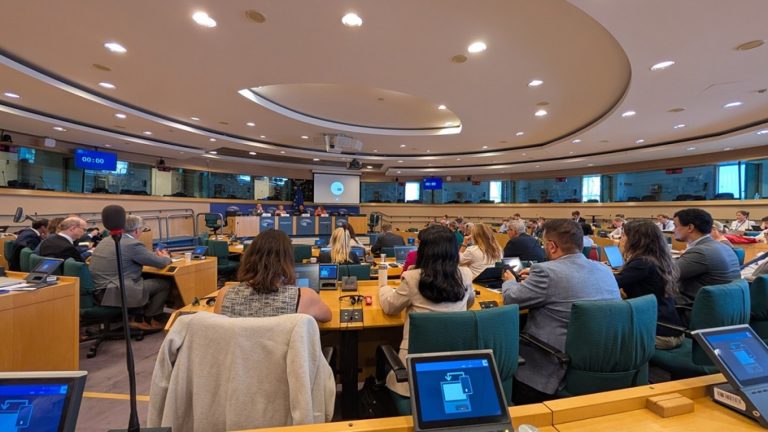

The European Parliament has taken a significant step towards securing the continent’s supply of critical raw materials (CRMs) by voting on amendments to the Critical Raw Materials Act (CRMA). This legislation aims to bolster the EU’s strategic autonomy by ensuring a sustainable and circular supply of essential materials necessary for various industries, including clean energy, digital technology, and defence. The proposed changes focus on expediting the entire value chain from extraction and processing to recycling and substitution, thereby diversifying supply chains across the EU.
One of the key initiatives proposed by Members of the European Parliament (MEPs) is the establishment of a dedicated European critical raw materials centre. This self-standing agency would be equipped with a €2 billion fund, as outlined in the EU’s long-term budget for 2028-2034. The centre would serve multiple functions, including market intelligence, resilience planning, and stakeholder engagement, all aimed at enhancing the EU’s capacity to manage its critical raw materials effectively.
To further secure supply, MEPs have suggested implementing a conditional export control clause. This would allow the European Commission to restrict the export of recyclable materials, ensuring that valuable resources remain within the EU. Additionally, the Commission would oversee the identification of large companies in strategic sectors that utilise CRMs, imposing resilience obligations on them to mitigate vulnerabilities in their supply chains.
The amendments also call for price-stabilisation mechanisms, such as contracts for difference (CfDs), to provide revenue certainty for developers involved in extraction and recycling projects. Moreover, the EU’s existing joint-purchasing mechanism would be expanded to facilitate coordinated stockpiling of critical raw materials among member states and businesses.
Highlighting the geopolitical significance of CRMs, lead MEP Mohammed Chahim emphasised that control over these materials equates to control over industrial futures and energy transitions. He urged for a proactive approach to ensure that Europe does not become vulnerable to external pressures regarding its supply chains. The report, which received overwhelming support with 470 votes in favour, is now set to enter negotiations with member states to finalise the law.
The CRMA, initially adopted in December 2023, laid the groundwork for an EU-wide strategy to guarantee access to raw materials crucial for various transitions. The recent amendments stem from the RESourceEU Action Plan, reflecting the EU’s commitment to securing its critical raw material needs in an increasingly competitive global landscape.