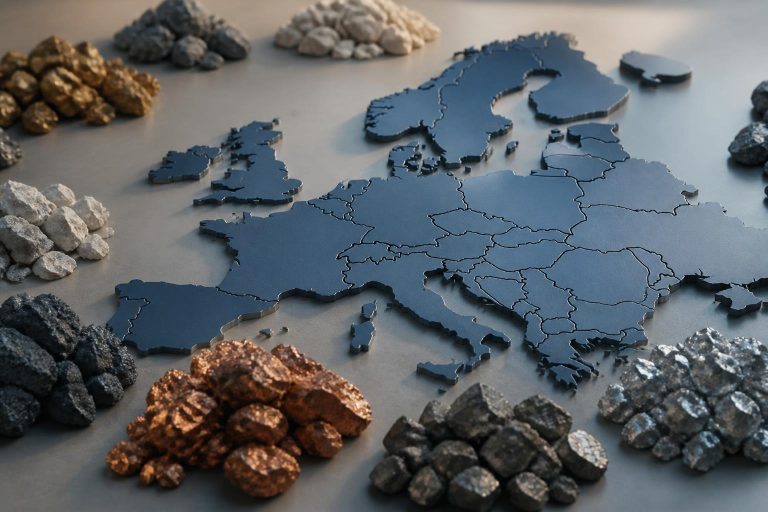
Tag: European Union

  • Euromines Urges Stronger Raw Materials Integration in EU Industrial Accelerator Act

    Euromines Urges Stronger Raw Materials Integration in EU Industrial Accelerator Act

    The European Union’s proposed Industrial Accelerator Act (IAA) represents a significant step toward building a more proactive and coordinated industrial policy aimed at strengthening competitiveness, resilience and strategic autonomy across key manufacturing sectors. However, industry representatives warn that the legislation must more clearly integrate the upstream raw materials sector to ensure the effectiveness of Europe’s strategic supply chains.

    The IAA seeks to stimulate investment and accelerate the development of strategic industries by promoting the production of key technologies and introducing measures such as simplified permitting, “Made-in-EU” criteria and requirements related to low-carbon content. These provisions are intended to create stronger regulatory certainty and targeted incentives capable of mobilising private capital and supporting the EU’s green and digital transitions.

    According to industry association Euromines, these policy tools reflect a growing recognition within the EU that achieving climate and technological goals requires a comprehensive industrial strategy capable of aligning supply and demand across critical value chains.

    However, the organisation argues that the current framework does not sufficiently address the role of domestic raw materials production. Without stronger links between manufacturing policies and upstream resource extraction, increased demand for strategic goods could fail to translate into greater supply security within the European Union.

    Euromines also notes that the proposed reliance on non-preferential rules of origin primarily reinforces final manufacturing stages rather than recognising the strategic importance of raw materials produced within the EU. While cooperation with trusted international partners remains important, extending recognition of EU origin to certain Free Trade Agreement partners may do little to strengthen Europe’s internal resource base.

    The organisation has called for greater integration of raw materials policy into the Industrial Accelerator Act, arguing that minerals and metals form the foundation of all strategic industrial value chains.

    Euromines said it is prepared to work with EU lawmakers to address these gaps, emphasising that fully incorporating domestic raw materials production into the IAA will be essential for building resilient supply chains and achieving the bloc’s long-term industrial, strategic and climate objectives.

  • Czech Cinovec Lithium Project Faces Local Opposition Despite EU Strategic Backing

    Czech Cinovec Lithium Project Faces Local Opposition Despite EU Strategic Backing

    A major lithium mining project in the Czech Republic’s north-west is drawing increasing local opposition even as it gains strategic support from the European Union as part of its efforts to secure critical mineral supplies for the green transition.

    The Cinovec deposit, located near the German border in the Ore Mountains, is considered one of the largest lithium resources in Europe. Developed by Geomet, a company jointly owned by Czech state-controlled energy group CEZ (51%) and European Metals Holdings (49%), the project could become a cornerstone of the EU’s emerging domestic lithium supply chain.

    The deposit is estimated to contain up to three percent of global lithium reserves. Current development plans envisage mining roughly 3.2 million tonnes of ore annually, producing about 37,000 tonnes of battery-grade lithium carbonate each year, enough to supply materials for around 1.3 million electric vehicles.

    The project has been designated a strategic initiative under the EU’s Critical Raw Materials Act, enabling accelerated permitting procedures and financial support. The development has also received a €36 million grant from the EU’s Just Transition Fund and a €360 million subsidy from the Czech government. Total project investment is estimated at around CZK 42 billion (€1.75 billion), with mining potentially beginning by 2030.

    However, residents and local officials in the Usti nad Labem region have raised concerns that the project could reverse years of environmental recovery following the decline of heavy industry and coal mining. The area, which transitioned from large-scale industrial extraction to tourism and spa services, now faces the prospect of renewed mining activity.

    Local leaders warn that lithium extraction could bring environmental and social impacts, including noise and air pollution, groundwater contamination and disruption to landscapes and biodiversity. Critics also point out that parts of the proposed mining area lie within protected Natura 2000 zones and the Ore Mountains UNESCO World Heritage site.

    Activists and environmental researchers argue that large-scale lithium extraction cannot be considered environmentally neutral, even if linked to renewable technologies and electric vehicle production. Concerns have also been raised about transparency, community consultation and the long-term economic benefits for local residents.

    Economic uncertainties further complicate the project’s outlook. Lithium prices have fallen sharply since their peak in 2022, raising questions about the financial viability of large-scale hard-rock lithium mining at Cinovec. Analysts note that the project’s costs may be relatively high due to the ore’s lower lithium concentration, while reliance on public subsidies and volatile global markets adds additional risk.

    Despite these challenges, Czech authorities continue to view the project as strategically important for maintaining the country’s role in the European automotive supply chain and supporting the EU’s broader goal of reducing dependence on imported battery materials.

  • Fen Deposit in Norway Expands 81%, Strengthening Europe’s Rare Earth Ambitions

    Fen Deposit in Norway Expands 81%, Strengthening Europe’s Rare Earth Ambitions

    Rare Earths Norway has announced a substantial upgrade to mineral resources at its Fen project, describing the deposit as Europe’s largest rare earth accumulation and a potential cornerstone of the continent’s strategic supply chain.

    According to a revised estimate prepared by consulting firm WSP, indicated and inferred resources at Fen now total 15.9 million tonnes of rare earth oxides, an 81 percent increase from the 8.8 million tonnes reported in 2024. The updated figures place Fen well ahead of Sweden’s Per Geijer deposit, previously cited by LKAB as Europe’s largest rare earth discovery.

    Bernd Schaefer, CEO of EIT RawMaterials, said the resource expansion elevates Fen from a promising discovery to what he described as a world-class strategic asset. He noted the project could serve as the foundation for a compact “mine-to-magnet” value chain within Europe, supporting industrial resilience and long-term raw material security.

    Europe currently has no operating rare earth mines, leaving the region heavily dependent on imports. Eurostat data show that in 2024, 95 percent of the European Union’s rare earth imports originated from China, Malaysia and Russia. The development of Fen would support EU efforts to diversify supply and reduce strategic vulnerability.

    Rare earth elements are essential for advanced defence systems, including precision motors and sensors used in naval vessels, fighter aircraft and drones, as well as permanent magnets required for electric vehicles, wind turbines and consumer electronics. The latest resource estimate indicates that approximately 19 percent of Fen’s oxides consist of neodymium and praseodymium, key materials for high-performance magnets. The deposit also contains notable quantities of niobium and thorium.

    Rare Earths Norway has previously outlined plans to commence production in late 2031, targeting annual output of 800 tonnes of NdPr by 2032, equivalent to roughly 5 percent of projected EU demand. While the company holds an extraction permit, it still requires an operating permit before mining can begin. The latest announcement did not revise projected timelines or production targets.

    The project aligns with the EU’s ResourceEU action plan adopted in December 2025, which seeks to accelerate domestic extraction, processing and recycling of critical minerals. However, current EU policy does not restrict the export destinations of rare earths mined within the bloc, meaning production could still be sold to non-European markets.

  • EU Lawmaker Says Serbia’s Jadar Lithium Project Remains Frozen Amid Legal Uncertainty

    EU Lawmaker Says Serbia’s Jadar Lithium Project Remains Frozen Amid Legal Uncertainty

    The proposed Jadar lithium project in Serbia remains suspended due to legal and regulatory uncertainty, despite its strategic importance for Europe’s critical raw materials supply, according to European Parliament representative Hildegard Bentele.

    Speaking to Deutsche Welle, Bentele, a member of Germany’s Christian Democratic Union and rapporteur on critical raw materials policy in the European Parliament, said the project remains “frozen,” although mining major Rio Tinto continues to retain exploitation rights over the deposit.

    She noted that the project could play a significant role in strengthening Europe’s lithium supply chain while delivering economic benefits to Serbia, provided a stable and reliable legal framework is established. According to Bentele, Rio Tinto has indicated its intention to comply with environmental and social standards should regulatory conditions improve.

    The Jadar project, considered one of Europe’s largest lithium deposits, had previously been included on the European Union’s list of strategic raw material projects. Plans linked the development to potential downstream battery manufacturing investments, including earlier discussions involving German industry and automotive supply chains.

    However, Bentele stressed that lithium mining projects require predictable licensing systems and institutional stability, conditions she believes are currently lacking. She pointed to concerns over governance, judicial independence and public trust in state authorities as key factors contributing to the project’s suspension.

    The EU, she added, will not pressure Rio Tinto to resume development under present circumstances, describing continued investment as too risky without regulatory certainty. The company’s earlier decision to halt implementation in Serbia’s Jadar Valley was therefore understandable given public opposition and doubts surrounding permitting procedures.

    While acknowledging broader challenges in sourcing critical minerals globally, often located in politically complex jurisdictions, Bentele emphasised that Serbia’s status as an EU candidate country places importance on alignment with European governance and environmental standards.

    According to her assessment, the future of the Jadar project depends primarily on improvements to Serbia’s legal and institutional framework. Until then, the project remains suspended rather than permanently cancelled, leaving open the possibility of future development if regulatory stability is restored.

  • Sweden’s Per Geijer Deposit Emerges as One of Europe’s Largest Rare Earth Discoveries

    Sweden’s Per Geijer Deposit Emerges as One of Europe’s Largest Rare Earth Discoveries

    A major rare earth discovery linked to Sweden’s long-established Kiruna iron mining district is positioning northern Europe as a potential future supplier of critical minerals essential for electric vehicles, renewable energy and advanced technologies.

    State-owned miner LKAB has confirmed that the Per Geijer deposit, located near Kiruna above the Arctic Circle, contains an estimated 2.2 million tonnes of rare earth oxides alongside substantial volumes of iron ore and phosphorus. The updated resource estimate places the site among the largest known rare earth deposits in Europe.

    Rare earth elements are vital components in permanent magnets used in electric vehicle motors, wind turbines and consumer electronics. Europe currently relies heavily on imports, with China responsible for processing nearly 90 percent of global rare earth supply, creating strategic vulnerabilities across industrial and energy transition supply chains.

    LKAB estimates that once fully developed, Per Geijer could eventually meet up to 18 percent of Europe’s rare earth demand. The deposit also contains approximately 1.2 billion tonnes of iron ore and phosphorus, with rare earth minerals primarily hosted in apatite, allowing recovery alongside existing iron mining operations.

    The project forms part of a broader European effort to strengthen domestic raw material production under the EU Critical Raw Materials Act, which aims to reduce reliance on single external suppliers and expand regional mining and processing capacity by 2030. Per Geijer, together with LKAB’s related developments in Malmberget and Luleå, has received strategic project status, enabling accelerated permitting procedures and improved access to financing.

    Rather than developing a standalone rare earth mine, LKAB plans an integrated industrial chain linking iron ore extraction in Kiruna with downstream processing facilities. Concentrates produced at Malmberget would be transported to a new industrial hub in Luleå, where hydrometallurgical processing will separate rare earth oxides, phosphoric acid for fertiliser production and gypsum by-products.

    To support final separation of individual rare earth elements, LKAB has also invested in Norwegian technology company REEtec, which is developing alternative refining methods aimed at reducing dependence on Chinese processing technologies.

    Despite its strategic importance, the project faces social and environmental challenges. Mining activity has already forced the gradual relocation of Kiruna due to ground subsidence, while Indigenous Sámi communities have raised concerns that expanded mining could disrupt traditional reindeer herding routes and fragile Arctic ecosystems.

    LKAB emphasises that Per Geijer remains a mineral resource rather than an approved mining reserve, with further exploration, technical studies and permitting required. Industry analysts expect large-scale rare earth production to take between 10 and 15 years before material from the project reaches European manufacturing supply chains.

    Even at full capacity, experts note that the deposit will complement rather than replace global supply networks. However, the presence of a major domestic rare earth source marks a significant shift in Europe’s long-term strategy to secure materials underpinning the green and digital transition.

  • EU Expects US to Narrow Scope of Steel and Aluminium Derivative Tariffs

    EU Expects US to Narrow Scope of Steel and Aluminium Derivative Tariffs

    European Union officials expect the United States to soon streamline its broad tariffs on products containing steel and aluminium, potentially easing a major source of tension in transatlantic trade relations.

    According to sources familiar with the bloc’s position, the Trump administration may within weeks reduce the number of so-called “derivative products” subject to the 50% tariff rate applied to goods containing the two metals. The EU has repeatedly argued that the sweeping metals tariff contradicts last year’s US-EU trade agreement, which established a 15% tariff ceiling for most European exports.

    The United States regularly updates the list of derivative products covered by the higher tariff, which now includes more than 400 items. The expanding scope has complicated compliance for exporters, who must calculate the share of steel or aluminium content in their goods, and has diminished the practical benefits of the bilateral trade accord.

    EU Trade Commissioner Maros Sefcovic told lawmakers he had received reassurances from US counterparts that the issue is being reviewed and that progress could come “rather soon.”

    The anticipated changes would not affect tariffs on commodity-grade steel and aluminium.

    The discussions come amid broader uncertainty in transatlantic trade relations. The US Supreme Court recently struck down the administration’s use of emergency powers to impose reciprocal tariffs, prompting Washington to introduce a new 10% global levy in addition to existing duties. That move could push tariffs on certain EU exports above levels allowed under the US-EU agreement.

    In response, the European Parliament has suspended work on ratifying the trade accord pending clarification of the new US policy. Despite the complications, both sides have signalled their intention to preserve the agreement while navigating the transition to a revised trade framework.

  • European Industry Coalition Pushes for Smarter and Faster Permitting Across the EU

    European Industry Coalition Pushes for Smarter and Faster Permitting Across the EU

    Euro Mines announced that 18 organisations have joined forces to establish an informal Coalition on Permitting, a cross-sector platform aimed at improving and accelerating project approval processes across the European Union.

    The move comes amid growing concern that lengthy and complex permitting procedures have become a structural bottleneck for Europe’s industrial revival, delaying investments across mining, energy and manufacturing.

    According to the coalition, permitting reform should be treated as a strategic enabler of Europe’s competitiveness, resilience and industrial value chains. The group is calling on EU policymakers to streamline and align permitting requirements stemming from EU legislation, particularly for cross-border projects, in order to reduce duplication and legal uncertainty.

    Among the proposed measures are enforceable time limits for permit decisions, digital tracking systems, clearer accountability mechanisms and stronger resourcing of permitting authorities.

    Coalition Co-Chair Gabrielle van Melkebeke said the initiative seeks to ensure Europe can deliver the projects required to meet net-zero targets while remaining an attractive destination for investment. She noted that the coalition combines diverse expertise to propose reforms that are both ambitious and practical.

    Co-Chair Florian Anderhuber stressed that Europe cannot meet its industrial, defence and climate objectives without modern and predictable permitting systems. By pooling cross-sector insights, the coalition aims to provide policymakers with evidence-based recommendations on where reforms are most urgently needed.

    The announcement follows mounting pressure on Europe’s industrial base. While the region initially led the early phase of the steel transition away from coal, momentum has slowed. The  reports that China has taken the lead in green steel production and has surpassed its 2025 green hydrogen capacity target of 200,000 tonnes.

    Financial challenges have also emerged. Swedish green steel developer  is facing a funding shortfall of more than $1 billion to complete its plant under construction. Stegra is also a key investor in , which is experiencing financial strain partly linked to limited government support.

    The coalition represents European and national trade associations, technology providers, project developers and supply chain partners. Its goal is to serve as a unified industry voice in support of modernising Europe’s permitting systems and restoring industrial momentum.

  • Lithuania Signals Willingness to Strike Bilateral Critical Minerals Deal With US

    Lithuania Signals Willingness to Strike Bilateral Critical Minerals Deal With US

    Lithuania may pursue a bilateral agreement with the United States on critical minerals if the European Union fails to move swiftly on a joint partnership, the country’s foreign minister has said.

    Speaking on the sidelines of the Munich Security Conference, Kestutis Budrys emphasized that while Vilnius prefers a coordinated European approach, time is becoming a decisive factor. “We have the intention to go forward at the European level,” he said, adding that if consensus within the EU proves too slow, “the way forward is bilaterally.”

    The EU has been working on a critical minerals partnership with the United States and other like-minded countries to reduce dependence on China, which dominates global supply chains for many rare earth elements and strategic materials essential for advanced technologies. Member states have granted the European Commission a mandate to negotiate on behalf of the bloc. However, some capitals, including Vilnius, have voiced concerns over the pace of negotiations.

    At the same time, the administration of Donald Trump has encouraged individual EU member states to consider direct bilateral agreements.

    The urgency of securing alternative supply chains has intensified amid ongoing trade tensions between Washington and Beijing. China’s export restrictions on rare earths last year heightened concerns among Western governments about supply-chain vulnerabilities and the risk of political leverage through mineral exports.

    Last week, the United States and 55 other countries agreed to introduce new policy tools, including price floors, aimed at stabilizing supply chains and countering market distortions.

    For Lithuania, the issue carries particular strategic weight. The country’s engineering sector and rapidly expanding defense industry rely on stable access to critical minerals. According to Budrys, Vilnius seeks to diversify imports and reduce exposure to what it considers unreliable suppliers, particularly China, which Lithuania accuses of using trade as a political instrument.

    As geopolitical competition over strategic resources deepens, Lithuania’s position highlights growing pressure within the EU to balance collective action with national urgency in securing critical mineral supply chains.

  • Romania Claims EU Leadership in Critical Raw Materials as US Partnerships Advance

    Romania Claims EU Leadership in Critical Raw Materials as US Partnerships Advance

    Romania holds 16 of the 32 critical raw materials designated at EU level and ranks first in the bloc in terms of subsoil resources for rare earths and strategic minerals, Energy Minister Bogdan Ivan has said.

    Speaking to local media, Ivan stated that Romania possesses half of the critical elements Europe considers essential, with some found only in Romania and at most one other EU member state. The minister argued that this positions the country as a key pillar of Europe’s resource security strategy.

    Romania is already working with what Ivan described as an “extremely important” American company in efforts to reduce dependence on Chinese critical minerals. According to local reports, this partner is likely Critical Metals Corp, which has links to investor Frank Timiș.

    Ivan acknowledged, however, that Romania currently lacks an integrated processing and refining chain for these materials. Developing such infrastructure would, he said, create the first fully integrated rare earth processing chain in the western hemisphere, potentially supplying strategic industries including aerospace and advanced technology manufacturers such as SpaceX.

    Discussions are also reportedly under way regarding cooperation between Critical Metals Corp and Nuclearelectrica (BVB: SNN). The proposal involves transforming the uranium processing facility at Feldioara into a plant capable of refining rare earth elements sourced from Greenland.

    In parallel, Ivan highlighted three Romanian projects included under the EU’s Critical Raw Materials Act, with a combined value of around EUR 615 million. According to European Commission data, these projects are being developed by Euro Sun Mining (copper), Salrom (graphite), and Verde Magnesium (magnesium). One of the projects, Euro Sun Mining’s copper development, currently lacks a valid environmental permit.

    The minister’s remarks come as the European Union intensifies efforts to diversify supply chains and reduce reliance on external suppliers amid geopolitical tensions and rising demand from the energy transition and defense sectors.

  • Czechia’s Chvaletice Manganese Project Gains Strategic Importance for EU Battery Supply Chains

    Czechia’s Chvaletice Manganese Project Gains Strategic Importance for EU Battery Supply Chains

    A major manganese deposit in eastern Czechia is emerging as a key asset in Europe’s push to secure strategic minerals for electric vehicles and renewable energy technologies. The Chvaletice site in the Pardubice region, once a legacy mining area, is now believed to host the largest manganese reserves in the European Union, according to local reporting.

    The project is being advanced by Mangan Chvaletice, which plans to reprocess historic mining tailings accumulated around the former industrial site. What was once considered waste is now viewed as a valuable secondary resource. The company says the project could eventually produce up to 50,000 tonnes of high-purity manganese per year.

    Manganese plays a critical role in lithium-ion battery cathodes, improving performance and safety in electric vehicle batteries. As demand for battery materials accelerates, securing regional supply is increasingly seen as essential for Europe’s economic resilience and industrial autonomy.

    The Chvaletice project has reportedly achieved key permitting milestones, including environmental approvals and mining licences. Preparatory work for a conveyor system and processing plant is expected to begin later this decade, with full commercial production targeted around 2030. The project could create up to 400 jobs.

    The Czech government has designated the Chvaletice deposit as a strategic mineral resource under national legislation, highlighting its importance for supply chain security. Current reserves are estimated to potentially meet up to one quarter of European manganese demand, with a projected mine life of approximately 25 years.

    Manganese and lithium are both listed as critical raw materials by the European Commission. Beyond Chvaletice, Czechia hosts one of Europe’s largest lithium deposits at Cínovec, as well as tungsten reserves and a history of uranium production, reinforcing the country’s growing role in Europe’s advanced technology supply chains.