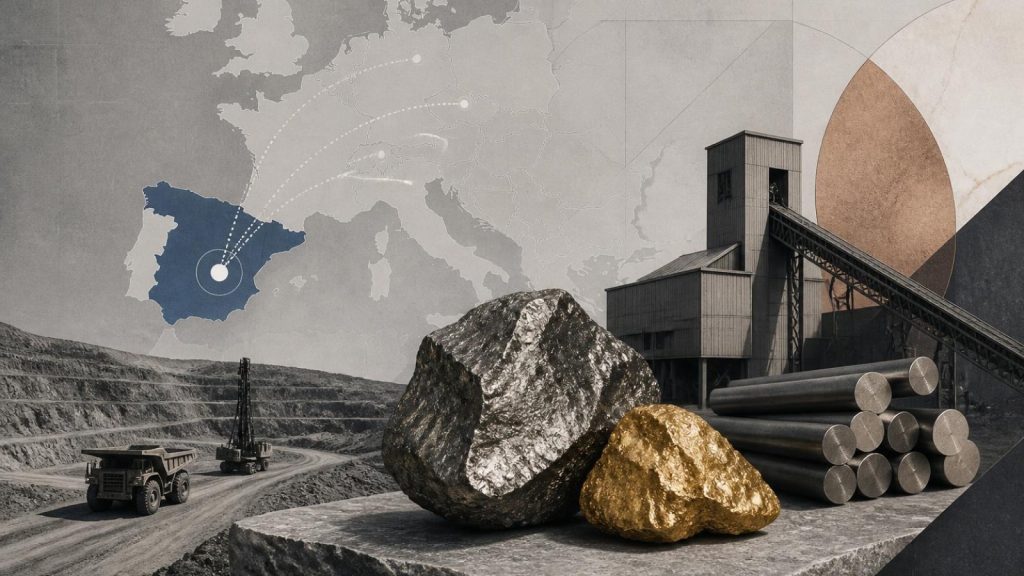
The El Moto project, located in Abenójar, Ciudad Real, is poised to become a significant player in the European tungsten and gold mining sector. Developed by Abenójar Tungsten, a subsidiary of the Spanish company PMC (Promotora de Minas de Carbón), the project is currently in the final stages of securing €160 million in financing, with plans to cede up to 49% of its capital to attract new investors. The European Commission has declared this initiative strategic, as it aims to cover 25% of the continent’s tungsten demand, which has seen prices more than double over the past year due to reliance on imports.
The financing strategy involves a combination of debt and equity, with approximately 60% to 70% of the required funds expected to come from loans, while the remaining 30% to 40% will be sourced from equity investments. The project is anticipated to generate substantial annual revenue, estimated at €100 million, with an EBITDA of €40 million and an internal rate of return (IRR) of 22.92%. With a mining concession lasting 90 years, the El Moto project is attracting interest from various financial institutions and investment funds, including the French fund InfraVia, which is supported by the French government.
The El Moto mine is expected to begin extraction and commercialisation in 2027, contributing to the European Critical Materials Act’s goal of ensuring that at least 10% of critical materials are sourced within the EU by 2030. The mine is projected to yield 91 million tons of tungsten ore and 1.2 million ounces of gold, making it a vital asset for the region and the continent. Currently, Spain has only one active open-pit tungsten mine, highlighting the significance of this new venture in diversifying the country’s mining capabilities.
Tungsten, known for its high melting point and hardness, is essential in various industries, including steel production, military applications, and electronics. The El Moto project not only promises to bolster Spain’s mining sector but also aims to reduce Europe’s dependency on external sources for this critical mineral. The support from both Spanish and European public administrations further underscores the project’s importance in achieving energy and resource independence within the EU.