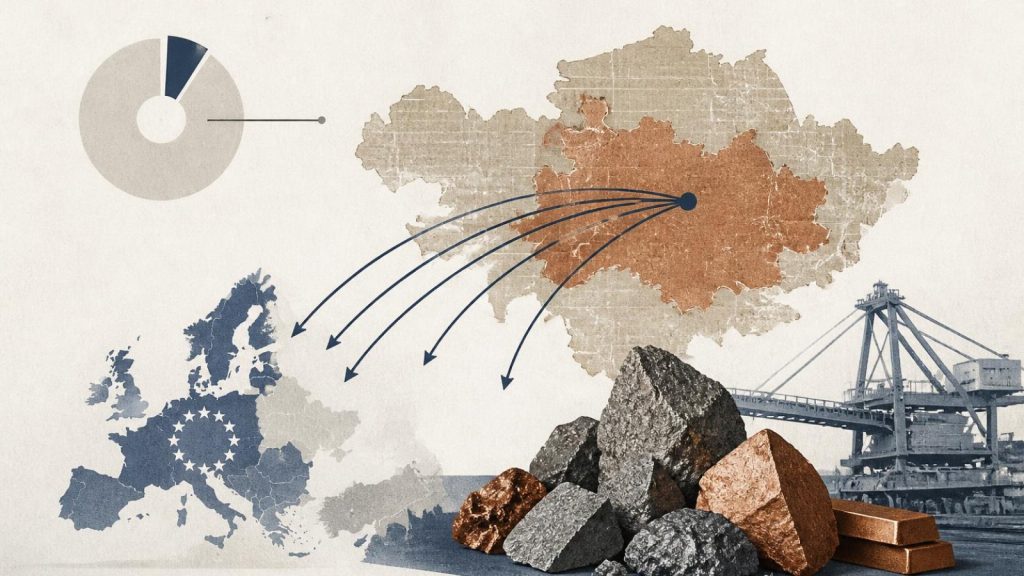
The European Union (EU) continues to play a minor role in the import of strategic raw materials from Kazakhstan, according to preliminary data released by Kazakhstan’s Bureau of National Statistics for the period of January to September 2026. This trend reflects a consistent pattern observed in previous years, with the EU’s share of imports remaining significantly low. The primary market for Kazakh copper ore and refined copper is currently dominated by China and Türkiye, with the EU accounting for less than 1% of these imports. Notably, Türkiye has emerged as the largest buyer of refined copper from Kazakhstan this year, highlighting a shift in market dynamics.
The data reveals that various factors contribute to the current state of raw material exports from Kazakhstan. For instance, tungsten exports are overwhelmingly controlled by China, which accounts for over 99% of the market. The Boguty mine, a significant source of tungsten, is operated by a subsidiary of China’s Jiaxin, further solidifying China’s dominance in this sector. In contrast, the EU’s involvement in titanium imports is primarily linked to Belgium’s Specialty Metals Holding Company, which holds a major stake in the Ust-Kamenogorsk Titanium-Magnesium Plant (UKTMP). According to the company’s financial statements, French customers represented 44% of UKTMP’s sales in 2025, indicating a reliance on specific European buyers.
The logistics of transporting these materials and the prevailing demand also play crucial roles in shaping the export landscape. As the EU seeks to enhance its strategic raw material supply chain, questions arise regarding what measures could be implemented to increase the volume of these essential materials reaching European markets. The current low engagement from the EU raises concerns about its future competitiveness in the global market for critical minerals, especially as other regions, particularly Asia, continue to dominate.
While Kazakhstan holds significant reserves of strategic raw materials, the EU’s current import levels remain minimal. The ongoing dominance of China and Türkiye in this sector poses challenges for the EU, which may need to reassess its strategies to secure a more substantial share of these critical resources.