Tag: EU

  • EU Weighs Import Curbs and Export Duties to Protect Metals Industry

    EU Weighs Import Curbs and Export Duties to Protect Metals Industry

    The European Commission is considering new trade restrictions on metal imports and exports to counter the impact of U.S. tariffs and protect the EU’s struggling metals industry, according to a draft policy document.

    With concerns that U.S. metal tariffs under the Trump administration could divert excess aluminum to Europe, the EU is evaluating potential import curbs. Additionally, it is planning duties on scrap metal exports to bolster domestic production. The EU already has safeguards in place for steel, including import limits, and launched a probe into alloy imports last December. However, European producers have called for further measures to address the global oversupply, particularly from China.

    The draft document highlights that EU metal producers have lost significant market share over the past decade, with half of primary production capacity remaining curtailed since 2021. The U.S. tariffs on aluminum are expected to exacerbate these challenges, increasing the risk of trade diversion from multiple countries.

    To reinforce its trade defense strategy, the EU plans to introduce a “melted and poured rule,” aimed at preventing importers from disguising a metal’s true origin by making minor modifications. A new proposal for steel trade measures, based on tariff rate quotas, is also expected by the third quarter of 2024 to replace the current system, which expires in 2026.

    Additionally, the Commission is considering imposing export duties of up to 25% on scrap metals as part of a broader steel and metals action plan. The initiative is a key component of the EU’s Clean Industrial Deal, designed to strengthen European industry and enhance competitiveness against Chinese and U.S. rivals. The final plan is set to be announced on Wednesday, though revisions may still be made.

  • Kazakhstan to Supply EU with Critical Raw Materials Under New Agreements

    Kazakhstan to Supply EU with Critical Raw Materials Under New Agreements

    Kazakhstan has signed a landmark agreement to supply the European Union (EU) with critical raw materials, essential for modern industries and technologies. The deal was finalized during a visit by European Commissioner for International Partnerships Jutta Urpilainen to Kazakhstan, as reported by the EU Representation in the country.

    The agreement includes a €3 million contract aimed at fostering cooperation between the EU and Central Asia in the field of critical raw materials. Funding will be provided by the European Bank for Reconstruction and Development (EBRD), with a focus on joint projects to establish reliable supply chains for these resources. Critical raw materials, such as rare earth metals, copper, aluminum, uranium, phosphorus, and potassium, are vital for sectors like technology, energy, defense, and transportation.

    Urpilainen emphasized the importance of the partnership, stating, “Europe needs reliable access to critical raw materials to modernize its economy. We are committed to mutually beneficial cooperation with Kazakhstan in their extraction and development. This partnership supports all Central Asian countries, boosts Kazakhstan’s economy, strengthens its industrial potential, and creates new opportunities for businesses, innovation, and high-quality jobs.”

    In addition to the raw materials agreement, the EU and Kazakhstan signed a €200 million loan deal between the European Investment Bank (EIB) and the Kazakhstan Development Bank. The EU will provide an €18 million guarantee for the loan, which Kazakhstan plans to allocate toward developing transport infrastructure and renewable energy sources.

    During the visit, Kazakh President Kassym-Jomart Tokayev also met with Urpilainen at the Akorda Presidential Palace, underscoring the growing partnership between Kazakhstan and the EU.

  • EU Awaits Clarification on Trump’s Proposed Metals Tariffs Before Responding

    EU Awaits Clarification on Trump’s Proposed Metals Tariffs Before Responding

    The European Commission announced on Monday that it will take action to protect EU interests following former U.S. President Donald Trump’s declaration of new 25% tariffs on steel and aluminum imports. However, the EU will wait for official clarification before responding.

    Trump’s statement, made on Sunday, signals a significant escalation in trade tensions. The Commission emphasized that it had not yet received formal notification of the tariffs and would not react based on broad announcements. In a statement, the EU reiterated that it sees “no justification” for such tariffs and will take necessary measures to safeguard European businesses, workers, and consumers.

    If confirmed, these tariffs would mirror Trump’s 2018 trade policies, which saw 25% duties on steel and 10% on aluminum, impacting €6.4 billion ($6.6 billion) worth of EU exports. The EU previously retaliated with tariffs on U.S. goods, but a suspension was negotiated under President Joe Biden.

    A key concern for European steel producers is that U.S. import restrictions could redirect 15 million tons of steel originally destined for the U.S. into the EU market, potentially destabilizing the industry. One EU diplomat indicated that if Trump’s policies mirror his first term, the EU’s response is likely to be similar as well.

  • Sixteen Finnish Projects Apply for EU Strategic Status Under Critical Raw Materials Act

    Sixteen Finnish Projects Apply for EU Strategic Status Under Critical Raw Materials Act

    Sixteen projects in Finland have applied for strategic project status under the European Union’s Critical Raw Materials Act, aiming to strengthen Europe’s raw material production and reduce external dependencies. The European Commission will review the applications and decide on the strategic designation by March 2025.

    On January 23, 2025, the Finnish Government confirmed that it would not exercise its national right to object to any of the applications. While the European Commission consults with Member States before making its final decision, the Finnish authorities have chosen to support all submitted projects.

    The Critical Raw Materials Act is a key component of the EU’s strategy to secure essential resources for industries such as renewable energy, battery production, and advanced technologies. Strategic project status grants selected projects regulatory advantages, faster permitting, and potential financial support to accelerate development.

    Due to confidentiality rules under the Act on the Openness of Government Activities, specific details about the applicants remain undisclosed during the evaluation process. However, the final list of approved strategic projects is expected to be published following the Commission’s decision in March.

  • Transforming Raw Materials into Strategic Strength: EIT Raw Materials Advocates for Bold Action in FP10

    Transforming Raw Materials into Strategic Strength: EIT Raw Materials Advocates for Bold Action in FP10

    Berlin, Germany – EIT RawMaterials, a leading knowledge and innovation community, has issued a compelling call for Europe to transform its raw materials sector into a cornerstone of strategic strength. The organisation has outlined key recommendations for the upcoming Framework Programme 10 (FP10), urging the European Union to invest €4 billion to secure its raw materials future.

    The Challenge: Dependency on Imports

    Europe’s heavy reliance on imported critical and strategic raw materials (CRMs and SRMs) poses significant risks to its green and digital transformation goals. With nearly 100% dependence on external sources for key materials like lithium, magnesium, and rare earth elements, the EU is vulnerable to global supply chain disruptions.

    The Solution: Innovation and Resilience

    EIT RawMaterials proposes a multifaceted strategy to reduce dependency and build resilience:

    • Domestic Production: Increase mining to supply 10% of Europe’s CRM needs.
    • Advanced Processing: Expand processing capacity to 40%.
    • Circular Economy: Reclaim 25% of CRMs through recycling.
    • Global Diversification: Limit reliance on single-country sources to 65%.

    Strategic Investments

    To meet these ambitious targets, the organisation recommends focusing on:

    1. Disruptive Technologies: Develop cutting-edge solutions like Direct Lithium Extraction and advanced recycling.
    2. Circular Economy: Scale up industrial symbiosis and recycling initiatives to retain valuable materials.
    3. Public-Private Partnerships: Allocate €1 billion to foster collaboration between industry and academia.
    4. Workforce Development: Train 1.2 million workers by 2030 to address the sector’s growing demands.

    A Sustainable Future

    EIT RawMaterials emphasizes the transformative potential of the raw materials sector, predicting a €2 trillion economic impact and the creation of 32 million jobs by 2030. Their initiatives also align with the EU’s Critical Raw Materials Act, which sets ambitious targets for mining, processing, and recycling by the end of the decade.

    Leading Innovation

    Since its inception, EIT RawMaterials has mobilized €600 million in funding and unlocked €3.6 billion for research and innovation. Its initiatives have fostered a thriving ecosystem of over 300 partners and 750 alliance members, driving sustainable solutions and workforce development across Europe.

    “The time to act is now,” said a spokesperson from EIT RawMaterials. “With bold investments and strategic collaborations, Europe can secure its industrial competitiveness, lead the global green transition, and build a resilient future.”

  • EU and US Welcome New Members to the Minerals Security Partnership (MSP)

    EU and US Welcome New Members to the Minerals Security Partnership (MSP)

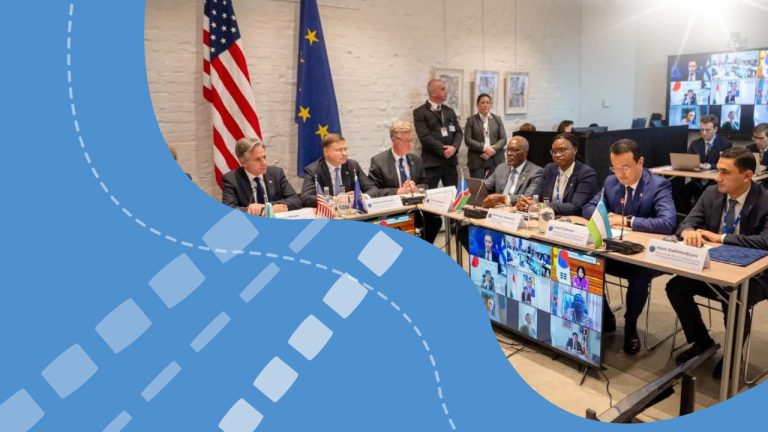
    The European Commission and the United States have officially welcomed seven new countries to the Minerals Security Partnership (MSP) Forum during an event held in New York City. The gathering, which took place on the sidelines of the United Nations General Assembly High-Level Week and Climate Week NYC, saw the inclusion of the Democratic Republic of the Congo, the Dominican Republic, Ecuador, the Philippines, Serbia, Türkiye, and Zambia as new members. These nations join an existing group of members, including Argentina, Greenland, Kazakhstan, Mexico, Namibia, Peru, Ukraine, and Uzbekistan, who were introduced at the inaugural MSP Forum in July 2024.

    The MSP Forum, co-chaired by Maive Rute, European Commission Deputy Director-General for Internal Market, and Jose W. Fernandez, U.S. Under-Secretary of State for Economic Growth, Energy, and the Environment, provided a platform for discussions on the responsible mining, processing, and recycling of critical minerals. These materials are essential for sectors such as energy transition and other key strategic industries. Ministers and high-level officials from across the partnership discussed key opportunities, challenges, and priorities related to the critical mineral sector, with a focus on project development, environmental, labour, and social governance aspects.

    The newly added members expressed their interests in further developing their critical mineral sectors, emphasizing the need for investment in local value addition and environmentally sustainable mining practices. The group also discussed the MSP Forum’s roadmap, which includes two primary workstreams on project development and policy dialogue.

    Looking ahead, the European Commission and the U.S. plan to host the next MSP Forum event during Raw Materials Week in Brussels in December 2024.

  • Serbia Launches the Lithium-Turbo Project in Partnership with the EU

    Serbia Launches the Lithium-Turbo Project in Partnership with the EU

    Serbia has embarked on the Lithium-Turbo project, capitalizing on its rich lithium reserves. The initiative marks a significant step in Serbia’s growing economic ties with the European Union, facilitated by a new raw material agreement. This partnership aims to exploit the lithium deposits in the Serbian Jadar Valley, potentially making Serbia the first European country to manage the entire value chain from mining to electric vehicle production. Michael Harms, Managing Director at the Eastern Committee of German Business, highlighted the geopolitical importance of the deal, noting that it diminishes China’s role in the region. The EU stands to benefit from reduced dependence on Chinese lithium and shorter transport routes. However, the project is not without political complications, as Serbia continues to maintain complex relationships with Russia, China, and the EU. Additionally, domestic opposition persists, with Serbian environmental activists expressing concerns over potential impacts on arable land and groundwater.

  • EU and Serbia Sign Agreement to Boost Lithium Supply Chain Development

    EU and Serbia Sign Agreement to Boost Lithium Supply Chain Development

    The European Union has signed a pivotal agreement with Serbia to promote the development of lithium supply chains, marking a significant step in the EU’s strategy to build raw material partnerships and reduce reliance on fossil fuels. This agreement grants the EU access to raw materials mined in Serbia, aiming to enhance the production of sustainable raw materials, battery manufacturing, and electric mobility. A roadmap is set to be developed by the end of the year to foster research and training in lithium technology.

    The deal has stirred controversy in Serbia, where debates over the rights to lithium mining and its environmental impact have been intense. In 2022, protests halted the mining activities of Rio Tinto, a company that had been developing what is now recognized as Europe’s largest lithium mine in the Jadar region. However, the ban was recently overturned as unconstitutional, allowing Rio Tinto to resume operations under a renewed commitment to meet strict environmental standards.


  • EU Urged to Establish Independent Pricing for Critical Minerals

    EU Urged to Establish Independent Pricing for Critical Minerals

    The head of an EU-funded group has called for a European system to set prices for critical minerals essential for the energy transition, independent of China’s influence. Bernd Schaefer, CEO of EIT RawMaterials, emphasized the need for a pricing mechanism that reflects the supply and demand within Europe, rather than being susceptible to China’s market decisions.

    Western start-ups are struggling with oversupply and weak prices of materials like lithium, cobalt, and rare earths, which are impacting their cash flows and ability to compete with China. “Europe should have a critical materials platform that has a price-building mechanism that reflects the supply and demand situation in Europe,” Schaefer told Reuters at the World Materials Forum in Paris.

    Schaefer also advocated for the creation of an exploration fund to enhance the mining of critical minerals in Europe, suggesting a substantial investment, “This should not be just a couple of million (euros), it should be a billion, it must be a big number.”

    EIT RawMaterials, an alliance of over 300 companies and academics, is instrumental in executing the EU plan to secure raw materials necessary to achieve net zero greenhouse gas emissions by 2050. The EU Critical Raw Materials Act, effective since May, sets ambitious targets for the mining, recycling, and processing of minerals like lithium and copper by 2030.

    Schaefer warned that political uncertainty could hinder progress towards these targets, citing recent elections in France, the European Parliament, and instability in Germany. “This discussion is in limbo. We are in a period of transition within the Commission and within Europe,” he noted. “We might be losing time, but we cannot afford to lose time.”

    As a neutral, non-political entity, EIT RawMaterials could play a pivotal role in driving the necessary changes, Schaefer added.

  • China Introduces New Regulations to Protect Rare Earth Supplies

    China Introduces New Regulations to Protect Rare Earth Supplies

    China has announced a series of new rare earth regulations aimed at securing its supplies for national security purposes. These regulations, issued by the State Council on Saturday, encompass rules on the mining, smelting, and trade of critical materials essential for products ranging from electric vehicle magnets to consumer electronics.

    According to the regulations, rare earth resources are state-owned, and the government will oversee the industry’s development. China, the world’s leading producer of rare earths, accounts for nearly 90% of global refined output. The new rules, effective from October 1, mandate the establishment of a rare earth product traceability information system. Enterprises involved in mining, smelting, separation, and export of rare earth products must maintain accurate records of product flow and enter this data into the traceability system.

    This move follows China’s introduction last year of export restrictions on germanium and gallium, crucial for the chip-making sector, citing national security concerns. Additionally, China banned the export of technology for making rare earth magnets and the extraction and separation of rare earths. These actions have raised concerns about potential supply restrictions escalating tensions with the West, particularly the United States, which accuses China of economic coercion—a claim Beijing denies.

    The regulations come at a time when the EU is set to impose provisional tariffs on Chinese electric vehicles on July 4, citing unfair state subsidies. Both sides have indicated plans for talks regarding the proposed tariffs. The EU has ambitious 2030 targets for domestic production of minerals vital for the green transition, especially rare earths, anticipating a sixfold increase in demand by 2030 and a sevenfold increase by 2050.