Tag: EU

  • EU to Offer US Critical Minerals Partnership to Counter China’s Dominance

    EU to Offer US Critical Minerals Partnership to Counter China’s Dominance

    The European Union is set to offer the United States a critical minerals partnership designed to curb China’s influence over global supply chains, according to people familiar with the matter.

    Brussels is preparing a memorandum of understanding to create a “Strategic Partnership Roadmap” within three months, which would guide joint efforts to source and refine essential materials for modern technologies—ranging from batteries to semiconductors—without heavy reliance on Beijing.

    The proposal includes initiatives such as joint mineral projects, price support mechanisms, and safeguards against market manipulation. It also encourages building reciprocal supply chains between the two economies while maintaining mutual respect for territorial integrity—a pointed reference after tensions rose when U.S. President Donald Trump signaled interest in purchasing Greenland, an autonomous territory of Denmark.

    The renewed cooperation effort comes ahead of a major U.S.-led meeting of foreign ministers and senior officials this week aimed at forming global alliances to reduce Chinese mineral dominance. Washington’s sense of urgency follows Beijing’s export restrictions on rare earth elements last year, temporarily eased under a deal between Trump and Chinese President Xi Jinping.

    Underlining its seriousness, the Trump administration this week launched a $12 billion national critical mineral stockpile. The EU’s draft mirrors this approach, suggesting both sides could coordinate stockpiling and rapid response measures to supply disruptions.

    Key pillars of the EU proposal include cooperation on securing supply chains, developing international premium markets, and sharing information to boost market transparency. It also envisions exemptions from mutual export restrictions, collaboration on innovation and research, and the creation of a joint EU-U.S. response group to manage potential shortages.

    Despite concerns over the pace of negotiations, EU officials called the talks “vital to diversify our supplies away from any single country,” indicating that the transatlantic allies are increasingly aligned in reshaping critical mineral dependencies.

  • EU and Australia Deepen Cooperation on Critical Raw Materials Amid Western Push to Reduce Reliance on China

    EU and Australia Deepen Cooperation on Critical Raw Materials Amid Western Push to Reduce Reliance on China

    The European Investment Bank (EIB) and the Australian government announced on Monday that they will expand their collaboration on critical raw materials, marking a significant move as Western nations accelerate efforts to reduce dependence on China.

    According to their joint statement, the initiative aims to strengthen financing and development across the entire critical minerals value chain—from exploration and extraction to processing, recycling, and innovation. The announcement comes as the European Union prepares to unveil a broad economic security package on December 3, reflecting growing concern over supply-chain vulnerabilities.

    Despite longstanding recognition of the issue, European officials and industry representatives say that financing continues to be a major obstacle in securing stable access to strategic minerals. Even projects listed as strategic by the EU currently receive no special financial advantages.

    The EIB has already taken steps by forming a dedicated task force earlier this year to boost support for critical materials projects, with plans to double its financing capacity. The new declaration is described as a key step toward enabling the bank to fund mineral projects in Australia, one of the world’s most resource-rich nations.

    International efforts are also intensifying. The G7, chaired by Canada in 2025, has established a Critical Minerals Production Alliance to mobilize public and private investment in fast-tracking production of graphite, scandium, and rare earth elements. Australia has offered G7 members the opportunity to purchase shares in its new strategic mineral stockpile.

    In parallel, the United States and Australia pledged $3 billion last month to support mining and processing projects, while also introducing a price floor for critical minerals—a measure long requested by Western mining companies. Additionally, Canada has secured offtake agreements for scandium and graphite with Australian producer Rio Tinto and Quebec-based Nouveau Monde Graphite, further reinforcing global attempts to diversify supply chains.

  • EU Seeks G7 Coordination to Counter China’s Expanded Rare Earth Export Controls

    EU Seeks G7 Coordination to Counter China’s Expanded Rare Earth Export Controls

    The European Union is working with the United States and other G7 partners to coordinate a response to China’s expanded export controls on rare earth minerals, senior EU trade officials said on Tuesday.

    Beijing, which dominates global production and refining of rare earths, tightened restrictions last week, adding more elements and refining technologies to its control list, along with new scrutiny for semiconductor-related exports. The move comes ahead of planned talks between Presidents Donald Trump and Xi Jinping, raising fresh concerns about supply security for key Western industries.

    European Trade Commissioner Maros Sefcovic described China’s measures as “unjustified” and said EU ministers gathered in Denmark had identified the issue as a “critical concern.”

    Previous Chinese export restrictions earlier this year caused widespread supply shortages, particularly for automakers, before temporary relief came through emergency supply agreements between Europe and the US.

    Sefcovic confirmed that G7 finance ministers are expected to discuss coordinated options on Wednesday.

    “We brainstormed yesterday that it would be advisable after this first discussion to have a G7 video call pretty soon,” he said, adding that he had already spoken with US Commerce Secretary Howard Lutnick on the issue.

    Sefcovic is also scheduled to hold talks with his Chinese counterpart early next week.

    Danish Foreign Minister Lars Rasmussen emphasized the need for a united and firm EU response, calling for solidarity with Washington.

    “We must be tough but realistic. This is an area of common interest with our friends in the US. If we stand together, we can better pressure China to act fairly,” Rasmussen said.

    While Trump’s response included a threat of 100% tariffs on Chinese imports, triggering a brief Wall Street sell-off, Rasmussen cautioned against escalation, advocating instead for “frank and open discussions” with Beijing.

    Sefcovic added that coordination among G7 nations could include joint efforts to diversify supply chains, accelerating critical mineral extraction and processing projects outside China.

    “Of course these projects take time,” he said, “but with this signal from China, it’s clear we must focus on speeding them up as much as possible.”

  • EU Urged to Prioritise ESG in Central Asia’s Raw Materials Push

    EU Urged to Prioritise ESG in Central Asia’s Raw Materials Push

    The EU must prioritize Environmental, Social, and Governance (ESG) principles in its dealings with Central Asia to secure its access to crucial raw materials, commentators warn.

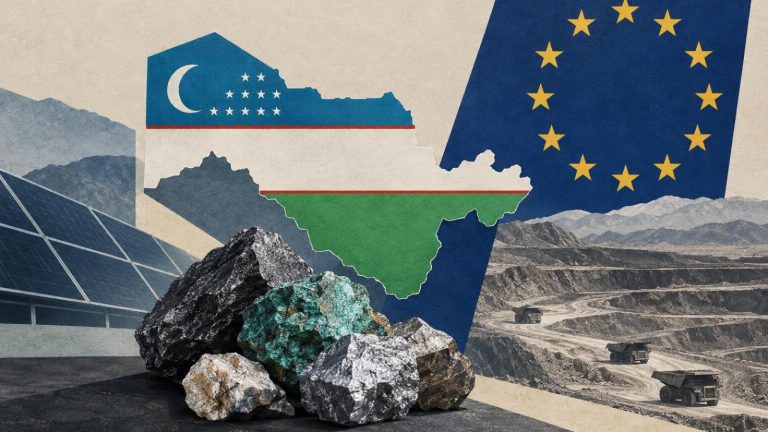
    The bloc arrived in Samarkand this April with a hefty €13.2 billion Global Gateway package, signaling a desire to move beyond merely buying raw materials from the region. A significant portion, €2.5 billion, is earmarked for new mining and processing projects in Kazakhstan, Uzbekistan, and beyond. This drive is born out of necessity: the EU still relies entirely on China for its heavy rare-earth imports and faces the growing risk of vulnerability.

    While geographically late to the game, Europe has a unique advantage: a reputation for robust ESG practices. Local executives cite European partners as “a sign of quality” due to their unwavering adherence to these standards, something often lacking in Chinese or Russian counterparts. However, this edge relies on Brussels consistently embedding ESG into every euro invested. This means robust monitoring and auditing of remediation plans, transparent royalty structures, and genuine upfront consultation with local communities.

    The EU’s Critical Raw Materials Act (CRMA) sets ambitious goals: attaining 10 percent mining, 40 percent processing, and 25 percent recycling of Europe’s annual CRM demand domestically or in trusted partner states by 2030.

    Realising these goals in Central Asia necessitates investment in sustainable technologies. This includes financing water-efficient processing plants, closed-loop waste systems, and solar-powered smelters, rather than simply opening more exploitative mines.

    The EU’s efforts are beginning to take shape, with the spotlight falling on graphite. Kazakhstan’s Sarytogan deposit has been placed on the EU Commission’s list of “strategic projects” eligible for expedited permits and loan guarantees under the CRMA. Meanwhile, the European Bank for Reconstruction and Development has taken a significant stake in the mine operator, marking a direct investment in the region’s CRM sector. The EU is now actively seeking downstream investors to refine indigenous graphite into anode-grade product, capturing added value that historically flowed to Chinese refiners.

    Lithium development is following a similar trajectory. A partnership between HMS Bergbau and Kazakhstan’s Creada Corporation aims to unlock the potential of Kazakh spodumene through extraction, processing, and refining into battery-ready lithium hydroxide. This would be a direct response to the EU’s new battery-passport regulations, which require materials of a certain purity.

    However, Europe faces a formidable competitor: China. The PRC Mineral Resources Law mandates environmental remediation planning before mining commences, setting a new baseline for responsible resource extraction. While welcomed, the application details remain vague, lacking guarantees on local community engagement and enforcement mechanisms, potentially creating loopholes for exploitation.

    Adding to the pressure, Chinese capital is expanding downstream. East Hope Group’s landmark $12 billion investment in Kazakh non-ferrous metals signifies a vertical integration approach—from mining and smelting to fabrication and renewable power generation. This $12 billion vertical integration project in Kazakhstan showcases China’s willingness to build a fully controllable supply chain.

    Europe must act strategically to counter these challenges.

    Firstly, financial aid should be contingent on stringent ESG benchmarks. EU financing must go hand-in-hand with clear, enforceable standards – ISO-compliant tailings dams, methane monitoring, gender-balanced workforce plans, and robust penalties for non-compliance.

    Secondly, the EU should focus on fostering value-adding industries beyond mining. This means investing in processing plants and recycling facilities, not just mines. By creating domestic processing hubs for cathode powders or rare-earth magnets, the CRMA’s 40 percent processing target can be achieved, generating jobs, technology transfer, and increased tax revenue for beneficiary countries.

    Finally, the EU must simplify visa requirements for Central Asian technical personnel. A targeted visa-facilitation agreement could allow them to train in Europe and return, strengthening the region’s skilled workforce.

    Securing a stable and sustainable supply of raw materials is a critical challenge for the EU. While China’s economic clout is undeniable, Europe has the opportunity to win this race by leveraging its commitment to ESG principles and building a truly sustainable, transparent, and trust-based partnership with Central Asia.

    Time is of the essence. The next 18 months, before China’s revised mining law takes full effect and East Hope’s megaproject begins construction, provide a crucial window for the EU to demonstrate its commitment to ESG beyond rhetoric. The stakes are high, as the fate of Europe’s essential raw materials supply hangs in the balance.

  • China Rebukes G7 and EU Over Rare Earth Criticism and Trade Policy Tensions

    China Rebukes G7 and EU Over Rare Earth Criticism and Trade Policy Tensions

    China has strongly condemned the Group of Seven (G7) nations and European Commission President Ursula von der Leyen for what it described as interference in its internal affairs and unfair criticism of its economic practices. The backlash follows a G7 statement issued after the summit in Alberta, where Canadian Prime Minister Mark Carney urged China to curb “market distortions and harmful overcapacity.”

    Chinese Foreign Ministry spokesperson Guo Jiakun labeled the remarks “irresponsible” and “manipulative,” asserting that accusations of overcapacity were a pretext for trade protectionism. He also rejected claims that China’s rare earth dominance was being weaponized, calling such allegations a smear on China’s industrial policy.

    Von der Leyen had warned of a new “China Shock,” accusing Beijing of flooding global markets with subsidized goods and leveraging its control over critical materials to undermine competitors. Her comments coincided with the EU’s decision to postpone an economic dialogue with China due to stalled trade progress.

    Guo defended China’s subsidy policies as fair and transparent, and called for cooperation with the EU to foster a non-discriminatory business environment. Von der Leyen is expected to visit China for a summit next month.

  • EU Adds 13 Global Projects to Strategic List Under Critical Raw Materials Act

    EU Adds 13 Global Projects to Strategic List Under Critical Raw Materials Act

    The European Commission has expanded its list of strategic initiatives under the Critical Raw Materials Act (CRMA) by designating 13 new international projects aimed at diversifying and securing Europe’s long-term supply of essential raw materials. The newly added projects—located in Canada, Greenland, the UK, Norway, Kazakhstan, Serbia, Ukraine, Brazil, Zambia, Madagascar, Malawi, South Africa, and New Caledonia—complement the 47 strategic projects within the EU announced in March, bringing the total to 60 priority projects.

    The Commission’s focus lies heavily on critical battery materials, with 10 of the new projects targeting lithium, nickel, cobalt, manganese, and graphite. Two others center on rare earth elements (REEs), including Frontier Rare Earths’ Zandkopsdrift project in South Africa and Mkango Resources’ Songwe Hill project in Malawi, which will supply key REEs like neodymium, praseodymium, dysprosium, and terbium.

    Mkango’s Songwe Hill is paired with its Pulawy separation plant in Poland, forming a vertically integrated supply chain now backed by the EU. Together, the operations will produce 1,953 tonnes/year of Nd/Pr oxides and 56 tonnes/year of Dy/Tb oxides in the first five years of full production, with both projects enjoying coordinated EU-level support.

    In Zambia, Kobaloni Energy received strategic status for its cobalt refinery project—Africa’s first—viewed as critical for establishing a secure and traceable battery-grade cobalt supply. CEO Johnny Velloza described the EU endorsement as a major milestone toward accelerating development.

    GreenRoc Strategic Materials’ Amitsoq graphite project in Greenland also gained strategic designation, becoming the first and only such project in the country. The EU’s Commissioner for Industrial Strategy, Stéphane Séjourné, is expected to visit the site this year, underlining its growing strategic weight.

    The 13 new international projects are estimated to require a total of €5.5 billion in capital investment, with the Commission committing to deeper cooperation with host nations—particularly those with existing raw materials partnerships.

    The CRMA, which came into force in May 2024, provides a legislative backbone for the EU’s ambition to reduce critical material dependencies and accelerate projects essential to the green and digital transitions.

  • Greenland Grants 30-Year Mining Permit for Climate-Friendly Aluminium Alternative

    Greenland Grants 30-Year Mining Permit for Climate-Friendly Aluminium Alternative

    Greenland has issued a 30-year mining license to Greenland Anorthosite Mining (GAM), a Danish-French mining group, to extract anorthosite—an unusual white rock that could play a key role in climate-friendly aluminium production. The permit covers a project site in western Greenland and marks a significant step toward the island’s ambitions to become a major player in the global green minerals market.

    GAM, backed by the French investment firm Jean Boulle Group and state investment funds from both Denmark and Greenland, aims to begin mining operations within five years. The company plans to export crushed anorthosite to the fiberglass industry, where it could serve as a more sustainable replacement for kaolin. Longer-term, it may replace bauxite in aluminium production, reducing the carbon footprint of a metal critical to the aerospace, automotive, and defense industries.

    Anorthosite is geologically similar to material brought back from the Moon by NASA’s Apollo missions, and its unique composition—aluminium, micro silica, and calcium—offers promising industrial applications.

    Despite the global spotlight on Greenland’s natural resources, Mineral Resources Minister Naaja Nathanielsen stated that heightened U.S. interest in the Arctic island—especially following former President Donald Trump’s 2019 proposal to purchase it—has not yet resulted in direct American investment.

    “Right now, all the fuss has not resulted in increased appetite for investment directly in Greenland,” Nathanielsen told Reuters. While U.S. business delegations have visited the island, formal talks with the U.S. government remain on hold.

    In contrast, Nathanielsen noted smoother progress with European Union and Danish partners, citing years of intensified cooperation.

    Although Greenland is rich in minerals, oil, and gas, its mining sector remains underdeveloped due to investor caution, regulatory hurdles, and environmental concerns. At present, only two small mines are operational on the island.

  • EU Urged to Create €10 Billion Fund for Critical Raw Materials

    EU Urged to Create €10 Billion Fund for Critical Raw Materials

    The European Union must establish funds exceeding €10 billion ($11.4 billion) to drive investment in the exploration, mining, and recycling of critical raw materials, according to Bernd Schaefer, CEO of EIT RawMaterials, an EU-funded agency for key minerals.

    The EU has set ambitious 2030 targets for 34 critical minerals, including lithium and copper, which are vital for its green transition. These goals aim for 10% of annual demand to be met through domestic mining, 25% through recycling, and 40% through local processing. Furthermore, no single third country should supply more than 65% of any given mineral—a threshold the EU currently surpasses with China for many materials.

    To reach these targets, Schaefer emphasized the necessity of dedicating part of the bloc’s next seven-year budget from 2028 towards mining and recycling initiatives. “It should probably start with at least a billion or 2 billion euros and have the potential to grow considerably,” Schaefer told Reuters.

    Additionally, Schaefer called for the creation of a €10 billion exploration fund to identify minerals within the EU, which, when combined with private investments, could reach around €100 billion. He stressed the importance of evaluating future consumption and supply for each mineral while converting alliances with international partners into tangible volumes amid rising geopolitical tensions.

    “The Americans are very much hands-on in getting things down the road,” Schaefer said, urging Europe to take decisive action.

    Schaefer also pointed out that Europe’s increased defense spending, a factor not considered when setting its raw material targets, would further heighten demand for minerals such as vanadium, titanium, molybdenum, and chromium. He noted that while the required volumes are not massive, the urgency and sensitivity surrounding their sourcing have intensified, surpassing even that for energy and mobility raw materials.

  • EU Opens Industry Consultation on Critical Raw Materials Cooperation Amid Supply Chain Pressures

    EU Opens Industry Consultation on Critical Raw Materials Cooperation Amid Supply Chain Pressures

    As the European Union works to shore up the security and sustainability of its raw material supply chains, European Commission Executive Vice-President Teresa Ribera has launched a public consultation aimed at promoting cooperation among industry players under EU competition rules.

    The move reflects Ribera’s dual mandate as Commissioner for a Clean, Just and Competitive Transition: guiding the bloc’s competition policy through 2029 while co-leading the Clean Industrial Deal, a pillar of the EU’s green and industrial transformation. According to her 2024 Mission Letter, Ribera must “modernise the EU’s competition policy” to enable innovation, resilience, and sustainability in an era marked by geopolitical tensions and unfair subsidy-driven competition.

    Announcing the consultation, Ribera invited stakeholders in extraction, processing, and recycling to identify barriers and opportunities for collaboration across the raw materials value chain. “Together, we can build sustainable supply chains and transform challenges into opportunities for prosperity, innovation and resilience,” she stated.

    The consultation comes as companies struggle to navigate legal uncertainty around cooperation. While the EU’s 2023 Horizontal Guidelines offer some room for sustainability agreements, they caution that even modest cooperation—such as setting a joint purchase price for recyclable phones—can breach antitrust rules. Meanwhile, the 2022 Vertical Guidelines do little to clarify how sustainability considerations might enable cooperation further down the supply chain.

    The legal ambiguity stands in contrast to growing EU policy imperatives. The Draghi Report on European Competitiveness (2024) urges the Commission to ease legal pathways for joint procurement and collaborative production efforts in critical raw materials. Likewise, the Commission’s Clean Industrial Deal communication commits to providing companies with tailored antitrust guidance aligned with EU economic and security priorities.

    While the EU’s 2024 Critical Raw Materials Act (CRMA) already outlines strategic public-sector projects to diversify sourcing, the CRMA stops short of addressing the private sector’s role in joint action. In March 2025, the Commission selected 25 Strategic Projects across 14 critical materials—including lithium, cobalt, nickel, graphite, and tungsten—but implementation rests largely with national governments and non-EU partners.

    Ribera’s new consultation, therefore, fills a key policy gap. The Commission is expected to initially focus on the 14 raw materials prioritized under the CRMA, particularly those essential to sectors like renewables, digital, aerospace and defence. Based on the feedback, the Commission will consider whether to issue new competition guidance—possibly by 2026—clarifying when and how companies may work together to strengthen critical supply chains without violating EU antitrust law.

  • EU’s Lithium Gamble in Serbia Faces Political Turmoil and Public Backlash

    EU’s Lithium Gamble in Serbia Faces Political Turmoil and Public Backlash

    The European Union’s ambitious transition to electric vehicles has hit a political and environmental wall in Serbia, as the Jadar lithium mining project—touted as a game-changer for Europe’s battery supply—becomes entangled in controversy, public protests, and fears of corruption, Politico reports.

    The Jadar deposit, considered one of the richest in Europe, could power up to a million electric vehicles annually and potentially meet a quarter of Europe’s lithium demand. Unsurprisingly, the EU had eyed the site as a cornerstone for its Critical Raw Materials Act (CRMA), aimed at reducing reliance on China for essential resources.

    Developed by mining giant Rio Tinto, the project initially appeared to align with Brussels’ green goals. However, it has triggered fierce resistance in Serbia over environmental concerns and deep mistrust in government transparency. Public sentiment has turned sharply against the mine, seeing it as a symbol of elite corruption and foreign exploitation.

    “If the EU backs Jadar, it sends the message that economic interests override its core values,” warned Aleksandar Matković, a Serbian researcher and protest organizer. The opposition movement, gaining traction as part of broader anti-government unrest, intensified after a state-friendly documentary branded activists as “foreign agents.”

    Even EU Commissioner for Industry, Thierry Breton, notably excluded any non-EU projects—including Jadar—from the March 2025 list of CRMA strategic ventures. Though the Commission reiterated its commitment to Serbia as a strategic partner, critics speculate that Jadar’s controversial status may have played a role.

    Tensions escalated further when Serbian President Aleksandar Vučić met with EU leaders, facing sharp criticism for democratic backsliding. While Vučić accused protesters of being Western-funded, EU officials insisted on reforms in media freedom, anti-corruption efforts, and election integrity.

    Despite the official suspension of the project in January 2022 following mass protests, Rio Tinto has remained active in Serbia—maintaining offices, acquiring over 500 properties, and claiming $500 million already invested. Critics see this as a sign the project is merely paused, not canceled.

    Environmental activist Marija Vuković voiced the growing fear in the region of Loznica, near the proposed site: “People don’t trust the government. They believe their land and water will be sacrificed for someone else’s gain.”

    While some locals welcome the promise of jobs, others are wary of irreversible environmental damage and the potential transformation of the region into a “sacrifice zone.”

    EU policymakers now face a dilemma: Can they back a project so vital to Europe’s green future without appearing complicit in environmental degradation and democratic decline?

    The stakes go beyond lithium. Serbia’s geopolitical balancing act—between the EU, Russia, and China—adds layers of complexity. A move by Brussels perceived as aligning with Vučić could backfire, undermining EU credibility in the Balkans.

    “The EU cannot afford to seem like it’s trading values for minerals,” Matković concluded. “That would betray the very essence of the European project.”