Tag: Critical raw materials

  • Euro Sun Mining Advances Romanian Copper-Gold Project with Key Regulatory Wins and Strong Updated Feasibility Results

    Euro Sun Mining Advances Romanian Copper-Gold Project with Key Regulatory Wins and Strong Updated Feasibility Results

    TORONTO — Euro Sun Mining Inc. (TSX: ESM) announced a major regulatory breakthrough in Romania as the government has adopted an Emergency Ordinance establishing a national Single Point of Contact to implement the European Union’s Critical Raw Materials Act (CRMA). This new framework is designed to accelerate permitting and streamline processes for strategic projects, directly benefiting Euro Sun’s flagship Rovina Valley Copper-Gold Project.

    The company also released results from its optimized and updated definitive feasibility study (DFS) for the Colnic and Rovina open pits, marking the first phase of development for the project. According to the updated economic model, the project’s pre-tax net present value (NPV) has surged 173% to US$1.776 billion, with a pre-tax internal rate of return (IRR) of 39.7%, based on copper priced at US$4.50/lb and gold at US$3,300/oz.

    Euro Sun estimates the first-stage development will produce 403 million pounds of copper and 1.472 million ounces of gold at an all-in sustaining cost (AISC) of US$1,206 per gold-equivalent ounce. The project incorporates a cyanide-free process and dry stack tailings, aligning with responsible mining practices. Initial capital expenditure (CAPEX) is estimated at US$607.1 million.

    CEO Grant Sboros called the regulatory milestone and DFS results “significant,” adding that the company’s environmental impact assessment technical report has also been completed. Sboros emphasized that the strengthened project economics reaffirm Rovina Valley’s importance as a future European source of critical metals.

    Euro Sun further announced it has fully repaid a US$350,000 secured debenture owed to a company affiliated with one of its directors, releasing all associated security interests.

    In a strategic move, the company has appointed Cantor Fitzgerald Canada Corp. as its exclusive financial advisor to explore potential mergers, acquisitions, or asset-level transactions that could unlock additional value.

    The environmental impact assessment is now ready for submission, and Euro Sun plans to work closely with Romanian authorities to advance the project toward construction. The updated DFS reflects current cost data and revalidated economic assumptions, and it maintains a phased development approach. While the initial phase focuses on the Colnic and Rovina open pits, the underground Ciresata deposit may be integrated later pending future studies.

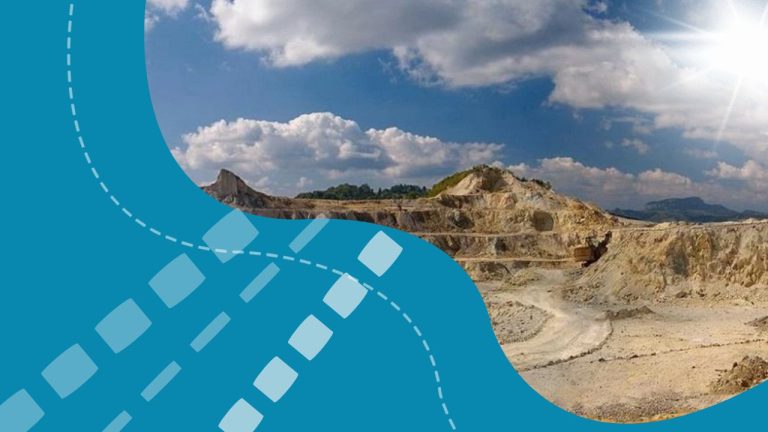
    Located in Romania’s historic Golden Quadrilateral Mining District, the Rovina Valley Project has access to established infrastructure, skilled local labor, and proximity to major transportation hubs. Over its 17-year open-pit operation, the project is expected to mine 140 million tonnes of ore, delivering 123.3 million tonnes for processing and stockpiling lower-grade material where feasible. Total material movement over the mine life is projected at 219 million tonnes, with a stripping ratio of 1.78:1.

  • Ukraine’s Titanium Comeback: A Strategic Blueprint for Rebuilding Europe’s Titanium Industry

    Ukraine’s Titanium Comeback: A Strategic Blueprint for Rebuilding Europe’s Titanium Industry

    For decades, titanium has been a cornerstone of aerospace, defense, and high-tech manufacturing — prized for its strength, lightness, and resistance to corrosion. Yet behind this strategic metal lies a highly concentrated global industry, where only a handful of nations control production of titanium sponge, the raw metallic form of the element.

    Among them, Ukraine once stood as a global leader, the industrial backbone of the Soviet titanium complex and one of the few countries that mastered the Kroll process — the key technology for sponge production. Ukraine uniquely combined chemical, metallurgical, and scientific expertise, hosting its own Institute of Titanium and advanced hydrometallurgical facilities capable of extracting not only titanium but also zirconium and hafnium.

    Today, that legacy stands disrupted. The Russian invasion has fractured Ukraine’s heavy industry and halted sponge production since 2021. But it also opened a potential path forward: the chance for Ukraine to reclaim a central role in Western titanium supply chains, as the world scrambles to reduce dependence on Russia and China.


    Global Titanium Landscape

    According to the US Geological Survey, global titanium sponge capacity reached 410,000 tons in 2024, with production steady at around 320,000 tons. The market is heavily consolidated:

    • China accounts for nearly 69% of global output, producing mainly industrial-grade sponge for domestic use.

    • Japan, Saudi Arabia, and Kazakhstan supply almost all of the aerospace-grade sponge imported by the United States and the European Union.

    • Russia remains integrated in its own defense value chain, but sanctions have eroded margins and logistics competitiveness.

    • Ukraine, a former key player, has recorded zero production since 2021.

    While China dominates the midstream segment with state-backed clusters, low-cost energy, and full integration, it lacks certification pathways to access Western aerospace markets. By contrast, Japan and Saudi Arabia occupy the high-quality premium segment, selling sponge at $11,000–13,000 per ton, compared with China’s $7,000 average price.

    The United States and EU remain the largest consumers and stockpilers, offering the most stable and profitable end markets — but they are also the most supply-constrained.


    Why Ukraine Matters

    Ukraine is the only European nation with both a high-grade mineral base and the industrial legacy to re-enter titanium sponge production. Its ilmenite and rutile deposits can support chloride-route Kroll processing, the same route used for aerospace-quality sponge.

    Even a 10,000–15,000 tpa facility could anchor a new Titanium Cluster serving Western markets. The cluster could later expand into VAR smelting (Vacuum Arc Remelting) to produce ingots and billets, especially for Ti-6Al-4V alloys used in aviation and defense.

    Strategically, this would fill a critical gap in the non-Chinese, non-Russian titanium segment, providing Europe with a certified domestic source of titanium metal for the first time in decades.


    Key Enablers and Investment Model

    Rebuilding Ukraine’s titanium metallurgy requires three foundational pillars:

    1. Energy Efficiency and Security:
      Titanium sponge production is power-intensive, with electricity costs accounting for 20–30% of total cash costs. Stable, affordable power — ideally renewable or nuclear — is crucial.

    2. Integrated Clustering:
      A vertically integrated industrial cluster combining mining, sponge, smelting, and by-product recovery (zirconium, hafnium, germanium) would minimize costs and maximize value retention.

    3. Strategic Financing:
      A $400–700 million CAPEX is needed for a 10,000–15,000 tpa sponge facility, with an additional $350–400 million for smelting capacity. Financing could come through long-term offtake contracts with Western aerospace and defense OEMs, supported by instruments such as the U.S.–Ukraine Reconstruction Investment Fund.

    Advanced payments and consortium-based equity could unlock broader project financing, while ensuring certification alignment with Western standards.


    Outlook and Feasibility

    Global titanium sponge output is forecast to reach 400,000–440,000 tons by 2035, driven by:

    • Rising aerospace demand (notably from Airbus A320 and Boeing 737 MAX programs).

    • Global rearmament and stockpiling.

    • Ongoing supply diversification efforts by Western governments.

    Within this framework, Ukraine and India are viewed as the two most promising re-entry markets. Ukraine could restore 5,000–10,000 tons per year of production by 2035, scaling to 15,000 tons under favorable conditions.

    Even modest early-stage output would offer strategic returns: it would anchor a European titanium hub, reduce Western supply risk, and cement Ukraine’s industrial role in the critical minerals value chain.


    Conclusion

    Ukraine possesses the minerals, know-how, and geographic advantage to rebuild a titanium industry that serves Europe’s long-term strategic interests.

    If paired with targeted investment, certification partnerships, and energy reforms, Ukraine could re-establish itself as a core supplier of aerospace-grade titanium, bridging the gap between resource-rich producers and high-tech Western consumers.

    Far from a nostalgic revival, this would mark a new strategic chapter — positioning Ukraine not just as a raw material exporter, but as Europe’s titanium powerhouse.

  • Savannah Resources Raises £9.2 Million in Oversubscribed Fundraise to Advance Barroso Lithium Project

    Savannah Resources Raises £9.2 Million in Oversubscribed Fundraise to Advance Barroso Lithium Project

    Savannah Resources Plc (AIM: SAV, FWB: SAV, SWB: SAV) announced it has successfully completed an oversubscribed £9.2 million (US$12 million) capital raise through a Placing and Subscription, with strong demand from existing and new institutional investors.

    The fundraising, managed through an accelerated bookbuild by SP Angel Corporate Finance LLP (Global Coordinator and Joint Bookrunner), alongside Canaccord Genuity Limited, Caixa-Banco de Investimento S.A., and Alantra Equities S.V. S.A., was significantly oversubscribed and scaled back as a result.

    The Company raised £5.9 million (US$7.6 million) via the Placing of 158.7 million shares and a further minimum £3.4 million (US$4.4 million) through a Subscription of at least 90.8 million shares, both at an issue price of 3.7 pence per share.

    Savannah’s Retail Offer remains open until 12:00 p.m. on 11 November 2025, after which final subscription totals will be confirmed.


    Use of Proceeds

    Net proceeds from the fundraise will strengthen Savannah’s financial position and accelerate development of the Barroso Lithium Project in northern Portugal — the largest battery-grade spodumene lithium resource in Europe and a European Commission “Strategic Project” under the Critical Raw Materials Act.

    Funds will be used to:

    • Acquire the Aldeia Mining Lease, which contains the highest-grade deposit within the Barroso Project area.

    • Advance Front-End Engineering Design (FEED) and long-lead item procurement.

    • Progress grid connection work and land control for infrastructure.

    • Cover project financing costs and provide additional working capital.


    CEO Statement

    Emanuel Proença, Chief Executive Officer, commented:

    “The strong demand from investors, which exceeded our US$12 million target, reflects growing confidence in the Barroso Lithium Project and renewed optimism in the lithium sector.

    With total cash reserves of approximately £20 million (US$26 million), Savannah is well positioned to move beyond the DFS and into pre-construction with confidence.

    The additional capital allows us to acquire the Aldeia Mining Lease and further progress critical workstreams ahead of construction.”

    Proença added that Savannah continues to expand its institutional investor base across Portugal, the UK, and Europe, with participation from both sector specialists and generalist investors. Retail investors are now able to participate through the open offer.


    Related Party Participation

    Key management and major shareholders took part in the subscription:

    Participant Subscription Shares Value (£) Resulting Shareholding
    Rick Anthon (Chairman) 550,676 £20,375 1,264,962 shares
    Emanuel Proença (CEO) 387,676 £14,352 3,124,556 shares
    Henrique Freire (CFO) 220,050 £8,135 2,520,050 shares

    Major shareholders also increased their stakes:

    • AMG Lithium B.V. subscribed for 39.1 million shares, bringing its total to 400.8 million shares.

    • Grupo Lusiaves SGPS, S.A. subscribed for 24.95 million shares (total 255.9 million).

    • Pluris Investments S.A. subscribed for 24.95 million shares (total 255.9 million).

    Their participation constitutes a related party transaction under AIM Rule 13. Independent directors Diogo da Silveira and Bruce Griffin reviewed the terms and deemed them fair and reasonable for shareholders.


    Admission and Next Steps

    Application has been made for the new shares to be admitted to trading on AIM. Dealings in the Placing and Subscription Shares are expected to commence at 8:00 a.m. on 12 November 2025.

    A separate announcement will follow for the Retail Offer results and Admission of additional shares.


    About Savannah Resources

    Savannah Resources Plc is a European lithium development company focused on the Barroso Lithium Project in northern Portugal. Once operational, the project is expected to produce around 190,000 tonnes per year of spodumene concentrate, enough lithium for approximately 500,000 electric vehicle battery packs annually.

    Through responsible development, Savannah aims to support Europe’s energy transition and contribute to the EU’s target of 10% domestic lithium supply by 2030.

  • Sarytogan Graphite Secures $1.4 Million Top-Up from EBRD to Advance Definitive Feasibility Study

    Sarytogan Graphite Secures $1.4 Million Top-Up from EBRD to Advance Definitive Feasibility Study

    Sarytogan Graphite Limited (ASX: SGA), a key player in the mining industry specializing in natural graphite extraction, has announced a $1.4 million top-up placement from the European Bank for Reconstruction and Development (EBRD). This follows a previous $5 million investment, bringing EBRD’s total investment in the company to $6.4 million. The funding is part of a broader package aimed at supporting Sarytogan’s Definitive Feasibility Study, which is on track for completion by mid-2026.

    The additional investment will increase EBRD’s shareholding in Sarytogan Graphite Limited from 17.3% to 19.99%. This increased stake reflects the EBRD’s confidence in the company’s operations and its strategic positioning in the critical raw materials market.

    Sarytogan’s primary project, the Sarytogan Graphite Deposit located in the Karaganda region of Central Kazakhstan, is recognized as a Strategic Project under the European Union’s Critical Raw Materials Act. This designation underscores the project’s importance in supplying sustainable critical raw materials, particularly for battery production and other strategic uses.

    The company’s focus on sustainable mining practices and its strategic location make it a vital player in the global supply chain for critical raw materials. The completion of the Definitive Feasibility Study will be a significant milestone, providing a clearer picture of the project’s potential and its role in meeting the growing demand for graphite in various industries.

  • Serbia Launches Consultation on New Mining Law to Align with EU Standards

    Serbia Launches Consultation on New Mining Law to Align with EU Standards

    Serbia’s Ministry of Mining and Energy has launched a public consultation on a new law on mining and geological exploration aimed at modernizing the country’s resource management framework and aligning it with European Union standards on critical raw materials, sustainable development, and the circular economy.

    According to the ministry’s draft outline, the legislation will be harmonized with the EU Critical Raw Materials Act and the European Green Deal, supporting Serbia’s gradual integration into the EU’s framework for sustainable mining, climate neutrality, and secure mineral supply.

    The move follows the European Commission’s decision earlier this year to include Rio Tinto’s Jadar lithium and boron project in Serbia among the EU’s strategic projects for critical raw materials — the only lithium extraction project on the list.

    The proposed law seeks to establish a modern, transparent, and efficient system for managing Serbia’s mineral and geological resources, strengthening the state’s role as owner and steward of natural assets. It also emphasizes environmental and social responsibility, calling for clearer investor obligations regarding environmental protection, land reclamation, and site remediation.

    In line with EU reporting standards, Serbia intends to adopt the Pan-European Reserves and Resources Reporting Committee (PERC) framework, the UN Framework Classification for Resources (UNFC), and the Petroleum Resources Management System (PRMS). The law will also mandate the application of ESG (environmental, social, and governance) principles throughout all stages of exploration and mining.

    Other key elements include:

    • Improving legal certainty in exploration and mining rights, with stricter oversight and consistent application of sustainability standards.

    • Defining and protecting strategic mineral deposits, ensuring they are incorporated into Serbia’s spatial and development plans.

    • Digitalizing permitting procedures through a unified online system for electronic applications and public access to data on exploration and mining areas.

    The ministry said the reform aims to ensure a gradual alignment with the EU’s green and digital transition goals while fostering investor confidence and transparency.

    The public consultation will remain open until November 11, allowing citizens, organizations, and industry representatives to submit comments and proposals on the draft framework.

  • China Tightens Grip on Tajikistan’s Antimony Industry

    China Tightens Grip on Tajikistan’s Antimony Industry

    In Tajikistan’s mountainous heartland, the Soviet-era Saritag antimony mine stands testament to China’s growing influence in Central Asia. Run by the joint venture Talco Gold, a collaboration between Tajik and Chinese companies, the mine produces over 5,000 tonnes of antimony concentrate daily, crucial for many industrial applications. The ore is crushed, ground in large drums, and then separated from the metal using chemical reagents before being dried and bagged as 30% pure antimony. This large-scale operation was made possible by a significant Chinese investment in 2022, which is now being followed by the construction of a new purification plant.

    Pictures of Tajikistan’s long-time President Emomali Rakhmon coexist with portraits of Chinese leader Xi Jinping on posters juxtaposing the country’s past with its present economic reality. While remnants of the Soviet era remain, China has overtaken Russia as the dominant power in the region’s crucial mining sector.

    The full potential of the mine is yet to be unlocked. China’s ambitious $359 million project aims to build a state-of-the-art purification plant on the site, allowing for even greater control over the antimony production chain.

    The Chinese investment, pouring in, signals a strategic move to secure access to vital resources and cement political ties. While offering much-needed economic boost to Tajikistan, it raises concerns about resource dependence and potential environmental consequences.

    This narrative paints a picture of delicate balance: economic prosperity coupled with increasing reliance on a single partner, leaving Tajikistan to navigate the complex landscape of China’s expanding geopolitical footprint in Central Asia.

  • Estonia Opens First Rare Earth Magnet Plan

    Estonia Opens First Rare Earth Magnet Plan

    Europe’s first large-scale rare earth magnet production plant has opened in Estonia, marking a watershed moment in the EU’s efforts to secure supply chains for critical raw materials. The facility, developed by Canadian group Neo Performance Materials at an investment of $75 million, is more than just a factory—it represents Europe’s growing determination to reduce its reliance on China in the race toward renewable energy and electric mobility.

    Why Rare Earth Magnets Matter

    Rare earth magnets are a cornerstone of the energy transition. They power electric motors in vehicles, enable the operation of wind turbines, and play a role in advanced electronics. Without them, scaling up clean technology becomes almost impossible. The challenge is that China has long dominated both the processing and production chains, supplying over 90 percent of the world’s rare earth magnets and an estimated 98 percent of Europe’s demand. This dominance has left industries on the continent vulnerable.

    When Beijing tightened export controls on certain rare earth materials earlier this year, European manufacturers reported severe delays in securing supplies. Such disruptions risk derailing the EU’s aggressive targets for decarbonisation and the expansion of electric vehicle production. As Neo’s chief executive Rahim Suleman put it, “Customer motivations are incredibly high to diversify their supply base and to have localized supply chains.”

    A Strategic Investment for Europe

    The new Estonian plant will initially produce 2,000 tonnes of rare earth magnets annually, with plans to scale up to 5,000 tonnes. While this is still only a fraction of projected European demand—forecast to rise from roughly 22,000 tonnes today to 60,000 tonnes within the next decade—it represents a critical first step toward supply diversification.The facility’s operations are closely linked with Neo’s nearby separation plant, creating an integrated processing hub inside the EU. Raw materials will be sourced from Australia and Malaysia, regions that Europe considers more geopolitically reliable than China.

    Beyond private investment, the project has enjoyed notable public support: a €18.7 million grant from the EU’s Just Transition Fund and a $50 million line of credit from Export Development Canada.European Commission president Ursula von der Leyen underscored the significance, stating that the magnets produced in Estonia are “indispensable to growth and innovation.” Her comments align with the EU’s strategic goal of processing at least 40 percent of its critical raw materials domestically, part of a broader strategy to insulate the bloc from geopolitical shocks.

    Industrial Demand and Auto Sector Stakes

    The automotive sector stands at the heart of the rare earth magnet debate. German auto suppliers Bosch and Schaeffler have already signed contracts with Neo, highlighting the desperation among manufacturers to lock in alternative supply lines. Electric vehicles rely heavily on permanent magnets for motors, making uninterrupted access critical to Europe’s industrial competitiveness.At the same time, Europe faces a delicate balancing act. Producing magnets outside China comes at a cost premium, driven by higher environmental standards, energy costs, and raw material logistics. But as Suleman pointed out, the magnet within an electric vehicle motor represents only a small fraction of the total cost. For carmakers increasingly judged by their ability to produce cleaner vehicles, paying a premium for secure, non-Chinese inputs may soon be seen as a necessary trade-off.

    Europe vs. U.S.: Diverging Paths

    The EU is not the only region scrambling to insulate itself from China’s grip on rare earths. The United States has moved aggressively, fueled by larger federal subsidies and sharper geopolitical confrontation with Beijing.

    Washington has poured billions into rare earth mining and processing projects, while Europe has leaned more heavily on public–private partnerships and industry demand.

    Suleman contrasted the two approaches bluntly: “In the U.S., they’re chasing government money, and in Europe we’re chasing customers—or customers are chasing us.” Europe’s model may take longer to scale, but some argue it will prove more resilient, given that it is anchored in long-term demand rather than temporary government incentives.

    The Limits of Diversification

    Despite bold moves like the Estonian plant, Europe cannot entirely sever ties with China in the near future. Analysts suggest that at best, 30 percent of global rare earth magnet production could shift outside Chinese borders in the next decade, leaving Beijing with enduring dominance. France has spearheaded several projects to challenge this control, but insufficient mining and processing capacity across the continent means Europe will remain dependent on imports.

    Furthermore, the global raw material supply chain itself has bottlenecks. While Australia is emerging as a reliable supplier, and southeast Asia provides alternatives, scaling these sources to cover growing demand will take time, investment, and political stability.

    A Turning Point for Europe’s Green Transition

    The Estonian facility is ultimately a symbol of Europe’s intent to claim greater agency in a strategically vital industry. As electric vehicle adoption accelerates and renewable power scales, the demand for rare earth magnets will only intensify. Neo Performance Materials’ new plant will not solve Europe’s dependency overnight. But by anchoring at least part of the value chain closer to home, it signals to both industry and policymakers that strategic autonomy in essential raw materials is not only desirable but possible.

    For Europe, Estonia is just the beginning. The continent will need more facilities, stronger alliances with trusted suppliers, and coordinated industrial policies to reduce its rare earths vulnerability. The magnet plant may be a modest contribution in terms of tonnage, but geopolitically, it is a giant leap forward.

  • Boliden Warns of Investment Impact from Finnish Mining Tax Proposal

    Boliden Warns of Investment Impact from Finnish Mining Tax Proposal

    Boliden, the Swedish mining giant, has issued a stark warning to the Finnish government over its proposed tax reforms, which it claims will have far-reaching consequences for the EU’s critical metal supplies. The company, which owns the Kevitsa copper and nickel mine in Finland, estimates that the proposed tax hike will result in a 20-30 million euro annual increase in costs, the bulk of which is due to a quadrupling of the recently introduced Finnish mining tax.

    In a strongly worded submission to the Finnish government, Boliden argues that the proposed tax reforms are “inadequately prepared” and lack proper impact assessments, which could lead to “serious consequences” for the investment climate in Finland. The company also notes that the current proposals should be withdrawn in their entirety.

    The proposed tax hike has sparked concerns among EU policymakers, as both copper and nickel, as well as cobalt and PGMs (platinum group metals), are designated as strategic and/or critical metals by the EU. The Kevitsa mine is one of the largest producers of these metals in the EU, and any disruption to its operations could have significant implications for the bloc’s raw material supplies.

    “We understand the need for a balanced tax system, but this proposal is unacceptable,” said a Boliden spokesperson. “The increased tax burden will not only harm our business but also threaten the EU’s critical metal supplies. We urge the Finnish government to reconsider its proposal and engage in a more inclusive and evidence-based decision-making process.”

    The Finnish government is expected to make a final decision on the tax reforms in the coming weeks.

  • Germany’s Zinnwald Lithium Project Faces Local Backlash Over Tourism and Environmental Concerns

    Germany’s Zinnwald Lithium Project Faces Local Backlash Over Tourism and Environmental Concerns

    Plans to tap Europe’s second-largest lithium reserves are meeting resistance in the Ore Mountains, where residents are split over a proposed mining project that could bring jobs but also disrupt the local tourism economy.

    Privately held Zinnwald Lithium aims to begin extracting lithium-rich ore from the region in 2030, with the goal of producing battery-grade lithium hydroxide for Europe’s fast-growing electric vehicle and energy storage industries. The project promises hundreds of new jobs and fresh investment in an area with deep mining traditions.

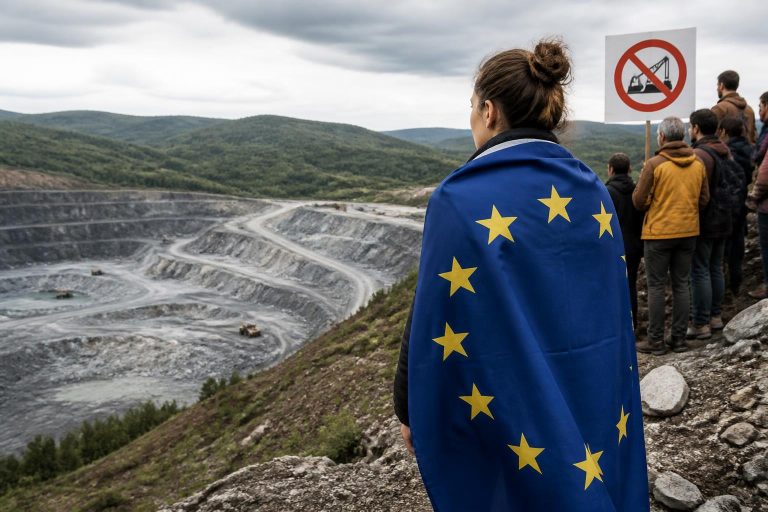
    But in the border village of Zinnwald, opposition is mounting. Locals worry that large-scale mining will damage the scenic landscape that attracts thousands of tourists each year, threatening one of the region’s main sources of income. Environmental campaigners have also raised concerns about water use, waste, and long-term ecological impacts.

    Supporters argue the mine could revive the Ore Mountains’ historic role as a mining hub and help Europe reduce its reliance on imported critical raw materials. Yet with community resistance growing, the future of lithium production in Zinnwald remains uncertain.

  • Military Metals Targets Strategic Antimony-Gold Potential in Slovakia’s Tiennesgrund Project

    Military Metals Targets Strategic Antimony-Gold Potential in Slovakia’s Tiennesgrund Project

    Military Metals (CSE: MILI) says its Tiennesgrund Antimony-Gold Project in eastern Slovakia could play a key role in bolstering Europe’s strategic resource independence. Following a preliminary field inspection and historical data review, CEO Scott Eldridge highlighted the project’s potential to strengthen domestic supply chains for critical minerals under the European Union’s Critical Raw Materials Act.

    “Antimony is listed as a critical raw material under the EU’s CRMA, and our project has potential to support the continent’s ambition to secure domestic supply chains for essential minerals,” Eldridge said. “We’re proud of the possibility that we may contribute to Europe’s resilience in the face of global resource volatility and will seek to help power the technologies that drive the green and defence sectors.”

    The 13 km-long, 0.8–1.4 km-wide property hosts numerous historical adits, where mineralised material remains visible in waste dumps. Historical sampling indicates antimony grades between 2.5% and 39.4%, and gold grades from 0.07 g/t to 9.6 g/t.

    A field campaign is planned for October 2025 to study structural controls of mineralisation and define drill targets. The program will include trenching, sampling, and mapping, with drill testing to follow where results indicate significant concentrations of antimony and gold.

    Military Metals, based in British Columbia, focuses on acquiring and advancing mineral projects with a particular emphasis on antimony, a metal critical to batteries, renewable energy systems, flame retardants, and advanced technologies such as liquid metal batteries and solar panels.

    Antimony prices have remained stable since July, with Shanghai Metals Market data showing No.1 ingot prices between ¥185,000 and ¥188,000 ($39,456–$40,092) per tonne.