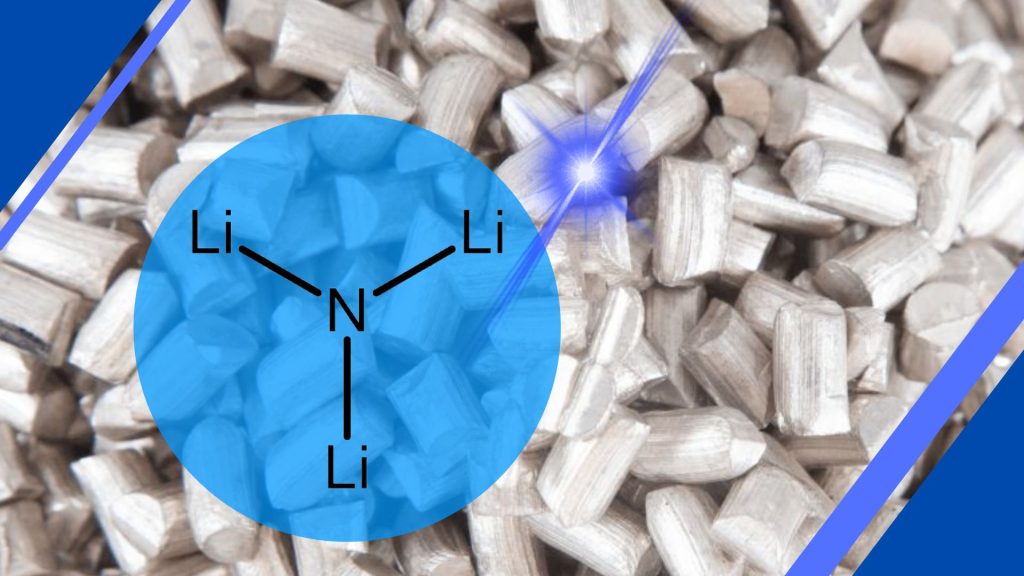
As the world pivots towards renewable energy and electric vehicles, one critical material has emerged as the linchpin of this transformation: lithium. This soft, silvery metal powers the batteries that drive electric cars, store renewable energy, and fuel the technologies of tomorrow. Yet Europe – the continent that ignited the green energy revolution – finds itself in an unexpected position: dangerously dependent on distant suppliers for a resource it urgently needs. The stakes are high, and Europe’s response could reshape global supply chains for decades to come.
The Lithium Imperative: Why This Element Matters
Clean technologies are revolutionising global economies. Solar panels harness the sun’s energy, wind turbines spin on hillsides, and electric vehicles replace combustion engines on roads worldwide. Behind each of these innovations lies lithium, the critical raw material that makes energy storage possible.
The scale of Europe’s ambition is staggering. The continent has committed to becoming carbon neutral by 2050 – a target that requires unprecedented quantities of lithium. According to projections, Europe’s demand for lithium could increase more than 20-fold by mid-century compared to current levels. This surge in demand reflects the sheer volume of batteries needed for electric vehicles, renewable energy storage systems, and grid stabilisation.
However, this explosive growth in demand has created a crisis of supply. Global prices for lithium have become highly volatile, swinging wildly with market sentiment and geopolitical tensions. For Europe to achieve its climate goals, it must solve a fundamental challenge: how to secure access to lithium when other countries have already locked in their supply chains?
Understanding Critical Raw Materials
The concept of “critical raw materials” emerged gradually in European policy circles. In 2011, the European Commission adopted its first list of 14 materials and material groups that merited close monitoring. Every three years, regulators revisited this list as global circumstances shifted.
The turning point came around 2019. Critical raw materials – once relegated to technical spreadsheets in Brussels – suddenly became a political priority of the highest order. The timing was significant: by 2020, lithium was added to the critical raw materials list just as Europe was launching its most ambitious climate initiative yet.
Modern economies run on raw materials. But some resources are so essential to maintain and so risky to secure that their absence could cripple entire industries. These are the materials that now define strategic competition in the 21st century.
The European Green Deal: Ambition Meets Reality
The European Green Deal represented a transformative vision: to reconcile Europe’s economy with its planet. Launched with the promise of turning the transition to a climate-neutral economy into Europe’s “next engine of growth,” the initiative encompassed everything from renewable energy investments to algorithmic innovations.
But the Green Deal revealed an uncomfortable truth: building clean technology at scale requires enormous quantities of raw materials. To power the continent’s clean energy future, Europe needs substantial amounts of lithium, copper, cobalt, and rare earth elements. The irony became starkly apparent – Europe, the champion of climate action, barely produces most of these materials itself.
Lithium exemplifies this predicament. While Europe excels in many sectors, lithium mining and processing remain almost entirely absent from the continent. Currently, Europe accounts for less than 0.1% of global lithium mine production, making it almost entirely dependent on imports.
The Global Lithium Landscape: Who Holds the Power?
Understanding Europe’s vulnerability requires examining the global lithium supply chain. Three countries dominate upstream production, each controlling different segments of the market.
Australia leads in hard rock mining, shipping most of the world’s spodumene concentrate – concentrated lithium extracted from mining ore. Chile dominates the production of lithium carbonate through massive evaporation ponds in the Atacama Desert, where vast salt flats are transformed into lithium repositories. And China, perhaps most significantly, controls approximately 70% of global battery-grade lithium hydroxide refining – the processed form essential for electric vehicle batteries and energy storage systems.
This concentration creates dangerous dependencies. When one country controls such a large portion of a critical supply chain, geopolitical risks multiply. Supply disruptions, trade disputes, or policy changes in any one nation can reverberate across the entire global economy.
For years, Europe overlooked an obvious solution: its own lithium deposits. Deep beneath European soil lie resources that were long considered economically unviable or technically challenging to extract. But as competition for lithium intensified, Europe began reconsidering these deposits. New extraction methods and new mine projects – ones that experts believe could cut Europe’s lithium imports by half – suddenly moved from the margins to the centre of strategic planning.
Project Lionheart: Europe’s Flagship Lithium Initiative
In December 2025, Cris Moreno, Managing Director and CEO of Vulcan Energy, announced a historic moment for the continent: comprehensive financing to fully fund the construction of Project Lionheart. This facility represents more than just another mining project – it embodies Europe’s determination to reshape its relationship with critical raw materials.
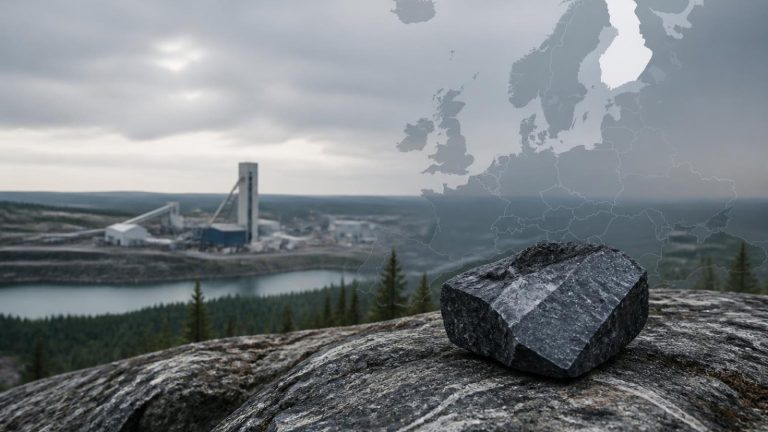
Located in Germany’s Palatinate region, Lionheart sits atop Europe’s largest lithium resource: a vast underground reservoir of lithium-rich, hot geothermal brine. The project’s brilliance lies not merely in the resource beneath the ground, but in how it extracts that resource.
Innovation in Extraction
The Lionheart process represents a significant leap forward in sustainable lithium production. Rather than simply pumping brine and abandoning it, Vulcan Energy operates an elegant closed-loop system:
- Geothermal Energy Extraction: Hot brine is pumped to the surface, and the thermal energy is harvested as a renewable energy product.
- Heat Distribution: This renewable heat feeds into local district heating grids, providing genuine utility beyond lithium extraction.
- Lithium Concentration: Only after energy extraction does the lithium separation process begin. The brine passes through extraction columns where lithium is concentrated into a 40% lithium chloride concentrate.
- Brine Reinjection: Crucially, the brine is re-injected into the reservoir, creating a closed-loop system with minimal waste.
- Final Processing: The lithium chloride concentrate travels to downstream facilities where green power converts it into battery-quality lithium hydroxide suitable for electric vehicle batteries.
This process is revolutionary because it achieves dual benefits: generating renewable energy while extracting lithium, all with a minimal environmental footprint. When fully operational by 2028, Lionheart will produce 24,000 tonnes of battery-grade lithium annually – enough to power approximately half a million electric vehicles per year.
Europe’s Broader Resilience Strategy
Project Lionheart represents one crucial piece of Europe’s larger strategic puzzle. The continent’s approach to critical raw materials extends far beyond a single project or even domestic extraction.
Regional Cooperation
The financing structure of Lionheart exemplifies European cooperation. Germany’s raw materials fund acted as a minority investor, attracting additional equity investors to the project. Simultaneously, the European Investment Bank provided a substantial debt portion, demonstrating how public and private capital can align around strategic objectives.
Industrial Partnerships
Companies like Umicore, a Belgian battery materials leader and one of Europe’s largest battery players, have become off-takers for Lionheart’s lithium. Umicore’s commitment reflects three compelling reasons for a European supply chain:
- Cost Competitiveness: Local sourcing reduces transportation costs and improves margin efficiency in the battery supply chain.
- Geopolitical Risk Reduction: Diversified, local supply chains insulate Europe from political disruptions in distant suppliers.
- Sustainable Sourcing: A European supply chain enables transparent oversight of environmental and labor standards, ensuring low-carbon, responsibly sourced lithium.
International Partnerships
Europe also recognizes that complete autonomy in raw materials is neither achievable nor necessary. Instead, the strategy emphasizes risk management through diversification. The European Investment Bank, for example, provides technical assistance to a lithium mining project in Namibia, creating secured supply chains for European manufacturers while supporting development in Africa.
The Critical Raw Materials Act: Policy Framework for Action
The turning point in European policy came with the Critical Raw Materials Act, which entered into force in 2024. Built on decades of analysis starting with the original 14-material list from 2011, this legislation translates strategic thinking into legal reality.
The Act’s core principle is straightforward yet powerful: reduce dependency to build resilience and competitiveness. Specifically, the regulation states that Europe should not rely on any single supplier for more than 65% of any critical raw material.
To operationalise this vision, the European Commission designated 47 strategic projects across the EU, with 18 specifically focused on lithium. These projects receive concrete benefits:
- Accelerated Permitting: Regulatory timelines are compressed, allowing faster project development.
- Improved Financing Access: Projects gain preferential access to European investment capital.
- Comprehensive Scope: Initiatives span the entire value chain – extraction, processing, recycling and substitution technologies.
Project Lionheart stands as one of these designated strategic projects, recognized as “the first green mine in Europe.” The European Commission has committed to ramping up support for critical raw materials to €2 billion annually, with additional funding rounds already underway.
Impact on Europe’s Electric Vehicle Revolution
The timing of Lionheart’s development aligns perfectly with Europe’s electric vehicle boom. In 2025 alone, close to 1.9 million fully electric cars were sold across the EU—a figure that reflects the continent’s genuine shift away from internal combustion engines.
Each of these vehicles requires a battery, and each battery requires lithium. Without securing domestic or closely-partnered sources of lithium, Europe risks becoming a captive consumer, dependent on suppliers who may not prioritize European interests.
By providing 24,000 tonnes of battery-grade lithium annually, Lionheart removes this vulnerability. The lithium produced can be woven directly into European battery supply chains, powering the next generation of electric vehicles manufactured in German, French and Swedish factories.
Lessons in Strategic Resilience
Europe’s approach to lithium offers important lessons in strategic thinking for the 21st century:
First, diversification matters. Rather than seeking 100% autonomy – an impossible goal – Europe embraces multiple sources: domestic extraction, international partnerships and investments in processing capabilities.
Second, policy must align with industrial realities. The Critical Raw Materials Act did not emerge from theoretical exercises; it reflected genuine business needs articulated by manufacturers and investors. Government policy created conditions that entrepreneurs could seize.
Third, innovation becomes strategic. Lionheart’s success depends on novel extraction technologies that previous generations dismissed as uneconomical. As climate urgency mounts, what was once marginal becomes central.
Fourth, finance follows frameworks. Once the European Commission established strategic designations and committed public capital, private investors followed. The project attracted equity investors, bank financing and international development partners because policy created certainty.
Looking Forward: Momentum Building
The momentum is undeniable. Projects are breaking ground across the continent. Financing deals are taking shape. The second call for critical raw materials projects has closed, with the pipeline full of new initiatives spanning extraction, processing, and recycling.
Recycling deserves particular attention as an emerging opportunity. As electric vehicles reach end-of-life, their batteries represent not waste but resources. Recovering lithium, cobalt, and other materials from spent batteries can significantly reduce dependence on virgin extraction while creating new industrial capabilities within Europe.
Conclusion: The Green Supply Chain Revolution
The clean energy transition requires more than renewable power and efficient vehicles. It requires secure, sustainable supply chains for the materials that make this transition possible. For decades, Europe outsourced this responsibility, concentrating on technology and consumer markets while others controlled raw materials.
The lithium story represents Europe’s course correction. Through Project Lionheart and initiatives like it, Europe is building a different future: one where clean technology and responsible sourcing go hand in hand, where geopolitical resilience aligns with climate commitments, and where a continent leads not just in environmental vision but in strategic execution.
With €2 billion annually supporting critical raw materials development, with the first green mine in Europe approaching completion, and with companies like Umicore securing local supply for their batteries, Europe is gaining genuine momentum. The clean tech era will be built on critical raw materials, and increasingly, those materials will have a European origin.
This is not just about lithium. It is about whether Europe can translate its climate ambitions into economic reality – and whether it can build the resilient, sustainable supply chains that future generations will depend upon.
About This Documentary
This article is based on a documentary-style video produced by the European Investment Bank Group (EIB Group) as part of a new series exploring the topics driving Europe’s biggest conversations. The EIB Group is actively supporting Europe’s transition to a competitive, resource-secure future through strategic investments in critical raw materials and clean technology infrastructure.
To stay competitive globally and strengthen its tech leadership, Europe is investing in the resources needed for the technologies of tomorrow. Critical raw materials, especially lithium, are key to powering this transition. The documentary features interviews with key industry and policy leaders shaping Europe’s lithium strategy.
Featured Contributors
The video includes insights from industry and policy experts who are driving Europe’s critical raw materials agenda:
- Cris Moreno, Managing Director and Chief Executive Officer of Vulcan Energy, discussing the innovative geothermal extraction methods at Project Lionheart
- Francis Wedin, Founder and Executive Chair of Vulcan Energy, sharing the strategic vision behind Europe’s first green lithium mine
- Dr. Jan Klasen, Director of the KfW German Raw Materials Fund, explaining how public investment catalyses private sector participation in strategic projects
- Stephan Jannis, Chief Operating Officer of Battery Cathode Materials at Umicore, detailing why European battery manufacturers are prioritising local lithium supply chains
These contributions highlight the collaborative effort between private enterprises, government institutions and development banks working to secure Europe’s raw materials future.
More episodes in this documentary series are available on the EIB Group’s YouTube channel, exploring additional topics central to Europe’s economic and environmental transformation.