Tag: critical minerals

  • Europe Moves Toward Lithium Independence with New German Refinery for EV Batteries

    Europe Moves Toward Lithium Independence with New German Refinery for EV Batteries

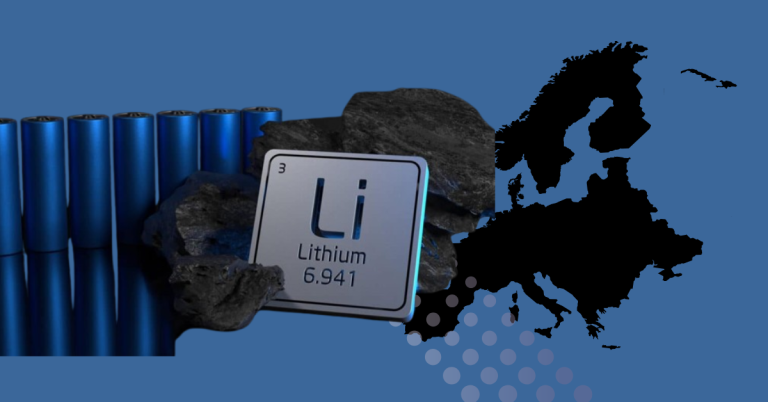
    As European automakers ramp up their pursuit of lithium for electric vehicle (EV) batteries, an Australian company is stepping in with a new refinery in Germany to help meet demand. Vulcan Energy has launched a pilot project at its plant west of Frankfurt to extract lithium from briny underground water near the French border. This lithium will be used by major auto manufacturers including Volkswagen, Renault, and Stellantis.

    In addition to producing lithium, the plant will use excess geothermal heat from water pumped from two kilometers below the Rhine Valley to warm homes in a local community. Francis Wedin, a senior executive at Vulcan, described the project as vital to Europe’s goal of reducing its reliance on foreign sources of critical materials. Currently, Europe’s lithium battery sector is struggling to gain a foothold as regional demand for EVs slows, but Vulcan hopes its plant will bolster Europe’s lithium industry and support the continent’s broader green transition.

    Set to begin commercial production by 2027, Vulcan’s project is partly funded by a 100 million euro ($106 million) subsidy from the German government. The EU, with its 2035 deadline to phase out new combustion engine vehicles, is eager to secure local lithium supplies to reduce dependency on China, a dominant player in global lithium mining and refining.

    Vulcan’s method involves drawing brine from geothermal reservoirs beneath Landau, where it’s processed into lithium hydroxide through electrolysis and crystallization. Notably, this approach has a carbon-neutral footprint and could be more cost-effective than China’s current methods. Vulcan’s Frankfurt facility aims to produce 24,000 tonnes of lithium hydroxide annually by 2027, enough for approximately 500,000 EV batteries.

    The EU has committed to refining 40% of its critical minerals domestically and has launched 28 lithium extraction or refining projects across the bloc. One competitor, AMG Lithium, opened a refinery in eastern Germany in September, sourcing raw materials from Brazil. Still, clean transport advocates warn that while securing lithium is critical, Europe needs further infrastructure to achieve full battery production independence.

  • UK Introduces Export Credit Financing to Secure Long-Term Critical Mineral Supply

    UK Introduces Export Credit Financing to Secure Long-Term Critical Mineral Supply

    The UK government has launched export credit financing through UK Export Finance (UKEF) to support critical mineral imports vital to industrial growth and the green energy transition. This financing aims to secure reliable sources of minerals like lithium, graphite, and cobalt, essential to sectors such as automotive, aerospace, and technology. The credit guarantees provided by UKEF will support overseas mineral projects, allowing UK manufacturers easier access to stable, sustainable supply chains and facilitating partnerships with countries like Australia, known for their rich lithium deposits. Business and Trade Secretary Jonathan Reynolds emphasized the critical minerals race, underscoring the government’s commitment to building partnerships for sustainable industry growth. Additionally, this initiative aligns with the Minerals Security Partnership, an international coalition supporting secure and resilient mineral supply chains. UKEF will collaborate with other export credit agencies to mitigate financing risks, ensuring that UK companies are well-placed in securing these vital resources for future development.

  • Kazakhstan: A Strategic Partner for Europe’s Green Transition and Rare Earth Supply Chain

    Kazakhstan: A Strategic Partner for Europe’s Green Transition and Rare Earth Supply Chain

    Kazakhstan’s Minister for Industry and Construction, Kanat Sharlapaev, has highlighted the country’s pivotal role as a supplier of critical raw materials to Europe, positioning Kazakhstan as a strategic partner for the continent’s green transition. Speaking with Euronews on The Big Question, Sharlapaev discussed the growing trend of “friendshoring”, where Europe shifts production to trusted geopolitical allies to secure a reliable supply of essential resources.

    According to the Brookings Institution, China produced around 60% of the world’s rare earth elements as of 2023. The pandemic revealed the risks of dependency on single-region suppliers, and with the shift toward greener technologies, Europe’s need for critical minerals is only increasing. Kazakhstan, which has long supported Europe’s energy stabilityand is Germany’s fourth-largest energy trading partner, could be the solution for Europe to reduce its reliance on China.

    Kazakhstan’s proximity to Europe also lowers shipping costs and emissions compared to sourcing from more distant suppliers in China or South America. The nation is rich in critical minerals, with 17 out of the 30 elements on the EU’s critical raw materials list available within its borders. It holds 20% of the aerospace-grade titanium market, 10% of manganese sulfate, 30% of global beryllium supply, and 17% of rhenium. Additionally, Kazakhstan ranks as the 11th largest copper producer globally.

    Sharlapaev underscored Kazakhstan’s commitment to expanding local processing capabilities to retain more value within the country, fostering job creation and regional economic growth. He explained that Kazakhstan aims to move beyond raw exports by enhancing its value chain. With the mining sector contributing between 12% and 15% of Kazakhstan’s GDP, this strategic focus is expected to further bolster the economy.

    Kazakhstan’s mining workforce is composed of 99% local talent, trained through its own educational institutions, setting it apart from the global trend of expatriate staffing in mining industries. “This strong human capital base enables companies to start operations more efficiently in Kazakhstan,” Sharlapaev noted, reinforcing the country’s appeal as a reliable partner in Europe’s pursuit of green energy goals.

  • UK Chancellor Launches Export Credit Financing to Boost Access to Critical Minerals for British Industries

    UK Chancellor Launches Export Credit Financing to Boost Access to Critical Minerals for British Industries

    The Chancellor has unveiled a significant initiative to support British industries by offering export credit financingaimed at securing a stable, long-term supply of critical minerals. This program, led by UK Export Finance (UKEF), aims to bolster UK industrial growth and drive the country towards achieving net zero by increasing access to these essential materials.

    The global demand for critical minerals—key components in emerging technology and sustainable industries—is on the rise, making their steady supply crucial for the UK’s largest exporting sectors, including automotive, defence, and aerospace. By enabling contracts that enhance UK access to critical minerals like lithium, graphite, and cobalt, UKEF aims to reduce supply-chain risks and reinforce economic resilience.

    As part of the initiative, credit guarantees will be provided to overseas suppliers of raw and processed minerals needed by UK exporters. These guarantees will allow overseas companies to access debt financing for projects that serve the UK’s mineral requirements. Furthermore, UKEF is expected to collaborate with other Export Credit Agencies (ECAs)and public financial institutions to fund projects in countries with abundant mineral deposits, including Australia, which is rich in lithium.

    Jonathan Reynolds, Secretary of State for Business and Trade, emphasized the critical nature of this financing in securing resources for UK manufacturers and building international partnerships. “With intense global competition for minerals like lithium and cobalt, this offer will position UK firms competitively, supporting industrial growth and advancing our commitment to net zero,” Reynolds stated.

    The announcement has been well-received by industry leaders. Kirsty Benham, CEO of the Critical Minerals Association (UK), hailed it as a testament to the UK Government’s recognition of critical minerals’ strategic importance. Sean Sargent, CEO of Green Lithium, added that the new financing initiative would strengthen international supply chains and support UK industrial development, especially at facilities like the planned Green Lithium refinery in Teesside.

    The UK government’s involvement in the Minerals Security Partnership (MSP)—an initiative led by the United Statesto secure critical minerals supply—is also reflected in this announcement. Recently, UKEF joined the MSP’s finance network, collaborating with global financial bodies to mitigate risks and expand financing opportunities for mineral projects. In a parallel effort, UKEF provided a guarantee for machinery exports to a major copper production facility in Central Asia, showcasing its broader commitment to strengthening UK capabilities in the critical minerals sector.

  • UK Budget to Support Critical Mineral Imports to Strengthen Industry and Reduce Reliance on China

    UK Budget to Support Critical Mineral Imports to Strengthen Industry and Reduce Reliance on China

    The upcoming UK budget, spearheaded by Chancellor Rachel Reeves, will introduce greater financial support for companies importing essential minerals like lithium, graphite, and cobalt. These minerals are vital for sectors such as defense, aerospace, EVs, and renewables, and the initiative aims to reduce the UK’s dependence on China. Importers with long-term contracts with UK exporters can access UK Export Finance, enhancing partnerships with Commonwealth suppliers. This budget will also include broader economic measures, including tax adjustments and increased borrowing to boost public services and infrastructure.

  • Military Metals Expands to Slovakia with Acquisition of Antimony and Tin Projects

    Military Metals Expands to Slovakia with Acquisition of Antimony and Tin Projects

    Military Metals (CSE: MILI) has broadened its search for critical mineral assets beyond Canada, signing a deal to acquire three brownfield projects in Slovakia. The newly acquired projects include two antimony-focused sites and one tin-focused site. This move aligns with the company’s goal of becoming a leading explorer and developer of critical minerals essential for battery technology and advanced industrial applications.

    Under the letter of intent, Military Metals will acquire these Slovakian projects by issuing 10 million shares, valued at C$5.6 million. The company’s stock rose by 4%, reaching C$0.78 per share with a market capitalization of C$25.5 million by noon ET on Monday.

    The key asset is the Trojarova antimony project, located near Pezinok in western Slovakia, which was heavily explored during the Soviet era. Historical data indicates a resource of 415,000 tonnes grading 0.162% antimony and 1.148 g/t gold. Military Metals plans to verify these figures with modern drilling to meet NI 43-101 compliance standards.

    Also included is the Medvedi tin project, which has a historical reserve estimate of 863,000 tonnes grading 0.19% tin. The third acquisition, Tiennesgrund, is another antimony project with a 10-kilometer fault-hosted vein system, though no resource estimate has yet been published for this site.

    Military Metals CEO Scott Eldridge emphasized that these acquisitions strategically position the company as a leading player in the critical minerals sector, particularly for antimony. He highlighted the importance of Slovakia’s strong mining infrastructure and the alignment with the European Union’s Critical Raw Materials Act, which could provide access to EU funding.

    This acquisition follows Military Metals’ recent purchase of the past-producing West Gore antimony project

  • UK Invests £4.5 Million to Boost Critical Mineral Mining in Devon and Cornwall

    UK Invests £4.5 Million to Boost Critical Mineral Mining in Devon and Cornwall

    The UK is investing over £4 million to speed up the extraction of key minerals such as lithium, tin, and tungsten in Devon and Cornwall. The University of Exeter will receive £4.5 million to establish a Green Economy Centre, which will focus on accelerating the mining of these critical materials, according to UK Research and Innovation (UKRI), the national agency for science and research funding.

    These minerals are crucial for the growing green economy, particularly in the production of digital technologies and advanced manufacturing. The initiative is part of a larger £25 million investment by UKRI to set up five new green industry centres across the country.

    The UKRI projects that up to 3,000 jobs could be created in Devon and Cornwall through the mining of these materials, as global demand for lithium alone is expected to increase significantly. The International Energy Agency estimates that up to 40 times more lithium will be required by 2040 to meet the demands of the energy transition.

    Frances Wall, the lead investigator for the Green Economy Centre at Exeter, described the investment as a “wonderful opportunity” to support the region’s critical mineral businesses. The centre will work closely with industry partners such as Cornwall Resources Limited, Petrolab, and Geolorn, along with local government bodies, to drive innovation and economic growth.

  • EU and US Welcome New Members to the Minerals Security Partnership (MSP)

    EU and US Welcome New Members to the Minerals Security Partnership (MSP)

    The European Commission and the United States have officially welcomed seven new countries to the Minerals Security Partnership (MSP) Forum during an event held in New York City. The gathering, which took place on the sidelines of the United Nations General Assembly High-Level Week and Climate Week NYC, saw the inclusion of the Democratic Republic of the Congo, the Dominican Republic, Ecuador, the Philippines, Serbia, Türkiye, and Zambia as new members. These nations join an existing group of members, including Argentina, Greenland, Kazakhstan, Mexico, Namibia, Peru, Ukraine, and Uzbekistan, who were introduced at the inaugural MSP Forum in July 2024.

    The MSP Forum, co-chaired by Maive Rute, European Commission Deputy Director-General for Internal Market, and Jose W. Fernandez, U.S. Under-Secretary of State for Economic Growth, Energy, and the Environment, provided a platform for discussions on the responsible mining, processing, and recycling of critical minerals. These materials are essential for sectors such as energy transition and other key strategic industries. Ministers and high-level officials from across the partnership discussed key opportunities, challenges, and priorities related to the critical mineral sector, with a focus on project development, environmental, labour, and social governance aspects.

    The newly added members expressed their interests in further developing their critical mineral sectors, emphasizing the need for investment in local value addition and environmentally sustainable mining practices. The group also discussed the MSP Forum’s roadmap, which includes two primary workstreams on project development and policy dialogue.

    Looking ahead, the European Commission and the U.S. plan to host the next MSP Forum event during Raw Materials Week in Brussels in December 2024.

  • United States and Uzbekistan Sign MOU to Strengthen Cooperation on Critical Minerals

    United States and Uzbekistan Sign MOU to Strengthen Cooperation on Critical Minerals

    Ambassador Jonathan Henick and First Deputy Minister of Geology Omonullo Nasritdinxodjaev signed a Memorandum of Understanding (MOU) today to enhance cooperation between the United States and Uzbekistan in the area of critical minerals. The signing took place just before Uzbekistan’s participation in MINExpo INTERNATIONAL, the world’s largest mining industry event, set for September 24-26, 2024, in Las Vegas, Nevada.

    This agreement follows the announcement made during the September 2023 Presidential Summit in New York, where President Biden, President Mirziyoyev, and the presidents of Kazakhstan, Kyrgyz Republic, Tajikistan, and Turkmenistan agreed to launch a Critical Minerals Dialogue. The MOU aims to promote economic cooperation, drive investment in clean energy initiatives, and safeguard Central Asia’s ecosystems.

    Critical minerals and rare earth elements are vital to clean energy technologies and are becoming increasingly important in global economies. The United States is actively encouraging private sector investment in Uzbekistan’s mining sector. The MOU underscores both nations’ commitment to maintaining high environmental, labor, and governance standards in the global mining sector.

    Ambassador Henick stated, “The United States and Uzbekistan must cooperate to establish resilient and secure supply chains that can support the future energy landscape. This memorandum reflects our shared goal to diversify global mineral supply chains and expand our Strategic Partnership with Uzbekistan.”

  • Uzbekistan and Germany Strengthen Cooperation on Critical Mineral Resources and Industrial Projects

    Uzbekistan and Germany Strengthen Cooperation on Critical Mineral Resources and Industrial Projects

    Uzbekistan and Germany have engaged in discussions to enhance collaboration on the development and deep processing of critical mineral resources, as well as the production and export of high value-added goods. This was a key topic during a meeting between Uzbek President Shavkat Mirziyoyev and German Chancellor Olaf Scholz, held in Samarkand with representatives from leading companies and banks from both nations.

    The discussions involved prominent figures such as Michael Kellner, Germany’s Parliamentary State Secretary for Economic Affairs and Climate Action, and Michael Harms, Managing Director of the Eastern Committee of German Industry. Major German companies like KNAUF, Siemens Energy, Linde Group, and Aurubis participated, along with financial institutions such as KfW Development Bank and AKA Bank.

    The meeting highlighted the successful outcomes of high-level negotiations, supporting Uzbekistan’s strategic priorities for economic transformation and sector modernization. Both sides agreed on measures to accelerate joint investment projects and trade agreements under a new Program for Industrial and Technological Partnership. Key sectors identified for collaboration include green energy, chemical industry, green hydrogen, machine engineering, textile industry, and pharmaceuticals.

    President Mirziyoyev and Chancellor Scholz emphasized the importance of continuing joint projects in sectors such as construction materials, metallurgy, energy, transportation infrastructure, and agriculture. Scholz’s official visit to Uzbekistan took place on September 15-16, further strengthening bilateral ties.