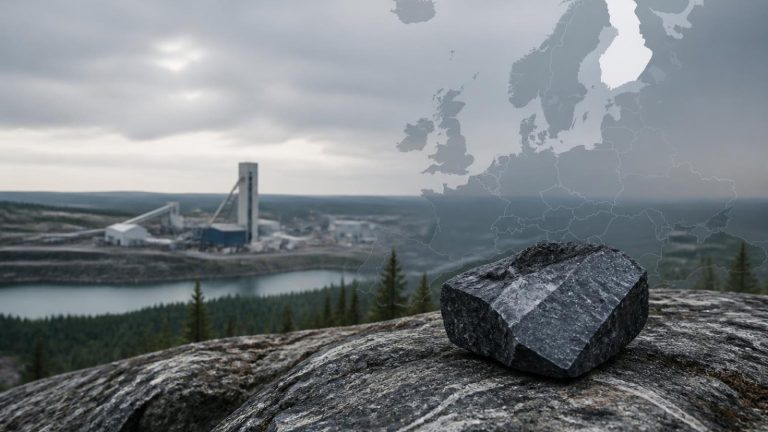
Ukraine is revamping its long-neglected minerals sector in an effort to attract billions in foreign investment and secure a critical role in global resource supply chains. The move follows a landmark minerals partnership with the United States, launched on 23 May through a dedicated fund that will channel revenues from new mining licenses into developing strategic resource projects.
Ecology Minister Svitlana Hrynchuk told Reuters that the deal, heavily promoted by former U.S. President Donald Trump, could unlock vast untapped potential in Ukraine’s natural resources sector. While the country currently derives just 4% of its GDP from natural resources, the minister sees significant room for growth—particularly in the extraction of critical minerals for defence, green energy, and high-tech industries.
Ukraine boasts deposits of 22 out of 34 critical minerals listed by the European Union. However, much of this potential remains underdeveloped, hampered by Soviet-era bureaucracy and a chronic lack of investment. The war has only worsened the situation, with an estimated 70 trillion hryvnias ($1.7 trillion) in sector losses due to Russian occupation and conflict along a 1,000 km frontline.
Despite this, Ukraine continues to push forward. A new national strategy is focused on digitising up to 80% of Soviet-era geological data—currently 40% complete—while also reviewing 3,000 mining licenses to identify dormant or underutilised assets. Last year, auctions for mining rights raised 2.4 billion hryvnias, and similar revenue is expected in 2025.
The U.S. deal, described by Treasury Secretary Scott Bessent as a “full economic partnership,” gives Washington preferential access to new Ukrainian mineral projects. The agreement is also seen as a key step in Ukraine’s EU accession ambitions, with Brussels and the European Bank for Reconstruction and Development supporting modernization efforts.
Although investor interest is currently dominated by domestic players, growing foreign participation is anticipated—especially in high-demand minerals like titanium, graphite, manganese, and traditional hydrocarbons.