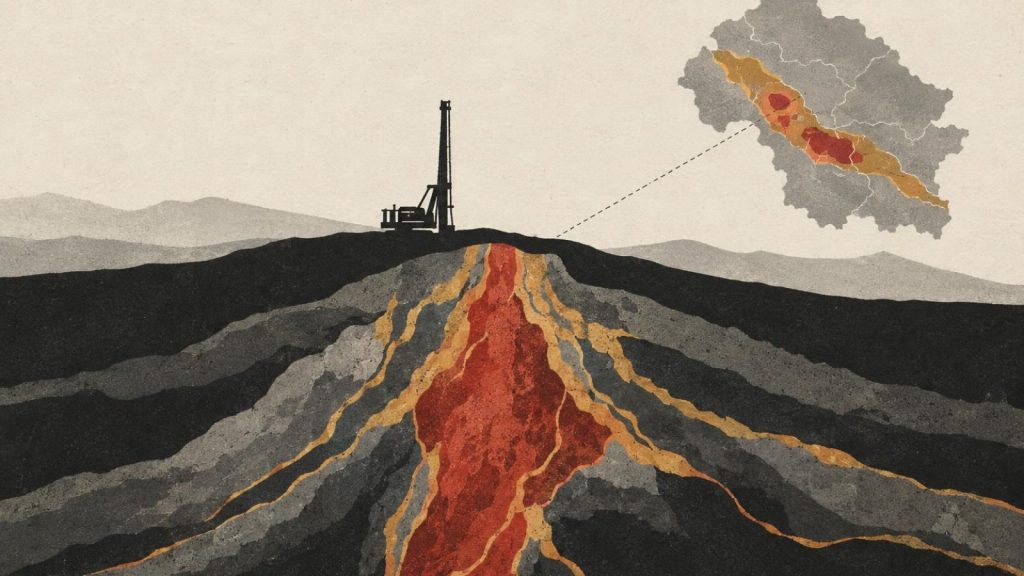
Recent regional analysis of porphyry molybdenum (Mo), copper (Cu), and tungsten (W) mineralization within the Kraków–Lubliniec Zone has revealed significant spatial variations in the distribution of these critical minerals. The study highlights that the Nowa Wieś Żarecka–Myszków–Mrzygłód area exhibits the highest enrichment of tungsten, which is closely associated with notable concentrations of molybdenum and copper. This finding is particularly important as it underscores the potential for economic extraction of these minerals in the region.
As the analysis progresses southeastward, a general decline in tungsten concentrations is observed; however, localised areas still show elevated molybdenum grades. This suggests that while tungsten may be diminishing in availability, molybdenum remains a viable resource in certain pockets of the zone. The Myszków area, in particular, stands out as the most significant domain for Mo–W mineralization, indicating its potential as a site for future mining activities.
The implications of this research are considerable for the mining industry, especially in terms of understanding the by-product potential of tungsten from copper-molybdenum operations. The findings suggest that mining companies could benefit from focusing on this region not only for molybdenum but also for tungsten, which is increasingly recognised as a critical mineral due to its applications in various high-tech industries.
The study, conducted by Oszczepalski et al. (2010), provides a comprehensive prospectivity analysis of the mineralization within the Precambrian–Paleozoic rocks at the border zone of the Upper Silesian and Małopolska blocks. This research is pivotal for guiding future exploration and investment decisions in the Kraków–Lubliniec Zone, as it identifies key areas of mineral wealth that could support the region’s economic development through mining activities.