Tag: critical minerals

  • Kazakhstan and Japan Expand Cooperation in Critical Minerals Sector

    Kazakhstan and Japan Expand Cooperation in Critical Minerals Sector

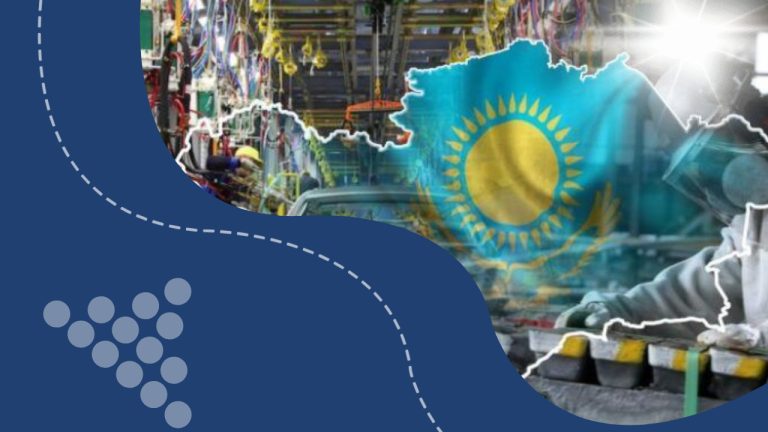
    Kazakhstan’s Minister of Industry and Construction, Kanat Sharlapayev, met with representatives from the Japan International Cooperation Agency (JICA) and the Japan Organization for Metals and Energy Security (JOGMEC) to discuss further collaboration in the critical minerals sector. The meeting, reported by El.kz with reference to the Ministry of Industry and Construction, focused on strengthening ties between the two countries in resource exploration and processing.

    JICA, a Japanese government agency specializing in technical assistance programs for developing nations, has been working with Kazakhstan since 2011. Through this partnership, Kazakhstan implemented the State Energy Register (SER), a key tool for monitoring and controlling energy consumption, based on Japanese expertise.

    JOGMEC, which integrates Japan’s former National Oil Corporation and Metal Mining Agency, has been actively involved in geological exploration and mineral extraction in Kazakhstan. In August 2024, the Ministry of Industry and Construction signed a Memorandum of Cooperation with JOGMEC, outlining joint efforts in mineral exploration, mining, and processing.

    During the meeting, both parties explored the possibility of launching new projects in the critical minerals sector, crucial for industrial production and the energy sector. Strengthening partnerships in rare earth metal extraction is expected to enhance Kazakhstan’s investment appeal and introduce advanced technologies in geological exploration.

  • Trump Proposes Rare Earth Deals with Ukraine in Exchange for U.S. Aid

    Trump Proposes Rare Earth Deals with Ukraine in Exchange for U.S. Aid

    U.S. President Donald Trump announced on Monday that he wants Ukraine to supply the United States with rare earth minerals as compensation for financial aid provided to support Ukraine’s war efforts against Russia.

    Speaking to reporters at the White House, Trump stated that Ukraine was open to the idea, emphasizing the need for “equalization” in return for Washington’s nearly $300 billion in assistance.

    “We’re telling Ukraine they have very valuable rare earths,” Trump said. “We’re looking to do a deal with Ukraine where they’re going to secure what we’re giving them with their rare earths and other things.” However, it remains unclear whether Trump was using “rare earths” to refer specifically to rare earth elements or to a broader category of critical minerals.

    Rare earths are a group of 17 metals essential for electric vehicles (EVs), cellphones, and other electronics due to their role in power conversion. The U.S. Geological Survey classifies 50 minerals as critical to the nation’s economy and national security, including rare earth elements, nickel, and lithium.

    While Ukraine possesses significant deposits of uranium, lithium, and titanium, none rank among the world’s top fivein volume. The United States also has untapped reserves of these and other critical minerals.

    Currently, the U.S. has only one active rare earths mine and limited processing capacity, although several companies are working on domestic projects. Meanwhile, China remains the world’s largest producer of rare earths and other critical minerals.

  • Kazakhstan and Japan Strengthen Cooperation on Critical Minerals

    Kazakhstan and Japan Strengthen Cooperation on Critical Minerals

    Kazakhstan’s Minister of Industry and Construction, Kanat Sharlapaev, met with representatives of Japan’s International Cooperation Agency (JICA) and the Japan Organization for Metals and Energy Security (JOGMEC) to discuss future collaboration on critical minerals.

    JICA has supported Kazakhstan since 2011, helping establish the country’s State Energy Registry based on Japanese expertise. Meanwhile, JOGMEC signed a memorandum with Kazakhstan in August 2024 on geological exploration, mining, and mineral processing.

    The meeting focused on expanding joint projects related to critical minerals essential for industrial and energy sectors. Kazakhstan aims to strengthen international partnerships in rare earth metals to boost investment appeal and integrate advanced geological exploration technologies.

  • Russia’s Seizure of Ukraine’s Lithium Reserves Raises Global Concerns

    Russia’s Seizure of Ukraine’s Lithium Reserves Raises Global Concerns

    Russia’s ongoing conflict in Ukraine has extended to the control of critical resources, with two of Ukraine’s four lithium deposits now under Russian control. Among them is a major reserve located in Shevchenko, a settlement in the Donetsk region. These deposits are part of Ukraine’s estimated 500,000 tons of untapped lithium reserves, considered among the largest in Europe. Known as “white gold,” lithium is crucial for producing batteries used in smartphones, electric vehicles, and renewable energy storage systems.

    Experts argue that while capturing lithium may not have been a primary objective of Russia’s invasion, Ukraine’s mineral wealth is a significant strategic interest. The Ukrainian Shield, a geologically rich region spanning much of central and southern Ukraine, contains not only lithium but also iron and rare earth metals.

    The European Union has been actively seeking local sources of critical minerals like lithium to reduce its dependence on imports from countries such as China. Ukraine, with its proximity and substantial reserves, was seen as a promising partner. The war, however, has stalled any efforts to leverage these resources, jeopardizing Europe’s green energy initiatives and energy independence goals.

    Rod Schoonover, founder of the U.S.-based Ecological Futures Group, noted that the invasion has disrupted Ukraine’s ability to utilize its resources but highlighted their potential significance if stability is restored. “These resources could become a cornerstone of Europe’s strategic autonomy in critical minerals,” he said. The situation underscores how vital resource control has become in modern geopolitical conflicts.

  • UK and Saudi Arabia Strengthen Collaboration in Mining for Critical Minerals

    UK and Saudi Arabia Strengthen Collaboration in Mining for Critical Minerals

    Saudi Arabia and the UK have formalized a partnership to address growing global demand for critical minerals essential for AI, green energy, and advanced technologies. The agreement, signed during the Future Minerals Forum, emphasizes sustainable mining, technology transfer, and joint investments.

    UK Industry Minister Sarah Jones highlighted Britain’s expertise in mining finance and research, positioning it as a key partner. Both nations are exploring projects in Africa and initiatives in the UK, such as Cornwall’s lithium and tin mining. Efforts focus on ethical and sustainable practices to meet mineral demands while addressing environmental and societal concerns.

    This collaboration reflects a proactive UK strategy under Prime Minister Keir Starmer, prioritizing supply chain security and global cooperation to support industries critical to the green transition and technological progress.

  • Kazatomprom Updates Strategy for 2025–2034 to Strengthen Global Market Leadership

    Kazatomprom Updates Strategy for 2025–2034 to Strengthen Global Market Leadership

    Kazatomprom, Kazakhstan’s leading atomic energy company, has revealed its updated strategic plan for 2025–2034, aiming to build on the successes of its 2018–2028 strategy. The refreshed goals focus on enhancing the company’s uranium resources, expanding into the rare and rare-earth metals sector, and improving trading operations. The strategy aims to ensure long-term sustainable value creation and strengthen Kazatomprom’s role in the global nuclear fuel cycle. By diversifying its resource base and increasing its market footprint, the company intends to contribute significantly to the global shift to clean energy.

    The updated strategy also emphasizes optimizing current processes and ensuring alignment with global green energy initiatives. As part of the strategy, Kazatomprom will continue to improve its governance practices and maintain a strong commitment to environmental, social, and governance (ESG) principles. The company’s diversified sales portfolio, including an expanded geographic presence, will help safeguard its long-term competitiveness, even as global demand for nuclear energy and critical minerals rises.

    Kazatomprom aims to secure its position as a global leader, expanding its footprint beyond uranium to meet the growing demand for critical minerals, while also making significant contributions to the economic and social development of Kazakhstan and the regions it operates in.

  • Britain to Sign Minerals Cooperation Deal with Saudi Arabia

    Britain to Sign Minerals Cooperation Deal with Saudi Arabia

    The UK will sign a minerals cooperation agreement with Saudi Arabia to enhance critical mineral supply chains, attract investments, and support economic growth. Critical minerals like lithium, copper, and nickel, vital for clean energy technologies and AI development, are key priorities for the UK.

    Saudi Arabia, with untapped resources valued at $2.5 trillion, aims to be a global critical minerals hub. The agreement aligns with ongoing UK-GCC free trade negotiations. British Industry Minister Sarah Jones will lead 16 companies to Riyadh’s Future Minerals Forum, emphasizing the UK’s strategic goals in securing resources.


  • China Bans Antimony Exports to the U.S., Prices Soar Amid Trade Tensions

    China Bans Antimony Exports to the U.S., Prices Soar Amid Trade Tensions

    Antimony prices surged by 40% on Wednesday following China’s ban on exports of key critical minerals to the United States. The ban, announced on Tuesday, enforces restrictions on antimony, gallium, and germanium, minerals critical to military applications. The decision comes as the U.S. prepares for President-elect Donald Trump to take office next month.

    “In principle, the export of gallium, germanium, antimony, and superhard materials to the United States shall not be permitted,” stated the Chinese Commerce Ministry.

    China, the world’s largest producer of antimony, accounted for 48% of global production in 2023, with an output of 40,000 tonnes, nearly double that of second-place Tajikistan. Turkey ranks third with 6,000 tonnes. Antimony, recognized as a strategic metal, is widely used in military applications, including ammunition, infrared missiles, and nuclear weapons. Its heat-resistant properties make it valuable in automotive batteries and brake pads, as well as in solar cell glass and smartphone screens.

    “This is a clear signal of rising geopolitical tensions,” commented Christopher Ecclestone, a mining strategist at Hallgarten & Company. “The military importance of antimony is driving this move, which will significantly impact U.S. and European defense industries.”

    The announcement sent rare metal producer stocks soaring. Shares of Hunan Gold Corporation, a leading antimony producer, have risen by 64% this year, while Perpetua Resources has surged by 270%.

    The ban follows Washington’s recent measures targeting China’s semiconductor industry, escalating the trade war between the world’s two largest economies. Last year, China imposed export restrictions on gallium and germanium products, and in August 2023, further tightened controls on antimony exports.

  • European Lithium Secures Leinster Project, Strengthens Leadership

    European Lithium Secures Leinster Project, Strengthens Leadership

    European Lithium has successfully acquired LRH Resources, the operator of the Leinster lithium project in Ireland, from UK-based Technology Minerals. The Leinster project encompasses an extensive area south of Dublin, with 15 prospecting licenses covering 477 km² and an additional eight licenses spanning 284 km². Notably, the region includes several lithium-bearing spodumene pegmatites across its northern and southern blocks.

    As part of the agreement, European Lithium will issue 1.37 million shares in Critical Metals Corp to Technology Minerals, with a lock-up period lasting until February 28, 2025.

    Chairman Tony Sage highlighted that this acquisition aligns with the company’s strategy to expand its presence in the European lithium market. He stressed the significance of the deal in supporting the European Union’s sustainability goals, securing supply chains for critical minerals crucial for the transition to a low-carbon economy. Sage also emphasized the strategic value of their investment in Critical Metals Corp, which facilitated the acquisition.

    To bolster its exploration efforts, European Lithium has appointed George Karageorge, an experienced geologist and international mining executive, as its Executive General Manager of Exploration. Karageorge brings a proven track record of advancing mining projects from exploration to production, having collaborated with several ASX and TSX-listed companies. His leadership is expected to enhance the company’s exploration and development activities in Europe.

    European Lithium, which also owns the Wolfsberg lithium project in Austria, aspires to become Europe’s first local lithium supplier, playing a vital role in the region’s integrated battery supply chain. The company’s strategic positioning aims to address the surging demand for lithium across Europe, solidifying its status as a key player in the sector.


  • Ukraine and USA Partner on Critical Minerals Supply Chain Cooperation

    Ukraine and USA Partner on Critical Minerals Supply Chain Cooperation

    The governments of Ukraine and the United States have signed a Memorandum of Understanding (MoU) to enhance cooperation in the critical minerals sector, focusing on strengthening supply chains for energy, national security, and economic development.

    Ukraine holds 23 of the 50 critical minerals identified by the United States as essential. These minerals, including titanium and lithium, require significant investments and advanced environmentally friendly technologies for exploration, extraction, and processing.

    Under the MoU, both nations will exchange information and expertise on best practices to boost the competitiveness of the mining sector. The agreement aims to attract investment in the exploration, extraction, processing, and recycling of critical minerals, adhering to ESG standards. It also supports the development of safe, sustainable, and responsible supply chains to serve global markets.

    The United States will promote investment opportunities in Ukraine’s mining projects among US companies and the Minerals Security Partnership Forum. Success will depend on Ukraine’s ability to implement key measures, including free access to mineral reserve data, international bidding rounds, access to detailed mining business opportunities, and the creation of financial and economic incentives.

    This collaboration positions Ukraine as a potential hub for critical mineral development, advancing global efforts in securing sustainable mineral resources.