Tag: Sweden

  • Goldsky Resources Initiates Metallurgical Testing at Barsele Project in Sweden

    Goldsky Resources Initiates Metallurgical Testing at Barsele Project in Sweden

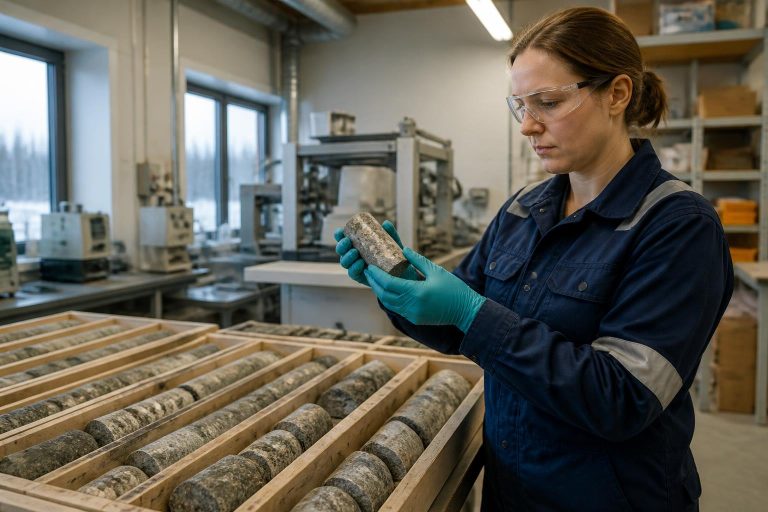
    Goldsky Resources Corp, a publicly listed gold exploration company, has announced the commencement of metallurgical test work on composite samples from its Barsele Project in Sweden. The samples, weighing a total of 345 kg, have been sent to Alfred Knight in Truro, United Kingdom, for analysis. This test work is crucial for determining the power requirements and reagent dosage necessary for the project, which is expected to contribute significantly to the Preliminary Economic Assessment (PEA) scheduled for publication in 2027.

    The metallurgical testing will encompass a range of assessments, including crusher comminution tests, Bond rod mill and ball mill tests, gravity gold recovery tests, gold leach kinetic tests, and detoxification tests. These tests are designed to provide essential data that will inform the resource update at Barsele, which is currently host to an Indicated Mineral Resource of 7.88 million tonnes grading 1.27 g/t Au and an Inferred Mineral Resource of 28.75 million tonnes grading 1.98 g/t Au.

    Russell Bradford, CEO of Goldsky Resources, expressed enthusiasm about the initiation of this metallurgical test program, highlighting its importance for the company’s future operations and resource assessment. The entire program is expected to take approximately 16 weeks, with results to be released to the market as they become available.

    Goldsky Resources is consolidating assets in Sweden and Finland, with the Barsele Project being its flagship asset. The company holds a district-scale license position surrounding Barsele, covering around 80,000 hectares on Sweden’s Gold Line greenstone belt, which includes two additional projects, Paubäcken and Storjuktan. In Finland, Goldsky Resources owns the entire underexplored Oijärvi greenstone belt, including the Kylmäkangas deposit, the largest known gold occurrence in that region, as well as the Rajapalot gold-cobalt project in northern Finland.

    As the mining industry continues to evolve, the results from Goldsky’s metallurgical tests could play a pivotal role in shaping the future of the Barsele Project and the company’s strategic objectives in the region. Investors and stakeholders are keenly awaiting the outcomes of these tests, which are expected to provide valuable insights into the project’s economic viability and operational efficiency.


  • Sweden Declares Critical Minerals Mining a National Security Interest

    Sweden Declares Critical Minerals Mining a National Security Interest

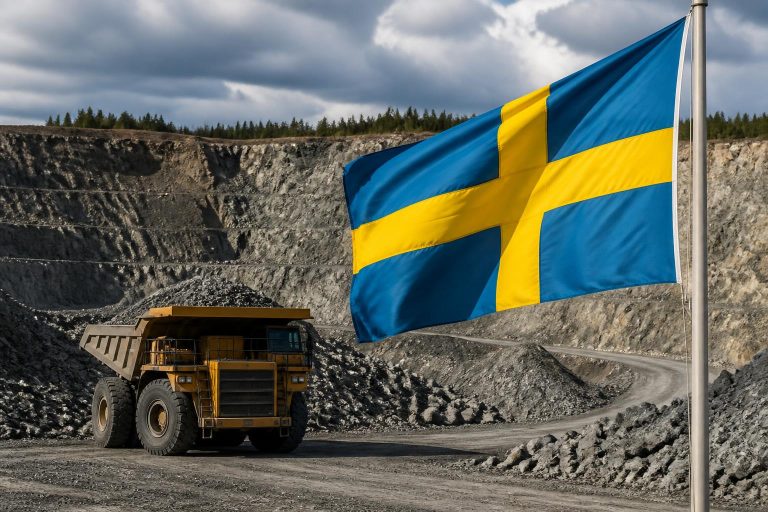
    In a significant move to bolster its mining sector and reduce reliance on foreign sources, particularly China, Sweden has officially designated the mining of critical metals and rare earth minerals as a national security interest. This announcement was made by Ebba Busch, Sweden’s Enterprise Minister and Deputy Prime Minister, on 23 July 2026. The strategy aims to enhance Sweden’s position in the global mining landscape, especially as China currently dominates the rare earth market, accounting for approximately 69% of global production. This dependency has raised concerns among Western nations, prompting Sweden to take decisive action to secure its mineral supply chains.

    Central to Sweden’s strategy is the Per Geijer deposit located at LKAB’s Kiruna mine, which is one of the European Union’s flagship projects aimed at reducing reliance on Chinese imports. The deposit boasts an impressive 1.2 billion tonnes of total mineral resources, including 2.2 million tonnes of rare earth oxides. Johan Menckel, the newly appointed President and CEO of LKAB, emphasised the company’s potential role in shaping Europe’s industrial value chains. The Swedish government plans to expedite the environmental permitting process for mining projects by establishing a dedicated authority, addressing current delays that hinder project approvals.

    Additionally, the government is exploring the establishment of a state-owned investment company to further support the mining sector. Deputy Prime Minister Busch highlighted the necessity for Sweden to leverage its rich natural resources and world-class mining companies. The strategy also includes a review of the mineral fee structure to ensure that local communities benefit more directly from mining activities. However, the expansion of mining rights has raised concerns among Sweden’s indigenous Sami population, who fear that increased mining activities could threaten their traditional way of life. As Sweden moves forward with its ambitious mining strategy, it must balance economic interests with the rights and concerns of local communities.


  • Sweden Approves Zoning Plan for Nunasvaara South Graphite Mine Near Kiruna

    Sweden Approves Zoning Plan for Nunasvaara South Graphite Mine Near Kiruna

    Sweden has approved a zoning plan for the Nunasvaara South graphite mine near Kiruna, marking an important step in the country’s efforts to accelerate the development of domestic mining projects and strengthen Europe’s access to critical raw materials.

    The project is operated by Talga Group and is expected to produce about 100,000 metric tons of graphite ore annually. This output will be processed into roughly 20,000 tons of battery-grade anode material, primarily for use in electric vehicles and energy storage systems.

    Deputy Prime Minister Ebba Busch said the decision reflects Sweden’s strategic position within Europe’s critical minerals supply chain. She stressed that graphite plays a key role in steelmaking, battery production, and automotive manufacturing, adding that Swedish mining standards rank among the most sustainable globally.

    The decision aligns with the European Union’s broader strategy to expand domestic production of critical minerals and reduce dependence on imports from China and other suppliers, amid rising geopolitical tensions.

    Talga said it is currently focused on building its graphite processing facility in Luleå and expects mining operations at Vittangi to begin around 2029. According to company representatives, the zoning approval removes the most significant regulatory barrier, although several minor permits are still required before production can commence.

    Once operational, the Nunasvaara South mine is expected to supply around 2% of Europe’s projected graphite demand by 2030, with potential to scale up output in the future.

    Sweden is home to a wide range of mineral resources essential for green technologies, including batteries, magnets, telecommunications equipment, and defence applications. The country’s largest mining initiative is state-owned LKAB’s Per Geijer iron ore and rare earths project near Kiruna, which was designated a Strategic Project by the EU in 2025.

  • EU Backs Sweden’s Largest Rare Earth Project but Faces Legal Barriers of Its Own Making

    EU Backs Sweden’s Largest Rare Earth Project but Faces Legal Barriers of Its Own Making

    The European Union is channelling significant financial support into LKAB’s Per Geijer rare earth project in northern Sweden as part of its strategy to reduce dependence on China for critical raw materials. However, the same EU legal framework designed to protect the environment and Indigenous rights is emerging as a major obstacle to the project’s progress.

    The Per Geijer deposit near Kiruna has been granted Strategic Project status under the EU’s Critical Raw Materials Act (CRMA), making it eligible for EU-backed loans, guarantees and other de-risking instruments. The designation reflects the project’s importance to Europe’s green transition, defence capabilities and electric vehicle supply chains. Under the CRMA, the EU aims to mine at least 10% of its strategic raw materials domestically and process 40% within the bloc by 2030.

    To support these targets, Brussels is deploying financing through tools such as InvestEU, the Innovation Fund and European Investment Bank lending, with nearly €3 billion earmarked for mining, processing and recycling projects. Northern Sweden has been identified as a priority region, and Per Geijer is seen as a flagship initiative.

    Despite this political and financial backing, the project remains subject to Sweden’s Environmental Code and EU environmental legislation, including the Environmental Impact Assessment Directive and the Habitats and Birds Directives. These rules require extensive assessments of impacts on biodiversity, water resources, emissions and climate, and allow for legal appeals that can delay projects for years. Strategic status does not provide exemptions from these requirements.

    Additional complexity arises from Indigenous rights considerations. The Per Geijer deposit overlaps with traditional reindeer-herding land used by the Sami people, triggering legal obligations under Swedish law, EU law and international human rights conventions. Requirements for meaningful consultation and protection of minority rights sit uneasily alongside the CRMA’s push for faster permitting.

    Per Geijer is part of a broader LKAB value chain that includes rare earth extraction at Malmberget and processing facilities in Luleå, all of which have also received Strategic Project status. However, the European Commission retains the right to withdraw this status if sustainability criteria are not met or if projects fail to deliver.

    The case highlights a structural tension within EU policy. While Brussels is accelerating funding and political support to secure raw material autonomy, its environmental and rights-based legal framework gives courts and civil society strong tools to slow or block projects. The outcome in Kiruna is increasingly seen as a test of whether the EU can reconcile its industrial ambitions with the legal principles at the core of the Green Deal.

  • Scania and LKAB Unleash “Sleipner”

    Scania and LKAB Unleash “Sleipner”

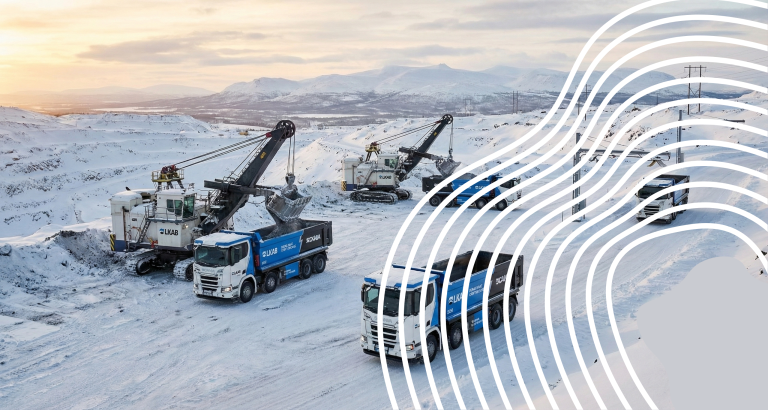
    Scania and LKAB have taken their collaboration to the next level with the introduction of a new fully electric 8×4 heavy tipper truck at LKAB’s Malmberget mine in northern Sweden. This groundbreaking vehicle, named “Sleipner” after Odin’s legendary eight-legged horse, is the first Scania electric truck to feature two steerable front axles. It has been designed to tackle the rigorous demands of mining transport, offering improved stability and load-bearing capabilities on tough mine roads.

    Sleipner represents a significant milestone in Scania’s commitment to electrifying heavy-duty transportation in challenging environments. With a total weight of 60 tonnes—38 tonnes of which is payload—the electric truck replaces its internal combustion counterpart, offering an eco-friendly alternative for transporting waste rock at LKAB’s mining operations.

    Powered by two MP20 battery packs with 416 kWh capacity, and a 400 kW electric motor, Sleipner has been built on Scania’s modular electric platform. This technology enables the vehicle to haul materials over a 5 km route with a 250-meter elevation gain while achieving substantial CO₂ savings. If successful, Sleipner could provide LKAB with a fully fossil-free solution for their transport needs, a major step in meeting their sustainability goals.

    “This vehicle is just the start of many more mining solutions to come,” said Tony Sandberg, Head of Scania Pilot Partner. The vehicle is the latest in a series of electric trucks operating at the Malmberget mine, demonstrating how Scania’s electric technology can be adapted for the toughest of environments.

  • Sweden Lifts Uranium Mining Ban, Opening Path to Exploration from January

    Sweden Lifts Uranium Mining Ban, Opening Path to Exploration from January

    Sweden’s parliament, the Riksdag, has voted to repeal a 2018 moratorium on uranium mining, reopening the country to exploration and production beginning January 1. The decision restores uranium’s status under the Minerals Act, enabling companies to apply for exploration and mining concessions after a seven-year freeze.

    The move positions Sweden — which holds an estimated 27% of Europe’s known uranium resources, according to the Geological Survey of Sweden — to play a larger role in Europe’s energy transition and nuclear fuel supply security.

    “It is very positive that the Riksdag is now backing the government’s proposal,” said Maria Sunér, CEO of the Swedish Mining Association (Svemin). “There are no factual reasons for uranium to be treated differently than other metals, and it is therefore entirely reasonable that we now have the opportunity to utilize the resources found in our bedrock efficiently.”

    A municipal veto on handling small quantities of uranium was also narrowed, reducing local barriers to development.


    Policy Shift and Strategic Context

    The repeal caps a two-year legislative push led by Sweden’s Climate and Enterprise Ministry. The government formally presented the bill in August 2025, describing uranium as strategic for both nuclear energy expansion and raw-materials security.

    Sweden operates six nuclear reactors, supplying roughly one-third of the nation’s electricity. Plans are underway to build several new reactors over the next decade to meet surging power demand.

    The change also aligns with broader EU supply-chain resilience goals, as the bloc seeks to reduce its dependence on imported uranium, particularly from Russia.


    Exploration Ready to Resume

    Several companies are preparing to act immediately.

    Australian explorer Aura Energy (ASX: AEE; AIM: AURA), which controls the Häggån polymetallic deposit in Jämtland, has already submitted a 25-year exploitation permit to Sweden’s Mining Inspectorate. Häggån’s JORC resource includes roughly 800 million lb of uranium oxide (U₃O₈) within a 2.55-billion-tonne vanadium deposit.

    “This vote means that from now on uranium has the potential to be an important contributor to Sweden’s economy and energy security and to support the region’s intention to triple nuclear power,” said Aura executive chairman Phil Mitchell.

    Canada’s District Metals (TSXV: DMX) also hailed the vote as a “historic step.” The company plans fieldwork in 2026 at its Viken project, including geophysics, drilling, and economic studies. Viken hosts an indicated resource of 176 million lb U₃O₈ and an inferred resource of 1.54 billion lb U₃O₈, alongside vanadium and molybdenum.


    Market Response

    Despite the legislative breakthrough, uranium developers saw modest share pullbacks:

    • Aura Energy fell 7% to A$0.20, trimming its 12-month gain to 46% (market cap A$188 million / $122 million).

    • District Metals slipped 6% to C$1.37, giving it a valuation of C$228 million ($162 million), though its stock has quadrupled in the past year.


    Next Steps

    A separate proposal is now under consultation until December 3 to redefine uranium mining so it is no longer legally classified as a nuclear installation. If adopted, that change would take effect on July 1, 2026, further simplifying the permitting process.

  • Sweden’s Parliament Lifts Uranium Mining Ban Amid Narrow Vote and Environmental Concerns

    Sweden’s Parliament Lifts Uranium Mining Ban Amid Narrow Vote and Environmental Concerns

    The Swedish Parliament (Riksdag) has narrowly voted to lift the national ban on uranium mining, reopening the door to domestic extraction of the nuclear fuel for the first time since 2018.

    The decision passed by just one vote, with support from the government coalition and the Sweden Democrats, while the opposition — including the Green Party and Social Democrats — strongly opposed the measure.

    Supporters of the move argue that uranium mining is essential for Sweden’s long-term energy stability as the country expands its nuclear power capacity. Critics, however, warn that the decision poses significant environmental and social risks, particularly for rural municipalities with uranium-rich deposits.

    “This is a step backwards for environmental protection and public safety,” said Amanda Lind, a Green Party representative, sharply criticising the government’s decision.


    Key Changes and Next Steps

    Under the new legislation, mines with small uranium reserves will no longer be subject to strict permit requirements or municipal veto rights, which had previously allowed local authorities to block mining projects.
    This effectively simplifies the approval process and allows uranium to be treated as a secondary raw material in broader mining operations.

    The legal changes will take effect on January 1, with further reforms planned for mid-2026 that could fully abolish municipal veto powers and reclassify uranium extraction from a “nuclear instrument” to a “nuclear activity,” reducing procedural delays for industry.


    Local Concerns

    The decision has sparked strong reactions in uranium-rich regions such as Falköping, Östersund, and Vilhelmina, where local leaders and residents fear potential impacts on water quality, farmland, livestock, and rural landscapes.

    “We risk losing public trust if local communities feel overruled,” said one municipal council member quoted in Swedish media.


    Nuclear Expansion Context

    Sweden currently operates six nuclear reactors and plans to build additional ones in the next decade to meet rising electricity demand and reduce dependence on fossil fuels.

    The previous uranium mining ban, introduced in 2018 by the Social Democratic government, aimed to limit environmental risks and reduce nuclear proliferation concerns.

    However, following Russia’s invasion of Ukraine in 2022, Sweden halted uranium imports from Russia, which previously supplied state-owned utility Vattenfall AB. The government now sees domestic uranium extraction as a way to cut import costs and secure a stable fuel supply for its expanding nuclear fleet.


    The Bigger Picture

    The debate highlights Sweden’s broader energy dilemma — how to balance green transition goals, energy independence, and public environmental concerns.

    While the repeal marks a significant policy shift, it also deepens divisions between advocates of energy security and defenders of environmental safeguards.

  • World’s Deepest Marathon Takes Runners More Than a Kilometer Underground in Sweden

    World’s Deepest Marathon Takes Runners More Than a Kilometer Underground in Sweden

    In the pitch-black tunnels of Boliden’s Garpenberg zinc mine, over a kilometer below the surface of northern Sweden, 55 runners from 18 countries gathered to compete in one of the most extreme races ever attempted — the World’s Deepest Marathon.

    The course, carved through the humid, diesel-scented rock 180 kilometers northwest of Stockholm, spanned a 2-kilometer stretch of tunnel that participants ran back and forth 11 times to complete the full 42 kilometers. Among them were mining executives, Boliden employees, ultra-marathoners, and first-time racers.

    “You’d run to the end and then turn around — 11 times,” said Henrietta Newman, a consultant with the World Gold Council who took part in the event. “Other than our headlamps, it was complete darkness.”

    The marathon, organized by BecomingX, the International Council on Mining and Metals, and Boliden, is expected to enter the Guinness World Records as both the deepest marathon and the deepest underground marathon distance ever completed, pending verification. The event also had a charitable mission — raising over $1 million for the BecomingX Foundation, which supports education in Africa, and for dog welfare projects run by the Wild at Heart Foundation.

    Runners descended by elevator to 1,120 meters below sea level before being driven by truck into the tunnels. Despite being inside an active mine, organizers ensured safety: helmets were mandatory, though participants wore running shoes after the course was smoothed for the event. “I was worried about the hard hat,” Newman admitted, “but it was actually super light.”

    Conditions underground were challenging. The air was thick and humid, around 24°C, but also contained 30% more oxygen than at the surface — a small advantage against fatigue. “Coming down the incline, you’d get these occasional puffs of air, and it felt amazing,” Newman said.

    Though well-supported with hydration stations and logistics teams, the unique environment tested endurance. Even the top finisher completed the course about 50 minutes slower than his personal record.

    For many, however, the sense of camaraderie outweighed the discomfort. Newman described a heartwarming moment when a group of South African runners doubled back to accompany a first-time marathoner on her final lap. “It was just such a nice moment,” she said. “There were people from all walks of life, and everyone helped each other finish.”

  • Kiruna’s Shifting Ground: Swedish Mining Town Faces Painful Trade-Off in Europe’s Raw Materials Push

    Kiruna’s Shifting Ground: Swedish Mining Town Faces Painful Trade-Off in Europe’s Raw Materials Push

    In the far north of Sweden, the residents of Kiruna are once again being forced to pack up and move — this time, for the second or even third time. Tanja Mattila and her husband had just spent about $300,000 on a new home when a letter arrived from LKAB, Sweden’s state-owned mining company, informing them that their neighborhood would soon become unsafe due to ground movement from the expanding iron ore mine.

    “It was a shock,” said Mattila, a 54-year-old language teacher. “We planned to stay here until we retire.” She and thousands of others are caught in the tension between local life and Europe’s growing appetite for raw materials deemed essential to the green transition.

    Kiruna, which produces nearly 80% of Europe’s iron ore, is also home to one of the continent’s largest deposits of rare earth minerals — metals vital for electric vehicles, wind turbines, and smartphones. As the EU pushes to secure domestic supplies of critical resources and reduce reliance on China, the mining boom in Kiruna is accelerating. But so are the social costs.

    LKAB, seeking to boost production by 50% over the next decade, says its operations are vital for Europe’s energy independence. “If you want self-reliance, you need to mine,” EU Industry Commissioner Stéphane Séjourné said during a recent visit. Yet, for Kiruna’s 23,000 residents, that strategy means homes, schools, and shops are being demolished and rebuilt miles away from the original town center.

    Earlier this year, the relocation of Kiruna’s iconic wooden church — a nationally treasured monument — was broadcast live, hailed as a feat of engineering and cultural preservation. But only days later, residents learned that 6,000 more people would have to move. Local officials, blindsided by the announcement, described the mood as one of mourning.

    For some business owners, the uncertainty is overwhelming. Grocery store owner Fredrik Spett noticed his shop floor rising as the ground shifted beneath it. Across the road, hotelier Jan Grönberg is unsure whether he’ll receive enough compensation to rebuild. “It’s hard to find the motivation,” he said.

    LKAB insists that no one will be left behind and that all residents will be compensated. Still, critics argue that the company and government failed to adequately communicate the scale of the project or involve locals in planning. “It’s a matter of survival for Kiruna,” said Energy and Enterprise Minister Ebba Busch, “but also a matter of sovereignty for Sweden and Europe.”

    The town’s social democrat official, Mats Taaveniku, gestures at a model in the new town hall where a red ribbon marks the previous demolition line. The new one, he says, should be black — “for mourning.”

    While Kiruna symbolizes Europe’s push for “strategic autonomy” in critical minerals, it also raises difficult questions about who pays the price for the continent’s green transition. As excavators tear down the Ferrum Hotel and graffiti nearby asks, “Is this what happens to a town no one cares about?”, residents can’t help but wonder if Europe’s sovereignty is worth their sacrifice.

  • Sweden Lifts Uranium Mining Ban to Boost Nuclear Energy Security

    Sweden Lifts Uranium Mining Ban to Boost Nuclear Energy Security

    Sweden will officially lift its uranium mining ban on January 1, 2026, marking a major policy reversal aimed at strengthening energy security and supporting its low-carbon transition strategy. The decision, driven by the center-right coalition government that came to power in 2022, is rooted in Sweden’s renewed commitment to nuclear power, which currently provides about 20% of the country’s electricity.

    Until now, uranium mined as a by-product was treated as waste, a policy the government said undermined energy independence at a time of rising global competition for nuclear fuel. With the ban lifted, companies will be able to apply for uranium exploration and mining permits under rules aligned with other mineral projects.

    Sweden’s uranium resources include the vast Viken deposit, considered one of the largest undeveloped uranium resources in the world, alongside other historically explored occurrences. The alum shale formations at Viken contain not only uranium but also vanadium, molybdenum, nickel, zinc, copper, potash, and phosphate, creating the potential for large-scale polymetallic mining.

    Open-pit and hybrid mining methods are being evaluated, with environmental safeguards such as dry-stack tailings and progressive reclamation central to future operations. Still, challenges remain, particularly the metallurgical complexity of processing fine-grained shale deposits. Advances in modern geophysics and processing, however, have improved prospects compared to earlier attempts.

    Officials and industry analysts say the move positions Sweden to play a key role in European energy security. Currently reliant on imports, Sweden’s uranium development could reduce dependence on suppliers such as Kazakhstan, Canada, and Australia while bolstering EU efforts under the Critical Raw Materials Act to secure strategic resources.

    The economic benefits could include regional job creation, skills development, and the establishment of value-added processing industries. Yet public acceptance, strict environmental oversight, and a lengthy regulatory process mean commercial production is still several years away.

    The policy shift reflects a broader global nuclear renaissance, with more than 60 new reactors under construction worldwide. Sweden’s uranium mining revival signals both a commitment to net-zero goals and a recognition of the strategic importance of critical minerals in today’s geopolitical landscape.