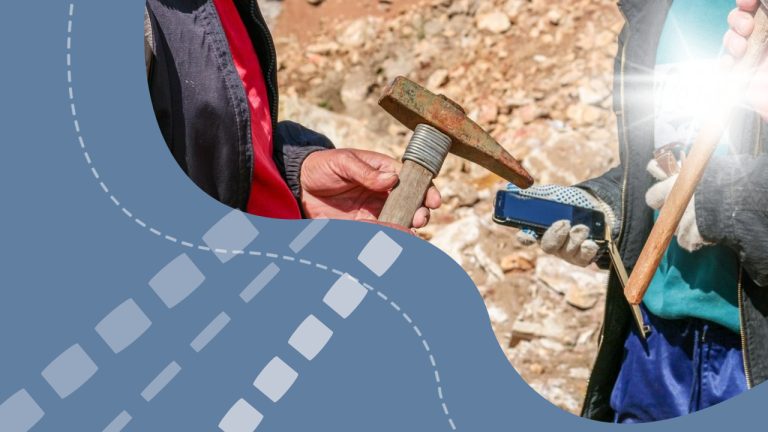
European Green Transition PLC (AIM: EGT) has extended the key license for its Olserum Rare Earth project in Sweden until 2029, strengthening its position for partnership and sale discussions. The company noted that the project demonstrated district-scale potential in 2024, underscoring its strategic importance as Europe seeks to reduce dependence on imported critical minerals.
EGT also confirmed a license extension at its Pajala copper project in Sweden until 2028, while the option agreement for the Altan Carbon credit project in northwest Donegal was extended by six months at no cost. The latter comes amid growing momentum in the carbon credit sector, bolstered by €3 million in peatland restoration funding from Meta, Microsoft, and Google.
CEO Jack Kelly highlighted the company’s transition away from being a pure mining player: “This is not a mining company. We have mining and exploration assets which we are looking to partner or sell, but our key focus is on acquiring distressed, revenue-focused businesses.”
The strategic shift is being led by Cathal Friel, EGT’s largest shareholder, who stepped in as executive chairman in June. Friel previously oversaw successful turnarounds at hVIVO and Amryt Pharma and is now guiding the company’s M&A strategy targeting revenue-stage businesses in the green economy.
EGT reported a strong cash position of €2.9 million as of June 30, with no debt and no committed costs, providing flexibility to pursue acquisitions.
On rare earths, Kelly stressed that Olserum remains a strategic asset: “There is no active rare earth mine in Europe today. Olserum could make a significant impact on European supply chains, especially as geopolitical tensions drive up prices and global players like Apple and the US government secure new long-term agreements in the sector.”
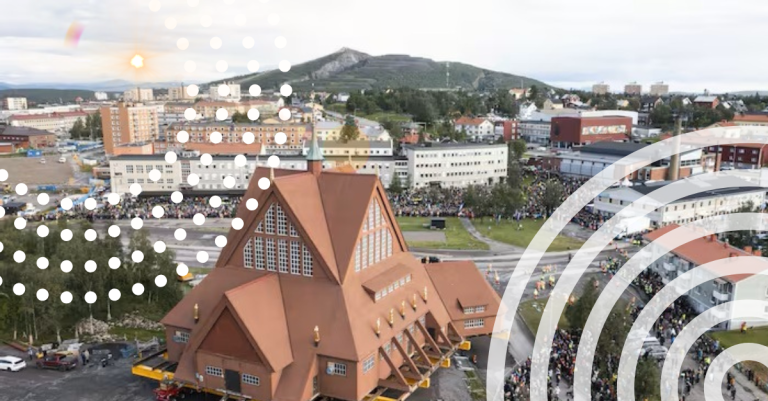
In a meticulously orchestrated feat of engineering, the iconic Kiruna Kyrka, a 1912 red wooden church weighing 672 tonnes, arrived at its new location in the Arctic town of Kiruna on Wednesday after a two-day, five-kilometre (three-mile) journey. The relocation was necessitated by the expansion of Europe’s largest underground mine, operated by LKAB.
The church, which began its journey on Tuesday, inched forward at a pace of half a kilometre per hour on two remote-controlled flatbed trailers. Its arrival around 2:30 pm (1230 GMT) was celebrated with a musical fanfare, marking the culmination of a complex logistical operation.
Kiruna’s entire town centre is being relocated due to the LKAB iron ore mine’s deepening excavations, which have compromised the stability of the ground. The church’s new location, chosen to preserve its character and connection to its surroundings, has been rotated 180 degrees, positioning the altar to face west—a symbolic gesture towards the town and its residents.
The relocation has captivated widespread attention, with large crowds gathering along the route to witness the historic event. Lisa Weber, a 26-year-old real estate agent from Germany, travelled to Kiruna specifically to see the relocation, describing it as a “historical” moment. “It’s something that you do once in your life, or see once in your life,” she told AFP.
King Carl XVI Gustaf of Sweden participated in the festivities, engaging with the Argentinian driver, Sebastian Druker, who remotely controlled the trailers using a joystick. The king also joined an attempt to set a world record for the largest “kyrkkaffe” (a coffee break following a church service).
The town’s relocation process, which began nearly two decades ago, is expected to continue for years. The new town centre was inaugurated in September 2022. LKAB has offered financial compensation or rebuilding services to those affected by the relocation, with 23 historic buildings already moved before the church.
Despite the meticulous planning, not all residents are satisfied. Critics, including local podcast hosts Alex Johansson and Magnus Fredriksson, have expressed dissatisfaction with LKAB’s handling of the relocation. “LKAB maybe didn’t read the room so well when they destroyed the whole town and then they stage this huge street party for the people,” Fredriksson remarked to broadcaster SVT.
LKAB’s discovery of Europe’s largest known deposit of rare earth elements near the Kiruna mine in 2023 has added another layer of complexity to the situation. These elements are crucial for the green transition, particularly in the manufacturing of electric vehicles. However, activists argue that mining operations are detrimental to the region’s pristine forests, lakes, and traditional Sami reindeer herding practices.
The relocation of the church alone is estimated to cost LKAB 500 million kronor ($52 million). Designed by Swedish architect Gustaf Wickman, the church features a blend of architectural influences, including designs inspired by the Indigenous Sami people. The church’s handblown glass windows were removed before the move and replaced with painted plywood. The separate belltower will be relocated next week.
As Kiruna continues to adapt to the demands of modern industry, the relocation of the Kiruna Kyrka stands as a testament to the town’s resilience and the intricate balance between progress and preservation.
District Metals (TSXV: DMX) has unveiled a significant upgrade to its Viken uranium project in central Sweden, announcing a new resource estimate that positions the project as the second largest uranium deposit in the world. The update has driven a substantial increase in the company’s share price, reflecting investor enthusiasm.
The updated resource now totals 456 million indicated tonnes with a grade of 175 parts per million (ppm) uranium oxide (U3O8), equating to 176 million contained pounds of U3O8. This marks an almost ninefold increase compared to the previous 2010 resource estimate. Inferred resources also saw a significant boost, growing by 44% to 4.33 billion tonnes at a grade of 161 ppm U3O8, yielding 1.53 billion contained pounds.
District CEO Garrett Ainsworth expressed that the impressive growth in the resource estimate highlights the strong continuity in grade and thickness of the mineralized Alum Shale formation across the Viken deposit. He also mentioned the potential for further expansion of the inferred resource, further underscoring the project’s promising future.
Following the announcement, District Metals’ shares surged by 23%, reaching C$0.35 per share in afternoon trading on Tuesday, giving the company a market capitalization of C$45.9 million.
Sweden’s Uranium Revival The new resource estimate for Viken is bolstered by the growing momentum for uranium in Sweden. The country is on the cusp of lifting its 2018 ban on uranium exploration and mining. The Swedish government, led by Prime Minister Ulf Kristersson, has been pushing to overturn the ban since 2023, with legislative changes expected to come into effect by January 2024.
While Sweden’s uranium output is small on the global stage, its resources represent 27% of Europe’s total, according to the Swedish Geological Survey. The global demand for uranium, driven by the need for zero-emission energy sources, is also creating a favorable environment for Sweden’s uranium projects.
Global Ranking of Viken Viken’s resource estimate places it among the largest uranium projects in the world. District Metals’ analysis, compared to other global uranium projects, positions Viken just below BHP’s Olympic Dam polymetallic project in South Australia, based on the total contained uranium.
Additional Critical Minerals In addition to uranium, the Viken deposit hosts significant amounts of other critical minerals. The indicated vanadium resource has increased more than 16 times, with 2.85 billion pounds of vanadium oxide (V2O5) at a grade of 2,836 ppm. The inferred vanadium resource has grown by 45% to 24.29 billion pounds at a grade of 2,543 ppm V2O5.
The indicated zinc resource totals 413 million pounds, grading 411 ppm zinc, and the inferred resource adds 3.9 billion pounds at a grade of 417 ppm. The nickel resources are also notable, with 332 million pounds of nickel in the indicated category at a grade of 330 ppm, and 3 billion pounds in the inferred category at a grade of 321 ppm.
Next Steps The Swedish government’s plans to lift the uranium mining ban will influence District’s decision on whether to proceed with a preliminary economic assessment for Viken in the fourth quarter of 2023. The new resource estimate is based on 122 holes, including drilling data from previous operators between 2006 and 2012.
Stockholm, Sweden – Talga Group has announced a significant milestone: its Swedish graphite project has been designated a “Strategic Project” under the European Commission’s newly enacted Critical Raw Materials Act (CRMA). This designation underscores the project’s crucial role in securing Europe’s supply of essential materials for its green and digital transitions.
Talga Group Ltd (ASX:TLG), a battery materials and technology company, has achieved a significant milestone with its natural graphite mine in northern Sweden receiving “Strategic Project” status under the European Commission’s Critical Raw Materials (CRM) Act.
This designation is a major endorsement of the project’s strategic importance in securing Europe’s battery material supply chain, and is expected to significantly accelerate Talga’s efforts to finalize project financing and development.
The CRM Act, designed to enhance the EU’s autonomy in critical raw materials vital for clean energy technologies, offers Strategic Projects a range of benefits. For Talga, this includes:
Improved Access to Financing: A dedicated subgroup within the CRM Board will coordinate EU, national, private, and public financial institutions to facilitate project financing.
Enhanced Appeal to Partners and Customers: The designation strengthens Talga’s position in ongoing discussions with debt providers, strategic investors, customers, and government-backed funding programs.
Expedited Permitting: Streamlined approvals will reduce project timelines and mitigate risks.
“The Strategic Project status validates Talga’s natural graphite mine and our vital role in sustainable battery materials,” stated Martin Phillips, CEO of Talga Group. “Graphite is critical to the lithium-ion battery industry, and increased EU capacity to extract and produce battery-grade graphite is essential for Europe’s resilience and competitiveness. We look forward to engaging with new opportunities under the CRMA to deliver Europe’s first fully integrated active anode supply.”
Talga’s Vittangi Anode Project aims to produce 19,500 tonnes per annum of Talnode®-C, a natural graphite battery anode material sourced from Talga’s wholly-owned graphite resources in Sweden. The project boasts a low emission footprint, vertical integration from mine to anode, and a resource base capable of supporting expansion to over 100,000 tonnes per annum.
The Company is actively pursuing customer offtake agreements and project financing structures as it progresses towards a Final Investment Decision. This “Strategic Project” status significantly strengthens Talga’s position in the European battery materials market and underscores its crucial role in the region’s transition to sustainable energy.
Mark Thompson, Founder & Managing Director of Talga Group Ltd commented, “This designation is a testament to the strategic importance of our Swedish project in securing a sustainable and reliable supply of graphite for Europe. We are committed to contributing to the EU’s ambitious green transition goals.”
Adding to the excitement, he also revealed that they are embarking on a series of meetings focused on securing new funding opportunities, engaging with potential customers, and exploring the onshoring of EU battery materials. “I am on a plane tomorrow for a range of meets including new funding opportunities, new customers and onshoring of EU battery materials!”.
This news comes at a crucial time as Europe intensifies its efforts to reduce reliance on foreign suppliers for critical raw materials and build a robust domestic battery supply chain. Talga’s “Strategic Project” status is expected to accelerate the development and implementation of their Swedish graphite operation, contributing significantly to the EU’s strategic autonomy and sustainability goals.
In a significant blow to Sweden’s green energy ambitions, Chinese-owned PTL has scrapped its planned SEK 13 billion investment in a state-of-the-art anode factory in Timrå. The project, which aimed to produce battery anodes for the growing electric vehicle market, would have created 1,900 jobs and positioned PTL as a key supplier to Northvolt, Sweden’s leading battery manufacturer. However, stringent security policy requirements imposed by the Swedish Inspectorate for Strategic Products (ISP) ultimately led to the project’s cancellation.
The ISP’s conditions included restrictions on PTL’s ownership, mandating that the company could not hold a majority stake in the factory. Additionally, the CEO, board chairman, and a majority of board members had to be Swedish citizens. PTL, unable to meet these demands within the required timeframe, appealed to the Swedish government but ultimately decided to withdraw from the venture.
On Thursday, PTL announced the termination of its land contract for the industrial site in Torsboda, effectively ending the project. Dr. Yu Han, PTL’s chief representative in Europe, expressed regret over the decision, stating, “The anode factory in Timrå would have played a key role in a future Swedish battery industry and contributed to the green transition. However, the delays mean that we have to call it a day. The business case for the investment no longer exists.”
Despite the setback, PTL has agreed to assist Torsboda Industrial Park in exploring opportunities to continue the project with another operator. The cancellation underscores the challenges of balancing foreign investment with national security concerns, particularly in strategic industries like battery manufacturing.
Swedish mining company LKAB has announced plans to replace its aging sorting plant in Vitåfors, which has reached the end of its service life. The new facility will be constructed adjacent to the existing plant on a 24,000-square-meter site, improving efficiency and accommodating larger volumes of iron ore processing.
“The sorting plant has served us well over the years, but it no longer meets modern operational requirements in terms of work environment and technology. Additionally, we need to handle greater production volumes,” said Monika Sammelin, Area Manager at LKAB.
The project will begin with excavation work to create space for the new plant, followed by foundation engineering and groundwork preparations. A construction contract will be signed when building work officially begins.
This initiative follows an earlier agreement in June 2024, when LKAB partnered with NCC to build a direct reduction plant and related infrastructure in Malmberget. The companies are now expanding their collaboration in the Swedish Ore Fields.
“By being involved from an early stage, we can provide both resources and specialist expertise to ensure an efficient project implementation. We are pleased to support LKAB’s continued growth,” said Helena Hed, Head of NCC Green Industry Transformation.
Initial exploration has given signals that the area is promising for expansion. A successful broadened exploration of the area could potentially increase Nordic Iron Ore’s mineral resources.
Through Nordic Iron Ore’s own exploration work and its participation in the EU-financed project Smart Exploration, knowledge has increased of the geology in the area, as well as previously explored areas. It also worth noting that the area has historically seen several small-scale mining operations. In addition to Smart Exploration’s measures, performed magnetic measurements indicate that the mineralisation in Blötberget continues to the north-east and could potentially be more easily accessible for mining. This makes the area promising for additional exploration. The company has therefore made an additional application to Bergsstaten for an exploration permit, Blötberget nr 6. Following approval of the application, the plan is to undertake core drilling in the area.
“It is pleasing to see that our exploration work is progressing and we have now made our second application for a new exploration permit during the past year. The purpose of the work is to expand upon the company’s mineral resources and thereby prolong the life of mine and improve profitability for the future mining operations at Blötberget,” said Ronne Hamerslag, VD at Nordic Iron Ore.
QX Resources-backed Bayrock Resources has expanded the mineral lease area around its promising Vuostok nickel-copper project in Northern Sweden.
In July, the Steve Promnitz-led lithium explorer QX Resources’ acquired 39% of the unlisted Aussie company Bayrock Resources, which has a portfolio of nickel-copper-cobalt projects in Sweden.
Bayrock’s Vuostok project is located roughly 60km northwest of Lainejaur, offering a potential joint development opportunity as a ‘district play’.
The newly added Nr 102 lease expands the total mineral lease by 33% at Vuostok, which QXR says could be within potential trucking distance to Lainejaur given the well-established all-weather road network and supporting infrastructure in the district.
“This would benefit any future stand-alone nickel-copper-cobalt operations or provide additional ore feed for a possible Lainejaur development,” the company says.
“Trucking of ore material for processing is a regular feature of operations in this part of northern Sweden.”
Further updates anticipated
In another exciting development, significant nickel-copper assay results have been identified from boulders located within the new Vuostok lease and from drill results near surface at Vuostok.
The company says these results underpin Bayrock’s decision to significantly expand the prospect.
“This is turning into a genuine potential district scale operation given the proximity of Bayrock’s Lainejaur and Vuostok Projects in a mining friendly region of Sweden,” QXR managing director Steve Promnitz says.
“Further updates are anticipated as Bayrock continues exploration across another highly prospective asset, the Notträsk Project, one of Bayrock’s six 100% owned nickel copper projects.”
Highly encouraging widths of nickel-copper mineralisation
The recently released assays by Bayrock highlight significant widths of nickel-copper mineralisation from eight holes at the Storbodsund Prospect within Vuostok.
The results include:
6.2m at 1.2% Ni, 2.2% Cu, 0.04% Co from 11m down hole (VUO23011);
6.9m at 1.2% Ni, 0.3% Cu, 0.05% Co from 5.1m down hole, including 0.4m at 3.9% Ni, 0.3% Cu, 0.11% Co from 6.85m down hole (VUO23013);
0.7m at 3.2% Ni, 1.0% Cu, 0.08% Co from 10.3m down hole (VUO23004); and
0.9m at 1.2% Ni, 0.1% Cu, 0.08% Co from 6m down hole (VUO23005).
QXR says the results indicate near surface massive nickel-copper sulphides between 0.3-6m thick, less than 18m from surface and beneath a thin cover of glacial sediments.
The plant in the northern town of Boden will use hydrogen produced from renewable electricity – rather than coal – to deliver steel in a process emitting as much as 95% less CO2 than steel produced with traditional blast furnace technology, the company says.
The transaction was a “big leap” towards the start of steelmaking operations in Boden by the end of 2025, the company said.
H2 Green Steel aims to ramp up production to 5 million metric tons of steel during 2026 and already has contracts for about half of its planned production despite green steel being more expensive than that produced by carbon-intensive methods.
“The willingness to pay more for green steel has increased quarter by quarter,” said chief executive Henrik Henriksson.
“The first contracts we signed were maybe at a 20% premium; the most recent are more like a 30% premium.”
Henriksson said that traditional steel production emits about 2 tonnes of CO2 per ton of steel compared with H2 Green Steel’s predicted 200 kilograms of CO2 per ton.
Last month H2 Green Steel announced that it had signed multi-year deals with miners Rio Tinto and Vale for the supply of iron ore pellets from Canada and Brazil.
Over the longer term the company aims to reduce the roughly 40kg of CO2 per ton of steel from transport of ore by sourcing in Sweden and utilizing cleaner transport methods, Henriksson said.
Morgan Stanley acted as sole financial adviser to H2 Green Steel in the private placement.
It is increasingly apparent that Europe must develop its own supply chain of critical minerals to support its green energy strategy. European Green Metals Ltd (EGM) aims to help in this regard, developing a portfolio of critical minerals projects, including the Olserum rare earth element (REE) project in southern Sweden, which has the potential to be Europe’s first REE mine.
Research suggests Europe needs to increase today’s critical minerals four-fold by 2040 for the deployment of clean energy technologies. Responsibly boosting global supply and avoiding critical mineral shortages is therefore paramount, no more so than in Europe, which has reached a critical juncture. As highlighted by European metals association Eurometaux, the next five years will decide whether the continent succeeds in recovering and growing its sustainable metals and minerals value chains, or whether other areas of the world push further ahead in the global resources race.
European Commission President Ursula von der Leyen recognised this earlier in the year when she stated: “Lithium and rare earth elements will soon be more important than oil and gas. Our demand for rare earths alone will increase five-fold by 2030… we will identify strategic projects all along the supply chain, from extraction to refining, from processing to recycling. And we will build up strategic reserves where supply is at risk.”
As a global hub for electric vehicles (EVs), gigafactories, wind turbines, solar, and battery storage, combined with world-class expertise in chemical industries, processing, and the refining of imported speciality metals, Europe should be in a stronger position than it is. Yet, there is a distinct lack of quality critical mineral projects on the horizon.
Whilst there has been an absence of exploration in the region, the continent has the geological potential to host a variety of substantial critical metal deposit types. Indeed, many countries have long mining histories, including Sweden which has 12 operational mines, recognised geology, infrastructure, and supportive in-country legislation. With European economic policy at the forefront of maintaining its competitive advantages, and political support from the EU Green Transition lobby, projects such as Olserum need to be rapidly advanced through permitting.
David Hall, CEO of EGM, said: “Critical mineral projects must be advanced quickly or we risk missing key environmental targets, which will have dire consequences on the world.”
EGM, with its team of highly experienced geologists, scientists, and financiers, has the experience and knowledge to take projects like the Olserum rare earth element project forward. Having operated worldwide, it has successfully developed natural resource projects under coherent and encompassing mandates driven by environmental, social, and governance (ESG) principles. Its understanding of economic geology, in tandem with environmental considerations and continual stakeholder engagement, has enabled the team to advance projects from exploration through to production.
Until recently, Hall was Chairman of Horizonte Minerals Plc – a company that has taken a Tier 1 nickel asset in Brazil from exploration through development to fully-financed construction. Other team members include the successful entrepreneur Cathal Friel, Co-Founder of Amryt Pharma Plc, which was acquired for $1.48bn in January 2023, and Michael Nolan, the former Finance Director and Founder of Cove Energy plc, which he guided through its £1.2bn sale to Thailand’s PTTEP.
Olserum: Project of National Interest
Since the REE mineralisation at the 6.5km2 Olserum licence (Fig. 1) was first identified in the 1990s by the Swedish Geological Survey (SGU), significant work has been undertaken at the project, resulting in the publishing of an initial 43-101 compliant Indicated Resource of 4.5Mt grading 0.6% Total Rare Earth Oxides (TREO) and an Inferred Resource of 3.3Mt grading 0.63% TREO using a 0.4% cut-off in 2013.
Fig, 1: Olserum location and licence area
The SGU designated Olserum as a project of National Interest for rare earths in May 2023. This establishes Olserum as a project of particular importance, which should hold priority over other land use where appropriate and protect it against measures that could complicate possible future extraction. The company is pleased with this recognition, even though the existing resource lies solely on commercial forestry lands well away from residential areas.
EGM’s experienced technical team, led by consultant geologist Aiden Lavelle, relogged all the previous drill core and undertook new geological mapping, sampling, and modelling (Fig. 2). This has given the team a better understanding of the controls on the REE mineralisation, and more importantly shown the district potential for major REE mineralisation. The initial 400m strike has already been expanded, exceeding 4km. With this knowledge, the company has expanded its land position ten-fold, acquiring the ~71km2 Olserum 22 permit, which surrounds the original Olserum licence (Fig. 1). This gives EGM district-scale control of this rapidly emerging highly prospective REE region.
Fig. 2: Geological modelling at Olserum
Work on the mineralogy and beneficiation of the ore has shown the REEs are hosted by xenotime and monazite – both REE-bearing phosphates which have well-established processing pathways. In addition, Olserum has a large contribution of the high-value critical REEs dysprosium (Dy), yttrium (Y), neodymium (Nd), terbium (Tb) and praseodymium (Pr) – a unique advantage for its ultimate development as a REE mine. The Olserum composite sample’s beneficiation flowsheet involved grinding, wet low intensity magnetic separation for magnetite removal, and a single stage of roughing and two stages of cleaning for flotation of the target phosphate minerals. The mineralisation’s strong continuity, potential for high-grade (>1% TREO) shoots, and promising recoveries using standard process routes suggest that Olserum could become Europe’s first REE mine, with its full potential yet to be determined.
Hall said: “The excellent location and infrastructure (Fig. 3) of the Olserum deposit, along with available renewable power sources, add to our belief that this project will be a viable mining asset. We are planning infill drilling on the current resource area, to upgrade and expand the resource to Measured and Indicated status, and are undertaking further beneficiation testwork with GTK Mintek to increase recoveries from 80% to 85%. We have also started environmental baseline studies prior to drilling and will engage with and involve the local communities in our plans for the project.”
The next steps for the Olserum rare earth element project
The team has already initiated a defined development programme aimed at completing a bankable feasibility study to advance Olserum toward production. This is being enacted utilising EGM’s team, as well as dedicated consultants such as international consulting and engineering firm Geosyntec Consultants AB, which will undertake baseline environmental studies and deliver an Environmental Impact Assessment (EIA).
The team is also lobbying for Olserum to be identified as a Strategic Project of European Interest, as defined in the EU Critical Raw Materials Act outlined in March 2023, to support fast-tracking the permitting process for the development of a mine. Additionally, as corporate end-users – including mineral processors, permanent magnet producers, EV battery suppliers, and automobile manufacturers – strive to ensure a stable stream of critical minerals, free from geopolitical constraints, the EGM team aims to forge partnerships with these entities through a collaborative co-development business model – one that is increasingly prevalent in the lithium sector, as highlighted by recent transactions. On a wider level, work at the new permit, Olserum 22, has yielded highly promising targets, which EGM aims to develop as it looks to deepen its understanding of the area and build a substantial REE resource inventory.
Fig. 3: Olserum location compared to local infrastructure
Pajala graphite potential: High-grade Swedish graphite
EGM’s mission of developing critical mineral projects in Europe for Europe is not limited to the Olserum rare earth element project. The company also owns the Pajala graphite project in northern Sweden, discovered while working through its proprietary in-house database of available, defined areas with known graphite occurrences. Graphite, while often overlooked, is another key constituent in the energy transition, representing over 25% of the mineral component of an EV battery.
Pajala comprises three granted concessions – Liviövaara 101, Lehtöslkä 101 and Lehtöslkä 102. Graphite in the area was initially defined in drilling by Sweden’s LKAB and, though only a few holes tested the horizon, combined with geophysics, a potential historic and non-compliant resource was outlined. The Liviövaara area has high-grade drill hole intercepts, including 4.7m grading 39.8% carbon (C) and 8.4m grading 29% C, values in line with Talga Group’s Vittangi project, which claims to be the highest-grade graphite in the world (19.4Mt grading 24% C). EGM plans to drill Pajala, aiming to twin the original holes then expand the drilling to rapidly define an initial resource. Large core will allow the company to undertake flake size distribution and purity to assess the quality of the graphite and the saleability of the product.
Elsewhere in Europe: The Saxony opportunity
In addition to Sweden, EGM is active in the Ore Mountains (Erzgebirge) of Saxony, Germany, which is host to multiple occurrences of critical metals, such as lithium, nickel, cobalt, gallium, germanium and indium. These metals occur in various styles of mineralisation, including veins, skarns, and lithium greisens.
Saxony has a 1,000-year mining history and is currently experiencing advanced exploration primarily for lithium, tin, tungsten, silver, and fluorite. The area has excellent infrastructure, a year-round workable climate and respected academic institutions providing high-level access to research and staff. EGM currently has two projects: the 14km2 Eichigt licence; and the 381km2 Marienberg licence.
The Eichigt licence, prospective for Li-Co-Ni-Mn-REE has been the focus of EGM’s exploration in 2023 and has been advanced to drill-target stage. Rock sample results identified elevated levels of multiple critical elements and mineralised structures on a NW-SE trend. 1km of strike was identified with workings continuing for a total of 1.7km, and grades were extremely promising. This included lithium up to 0.23%, cobalt up to 0.82%, and nickel up to 0.18% ppm and REE values higher than expected, the highest TREO value of 1.26% with four other samples greater than 0.5%. The next stage for EGM is to drill test this large poly-critical metals system in the heart of Europe to define its economic potential.
The 381km2 Marienberg licence area was historically an area that produced silver and tin but is also highly prospective for critical minerals. The EGM team believe that the encountered geological signatures make it a perfect addition to its portfolio and is currently initiating an extensive evaluation programme to understand its potential.
What does it all mean?
Achieving the energy transition demands a vast supply of critical minerals. Companies and governments must co-operate to boost production on a massive scale, with ESG principles at the forefront of mineral development. As well as stakeholder engagement, further education of the general public is required. Miners, such as EGM, are not the destructive demons many perceive, but responsible developers of critical minerals, without which there can be no net zero.
Projects, such as the Olserum rare earth element project, must be advanced. EGM has demonstrated the existence of critical mineral projects to progress within the European Union (EU) and others to explore and define. Industry names are eager to collaborate with EGM’s team. Now, EGM and the natural resource development sector need the backing of national and local governments to bring these promising projects to fruition.