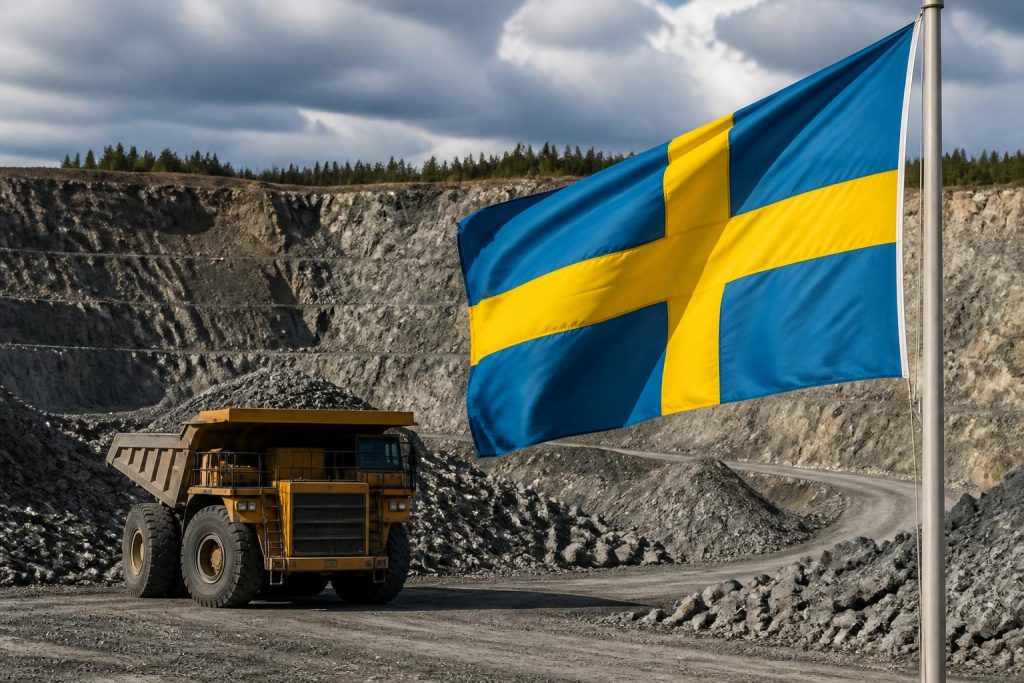
In a significant move to bolster its mining sector and reduce reliance on foreign sources, particularly China, Sweden has officially designated the mining of critical metals and rare earth minerals as a national security interest. This announcement was made by Ebba Busch, Sweden’s Enterprise Minister and Deputy Prime Minister, on 23 July 2026. The strategy aims to enhance Sweden’s position in the global mining landscape, especially as China currently dominates the rare earth market, accounting for approximately 69% of global production. This dependency has raised concerns among Western nations, prompting Sweden to take decisive action to secure its mineral supply chains.
Central to Sweden’s strategy is the Per Geijer deposit located at LKAB’s Kiruna mine, which is one of the European Union’s flagship projects aimed at reducing reliance on Chinese imports. The deposit boasts an impressive 1.2 billion tonnes of total mineral resources, including 2.2 million tonnes of rare earth oxides. Johan Menckel, the newly appointed President and CEO of LKAB, emphasised the company’s potential role in shaping Europe’s industrial value chains. The Swedish government plans to expedite the environmental permitting process for mining projects by establishing a dedicated authority, addressing current delays that hinder project approvals.
Additionally, the government is exploring the establishment of a state-owned investment company to further support the mining sector. Deputy Prime Minister Busch highlighted the necessity for Sweden to leverage its rich natural resources and world-class mining companies. The strategy also includes a review of the mineral fee structure to ensure that local communities benefit more directly from mining activities. However, the expansion of mining rights has raised concerns among Sweden’s indigenous Sami population, who fear that increased mining activities could threaten their traditional way of life. As Sweden moves forward with its ambitious mining strategy, it must balance economic interests with the rights and concerns of local communities.