
The Commons Business, Innovation, Science and Trade Committee has released its Ninth Report of Session 2026–27, titled ‘Critical Minerals’, on 5 November 2026. This comprehensive report draws on 60 written submissions, two oral evidence sessions, and a visit to Canada, highlighting the UK’s precarious reliance on imported critical minerals, particularly from China. The report argues that the UK cannot effectively re-arm, achieve net zero emissions, or develop artificial intelligence infrastructure without a secure supply of these essential materials.
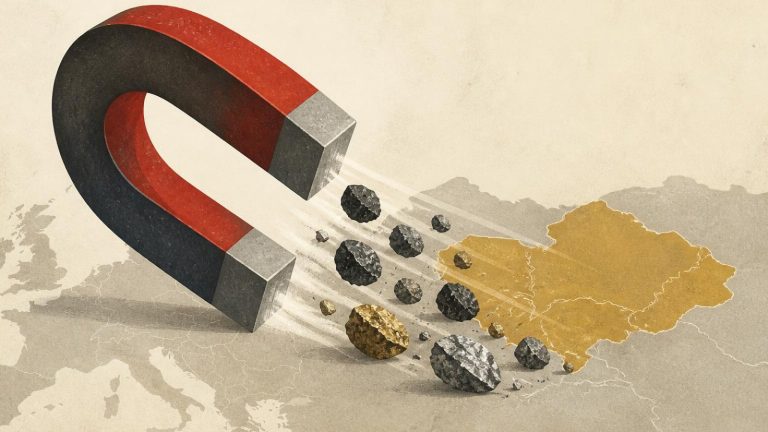
Currently, the UK is almost entirely dependent on imports for critical minerals, with China dominating the market by refining 19 out of 20 strategic minerals, holding an average market share of 70%. The report highlights the impact of China’s 2025 rare earth export controls, which have already affected manufacturers beyond the US, notably causing Ford to temporarily close plants. The committee suggests that while complete decoupling from China is neither realistic nor desirable, a strategy of ‘precision de-risking’ could be implemented over the next 10 to 15 years, requiring sustained commitment from both political and industry stakeholders.
The demand for critical minerals in the UK is projected to surge by 2030, with lithium expected to increase by approximately 45 times compared to 2024 levels, while graphite, cobalt, and rare earths could see increases of 13 to 16 times. The report criticises the government’s current progress as ‘opaque’, stating that Parliament lacks visibility on which capabilities are being protected, the vulnerabilities identified, and the projects being supported. It sets out ten tests for success, expressing doubt that the government can confidently meet any of them.
To address these challenges, the committee has made several key recommendations. Firstly, it urges the government to publish a list of sovereign capabilities it aims to protect, a move previously rejected due to concerns about obsolescence and vulnerability exposure. Secondly, it calls for the establishment of a single Critical Minerals Finance Facility, managed by mining finance experts, to pool resources from various government bodies and support domestic mining and refining efforts.
Further recommendations include empowering British International Investment to take equity stakes in critical minerals projects, expanding the remit of UK Export Finance through legislation, and introducing a national stockpiling programme to ensure a 60-day supply of minerals for defence. Lastly, the committee advocates for closer partnerships with G7, European, and Indo-Pacific nations to aggregate demand and bolster domestic capabilities in mining, refining, recycling, and planning.