Tag: Serbia

  • Zijin Plans New High-Tech Investments in Serbia Amid Environmental Scrutiny

    Zijin Plans New High-Tech Investments in Serbia Amid Environmental Scrutiny

    Chinese mining giant Zijin Mining has announced plans for new investments in Serbia, pledging to employ advanced technologies and uphold high environmental standards. The news came following a meeting on July 15 between Zijin representatives and Serbian Prime Minister Đuro Macut in Belgrade, as reported by the Serbian News Agency.

    According to the government, Zijin reiterated its commitment to “green development,” the company’s guiding principle, and discussed future expansion in Serbia’s mining sector. Prime Minister Macut urged the company to enhance environmental protection efforts, particularly in the Bor region and across eastern Serbia.

    Zijin’s activities in the region have sparked controversy due to allegations of environmental degradation and pollution. While environmental groups have raised concerns about the company’s impact on local ecosystems, Zijin maintains it operates within environmental standards.

    Zijin entered Serbia in December 2018 through a strategic partnership with the government, acquiring a majority stake in the Bor Mining and Smelting Basin—now known as Serbia Zijin Copper. The company has since invested heavily in Serbian mining, notably launching the Čukaru Peki copper-gold mine in October 2021, following acquisitions from U.S.-based Freeport McMoRan and Canadian firm Nevsun Resources.

    With full ownership of the upper and majority control of the lower Čukaru Peki deposit, Zijin has significantly expanded its global resources, reporting total copper reserves of 57.24 million tons and gold reserves of 1,889 tons.

  • Zijin’s Shadow: Villagers in Serbia and Tajikistan Bear Brunt of Chinese Mining Expansion

    Zijin’s Shadow: Villagers in Serbia and Tajikistan Bear Brunt of Chinese Mining Expansion

    In the hills of eastern Serbia and the valleys of western Tajikistan, villagers say they’re paying the price for China’s global mining ambitions. The Chinese-owned Zijin Mining Group, operating major copper and gold projects in both countries, stands accused of polluting the air, poisoning rivers, and displacing communities—while receiving strong political backing under the umbrella of Beijing’s Belt and Road Initiative (BRI).

    In Bor, Serbia, residents near Zijin’s Cukaru Peki copper mine complain of worsening air quality, arsenic, and fine particulate matter still lingering in the atmosphere despite the company’s reported $259 million investment in environmental improvements.

    “You used to see the smoke,” says Violeta, a Bor resident. “Now you don’t—but it still stinks.”

    In Krivelj, just outside Bor, Milos Bozic says the dust has made farming impossible. Professor Snezana Serbula of the Bor Technical Faculty confirms that PM particles and arsenic persist in the air. Meanwhile, residents like Dragoslav Stanculovic in nearby Ostrelj refuse to sell their properties. “What am I supposed to do—sell my dignity?” he asks.

    Despite environmental alarms, the Serbian government has doubled down on its support for Zijin, with Chinese companies now Serbia’s top exporters, surpassing $1 billion in trade by 2024.

    In Tajikistan, the story echoes Serbia’s. In Khumgaron and Shing, villagers say Zijin’s Zarafshon gold mine, where the company owns a 70% stake, has brought choking air and poisoned water. “Thick smoke covers the village in the morning,” says Abutolib Mukhtorov.

    Local residents in both countries report broken promises of relocation, inadequate compensation, and police intimidation of those who speak out. In Tajikistan, women who protested in Panjakent were detained. Firuza Kahorova recalls collapsing during the protest and being mocked by authorities: “They said, ‘Don’t give her water—give her dirt.’”

    Zijin claims 98% of Serbian land was acquired voluntarily and insists its projects meet environmental laws, branding Cukaru Peki as Serbia’s first “green mine.” In Tajikistan, Zijin has been fined, but continues operating with 20-year plans and strong support from the government, which highlights tax revenues and economic benefits.

    But for many residents, those benefits are illusory. “Peaches don’t grow. Cucumber flowers fall off. The river’s poisoned,” says Asadulo Rahmonov in Tajikistan. “It’s not progress. It’s survival.”

  • Rio Tinto’s Jadar Lithium Project in Serbia Gains EU Strategic Status Amid Fierce Environmental Opposition

    Rio Tinto’s Jadar Lithium Project in Serbia Gains EU Strategic Status Amid Fierce Environmental Opposition

    The controversial lithium and boron mining project in Serbia’s Jadar Valley, spearheaded by Anglo-Australian mining giant Rio Tinto, has been designated as one of 13 strategic projects outside the EU under the European Commission’s Critical Raw Materials Act (CRMA). The move aims to secure long-term access to critical raw materials vital for Europe’s green transition.

    Located in western Serbia, the Jadar Valley is believed to host Europe’s largest lithium reserves and one of the most significant global deposits. The lithium extracted from the site is considered crucial for manufacturing electric vehicle (EV) batteries, an industry central to the EU’s climate and industrial strategies.

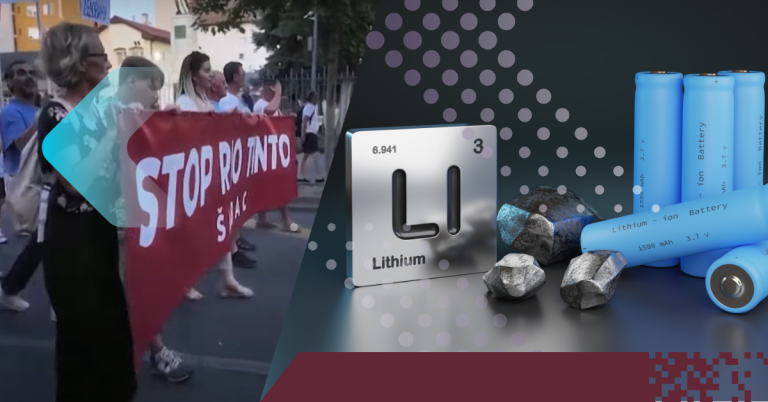
    Despite its strategic importance, the Jadar project has sparked intense opposition within Serbia. Environmentalists have organized mass protests since 2021, arguing the mine threatens local ecosystems, water sources, and agriculture. Public pressure led the Serbian government to revoke Rio Tinto’s licenses in 2022—a decision later overturned by the Constitutional Court in 2023.

    The European Commission’s endorsement reflects growing concern over the EU’s dependence on Chinese-dominated supply chains for critical minerals. By supporting the Jadar project, Brussels aims to bolster domestic resilience and reduce geopolitical vulnerability.

    However, local opposition remains firm. Environmental groups warn of renewed protests and blockades if the mine proceeds, arguing that no economic benefit can outweigh the environmental cost.

    Rio Tinto has pledged to meet the EU’s environmental and human rights standards as part of the project’s strategic designation. “The project will undergo multiple stages of scrutiny and public consultation,” said Chad Blewitt, Managing Director of the Jadar project. “It positions Serbia at the forefront of the green and digital revolution.”

  • EU’s Lithium Gamble in Serbia Faces Political Turmoil and Public Backlash

    EU’s Lithium Gamble in Serbia Faces Political Turmoil and Public Backlash

    The European Union’s ambitious transition to electric vehicles has hit a political and environmental wall in Serbia, as the Jadar lithium mining project—touted as a game-changer for Europe’s battery supply—becomes entangled in controversy, public protests, and fears of corruption, Politico reports.

    The Jadar deposit, considered one of the richest in Europe, could power up to a million electric vehicles annually and potentially meet a quarter of Europe’s lithium demand. Unsurprisingly, the EU had eyed the site as a cornerstone for its Critical Raw Materials Act (CRMA), aimed at reducing reliance on China for essential resources.

    Developed by mining giant Rio Tinto, the project initially appeared to align with Brussels’ green goals. However, it has triggered fierce resistance in Serbia over environmental concerns and deep mistrust in government transparency. Public sentiment has turned sharply against the mine, seeing it as a symbol of elite corruption and foreign exploitation.

    “If the EU backs Jadar, it sends the message that economic interests override its core values,” warned Aleksandar Matković, a Serbian researcher and protest organizer. The opposition movement, gaining traction as part of broader anti-government unrest, intensified after a state-friendly documentary branded activists as “foreign agents.”

    Even EU Commissioner for Industry, Thierry Breton, notably excluded any non-EU projects—including Jadar—from the March 2025 list of CRMA strategic ventures. Though the Commission reiterated its commitment to Serbia as a strategic partner, critics speculate that Jadar’s controversial status may have played a role.

    Tensions escalated further when Serbian President Aleksandar Vučić met with EU leaders, facing sharp criticism for democratic backsliding. While Vučić accused protesters of being Western-funded, EU officials insisted on reforms in media freedom, anti-corruption efforts, and election integrity.

    Despite the official suspension of the project in January 2022 following mass protests, Rio Tinto has remained active in Serbia—maintaining offices, acquiring over 500 properties, and claiming $500 million already invested. Critics see this as a sign the project is merely paused, not canceled.

    Environmental activist Marija Vuković voiced the growing fear in the region of Loznica, near the proposed site: “People don’t trust the government. They believe their land and water will be sacrificed for someone else’s gain.”

    While some locals welcome the promise of jobs, others are wary of irreversible environmental damage and the potential transformation of the region into a “sacrifice zone.”

    EU policymakers now face a dilemma: Can they back a project so vital to Europe’s green future without appearing complicit in environmental degradation and democratic decline?

    The stakes go beyond lithium. Serbia’s geopolitical balancing act—between the EU, Russia, and China—adds layers of complexity. A move by Brussels perceived as aligning with Vučić could backfire, undermining EU credibility in the Balkans.

    “The EU cannot afford to seem like it’s trading values for minerals,” Matković concluded. “That would betray the very essence of the European project.”

  • ​DOCVILLE Festival Cancels ‘Not In My Country’ Documentary Amid Death Threats and Anti-Mining Protest Controversy

    ​DOCVILLE Festival Cancels ‘Not In My Country’ Documentary Amid Death Threats and Anti-Mining Protest Controversy

    The DOCVILLE documentary festival in Leuven has canceled two films following death threats and intimidation. One of the withdrawn documentaries is “Not In My Country, Serbia’s Lithium Dilemma,” which examines the extensive protests in Serbia against the proposed Jadar lithium mine. The second film, “Russians at War,” faced criticism for being perceived as pro-Russian propaganda.kuleuven.sim2.be

    “Not In My Country” delves into the environmental and geopolitical tensions surrounding the Jadar Valley lithium project. The documentary raises questions about potential Russian hybrid warfare techniques influencing opposition since mid-2020, a concern also highlighted in a Wall Street Journal report.kuleuven.sim2.be

    DOCVILLE’s director, Frank Moens, expressed surprise at the unprecedented situation, noting that in the festival’s 21 editions, there had never been a need to withdraw films. He remarked, “I believe it says something about the spirit of the times. Everyone is just shouting in their own bubble.”

    Previously, KU Leuven Rector Prof. Luc Sels expressed sadness over the missed opportunity for an evidence-based discussion on the science and technology of the Jadar lithium project. The film’s creators aimed to facilitate a factual conversation about the project’s scientific and technical aspects, separate from the geopolitical controversies and mass demonstrations against Serbia’s regime. They sought to address topics central to the film but often overlooked by opponents, such as the differences between lithium minerals and other ores, comparisons between jadarite and spodumene, environmental considerations of jadarite extraction, and the potential development of a Serbian mine-to-electric vehicle value chain.

    Ironically, the campaign against “Not In My Country” has heightened interest in the documentary, leading to increased views, reports, and interviews. This surge in attention underscores the complexities and sensitivities surrounding discussions of mining projects and environmental activism in Europe.

  • The right mine, at the wrong time at the wrong place?

    The right mine, at the wrong time at the wrong place?

    The controversial video “Not In My Country: Serbia’s Lithium Dilemma” in now live on the YouTube channel Journeyman Pictures: https://lnkd.in/ejacPysy

    Belgrade, Serbia – August 2024: Massive protests have erupted in Serbia over the proposed lithium mine in the Jadar Valley, spearheaded by British-Australian mining giant Rio Tinto. Approximately 25,000 people took to the streets of Belgrade, expressing their fury over the project’s potential environmental impact and raising concerns about the nation’s future.

    The controversy stems from the Serbian government’s reversal of a 2022 decision to halt the project, reinstating it two years later. This move has ignited widespread public outrage, with many fearing the mine will devastate local agriculture and natural habitats.

    Environmental and Political Concerns Fuel Opposition

    Climate expert Dr. Peter Tom Jones, director of the KU Leuven Institute for Sustainable Metals and Minerals, traveled to Serbia to investigate the strong opposition. He notes the paradox of Serbia, home to Europe’s largest lithium deposit, resisting a project vital for the continent’s transition to electric vehicles and renewable energy storage.

    Rio Tinto plans to invest $2.4 billion in the Jadar mine, potentially making Serbia a leading lithium producer. However, the project has faced fierce resistance from local groups like NAD Jadar, who cite fears of pollution and environmental destruction.

    Marijanti Babic, Rio Tinto’s country head in Serbia, claims the mine will be an “invisible mine,” operating primarily underground with minimal surface impact. She emphasises the company’s commitment to preserving local farming and utilising modern, electronically controlled operations.

    However, resistance groups allege intimidation and threats, claiming they will “defend this with their lives.” The project has become deeply politicised, with allegations of disinformation campaigns and distrust of both Rio Tinto and the Serbian government.

    Disinformation and Distrust Plague the Project

    Anthropologist Jena Vasilovich from the University of Belgrade points to a lack of transparency and democratic process as key drivers of public distrust. She also highlights past grievances with similar projects and a general dissatisfaction with the current political regime under President Vučić.

    Rio Tinto has established an information center and a “fake news wall” to combat what they claim is an organised disinformation campaign. They deny allegations of radioactivity, excessive acid use, and the existence of a large aquifer beneath the mine.

    The company has engaged in extensive community outreach, holding over 150 events in the Jadar Valley to address local concerns. They emphasize their commitment to environmental, social, and governance (ESG) standards and highlight the project’s potential economic benefits, including the creation of 20,000 jobs in the battery value chain.

    Economic Potential vs. Environmental Risks

    Companies like battery manufacturer 11 ES see the Jadar mine as a crucial step towards establishing a European lithium battery supply chain, reducing reliance on China. They highlight the project’s potential to drive economic growth and support the transition to climate neutrality.

    However, environmental groups remain skeptical, citing past mining industry practices and the potential for long-term environmental damage. They call for stricter regulations and greater transparency.

    The European Union sees the Jadar mine as a strategic asset, aiming to secure its lithium supply and reduce dependence on external sources. However, the project has become entangled with Serbia’s EU membership aspirations, adding another layer of complexity to the debate.

    A Nation Divided

    The Jadar lithium mine has divided Serbia, pitting economic potential against environmental risks and fueling political tensions. As the global demand for lithium surges, Serbia faces a critical decision that will shape its economic and environmental future.

  • Docville Cancels Lithium Mine Documentary Due to “Overestimated Sensitivity”

    Docville Cancels Lithium Mine Documentary Due to “Overestimated Sensitivity”

    The Docville documentary festival in Leuven has decided to cancel a planned screening and debate surrounding a controversial lithium mine in Serbia. The decision, described as being made “with a bit of a heavy heart,” was influenced by the subject’s sensitivity. The festival’s director, Frank Moens, confirmed to VRT NWS that this marks the first time such a cancellation has occurred at the festival.

    The cancellation applies to the debate titled “Ethical Mining: Is That Possible?” and the accompanying documentary, Not in My Country: Serbia’s Lithium Dilemma, directed by Peter Tom Jones of the KU Leuven Institute for Sustainable Metals and Minerals. The documentary explores the contentious development of a lithium mine in Serbia’s Jadar Valley.

    The European Union sees lithium mining as crucial for the green transition, especially for producing batteries for electric vehicles. However, Europe faces challenges in mining lithium domestically, with Serbia identified as a prime location. Yet, proposals to establish lithium mines have provoked significant opposition due to concerns over environmental impacts, such as polluted water, noise, and threats to biodiversity.

    Jones, who supports lithium mining as part of the green transition, highlights emotional and historical resistance within Serbia. Activists have voiced concerns about the mine’s potential to harm agriculture, water quality, and the local ecosystem, including threats to bees and other wildlife.

    Moens explained the difficulty of organising a balanced debate on the topic, as some parties refused to participate if specific individuals were included, and there were disagreements over moderators. Without a debate, the festival opted not to show the documentary. This contrasts with last year’s successful discussion about a Swedish lithium mine, which included perspectives from the indigenous Sami community. Moens admitted, “We probably underestimated it a bit.”

    Despite this setback, Docville still offers a wide range of documentaries, with the festival kicking off next Wednesday.

  • Strickland Metals Discovers Significant Gold Potential at Jezerska Reka Prospect in Serbia

    Strickland Metals Discovers Significant Gold Potential at Jezerska Reka Prospect in Serbia

    Australian mining company Strickland Metals has announced a major breakthrough at its Jezerska Reka prospect, part of the Rogozna gold and base metals project in southern Serbia. The company reported drilling through over 490 metres of porphyry-related veining, alteration, and gold anomalism, signaling promising potential for a large-scale discovery.

    The results from the second drill hole at Jezerska Reka revealed a 493-metre intercept grading 0.14 grams of gold per tonne, starting at a depth of 223.6 metres. Strickland’s Managing Director, Paul L’Herpiniere, described the findings as “highly encouraging,” emphasizing the prospect’s potential to significantly enhance the already substantial resource inventory of the Rogozna project.

    Earlier drilling at Jezerska Reka also yielded positive results, including a 94-metre intercept grading 0.4 grams of gold per tonne from a depth of 484 metres. The company plans to conduct additional drilling in early April to further explore the target area.

    This development follows Strickland’s recent announcement of a maiden mineral resource estimate (MRE) for the Medenovac prospect, which increased the Rogozna project’s total MRE to 6.69 million ounces of gold equivalent, up from 5.41 million ounces. Strickland believes the Rogozna site, currently comprising four prospects, could become one of the world’s largest undeveloped gold deposits.

    In a related move, Strickland finalized a $37 million agreement in April 2024 with Ibaera Capital Fund’s subsidiary ISIHC to acquire Betoota Holdings, the owner of Serbia’s Zlatna Reka Resources, which holds 100% of the Rogozna project.

  • Premiere of “Not In My Country: Serbia’s Lithium Dilemma” Sparks Engaging Debate in Ljubljana

    Premiere of “Not In My Country: Serbia’s Lithium Dilemma” Sparks Engaging Debate in Ljubljana

    (PTJ, 20-2-2025; Photos: MJ)

    On February 19, 2025, the documentary “Not In My Country: Serbia’s Lithium Dilemma” premiered in Ljubljana, Slovenia. The event, jointly organised by IRTC and CIRAN, featured a screening of the film followed by a panel debate with proponents and opponents of the controversial Jadar lithium project.

    The film, which explores the tensions surrounding Europe’s largest proposed lithium mine in Serbia’s Jadar Valley, was met with enthusiastic applause from the audience. Unlike the previous premiere at the European Parliament in Brussels, where discussions focused on the film’s funding and representation, the Ljubljana event delved into substantive issues surrounding the project.

    Key Discussion Points

    Key topics discussed during the panel debate included:

    1. Technical Comparisons: Jadarite extraction versus other lithium sources.

    2. Origin of “Toxic Claims”: Addressing misconceptions about environmental impacts.

    3. Demand-Side Management: The necessity for broader management strategies alongside mining.

    4. Rule of Law Challenges: Navigating project implementation in a country facing governance and media freedom issues.

    The film’s presenter challenged Rio Tinto to bring in a third-party auditor and aim for at least IRMA50 certification, which exceeds current EU standards.

    A significant point raised during the discussion was the controversy surrounding a July 2024 publication in Scientific Reports, which has fueled many fears about the project in Serbia. The presenter highlighted that an October 2024 “Author Correction” addressed numerous flaws in the original paper’s methodology and language.

  • Not In My Country: Serbia’s Lithium Dilemma

    Not In My Country: Serbia’s Lithium Dilemma

    On 5 February 2025, the avant-première of the groundbreaking documentary Not in My Country took place at the European Parliament in an exclusive, invitation-only event. This compelling film delves into the heart of the fierce protests in Serbia over the proposed development of Europe’s largest lithium mine in the Jadar Valley. It examines the delicate balance between environmental preservation and the urgent drive for a climate-neutral future powered by lithium-ion batteries for clean mobility and energy storage. The documentary also sheds light on the geopolitical complexities surrounding Serbia’s aspirations for EU membership and allegations of political interference.


    The Film

    In December 2004, exploration geologists from the Anglo-Australian mining giant Rio Tinto made a remarkable discovery in the fertile Jadar Valley of Western Serbia: a unique lithium-boron-silicate mineral later officially named “jadarite.” Dubbed “Serbian kryptonite,” this potent mineral was hailed as a source of immense wealth for the Serbian people, promising to propel the Republic into a cleantech-based, future-proof, climate-neutral economy.

    Fast forward to 2020: Rio Tinto’s land acquisition programme began dividing the villagers of the Jadar Valley, sparking the birth of a local agricultural opposition movement. This quickly evolved into a diverse and determined national movement: Not In My Country! By 2022, mass demonstrations had grown so powerful that they forced the Serbian government to withdraw Rio Tinto’s permits. However, two years later, Serbia’s Constitutional Court reversed the decision, reigniting protests in Belgrade in July 2024 and splitting the nation into two camps—those in favour and those against the project.

    In Not in My Country , the film’s presenter seeks to understand how seemingly unlikely allies—Serbian nationalists, local farmers, urban environmentalists, scientists, and pro-EU, pro-democracy Serbs—have united against the Jadar project. The presenter engages with a multitude of voices from the Jadar Valley, Belgrade, and Brussels, exploring pressing questions:

    • Can Rio Tinto be trusted to uphold the strictest ESG standards?
    • Is Serbia merely an EU mining colony, sacrificing its environment so wealthy Europeans can drive oversized electric vehicles?
    • Is the Jadar project an entry ticket to the European Union?
    • Shouldn’t the EU open its own lithium mines before asking Serbia to open its Jadar mine?

    The Film Producers

    The documentary is co-developed and fully financed by SIM², the KU Leuven Institute for Sustainable Metals and Minerals. Recognising their pivotal role in achieving a climate-neutral society, SIM² is dedicated to advancing the sustainable production and recycling of critical metals and minerals through research, education, and wider-society learning, including the development of science communication documentaries.

    Dr. Peter Tom Jones, director of SIM², states: “When we embarked on producing this film, our goal was to create a ‘science communication’ documentary aligned with the mission of our KU Leuven Institute. However, we quickly realised that the Jadar project is so heavily politicised that it is challenging to separate a fact-based discussion on the intrinsic techno-environmental merits and pitfalls of this mining and refining project from the complex nature of Serbian politics. We discovered firsthand that this story is one of intimidation from all sides, filled with confusion, distrust, and deep-seated historical emotions and suspicions towards external players who come into Serbia and seem to want to dictate terms. With the recent disaster in Novi Sad and the ongoing massive student-led protests against the regime, all of this has become even more explosive. Is it a matter of the right mine at the wrong time and wrong place? Is it a question of not throwing the baby out with the bathwater?”


    The Panel Debate

    After the film’s screening in the European Parliament, David Rose moderated a unique panel discussion. The debate brought together MEPs Hildegard Bentele and Yvan Verougstraete, Julia Poliscanova from Transport & Environment, as well as direct proponents and opponents from Serbia. The aim of this panel was to investigate how to bridge the tensions between environmental preservation and people’s right to object to mining activities in their country, while addressing the pressing need to source metals such as lithium, which are essential enablers of the transition towards climate neutrality.


    Additional Information

    • Trailer : The trailer for Not In My Country is available here . The film will not be made public until all avant-première events have been completed. Journalists may request a protected link for reviewing purposes or obtain images and footage by contacting Journeyman Pictures directly or Peter Tom Jones via his LinkedIn profile.
    • SIM² KU Leuven : This interdisciplinary institute spans fields such as geology, chemistry, metallurgy, engineering, law, and economics. SIM² is one of Europe’s leading academic institutes, dedicated to advancing the sustainable production and recycling of critical metals through research, education, and wider-society learning. Notable examples include the award-winning documentaries Made In Europe: From Mine to Electric Vehicle (2023), The Sami Perspective (2024), and Europe’s Mining Renaissance: A Catalyst for Climate Neutrality (2024).

    For more information, visit https://kuleuven.sim2.be/ .

    • Journeyman Pictures : The film is distributed by Journeyman Pictures, a leading independent supplier of award-winning stories to the global theatrical, broadcast, digital, and educational markets. For more information, visit https://www.journeyman.tv/about/about-us .

    Disclaimer : SIM² has no financial interest in publishing its documentaries. It does not and will not receive royalties or commercial income from the airing of these films. The production of these films is solely part of SIM²’s commitment to “wider-society learning,” as acknowledged by the International Panel evaluating SIM²’s first four years as an official KU Leuven Institute.