Tag: Serbia

  • Mundoro Announces 2024 Portfolio Highlights, 2025 Outlook and Corporate Update

    Mundoro Announces 2024 Portfolio Highlights, 2025 Outlook and Corporate Update

    Vancouver, British Columbia – 3rd February 2025 – Mundoro Capital Inc. (TSXV: MUN) (OTCQB: MUNMF) (www.mundoro.com) (“Mundoro” or the “Company”) is pleased to provide a summary of key achievements from 2024 and outline strategic priorities for 2025.

    2024 Highlights

    In 2024, Mundoro made significant progress in advancing new exploration targets, securing partnerships, and expanding its robust pipeline of projects in two mineral districts: Western Tethyan Belt in Eastern Europe and the Laramide Belt in the southwest USA.

    Serbia Projects

    In Serbia, Mundoro’s primary focus was on advancing exploration activities at its wholly-owned projects, including Ponor, Lipovica, Orlovac, and Vitanovac licences. The Company conducted a comprehensive programme that included a project-scale ground Audio-Magnetotelluric (AMT) survey, targeted rock and soil sampling, and reconnaissance mapping. These efforts were designed to enhance the geological understanding of the project area.

    Arizona Projects

    In Arizona, Mundoro’s drilling programme at the Dos Cabezas project confirmed porphyry potential and partnership opportunities. Drill results from two drill holes intersected Cu-Au-Mo and Cu-Mo-Ag mineralization. Potential partners have been approached to advance the Dos Cabezas project and Mundoro plans to advance the identified porphyry targets at Picacho to drill-ready status through further exploration and permitting.

    2025 Outlook

    Mundoro’s primary focus in the coming year will be to advance high-potential targets across its wholly-owned projects with the objective of securing additional joint venture partnerships. The Company will also execute exploration programmes for its partners, BHP and JOGMEC. A key element of its strategy involves ongoing generative exploration to identify and develop compelling copper and/or gold targets for drill testing.

    Leadership Transition and Corporate Update

    Mundoro is pleased to announce the appointment of Ms. Mireia Cervera as Chief Financial Officer (CFO), effective January 31, 2025. The Board of Directors has also approved the grant of 3,080,000 stock options and 500,000 restricted share units (RSUs) under the Company’s Equity Incentive Plan.

    “We are confident that Mireia’s proven financial expertise and robust understanding of our financial systems will enhance our growth objectives,” said [Name], CEO of Mundoro.

    About Mundoro Capital Inc.

    Mundoro is a publicly listed company on the TSX-V in Canada and OTCQB in the USA with a portfolio of mineral properties focused primarily on base and precious metals. Mundoro’s asset portfolio generates near-term cash payments to Mundoro and creates royalties attached to each mineral property optioned to partners.

    Qualified Persons

    The scientific and technical information described in this Press Release has been prepared in accordance with National Instrument 43-101. The scientific and technical information for this press release has been reviewed and approved by R. Jemielita, PhD, MIMMM, a Qualified Person as defined by NI 43-101 and Chief Geologist to the Company.

    For more information, please visit our website at www.mundoro.com

  • Canadian Gold Miner Files Technical Report for Serbian Project

    Canadian Gold Miner Files Technical Report for Serbian Project

    TORONTO, 31 January 2025 – Dundee Precious Metals Inc. (TSX: DPM), a leading Canadian-based international gold mining company, has announced the filing of a technical report for its Čoka Rakita gold project in Serbia. The report supports the Mineral Resource and Mineral Reserve estimate and pre-feasibility study for Čoka Rakita, as outlined in the company’s news release dated 18 December 2024.

    The technical report has been prepared in accordance with the Canadian Securities Administrator’s National Instrument 43-101 – Standards of Disclosure for Mineral Projects. Both the report and the December 2024 news release are accessible on SEDAR+ (www.sedarplus.ca) and the company’s website (www.dundeeprecious.com).

  • “Not In My Country” Documentary Explores Serbia’s Contentious Lithium Project

    “Not In My Country” Documentary Explores Serbia’s Contentious Lithium Project

    A new documentary set to premiere at the European Parliament on February 5th, 2025, delves into one of Europe’s most contested mining projects. “Not In My Country: Serbia’s Lithium Dilemma” examines the complex intersection of sustainable energy ambitions, environmental concerns, and geopolitical tensions surrounding the Jadar Valley lithium project in Serbia.

    The film, directed by Stijn van Baarle and presented by Dr. Peter Tom Jones of KU Leuven, chronicles the discovery of a unique lithium-boron-silicate mineral dubbed “Serbian kryptonite” by mining giant Rio Tinto in 2004. What initially seemed like a promising economic opportunity for Serbia has evolved into a deeply divisive issue, sparking nationwide protests and raising questions about environmental sovereignty.

    A Tale of Two Decades

    The documentary traces the project’s trajectory from its optimistic beginnings to the emergence of fierce local opposition. The turning point came in 2020 when Rio Tinto’s land acquisition program began fracturing local communities. The resistance movement gained such momentum that it led to the withdrawal of Rio Tinto’s permits in 2022. However, the story took another turn when Serbia’s Constitutional Court reversed this decision in July 2024, igniting fresh protests in Belgrade.

    Key Questions Addressed

    The film confronts several crucial questions facing modern resource extraction:

    • Can multinational mining corporations be trusted to maintain rigorous environmental and social governance standards?
    • Is Serbia being reduced to an EU mining colony, sacrificing its environmental heritage for Western Europe’s electric vehicle ambitions?
    • Could the opposition to the project be influenced by pro-Russian interests seeking to impede Serbia’s EU membership prospects?

    Multiple Perspectives

    The documentary features an impressive array of voices from all sides of the debate, including:

    • Local activists from the Ne Damo Jadar movement
    • Rio Tinto executives including Marijanti Babic, Chad Blewitt, and Sinead Kaufman
    • ElevenEs’s CEO Nemanja Mikac
    • Serbia’s Minister of Mining & Energy Dubravka Djedovic Handanovic
    • Environmental and political experts from various institutions

    Premiere Event Details

    The European Parliament premiere will be hosted by MEPs Hildegard Bentele and Yvan Verougstraete, in collaboration with the KU Leuven Institute for Sustainable Metals and Minerals. While the in-person event is invitation-only due to security restrictions, the post-screening interview and panel discussion will be livestreamed to ensure public access to this important debate.

    The documentary, funded by SIM² KU Leuven & KU Leuven, represents a significant contribution to the ongoing discourse about sustainable resource extraction in Europe. It highlights the delicate balance between environmental protection, economic development, and geopolitical interests in an increasingly electrified world.

    For those interested in viewing the documentary’s trailer, it is available through Journeyman Pictures, offering a glimpse into this comprehensive exploration of one of Europe’s most significant environmental and economic debates.

  • German MPs Criticize Lithium Mining in Serbia Amid Human Rights and Environmental Concerns

    German MPs Criticize Lithium Mining in Serbia Amid Human Rights and Environmental Concerns

    German Left Party MPs have raised concerns over the mining of lithium in the Jadar Valley, Serbia, questioning their government’s stance and expressing dissatisfaction with the responses provided. According to Cornelia Möhring, a Die Linke MP, the German government’s answers reflect its prioritization of geopolitics and industrial interests over democratic principles and environmental protection. Möhring highlighted that local Serbian communities have been protesting for years against industrial lithium mining due to its harmful consequences, facing threats and persecution in return.

    In a recent inquiry, Möhring, alongside MPs Gregor Gysi and Susanne Hennig-Wellsow, criticized the German government for failing to address key concerns, including environmental violations and threats against Serbian environmental activists. The Federal Ministry of Economy and Climate Protection, representing the German government, avoided providing clear commitments on human rights and ecological standards.

    The MPs cited the “Strategic Partnership Agreement for Sustainable Raw Materials”, signed in July 2024 by German Chancellor Olaf Scholz, Serbian President Aleksandar Vučić, and EU Vice President Maroš Šefčovič. This agreement opens doors for Rio Tinto’s lithium mining operations in Serbia, which activists claim disregard environmental and democratic standards.

    Möhring criticized the government for neglecting Serbia’s deteriorating democracy and rule of law, accusing it of prioritizing cheap electric car batteries over human rights. She called for an immediate moratorium on the lithium deal and urged a reassessment of Germany’s foreign policy to ensure transparency and accountability.

    Another Die Linke MP, Gökay Akbulut, condemned the German government for relying entirely on Serbian authorities to enforce environmental standards. He stated that this unprincipled approach undermines both environmental efforts and democratic values, signaling that economic interests outweigh ethical considerations.

  • Serbia Faces Controversy Over Europe’s Largest Lithium Project

    Serbia Faces Controversy Over Europe’s Largest Lithium Project

    The Serbian government is pushing forward with plans for what could become Europe’s largest lithium and boron extraction project, led by the multinational company Rio Tinto. Officials, including the president, have been actively working to secure the investment, even resorting to tactics aimed at discrediting critics. However, the project has faced widespread public resistance, fueled by environmental concerns and allegations of political corruption. For months, protests have erupted across the country, with a core group of rural residents leading the charge. These individuals, who may face property expropriation, are determined to oppose the mine and its potential impacts on their communities and the environment.

  • Serbia’s Environmental Ministry Sets Terms for Rio Tinto’s Jadar Mining Project Amid Criticism

    Serbia’s Environmental Ministry Sets Terms for Rio Tinto’s Jadar Mining Project Amid Criticism

    The Ministry of Environmental Protection of Serbia has defined the scope and content of the required environmental impact assessment (EIA) for the mining section of the controversial Jadar project, spearheaded by Rio Tinto. The multinational mining company is now obligated to address cumulative environmental impacts and propose mitigation measures as part of its EIA study.

    The decision has sparked backlash from environmentalist groups, including Marš sa Drine, which claim it violates public participation rules, neglects key safeguards, and prioritizes corporate interests. The group alleges that the Ministry’s approval bypassed crucial regulations, calling for a public lawsuit to challenge the legality of the move.

    Rio Tinto’s Serbian subsidiary, Rio Sava Exploration, submitted its request on September 17 to outline the EIA scope for an underground lithium and boron mining operation in western Serbia. The project encompasses several municipalities in Loznica and is part of a broader initiative to exploit the Jadarite mineral, a rare source of lithium and boron.

    Environmental watchdog RERI has criticized the fragmented approach, accusing Rio Tinto of “salami slicing” the project to sidestep a comprehensive assessment. RERI argues that dividing the project undermines transparency and diminishes adherence to European Union environmental standards.

    Following an analysis of 149 public comments, the Ministry has required Rio Tinto to explicitly list mitigation measures and adopt best available technologies in the EIA. The company has one year to submit the finalized study, which must detail all cumulative impacts, proposed solutions, and monitoring mechanisms.

    Critics remain unconvinced, warning that the decision favors Rio Tinto at the expense of public and environmental well-being. Marš sa Drine has urged citizens to mobilize against what it calls a breach of Serbian and international laws.

  • Strickland Metals Commences Phase Two Testing on Serbia’s Rogozna Gold Project

    Strickland Metals Commences Phase Two Testing on Serbia’s Rogozna Gold Project

    Strickland Metals has advanced to phase two metallurgical testing on its Rogozna gold and base metals project in Serbia, following successful initial results in 2021. A 400kg bulk sample from the Shanac deposit is being tested at an ALS Laboratory in Perth, managed by Macromet. This phase aims to refine metal recovery techniques for distinct deposit zones containing gold, copper-gold, and lead-zinc-silver. Preliminary results showed promising recovery rates, with high copper and gold concentrations. Completion is expected by mid-2025, supporting upcoming Rogozna scoping studies.

  • Protest in Berlin Against Lithium Mining in Serbia Highlights German Industry’s Double Standards

    Protest in Berlin Against Lithium Mining in Serbia Highlights German Industry’s Double Standards

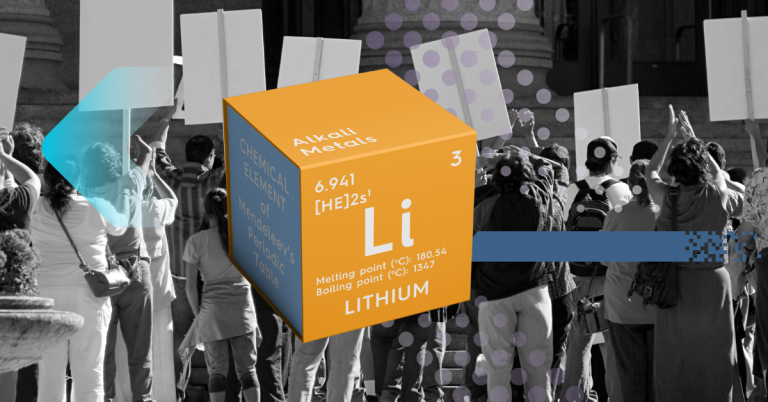
    A protest against lithium mining in Serbia took place in Berlin, drawing attention to the perceived double standards of the German industry. The demonstration, held in front of the Futurium building near Berlin’s main train station, was organized by people from the former Yugoslavia and environmental activists from across the globe. Protesters aimed to highlight the contrast between Germany’s advocacy for ecologically sustainable production at home and its support for lithium extraction in Serbia, which they argue harms the environment.

    Around several dozen demonstrators attended the event, including members of the Serbian community in Berlin and left-wing activists. They voiced dissatisfaction with the policies of German Chancellor Olaf Scholz, particularly his support for Rio Tinto and their controversial mining projects in Serbia.

    One of the protest organizers, Krunoslav Stojakovic, stated that the protest was strategically held in front of the Futurium, where the German Association of Industrialists was hosting a congress on the environmental development of industry. He criticized the German industry for promoting sustainable practices at home while supporting environmentally damaging lithium exploitation abroad.

    The protest attracted citizens from Serbia and other former Yugoslav republics living in Berlin, who are concerned about the potential environmental and water supply issues that lithium mining could cause in Serbia. They also pointed to the negative impacts of similar mining projects in other countries.

  • Serbian Parliament Debates Ban on Lithium Mining Amid Rio Tinto Controversy

    Serbian Parliament Debates Ban on Lithium Mining Amid Rio Tinto Controversy

    On Monday, Serbia’s parliament began discussing an opposition-led proposal to ban lithium and borate mining, a move that would halt Rio Tinto’s contentious $2.4 billion Jadar lithium project in the western region of the country. The debate comes after Serbia reinstated Rio Tinto’s mining licence in July, two years after it was previously revoked following strong opposition from environmental groups.

    The reinstatement of the licence sparked nationwide protests, with demonstrators blocking roads and railways in protest of the potential environmental impact. If completed, the Jadar project could satisfy 90% of Europe’s lithium demand, solidifying Rio Tinto’s position as a leading global lithium producer. Lithium is an essential material in the production of batteries for electric vehicles and mobile devices.

    While the Serbian government argues that the mine will greatly benefit the country’s economy, environmental groups are concerned about the potential damage to land and water caused by industrial waste. The project, which may not begin until 2028, will undergo strict environmental reviews and public consultations, according to Rio Tinto.

    Serbia’s Minister for Mining and Energy, Dubravka Djedovic Handanovic, emphasized that the government would ensure Rio Tinto adheres to stringent international environmental standards. She warned that banning lithium mining could result in lost investments, jobs, and hinder Serbia’s plans to become a hub for electric vehicle and battery production.

    Opposing the project, Danijela Nestorovic, a member of the Ecological Uprising movement, called the proposed mining activities a grave environmental risk, asserting that Serbia’s future would not be endangered without lithium extraction.

    Despite the heated debate, the ruling coalition has a comfortable majority in parliament and has already signaled it will not support the opposition’s proposal. A vote is expected in the coming days, with environmental groups threatening further protests if the ban is blocked.

  • Electrum Discovery Secures Funding for Timok East Copper-Gold Exploration

    Electrum Discovery Secures Funding for Timok East Copper-Gold Exploration

    Canadian company Electrum Discovery, formerly known as Medgold Resources, has announced the successful financing of 1.5 million Canadian dollars to further its exploration of the Timok East copper and gold project in Serbia. The funding will support the initial drilling program and general working capital. Electrum plans a private placement of up to 21,428,571 company units at a price of $0.07 per unit, aiming to raise the total funds.

    Electrum’s projects in Serbia cover 645 square kilometers, with Timok East spanning 123 square kilometers and the Novo Tlamino project covering 522 square kilometers in southeastern Serbia. In Timok East, the company has identified a promising copper-gold anomaly, named Bambino, located five kilometers from the Veliki Krivelj deposit. This anomaly has grown to 1.8 kilometers in length, revealing high copper and gold concentrations, with soil samples showing up to 8,238 ppm of copper.

    CEO Elena Clarici highlighted the significance of the Bambino discovery and the potential of the underexplored Timok region. The company is currently conducting a detailed geological analysis of the site. Additionally, Electrum is reviewing its Novo Tlamino gold project, which contains historical gold reserves, in light of rising global gold prices. The Barje site, located within the Donje Tlamino license, holds an estimated 20 tons of gold and 38 grams of silver per ton.