Tag: Serbia

  • Rio Tinto to Halt Serbia’s Jadar Lithium Project as Costs Rise and Progress Stalls

    Rio Tinto to Halt Serbia’s Jadar Lithium Project as Costs Rise and Progress Stalls

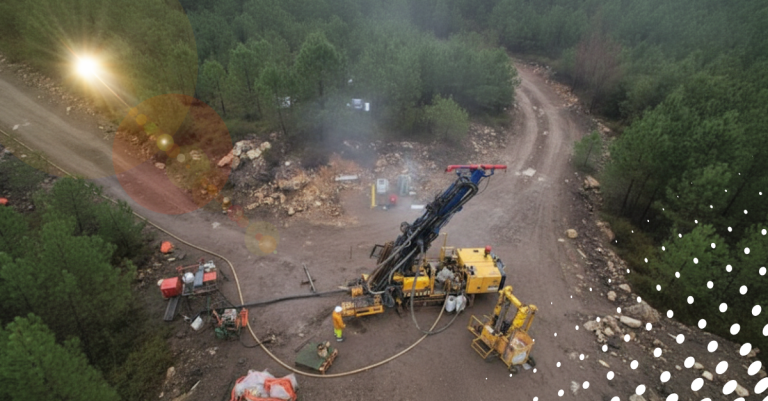
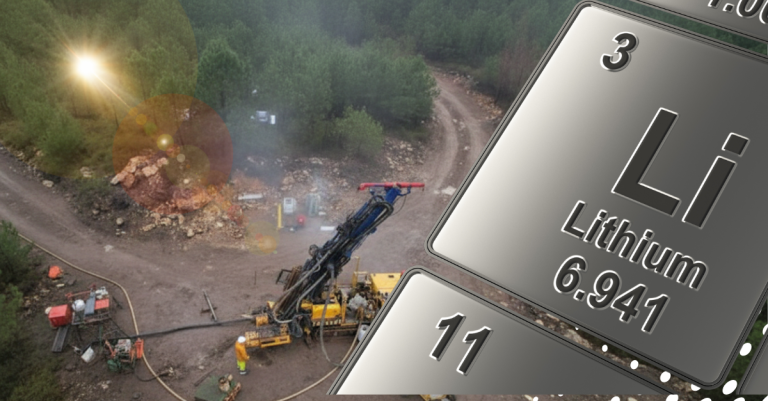
    Rio Tinto will suspend development of its long-delayed Jadar lithium project in Serbia, effectively mothballing what was once slated to become Europe’s largest lithium mine. The decision, first reported by Bloomberg and later confirmed by a company spokesperson, places the nearly $3-billion project into “care and maintenance” as the miner seeks to reduce spending and refocus its lithium strategy.

    The move ends Rio’s two-decade effort to unlock the massive Jadar deposit, discovered in 2004 and estimated to produce 58,000 tonnes of battery-grade lithium carbonate annually. Despite the project’s strategic importance for Europe’s battery supply chain, Jadar has repeatedly stalled amid regulatory hurdles, political uncertainty and strong community opposition. Serbia revoked Rio’s licence in 2022 over environmental concerns and only reinstated it last year, but permitting made little progress.

    In the internal memo cited by Bloomberg, Rio said it could no longer justify the level of investment given the limited advancement of the project. Earlier this year, the company raised Jadar’s cost estimate to nearly $3 billion, citing the need to meet stringent EU environmental and human rights standards.

    The suspension is part of broader cost-cutting measures under new CEO Simon Trott, who has introduced restructuring efforts and workforce reductions across the company. With Jadar shelved, Rio is expected to concentrate its lithium ambitions on South America, including Argentina’s Rincon project and joint ventures in Chile.

    Analysts say the decision underscores Rio’s pivot away from hard-rock assets inherited through its merger with Arcadium, and some expect those projects could be sold. The halt also deals a blow to EU plans to secure domestic lithium supply, as Jadar was projected to cover nearly 90% of Europe’s current demand.

  • Serbia Zijin Copper Files for Environmental Review of New Kraku Bugaresku–Cerovo Expansion

    Serbia Zijin Copper Files for Environmental Review of New Kraku Bugaresku–Cerovo Expansion

    Serbia Zijin Copper LLC Bor, a subsidiary of Zijin Mining Group, has filed a formal request with Serbia’s Ministry of Environmental Protection to prepare an Environmental Impact Assessment (EIA) for the planned exploitation of the Cementation 2 and Cementation 3 ore bodies at the Kraku Bugaresku–Cerovo Cementation deposit, near Bor.

    The new project marks a continuation of decades-long mining activity in the region, following previous open-pit operations at Cementation 1, according to eKapija. The deposit lies about 13 kilometers from Bor and 2 kilometers from Mali Krivelj, on the ridge of the Kraku Bugaresku hill.


    Project Scope and Development Phases

    The EIA request, prepared by the Faculty of Mining and Geology at the University of Belgrade, builds on earlier approvals from the Ministry of Mining and Energy dating back to 1991 and 2018.

    Mining at Cementation 2 and 3 will proceed in five phases:

    1. Initial extraction in the northern section of Cementation 2.

    2. Expansion southwest.

    3. Opening of the Cementation 3 pit.

    4. Southward expansion of both pits.

    5. Subsequent exploitation of Cementation 4 reserves in the southeast.

    The open-pit Cementation 2 is designed to produce 3.5 million tonnes of ore annually over a seven-year mine life. The project’s estimated net present value (NPV) stands at $117 million in the best-case scenario, positioning it among Serbia’s most significant mining investments in recent years.


    Waste Management and Environmental Measures

    Ore extraction will follow discontinuous mining technology, involving drilling, blasting, loading, and transport to the primary crusher, alongside drainage and auxiliary works.

    A total of 61.1 million tonnes of waste rock is expected to be generated. The existing waste rock dumps from Cementation 1 will be expanded to accommodate material from Cementation 2 and 3, increasing total dump capacity to 61.9 million tonnes.

    The project also requires hydrological modification: the Cerova River, which flows between the open pit and access roads, will be diverted and piped, with a reinforced embankment wall constructed downstream to protect infrastructure.


    Context and Outlook

    The Kraku Bugaresku–Cerovo expansion reinforces Zijin’s long-term presence in Serbia, where the company operates major copper and gold projects. It also reflects the continued development of Serbia’s Bor mining basin into a regional hub for base metals production.

    The forthcoming Environmental Impact Assessment will evaluate the project’s potential effects on water resources, biodiversity, waste management, and local communities, determining the conditions under which exploitation may proceed.

  • ‘Europe’s Lithium Paradox’: Documentary Highlights Europe’s Struggle Between Green Ambitions and Mining Reality

    ‘Europe’s Lithium Paradox’: Documentary Highlights Europe’s Struggle Between Green Ambitions and Mining Reality

    Europe is facing a “critical crossroads” in its green transition, warns Dr. Peter Tom Jones, director of the KU Leuven Institute for Sustainable Metals and Minerals, whose new documentary Europe’s Lithium Paradox explores the continent’s mounting dilemma over lithium extraction.

    The one-hour film focuses on two key European lithium projects — in Portugal and Serbia — both stalled amid fierce public opposition and political hesitation. As Europe pushes to electrify transport and expand renewable energy, it finds itself torn between the need for raw materials and growing citizen resistance to mining.

    “You can’t recycle your way out of a fossil fuel economy,” Jones says. “You have to mine first — we simply don’t have enough scrap in Europe, and we won’t until at least 2035. That leaves us with a ten-year gap.”

    Europe’s Feedstock Crisis

    Jones argues that Europe’s transition to clean energy is being undermined by a lack of “feedstock” — the raw materials required for batteries, solar panels, and electric vehicles. While recycling giants like Umicore have proven high-level battery recovery is possible, the continent’s reliance on imported lithium remains a major vulnerability.

    He estimates that lithium mined in Serbia alone could power at least one million electric vehicles, potentially creating a “new ecosystem” including a refinery, battery recycling hub, and full supply chain infrastructure.

    “With ten or more industrial-scale mining sites — compared to just four today, one of which is idle — Europe could achieve self-sufficiency in lithium,” he insists. “We need to act now to avoid sleepwalking into the abyss.”

    A “Minerals Cold War”

    In the film, Jones warns that the geopolitical race for critical minerals is intensifying.

    “China and the U.S. aren’t playing by the rules — they’re making their own,” he says. “Donald Trump is pushing a capitalist model with minimum price floors for lithium, while China is restricting exports of technology metals. Europe is a bystander in this minerals cold war.”

    He argues that Europe’s regulatory delays, public protests, and political indecision risk leaving it strategically dependent on foreign supply chains — with devastating consequences for its industrial competitiveness.

    Between Industry and Activism

    Europe’s Lithium Paradox aims to spark informed debate, but its reception has been polarized. In both Serbia and Portugal, local communities refused to speak on camera, accusing the filmmakers of promoting mining interests. Ironically, mining companies also distanced themselves from the project, with some reportedly banning employees from watching it for being “too critical.”

    Jones acknowledges the tension but maintains that the documentary is “grounded in science, not politics.”

    “We’re trying to balance innovation with real-world concerns. I’ve heard the phrase ‘you can’t fight feelings with facts’ — but we can at least try to change the narrative,” he says.

    The film is currently touring European universities, R&D institutes, and industry conferences, and is also available on Amazon Prime.

    “Europe must move beyond entrenched positions and forge a united front,” Jones concludes. “This is not about taking sides — it’s about survival.”

  • Serbia Launches Consultation on New Mining Law to Align with EU Standards

    Serbia Launches Consultation on New Mining Law to Align with EU Standards

    Serbia’s Ministry of Mining and Energy has launched a public consultation on a new law on mining and geological exploration aimed at modernizing the country’s resource management framework and aligning it with European Union standards on critical raw materials, sustainable development, and the circular economy.

    According to the ministry’s draft outline, the legislation will be harmonized with the EU Critical Raw Materials Act and the European Green Deal, supporting Serbia’s gradual integration into the EU’s framework for sustainable mining, climate neutrality, and secure mineral supply.

    The move follows the European Commission’s decision earlier this year to include Rio Tinto’s Jadar lithium and boron project in Serbia among the EU’s strategic projects for critical raw materials — the only lithium extraction project on the list.

    The proposed law seeks to establish a modern, transparent, and efficient system for managing Serbia’s mineral and geological resources, strengthening the state’s role as owner and steward of natural assets. It also emphasizes environmental and social responsibility, calling for clearer investor obligations regarding environmental protection, land reclamation, and site remediation.

    In line with EU reporting standards, Serbia intends to adopt the Pan-European Reserves and Resources Reporting Committee (PERC) framework, the UN Framework Classification for Resources (UNFC), and the Petroleum Resources Management System (PRMS). The law will also mandate the application of ESG (environmental, social, and governance) principles throughout all stages of exploration and mining.

    Other key elements include:

    • Improving legal certainty in exploration and mining rights, with stricter oversight and consistent application of sustainability standards.

    • Defining and protecting strategic mineral deposits, ensuring they are incorporated into Serbia’s spatial and development plans.

    • Digitalizing permitting procedures through a unified online system for electronic applications and public access to data on exploration and mining areas.

    The ministry said the reform aims to ensure a gradual alignment with the EU’s green and digital transition goals while fostering investor confidence and transparency.

    The public consultation will remain open until November 11, allowing citizens, organizations, and industry representatives to submit comments and proposals on the draft framework.

  • Protests, Politics, and Lithium: Serbia’s Unrest Tests the EU’s Democratic Credibility

    Protests, Politics, and Lithium: Serbia’s Unrest Tests the EU’s Democratic Credibility

    As student-led pro-democracy protests sweep across Serbia, tensions between citizens and Brussels are deepening, exposing the European Union’s struggle to balance its democratic principles with its strategic green industrial ambitions.

    The unrest, sparked by last year’s Novi Sad tragedy in which a newly built railway canopy collapsed and killed 16 people, has evolved into a nationwide movement demanding transparency and reform. But after nearly a year of demonstrations, violence erupted again this week — a shooting and arson attack outside the Serbian parliament left one person injured and further inflamed an already volatile political climate.

    President Aleksandar Vučić has responded to growing dissent with increasingly aggressive rhetoric. Visiting a vandalised party office in August, he pledged to “act faster, stronger,” portraying the protesters as part of a campaign of “terror.”

    Meanwhile, frustration with the EU is reaching historic levels. Serbia has been an EU candidate since 2012, but progress toward membership has stalled amid concerns about democratic backsliding, media repression, and ties with Russia and China. Despite these issues, Brussels continues to provide around €1.8 billion in annual funding through grants and pre-accession support.

    The European Parliament recently passed a resolution condemning “state repression and political polarisation,” while Enlargement Commissioner Marta Kos described the violence as “deeply concerning.” But for many Serbs, such statements ring hollow. Public confidence in the EU has plummeted from 64% in 2020 to just 33% in 2025 — the lowest in the Western Balkans.

    Analysts suggest that part of this disillusionment stems from the controversial Jadar Valley lithium mine, a cornerstone of the EU’s green transition strategy. Developed by Rio Tinto, the mine is projected to meet up to 90% of Europe’s lithium needs by 2028, supporting the bloc’s electric vehicle and renewable energy ambitions. Yet 63% of Serbs oppose the project due to environmental and agricultural risks, seeing it as a symbol of EU-backed exploitation rather than partnership.

    Critics like University College London professor Eric Gordy argue that “the EU knows the project cannot succeed under a truly democratic Serbian government,” given the public’s strong opposition. The mine’s use of toxic sulphuric acid, in one of Serbia’s key farming regions, has only heightened fears.

    Srdjan Majstorović of the Centre for European Policy in Belgrade warns that the EU’s hesitancy to confront Vučić’s increasingly authoritarian government risks alienating a generation of young Serbs who once saw Europe as a model of democracy. “The long-term viability of European interests in Serbia,” he said, “depends on democratic governance, not transactional politics.”

    Without a change in tone, he added, the EU may soon face the sentiment voiced in a popular Serbian song: “Where were you when I was nobody… how can I trust you now?”

  • Mundoro Capital Grants BHP Option to Earn 100% Interest in Serbian Copper-Gold Licences

    Mundoro Capital Grants BHP Option to Earn 100% Interest in Serbian Copper-Gold Licences

    Canadian exploration and development company Mundoro Capital Inc. has granted an earn-in option to a subsidiary of BHP Group for seven copper and gold exploration licences within Serbia’s Timok Magmatic Complex, one of the most prolific mineral belts in the Tethyan region.

    Under the agreement, BHP can earn up to 100% ownership of the licences — which span 418 square kilometres — by funding US$35 million (€30 million) in exploration expenditures over ten years, the company announced on Monday.

    BHP will also make annual option payments beginning at $323,000, increasing by 2% annually, and milestone payments of $2 million each for specific resource declarations, up to a total of $10 million, or a single $10 million payment upon exercising the option if no resource is declared.

    Mundoro will initially operate the project, managing exploration activities and earning operating fees. Once BHP invests at least $20 million or completes 40,000 metres of drilling, it may assume operational control. Upon exercising the option, BHP will also start making annual advance royalty payments to Mundoro.

    To date, Mundoro and its partners have invested C$15.4 million ($11 million) into the project, which hosts multiple exploration targets. The most advanced prospects include:

    Skorusa copper-gold porphyry system, with an intercept of 201.2 metres grading 0.11% Cu and 0.11 g/t Au.

    Tilva Rosh prospect, where trenching returned 12 metres at 30.39 g/t Au and 171.27 g/t Ag.

    Other promising targets include Markov Kamen, Orlovo, D-vein, Prekostenski, Zlot 1–3, Bukova, Tilva Mare, Glavica, Bacevica North, Gorunov, Oblez SE, and Branik.

    The Timok Magmatic Complex is home to several major deposits and producing mines, including Cukaru Peki, Bor, Majdanpek, Veliki Krivelj, and Coka Rakita, positioning this partnership to further strengthen BHP’s exploration footprint in Europe’s key copper-gold corridor.

  • Middle Island Resources Becomes Serbia’s Largest Mineral License Holder After Konstantin Acquisition

    Middle Island Resources Becomes Serbia’s Largest Mineral License Holder After Konstantin Acquisition

    Australian explorer Middle Island Resources has secured a dominant position in Serbia’s mining sector after acquiring fellow Australian firm Konstantin Resources, gaining ownership of 14 mineral exploration licenses covering 62,000 hectares — the largest portfolio held by any company in the country.

    The licenses are spread across three key project areas: Bobija, Priboj, and Timok. While primarily targeting gold and copper, the assets also show potential for silver, lead, and zinc, according to reports from Mining, cited by Ekapija.

    Middle Island has already commenced exploration at the Bobija project, which will be the company’s initial focus. Located roughly 100 kilometers southwest of Belgrade, the project spans 20,800 hectares and includes three granted exploration permits — Bobija, Bobija East, and Kamenita Kosa. In addition, Middle Island holds an application for the Orovica area and a ten-year option for two mining licenses owned by local operator Bobija doo Ljubovija.

    The acquisition underscores Serbia’s growing importance as a European hub for critical gold and copper exploration, with Middle Island positioning itself at the forefront of this activity.

  • Serbia’s Timok Discovery Poised to Reshape Global Copper and Gold Markets

    Serbia’s Timok Discovery Poised to Reshape Global Copper and Gold Markets

    Serbia’s Timok district, a region with a long mining tradition, has drawn international attention after Zijin Mining announced the discovery of extensive copper and gold deposits at the Malka Golaja site. With identified resources of 2.81 million tonnes of copper at an average grade of 1.87% and 92 tonnes of gold at 0.61 g/t, the find is considered highly significant and could elevate Serbia’s role in global commodity supply.

    The geological setting of the Timok district is key to its potential. Located within a metallogenic belt, the area hosts porphyry copper systems—large, lower-grade deposits—and high sulfidation zones, where both copper and gold are concentrated in higher grades. This dual mineralisation makes the region attractive for large-scale copper mining as well as high-value gold extraction.

    While the results are promising, analysts caution that the figures represent resources rather than proven reserves. Resources indicate estimated mineral quantities, whereas reserves are confirmed to be economically extractable under current market conditions. Further drilling, feasibility studies, and economic assessments will be needed before production can be confirmed.

    Economically, the copper grade of nearly 1.9% is considered high for such a large system, making the project particularly valuable in a world where copper demand is surging due to its central role in electric vehicles, renewable energy, and digital infrastructure. Gold, meanwhile, continues to serve as both a financial hedge and an essential input in electronics. The co-location of the two metals presents a cost-efficient mining opportunity.

    If developed, the Timok project could have far-reaching implications. Copper supply remains tight globally, with new high-quality projects in short supply, while gold continues to attract investors as both an industrial metal and a store of value. Serbia’s entry into the global copper and gold supply chain would not only reshape its domestic mining industry but could also influence long-term price dynamics.

  • Rio Tinto Pushes Forward with Serbia’s Jadar Lithium Project Amid Environmental Debate

    Rio Tinto Pushes Forward with Serbia’s Jadar Lithium Project Amid Environmental Debate

    Rio Tinto is actively seeking regulatory approvals to revive its Jadar lithium project in western Serbia, a venture that could become one of the largest greenfield lithium mines globally. Speaking to SeeNews, Chad Blewitt, Managing Director of the Jadar Project, confirmed that the company is awaiting approval for a revised Environmental Impact Assessment (EIA) study and other critical permits, including an exploitation field license.

    “If we secure all necessary regulatory approvals and public consultations go smoothly, we could begin construction within the next few years,” Blewitt said. The company previously planned to start production in 2027 following the mine’s completion in 2026.

    The Serbian environmental protection ministry has yet to comment on the status of the EIA review. Once the scope is approved, Rio Tinto will have one year to complete the updated study.

    Discovered in 2004, the Jadar deposit contains jadarite, a unique lithium- and boron-rich mineral. If developed, the mine is expected to produce 58,000 tons of battery-grade lithium carbonate annually over a 40-year lifespan, potentially placing Rio Tinto among the world’s top ten lithium producers.

    However, the project has sparked significant backlash. Environmentalists, local residents, and scientists warn that mining in a fertile and densely populated valley could have catastrophic ecological consequences. Activist group Ne Damo Jadar points out that the mine’s projected footprint affects 17 villages, with five located near the planned landfill zone—home to nearly 19,500 people.

    Blewitt rejected these criticisms, calling them “reckless” and based on misinformation. “Scientific facts confirmed by independent experts show the project is safe,” he said, emphasizing that the Jadar mine has passed the most rigorous environmental studies ever conducted in Serbia.

    The European Commission recently added Jadar to its list of strategic raw materials projects outside the EU, a move Blewitt says proves the project can meet the highest environmental and human rights standards.

    Originally estimated at €2.55 billion, the project’s capital cost is now under review to incorporate new technical developments. Economic benefits touted by Rio Tinto include an estimated €695 million annual contribution to Serbia’s GDP and over €180 million in yearly state revenues from taxes and royalties. The operational phase is expected to create 1,300 permanent jobs, with additional economic ripple effects potentially generating over 20,000 new roles in associated sectors like battery and EV production.

    Blewitt, who returned to lead the Jadar project in 2023 after advancing Rio Tinto’s operations in Guinea and Mongolia, remains focused on finalizing the EIA and ensuring full regulatory compliance before breaking ground.

  • Serbia to Retain Entire Gold Reserve on Home Soil, Snubbing Traditional Hubs

    Serbia to Retain Entire Gold Reserve on Home Soil, Snubbing Traditional Hubs

    Serbia’s central bank has revealed plans to relocate all of its gold reserves—valued at roughly £4.7 billion—back to its own territory, in a move aimed at safeguarding the stockpile during times of crisis.

    This would make Serbia the first country in Eastern Europe to entirely eschew established storage locations such as Switzerland, the United Kingdom, and the United States.

    “In bringing the gold back to Serbia, the National Bank sought to enhance both its accessibility and security during periods of instability,” the institution stated, noting that the repatriation effort had commenced in 2021 amid growing global uncertainty.

    Following the freezing of Russia’s foreign currency reserves in 2022, the rate of gold accumulation by central banks worldwide doubled, underscoring the political risk involved in holding reserves in US dollar and euro-denominated assets. Housing gold bars domestically reduces the threat of external interference.

    Between 2019 and the end of last year, Serbia acquired 17 tonnes of gold abroad and a further 19 tonnes from the local arm of Zijin Mining Group. This brought the total reserve to 50.5 tonnes, nearly all stored in Belgrade—except for five tonnes bought in 2024, which remain in Switzerland for now.

    Those final five tonnes will be brought back “as soon as possible,” according to Governor Jorgovanka Tabaković. Serbia’s neighbours hold differing proportions of their reserves domestically, ranging from 86% in Hungary to around 25% in Poland, as per data compiled by Bloomberg.

    The central bank said it had weighed the pros and cons before committing to full repatriation, admitting that while holding gold in global market hubs facilitates easier selling and lending, the risks outweighed those advantages.

    The Bank of England’s vault in London currently houses a significant portion of the world’s gold reserves—around £430 billion in value—cementing the UK’s position as the primary hub for precious metals trading. Similarly, the Federal Reserve in New York holds gold on behalf of nations including Germany and the Netherlands.

    Germany’s decision to bring gold back home over a decade ago sparked national debate and was driven by Cold War fears. Though the Soviet threat has since faded, the metal remained overseas until the repatriation effort was completed.

    Other countries, such as Poland and the Netherlands, have followed suit, while similar calls for domestic storage have echoed through Slovakia and Romania.

    The notion of storing gold within national borders has gained traction among rising populist movements, such as Germany’s Alternative für Deutschland, which regards it as a crucial safeguard against international political pressure.