Tag: Serbia

  • Zijin Mining to invest further $3.8 bln in Serbia copper project

    Zijin Mining to invest further $3.8 bln in Serbia copper project

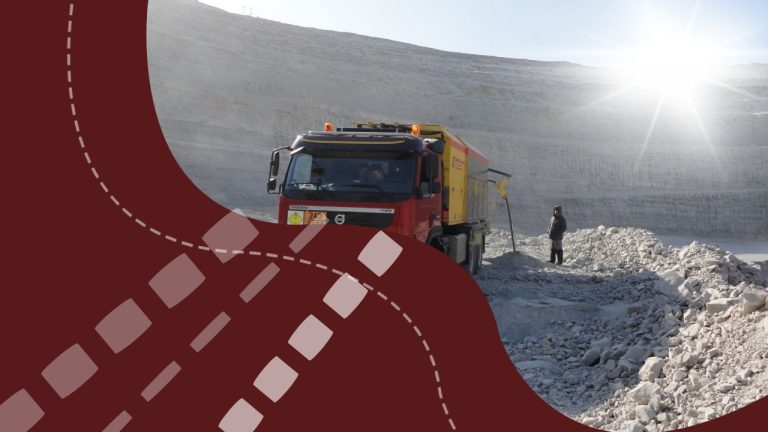
    On September 11th, China’s Zijin Mining Group announced a substantial investment of $3.8 billion (3.5 billion euros) in the development of the Cukaru Peki Lower Zone mine within the Timok copper-gold project, situated in eastern Serbia, as disclosed by the government.

    Furthermore, a separate agreement has been finalized for a 300 MW solar power plant project, aimed at fulfilling the company’s energy requirements. This solar power plant investment stands at $200 million and will facilitate the integration of renewable energy sources into mining operations.

    Zijin had previously injected $678 million into the development of the Cukaru Peki mine, which commenced operations in 2021.

    These investments are expected to establish Serbia as a significant copper producer in Europe and a notable gold producer, while also creating opportunities for additional investments, as emphasized by the government.

    The Timok project comprises both the Cukaru Peki Upper Zone and Lower Zone and is strategically located within the central zone of the Timok Magmatic Complex (TMC) in the Serbian portion of the East European Carpathian-Balkan Arc. The TMC boasts one of the highest concentrations of copper enrichment within the Tethyan Belt.

  • The geopolitical dimension of the Jadar Lithium project in Serbia

    The geopolitical dimension of the Jadar Lithium project in Serbia

    On March 16, the European Commission published a proposal for a new Law on Critical Raw Materials. EU wants to compete with China and the USA in the production of green technologies, as well as to reduce the emission of harmful gases by 2050. Critical raw materials are primarily rare metals necessary for modern green technologies, and lithium is among them. EU members are obliged to carry out geological research and mapping of new deposits in order to reduce import dependence on China through the exploitation of critical raw materials. It is also planned to form a Committee for Critical Raw Materials, which will have the right to declare certain exploitation projects as strategic and reduce the maximum period for issuing permits for the operation of such mines to 24 months. Serbia is not mentioned in the new law, but cooperation with exporters such as Namibia, Chile and Canada is announced. As Serbia is home to one of the largest lithium deposits in Europe, it is not excluded that the Jadar project will also have a geopolitical dimension. Especially since Serbia opened negotiation chapter 15 on energy on December 14, 2021, in the midst of protests against amendments to the Law on Referendum and the Law on Expropriation, which, it was believed, served to speed up the implementation of the Jadar project. Meanwhile, BIRN obtained a report from the meeting between the representatives of the Rio Tinto company and the head of the EU Delegation in Serbia, Emanuel Gioffre, held on March 25, 2022, two months after the end of the project was allegedly put on hold. The company’s representatives then said that they support the local one, but that they are afraid of the results of the national referendum.

    A fairy tale of accelerated growth

    With its GDP per capita of 7,803 euros, Serbia is 2.6 times behind a medium-developed country such as Slovakia, and even 4.7 times behind the EU average. In other words, the GDP per inhabitant of Serbia would have to grow by 10 percent per year on average over the entire decade just for Serbia to reach today’s Slovakia. Or 13 percent per year to be similar to what it was then (or only slightly less if we take into account the Balasa-Samuelson effect that would act on the appreciation of the dinar and which would eventually help to equalize the GDP per capita faster), assuming that Slovakia in that period grows a modest 2.5 percent. It is immediately clear that this kind of growth is simply not possible – neither without the Jadar project, nor with ten such projects in the next ten years. The President of Serbia has repeatedly said that the exploitation of lithium would contribute to GDP growth of 3.5 to 4 percent. “We would have 3.5-4 percent higher growth on an annual basis,” he literally said. Growth higher by 3.5-4 percentage points per year means that, say in 2022, growth would be around 6.05 percent (actual growth of 2.3 percent plus 3.75 percentage points), and growth higher by 3.5-4 percent would mean that it would be 2.39 percent (2.3 percent times 1.0375). I reasonably assume that the president meant percentage points, not percentages, as he said, for two reasons. First, the difference in economic growth between 2.3 and 2.39 percent, although welcome and many times closer to the real effects, is far from the economic miracle needed for Serbia to catch up with the middle developed European countries. Second, politicians – even when they know the difference between a percentage and a percentage point – almost always use a percentage in both cases to be more “understandable”. And now let’s demystify the claim that the opening of one company, no matter how big it is, could accelerate economic growth by 3.5-4 percentage points and thus enable Serbia to catch up with the mentioned countries. Admittedly, not to catch up with them, because Serbia needs growth of 10 or more percent for 10 years in a row. And Serbia has never achieved such a growth rate. Not during one year, let alone continuously. In fact, such rates can only be achieved by extremely underdeveloped countries with a growing and young population, such as China (two decades ago) or African countries. In addition, history is dominated by examples that show that through the direct exploitation of mineral raw materials, few countries, and even fewer populations, developed (became happy), and that instead of economy, corruption mostly develops. This is also shown by the countries of South America, which are incomparably richer in ores.

    Having shown that even an increase in growth by 3.5-4 percentage points alone is insufficient to fulfill the fairy tale, we will now show to what extent it is impossible and improbable to achieve it through the Jadar project. First, the information that this project would increase growth by so much is not even in the study on economic effects, prepared by Rio Tinto. The study evaluates the economic effects significantly more modestly – the project would increase the GDP by 2.8 percent in the phase of full realization – that is how much it would participate in the formation of the GDP. Therefore, if the Jadar project were to be realized, and everything else in Serbia remained unchanged, the GDP per inhabitant would increase from 7,800 to 8,029 euros. The opening of the mine would help, therefore, to cross only one-eightieth of the way to the “then Slovakia”! At the same time, all these assumptions in the Rio Tinto study refer not only to direct, but also to indirect (development of domestic suppliers and subcontractors) and induced effects of the project (generation of GDP through spending of income generated in the company). Assumed indirect effects (not directly dependent on the project) actually make up most of the assumed effects – out of 5,120 new jobs, only 1,170 are predicted to be created in the mine, and the remaining almost 4,000 are related to indirect and induced effects. This is not necessarily too optimistic, but, nevertheless, a project of this size must require serious planning – which new investments would it attract, which domestic suppliers could it hire, do they need support to increase capacity, acquire new equipment, and the like – otherwise these effects would be completely absent.

    Let’s take a step back, to the claim that the opening of one company can make up for Serbia’s 30-year lag by accelerating growth. The statement that the opening of one company could accelerate growth by 3.5-4 percentage points indicates economic illiteracy or deception. Because it would have to be a company with the economic strength and size of EPS, three Ziđina or six Michelin factories. And every year for the next ten years. At the same time, the business assets of EPS, together with Kolubar, are 4.5 times larger than the planned investments in the Jadar project, while the number of employees in EPS is 30 times larger! Considering the similarity of the industry, a convenient comparison with the Jadar project is China’s Zijin, as it had comparable investments and has six times more direct employees. At the macro level, Ziđin generates about one percent of Serbia’s GDP, and in the past, a record year for them, it participated in exports with 4.5 percent, and very similar effects are expected from the Jadar project. It is indisputable that the revitalization of the Bor mine was of great importance for the local economic activity – 20 percent of the employees and more than half of the wages paid in the Bor area. In the case of the Jadar project, the effects would be similar, but still somewhat smaller, since the surroundings of Loznica have a different economic structure and there would be a shutdown of certain economic, primarily agricultural, activities. By no means should we leave out the effect on the environment either – despite Ziđin’s alleged efforts to reduce pollution, Bor is the “black point of the Balkans”. The problem of growing pollution coincides with the start of work and increased production. Would it be the same in the case of Jadar, is one of the main questions to which there seems to be no credible answer.

    The fiscal moment is also important. As a major investor, Rio Tinto would effectively be exempt from paying corporate tax up to the amount it invested in the project – paradoxical but true, just like Ziđin. To conclude, the effects of those two investments would be comparable, they have positive sides – although not close to hyperbolic claims, for the fulfillment of which a clear strategy and a more meaningful fiscal policy are needed. Both investments, unfortunately, have negative effects, primarily on the environment. This analysis is neither for nor against the Jadar project per se. The situation in which Rio Tinto finances economic and environmental impact studies certainly has a negative effect on the credibility of the facts. Telling fairy tales has an equally negative impact. Maybe it would really have more significant economic effects, but there is no one to plan them and convince us of that. It might not have an irreparably negative impact on the environment, but no one can guarantee that. This is also the key development problem of Serbia. At this moment, I am closer to the point of view that Serbia is not institutionally mature for something like this.

    Economist Nebojša Katic also wrote about the economic effects of the Jadar project more than a year and a half ago. “If Rio Tinto start with exploit and export of ore from Serbia, export revenues will increase Serbian GDP, but these revenues belong to Rio Tinto and, as a rule, do not stay in Serbia.” Serbia will have mineral rent from that, maybe Rio Tinto will pay some taxes, and some will even get a salary working for Rio Tinto. This is where the financial benefits for Serbia will end and they will be incomparably less than the statistical growth of GDP,” Katic wrote in the author’s text, with the remark that “economists really like indirect effects because they can estimate, magnify and manipulate them as much as they want, or as much as they are paid”. The words of Luka Erceg, a native of Canada, originally from Loznica, master of law and economics and director of a company in the USA that manages investments, have even greater specific weight. All the more so since until 2013 he ran a company for the production of lithium in the USA, about which he also spoke to the leading world media, the New York Times, Bloomberg and CNN, and in 2012 he spoke about strategic minerals in the US Congress. “The Jadar project will never be able to compete economically with lithium extraction projects from salt water, which are being developed around the world.” I would recommend that Serbia explores old oil and gas sources, because in many of them, economically profitable amounts of lithium have been found,” Erceg claims for NIN.

    “Extraction from salt water is more economical and can withstand falling prices.” If we insist on the Jadar project, it will be shut down in a few years, because lithium from salt water will lower the price. More and more such will arrive from the “lithium triangle”, which consists of Argentina, Bolivia and Chile. Furthermore, lithium for car batteries is not obtained from rocks, because it has too many impurities,” explains Erceg, noting that everyone forgets that lithium batteries last for ten years, and that they can be recycled afterwards. “That’s why eventually we won’t need to produce as much lithium as we do today, because even after recycling it will be able to be used as if it had just been taken out of the mine.” It would therefore make more sense for Serbia to encourage factories for the production and assembly of lithium batteries, which are large and heavy, so local production has advantages. Such a technologically advanced industry would also be stimulating for students of engineering, electrical engineering, chemistry… and that is why it is better to deal with it than ores. I would praise the government for developing technological industries and in general I would recommend it to focus on “knowledge industries,” because the lithium mine will not create many new jobs,” Erceg points out. “After all, it is not impossible to have a lithium mine like the ones that exist in Australia.” But look at the pictures of the disasters those mines have created. At the same time, what exists in Australia does not exist in Serbia. Australian mines work because ore is sent to China for processing. When the ore is processed there, there are also battery manufacturers nearby. Where will Jadar send his ore or his lithium?” The already fantastic story of Serbian officials about lithium billions could hold water as much as possible while the demand and prices of that metal on the world market were breaking records month after month. Meanwhile, the situation has changed dramatically. On April 28, global media reported that the price of lithium carbonate had fallen to an 18-month low, from a record high of $86,170 to around $52,000 per metric ton. In March of this year, somehow just at the time when Vučić brought back to the public the story of the greatest missed opportunity, the price fell by 64.22 percent compared to March 2022. And at the same time, world agencies do not cite the key reason for such a price drop only a weak demand, but an abundant supply.

    At that time, experts estimated that the drop in lithium prices would be reflected in the drop in prices of electric cars, if their sales would not increase. And then, when the sale of electric cars increases, one could also expect a recovery in lithium prices… But that was obviously a long shot. Meanwhile, the decline continued on the first working day of this week, on September 4, a ton of lithium carbonate cost $27,861 on the world market, and just a month before that it was $37,612 or 35 percent more. The dramatic decline is even better evidenced by the fact that the price of lithium a little less than two years ago was almost three times higher than it is now. This time, lower demand contributed to the decline, not much higher than the lowest at the beginning of the pandemic, in April 2020. Despite this, Serbian officials have not changed their story, as if they are still basing their calculations on record lithium prices. It was as if time and everything else had stopped. Everything except an effort to revive the fairy tale about the economic effects that Serbia would have if the Government decided to change its position and still enable lithium mining. However, Minister Momirović was right when he said that “we will only see how this story unfolds in the coming period, but we cannot ignore the perspectives it opens up.”

  • China Eyes Billion Dollar Serbian Copper Mine Investment

    China Eyes Billion Dollar Serbian Copper Mine Investment

    China is gearing up for a substantial expansion of copper mining activities in Serbia as global demand for this vital metal, crucial for the global transition to green energy, outpaces supply. The race to secure materials and supply chains essential for green-energy transition has intensified, with China emerging as a dominant supplier of critical minerals required for technologies such as wind turbines, power grids, and electric vehicles.

    Zijin Mining Group, China’s largest gold miner and a significant copper producer, is set to increase copper extraction at the Cukaru Peki copper and gold mine in Eastern Serbia. This mine was inaugurated approximately two years ago, with an initial investment of US$678 million to commence operations. Now, China is eyeing further exploration, drilling nearly two kilometers deeper to tap into additional reserves.

    Branko Rakocevic, the leading Serbian official associated with the mine, revealed in media statements, “These are extensive reserves, necessitating additional infrastructure and an extra investment of approximately US$3.5 billion to US$3.8 billion.”

    Situated in the eastern Bor region, the mine comprises an upper and lower zone. Last year, production from the upper area yielded 111,000 tons of copper and 152,000 ounces of gold. Its potential annual capacity is estimated at 91,400 tons of copper and 2.5 tons of gold, with the possibility of reaching peak outputs of 135,000 tons of copper and 6.1 tons of gold.

    Once both zones reach their full capacity, the Cukaru Peki mine is poised to position Serbia as Europe’s second-largest copper-producing nation. Europe’s largest copper producer is the Skouriotissa Mine in Nicosia, Cyprus.

    Rakocevic emphasized, “Copper enjoys consistent global demand, justifying long-term investments. The market remains stable, with prices experiencing a decline from last year, but we anticipate limited volatility.”

    According to McKinsey, the global transition toward a greener economy will drive annual copper demand to 36.6 million tons by 2031. In contrast, supply is projected to reach around 30.1 million tons by the same year, up from the current 22 million tons, resulting in a potential shortfall of 6.5 million tons at the beginning of the next decade.

    Serbia, not being part of the European Union, maintains a Free Trade Agreement with the Eurasian Economic Union (EAEU), encompassing Armenia, Belarus, Kazakhstan, Kyrgyzstan, and Russia. China also holds a non-preferential Free Trade Agreement with the EAEU, a flexible arrangement allowing Beijing to negotiate tariff reductions as needed.

    In April 2023, China and Serbia initiated negotiations for a free trade agreement. Serbia stands as China’s primary trading partner in Central and Eastern Europe, with bilateral trade surging by 10.1% year-on-year to reach US$3.55 billion in 2022.

  • Adriatic Metals hails precious metals finds at Rupice

    Adriatic Metals hails precious metals finds at Rupice

    (Alliance News) – Adriatic Metals PLC on Wednesday gave an update on its Rupice northwest exploration which is part of the company’s Vares silver project.

    Adriatic Metals is a precious and base metals explorer and developer that owns the Vares silver project in Bosnia & Herzegovina and the Raska zinc deposit in Serbia.

    The company said it found 2.6 grams of gold per tonne, 409 grams of silver per tonne, about 12% zinc, 8.9% lead, 1.2% copper, 9% barium sulfate and 0.2% antimony in hole BR-30-23.

    Managing Director Paul Cronin said: “Additional exploration drilling, new geology, more tonnes at higher grades to the west of the current Rupice Northwest resource are adding significantly to the growth of Rupice. Faulting and folding have thickened and bent mineralization to vertical, with silver-gold-copper grades increasing in proximity to the deformation. Drilling will continue to define the western extent of RNW for a further resource update at the end of 2023.”

    Adriatic Metals rose 2.9% to 192.00 pence each on Wednesday morning in London.


  • Coal Miners Discover Ancient Roman Boat in Serbia

    Coal Miners Discover Ancient Roman Boat in Serbia

    For the second time since 2020, coal miners in Serbia have stumbled upon an ancient Roman boat.

    The boat’s exact age is still unknown—but based on previous finds, researchers think it could date to around the third or fourth century C.E., lead archaeologist Miomir Korac tells Aleksandar Vasovic of Reuters.

    Back then, a bustling Roman city called Viminacium sat not far from the Danube River, some 45 miles east of Belgrade. Today, the surrounding area is a rich archaeological site: Researchers have been working there since the first excavations began in the 1880s, according to the Viminacium archaeological park’s website. Once the ship is fully excavated, researchers hope to display it alongside other artifacts found at Viminacium.

    Removing it, however, will take some doing.

    “Our engineer friends … will prepare a special structure that will be lifted by a crane, and … the entire process of gradual conservation will follow,” Mladen Jovicic, a member of the archaeological team working on the ship, tells Reuters.

    Miners uncovered the first traces of the ship last month. They alerted archaeologists, who began careful excavations. Moisture in the wood and surrounding sand had helped preserve the remains, which measure nearly 43 feet long (though the ship was likely longer in its day). “A great danger was the strong sun that threatened to dry out the ship too quickly,” a spokesperson tells Maja Miljević-Đajić of the Serbian publication Sve o arheologiji, per Google Translate. Keeping the wood wet during the dig became a priority.

    At the height of its dominance, the vast Roman Empire was divided into provinces with capitals and governors. The ancient city of Viminacium was the capital of the Moesia Superior province. The archaeological team theorizes that the boat once sailed on a tributary that connected the Danube River to Viminacium, which had a population of some 45,000 residents.

    A similar incident took place in 2020, when Serbian miners accidentally unearthed the remains of three ships in the area. In that case, mining equipment caused extensive damage to the discovery.

    “Approximately 35 percent to 40 percent of the ship was damaged,” Korac told Kiona N. Smith of Ars Technica at the time. “But the archaeological team collected all the parts, and we should be able to reconstruct it almost in full.”

    Those vessels showed no damage from battle or fire, leaving archaeologists with many unanswered questions about what happened to them. One possibility is that they “were either abandoned or evacuated. They did not sink suddenly with cargo,” Korac added. “If these happened during the barbarian invasion and withdrawal of Roman troops, the ship could be abandoned and sunken in order not to fall into the hands of the enemy.”

    Many more discoveries await researchers in coming years. According to Reuters, archaeologists estimate they have only combed through 5 percent of Viminacium so far.

  • Adriatic Metals proposes $30 million placing to fund exploration

    Adriatic Metals proposes $30 million placing to fund exploration

    Adriatic Metals PLC on Monday announced it intends to conduct a placing to raise $30.0 million to fund an expanded exploration programme at the Rupice and Rupice Northwest deposits in Bosnia & Herzegovina.

    Adriatic Metals is a precious and base metals explorer and developer that owns the Vares silver project in Bosnia & Herzegovina and the Raska zinc deposit in Serbia. Shares in the firm closed down 1.7% at 169.40 pence on Monday in London.

    Monday’s placing price of £1.70 per share – or A$3.30 per CHESS depositary interest, representing such shares – represents a discount of 5.1% to the company’s average price share in the last 10 days on the Australian Securities Exchange.

    The total number of placing securities is expected to represent approximately 5.0% of the company’s existing share capital.

    Adriatic Metals said the proceeds of the placing will fund an expanded and accelerated exploration programme at Rupice and Rupice Northwest, including an additional 40,000 metres of drilling, and associated facilities and equipment. It will also contribute to the general working capital associated with exploration, as well as growth opportunities, general corporate purposes and fees.

    ‘Rupice and Rupice Northwest remain open and there are numerous regional targets such as Droskovac, SP1 and SP2 that have exciting prospects. We believe this exploration programme will deliver impactful results by more aggressively testing priority targets across our emerging high-grade polymetallic district,’ said Chief Executive Paul Cronin.

  • Uganda Seeks Serbian Investment to Develop Raw Materials

    Uganda Seeks Serbian Investment to Develop Raw Materials

    President Yoweri Museveni of Uganda has reached out to his Serbian counterpart, President Aleksandar Vucic, seeking support to advance Uganda’s economic agenda.

    During the launch of the Uganda Trade Hub in Belgrade, President Museveni urged for collaboration in adding value to Uganda’s raw materials, with the goal of increasing revenue for the country.

    “We need to add value to our agricultural products to enhance revenue generation for Uganda. I call on the Serbian Government to collaborate with us in critical sectors.” stated President Museveni.

    In a round table meeting with Serbian businessmen and women, President Museveni highlighted the importance of adding value to Uganda’s agricultural products to ensure higher returns. He urged the Serbian Government to join hands with Uganda in crucial sectors to achieve this objective.

    In response to President Museveni’s appeal, President Vucic pledged support by ensuring direct flights between Belgrade and Entebbe proposing that Serbian Career Air Serbia would fly directly to Entebbe via a code share with Uganda Airlines, aiming to enhance connectivity and reduce logistical costs for exporters. To materialize this agenda, President Vucic committed to sending a Serbian delegation to Uganda in August.

    “Serbian Career Air Serbia will fly directly to Entebbe via a code share with Uganda Airlines, strengthening connectivity and reducing logistical costs for exporters.” Stated President Vucic.

    The waterfront in Belgrade witnessed the official launch of the Uganda Connect Trade Hub, which is expected to play a significant role in marketing Ugandan products to the world.

    The hub, fully stocked with Ugandan products, is manned by Ugandan students who will coordinate bulk orders and serve as ambassadors for the nation’s exports.

    Board member of the Private Sector Foundation Uganda (PSFU), Badru Ntege, expressed his enthusiasm about the trade hub.

    Chairman of the Presidential Advisory Committee on Exports and Development, Odrek Rwabwogo, described the trade hub as the first step toward a bigger vision, representing a disruptive force in the traditional flow of trade. This venture is set to stimulate and invigorate Uganda’s export sector significantly.

    “The trade hub marks the first step into a bigger picture, disrupting the usual flow of trade,” noted Rwabwogo.

    As the Uganda flag flew high in Belgrade, local producers back home were encouraged to collaborate and establish consortiums that meet global standards, essential for accessing this new market. The strategic partnership with Serbia holds immense potential to drive Uganda’s socio-economic transformation.

    With the trade hub now operational and the commitment of the Serbian Government to support Uganda’s endeavors, the stage is set for a dynamic surge in Uganda’s exports, paving the way for increased revenue and economic prosperity in the East African nation.

  • Serbia to invest EUR 320 million in electricity distribution network

    Serbia to invest EUR 320 million in electricity distribution network

    Minister of Mining and Energy of Serbia Dubravka Đedović said EUR 320 million would be invested to strengthen the power distribution grid. The country’s parliament is about to pass a law on guarantees for a EUR 50 million commercial loan for the purpose.

    The stability of supply has been stabilized after interruptions in several areas in Serbia, caused by several violent storms, according to Minister of Mining and Energy Dubravka Đedović. She said the government would invest EUR 320 million in strengthening the distribution network.

    “We had major problems in identifying the locations where the grid was disconnected. We began big new investments in the distribution network, in which we are investing EUR 320 million to strengthen and automatize it and replace transformers and old meters. This way we will reduce losses and identify future outages more easily,” Đedović stated, as quoted by the ministry.

    Of note, Schneider Electric recently announced that it signed a EUR 140 million contract with Serbia for the delivery of medium voltage equipment and grid management software for the power distribution system.

    Serbia to provide guarantees for commercial loans for EDS

    The National Assembly is currently debating a proposal to provide guarantees for a loan package for distribution system operator Elektrodistribucija Srbije (EDS) of EUR 50 million. The proceeds are intended for the replacement of wooden poles with ones made of concrete, switching noninsulated conductors with self-supporting power cable bundles and the adaptation of household connection devices.

    The upcoming investments are intended for cutting losses in the distribution grid and to identify locations of breakdowns in the system

    The firm agreed through a tender to borrow EUR 40 million from Hungarian OTP Bank’s subsidiary in Serbia and EUR 10 million from the local branch of Italy-based Banca Intesa. The loans are due in seven years including a repayment delay for the first three years. The financing facility is intended for the renewal of the network in and around the cities of Kraljevo, Niš and Kragujevac, the documentation shows.

    The minister earlier said lawmakers would soon vote on bills that would enable the introduction of smart electricity meters throughout the country. She added that the implementation should start by early 2024.

    The project is worth EUR 110 million. EDS signed a loan agreement with the European Bank for Reconstruction and Development in 2021 for EUR 80 million.