Tag: renewable energy

  • Poland’s Coal Mine Leisure Lake Proposal Sparks Debate Over Economic Viability

    Poland’s Coal Mine Leisure Lake Proposal Sparks Debate Over Economic Viability

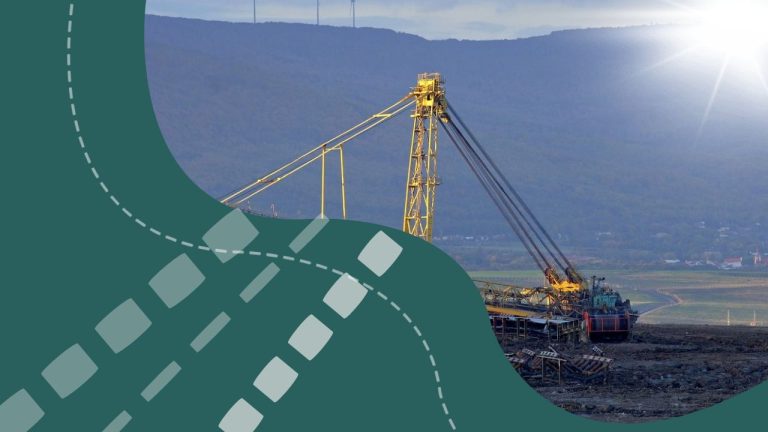
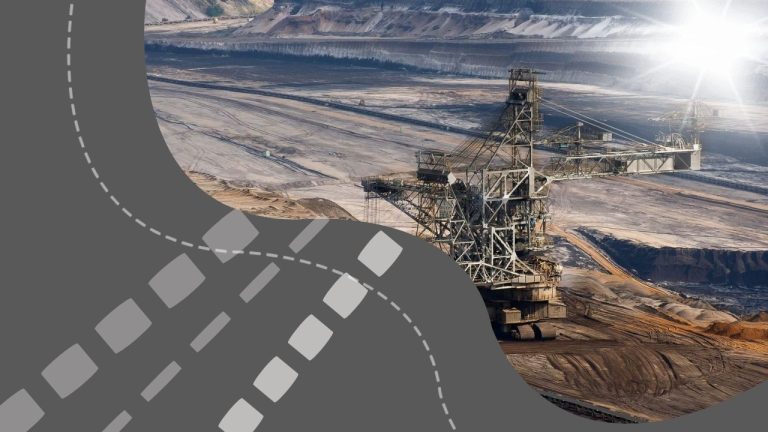
    Poland’s Bełchatów, Europe’s largest coal mine, is slated for a transformation into a leisure lake by 2070 under the state-owned utility PGE’s plan. While PGE views the lake as a way to reuse the land, critics argue the project diverts from urgently needed green energy infrastructure that could bring more immediate economic benefits. Local officials emphasize renewable energy would create more jobs and help the area transition economically, while the lake project’s timeline raises concerns in the coal-dependent community.

  • UK Introduces Export Credit Financing to Secure Long-Term Critical Mineral Supply

    UK Introduces Export Credit Financing to Secure Long-Term Critical Mineral Supply

    The UK government has launched export credit financing through UK Export Finance (UKEF) to support critical mineral imports vital to industrial growth and the green energy transition. This financing aims to secure reliable sources of minerals like lithium, graphite, and cobalt, essential to sectors such as automotive, aerospace, and technology. The credit guarantees provided by UKEF will support overseas mineral projects, allowing UK manufacturers easier access to stable, sustainable supply chains and facilitating partnerships with countries like Australia, known for their rich lithium deposits. Business and Trade Secretary Jonathan Reynolds emphasized the critical minerals race, underscoring the government’s commitment to building partnerships for sustainable industry growth. Additionally, this initiative aligns with the Minerals Security Partnership, an international coalition supporting secure and resilient mineral supply chains. UKEF will collaborate with other export credit agencies to mitigate financing risks, ensuring that UK companies are well-placed in securing these vital resources for future development.

  • Serbia and Germany Collaborate on HyDSerbia Green Hydrogen Pilot Project

    Serbia and Germany Collaborate on HyDSerbia Green Hydrogen Pilot Project

    Serbia’s first green hydrogen project, HyDSerbia, launched with Germany’s Leipziger Energiegesellschaft and funded by the German government, aims to construct a pilot hydrogen plant with solar power capabilities. The project, funded with €3.5 million, will run until June 2026, focusing on small-scale hydrogen production and laying the groundwork for industrial expansion. Germany’s KfW Development Bank, expressing interest in Serbian renewable energy, views HyDSerbia as part of its broader push to stimulate hydrogen value chains in Southeast Europe.

  • UK Budget to Support Critical Mineral Imports to Strengthen Industry and Reduce Reliance on China

    UK Budget to Support Critical Mineral Imports to Strengthen Industry and Reduce Reliance on China

    The upcoming UK budget, spearheaded by Chancellor Rachel Reeves, will introduce greater financial support for companies importing essential minerals like lithium, graphite, and cobalt. These minerals are vital for sectors such as defense, aerospace, EVs, and renewables, and the initiative aims to reduce the UK’s dependence on China. Importers with long-term contracts with UK exporters can access UK Export Finance, enhancing partnerships with Commonwealth suppliers. This budget will also include broader economic measures, including tax adjustments and increased borrowing to boost public services and infrastructure.

  • Poland’s PGE to Phase Out Coal-Fired Power Units by 2025

    Poland’s PGE to Phase Out Coal-Fired Power Units by 2025

    Poland’s largest power utility, PGE, plans to cease electricity production at its four remaining coal-fired units at the Rybnik power plant by the end of 2025, according to a report from the Polish Press Agency. The units, which collectively generate 900 megawatts (MW), have capacity market contracts running until this deadline. While coalcontinues to dominate Poland’s electricity generation, profitability is declining as state-controlled utilities like PGE shift towards renewable energy. Additionally, banks are increasingly reluctant to finance coal-based operations.

    PGE has already phased out four coal-fired units at the Rybnik plant and is preparing to replace them with an 882 MW gas-fired unit, scheduled for commissioning by the end of 2026. The company reiterated that the decision to end coal production was made in 2020. The timeline for ending heat production at the coal-fired units has been extended to August 31, 2026.

  • Germany May Turn to Its Own Lithium Deposits Amid Growing Interest

    Germany May Turn to Its Own Lithium Deposits Amid Growing Interest

    A growing discussion is emerging in Germany regarding the exploitation of its lithium deposits, particularly among media professionals and government circles. The question raised is why Germany should rely on Serbian lithium when it possesses its own deposits, allowing for greater control and profit. Notably, the country has vast lithium reserves, primarily located along the Rhine River near Insheim and Altenberg. Research is already underway at these sites, which are considered some of the largest in Europe.

    The delay in tapping these resources stems from concerns about environmental and safety risks. In Insheim, fears of earthquakes triggered by geothermal drilling have been a major obstacle. However, new hydrothermal methods, which use existing water pathways underground, are seen as a safer alternative. Another challenge is the carbon footprintassociated with lithium extraction, but Vulcan Energy Ltd has pioneered a process that extracts lithium with zero carbon emissions by using geothermal energy, as reported by Rob Schmitz of NPR.

    On the political front, German Chancellor Olaf Scholz recently visited the Altenberg site following a memorandum signed with Serbia. The Zinnwald Lithium mine, set to open in 2030, could supply lithium for up to 600,000 electric vehicles, offering a more self-reliant source for Germany’s electric vehicle industry. This shift toward domestic lithium could reduce Germany’s reliance on foreign sources, including Serbia, and secure more of the profit chain for itself.

  • Aurubis Maintains Record-High Copper Premium for 2024 Amid Strong Demand

    Aurubis Maintains Record-High Copper Premium for 2024 Amid Strong Demand

    Aurubis, Europe’s largest copper smelter, announced on Thursday that it will maintain a premium of $228 per metric ton over the London Metal Exchange (LME) price for copper sold to European customers in 2024. This premium remains unchanged from the previous two years, as previously reported by Reuters.

    A spokesperson for Aurubis confirmed that the premium remains at a “record high level” due to the consistently strong demand for copper products across Europe. She cited the ongoing transition to renewable energy as a key factor driving this heightened demand.

    As of Thursday, copper was trading at approximately $9,900 per ton on the LME, a decline of 10% since reaching a record high of $11,100 in May.

  • Eurogroup Laminations Partners with ArcelorMittal to Meet Rising Demand for Electric Motor Solutions

    Eurogroup Laminations Partners with ArcelorMittal to Meet Rising Demand for Electric Motor Solutions

    The demand for stators and rotors, essential components of electric motors and generators, is experiencing a surge, particularly from global Original Equipment Manufacturers (OEMs) in the automotive industry, driven by the electric vehicle (EV) revolution. There is also a growing need for advanced motor cores across various industries due to the rapid advancement in renewable energy and automation. In response to this demand, Eurogroup Laminations has entered into a partnership with ArcelorMittal to provide innovative motor core solutions, combining Eurogroup’s expertise in motor core design with ArcelorMittal’s production capacity in non-oriented electrical steels (NOES). According to Marco Barabino, Key Account Manager Electrical Steel at ArcelorMittal Europe, the partnership is crucial for meeting EU deadlines for transitioning away from conventional internal combustion vehicles by 2035. This collaboration will enable a significant increase in electrical steel production, with plans for a new facility in Mardyck, France, aimed at tripling annual capacity to 300,000 tonnes. As the world shifts towards an energy transition, Eurogroup’s CEO Marco Arduini emphasizes the importance of expanding production capabilities while focusing on tailored investments across global operations. ArcelorMittal’s iCARe range of electrical steels has been specifically designed for the automotive market, offering solutions that meet the performance and efficiency demands of modern EVs. The partnership aims to deliver customized motor core solutions to meet the diverse needs of customers in the automotive sector and beyond

  • Poland’s Top Coal Producer Bogdanka Takes $305 Million Hit as Renewables Rise

    Poland’s Top Coal Producer Bogdanka Takes $305 Million Hit as Renewables Rise

    Poland’s most profitable coal producer, Lubelski Węgiel Bogdanka SA, announced a significant write-off of $305 million from the value of its assets due to the increasing influence of wind and solar power in the energy market. The company, which is under the control of state-run utility Enea SA, attributed the 1.17 billion zloty ($305 million) provision to “dynamic changes” in the domestic coal market, highlighting a “clear trend” toward growing renewable energy capacity.

    Last year, Bogdanka’s profit surged to a record 687 million zloty due to high coal prices. However, analysts predict a significant decrease in profit for 2024, even before considering the recent write-off. Despite Poland’s new government promoting clean energy, an official energy policy with specific targets for the upcoming decades has yet to be published. Nevertheless, coal’s share in the country’s electricity mix has already dropped to 66% last year, down from over 70% the previous year, as investments in photovoltaic and wind energy increase.

    The pressure on coal is expected to intensify with the introduction of the first offshore wind turbines and the completion of gas-fired power units in the coming years. Additionally, Poland plans to inaugurate its first nuclear power plant next decade, aligning with the European Union’s climate neutrality goal by mid-century. Bogdanka, listed on the Warsaw Stock Exchange, plans to revise its strategy by the end of 2024 in response to these changes. The company’s shares have dropped 27% this year, resulting in a market valuation of 846 million zloty, while the WIG20 Index has risen by 1.4%during the same period.

  • Poland’s Top Coal Producer Bogdanka Faces $305 Million Write-Off Amid Renewable Energy Surge

    Poland’s Top Coal Producer Bogdanka Faces $305 Million Write-Off Amid Renewable Energy Surge

    Poland’s leading coal producer, Lubelski Wegiel Bogdanka SA, has announced a substantial $305 million write-offfrom the value of its assets, as the rise of wind and solar energy accelerates the decline of coal in the market. Bogdanka, which is controlled by state-run utility Enea SA, cited “dynamic changes” in the domestic coal market and the increasing capacity of renewable energy sources as the primary reasons for this financial adjustment.

    The company’s profits had nearly tripled last year, reaching a record 687 million zloty, largely due to high coal prices. However, analysts predict a significant reduction in profits for 2024, even before accounting for the recent write-off.

    While Poland’s new government has been promoting clean energy, it has yet to release a formal energy policy with specific targets for the coming decade. Nonetheless, coal’s share in Poland’s electricity mix has already dropped to 66%last year, down from over 70% the previous year, as investments in photovoltaic and wind farms increase. The pressure on coal is expected to intensify as offshore wind turbines and gas-fired units become operational, and Poland looks towards establishing its first nuclear power plant in the next decade to align with the European Union’s climate neutrality goals.

    Bogdanka plans to revise its strategy in response to these new market conditions by the end of 2024. The company’s shares have dropped 27% this year, reducing its market valuation to 846 million zloty, while the WIG20 Index rose by 1.4% during the same period.