Tag: renewable energy

  • Decarbonising the Mining Industry: Challenges and Innovations

    Decarbonising the Mining Industry: Challenges and Innovations

    The drive to decarbonise the global economy is unearthing new challenges in the mining sector, an industry pivotal to the green transition. Mining provides critical minerals for renewable technologies like solar panels, wind turbines, and electric vehicles. Yet, the sector is responsible for 4-7% of global emissions, primarily from methane released by coal mines. While methane emissions are expected to decline over the next 25 years, attention is turning to the decarbonisation of other mining operations essential for the energy shift.

    The International Energy Agency projects that achieving net-zero emissions by 2050 will require a 50% increase in copper demand by 2040, a doubling of nickel and cobalt needs, and an eightfold surge in lithium demand. Amid these projections, Australian iron ore giant Fortescue Metals Group has positioned itself as an industry leader. Unlike many companies relying on carbon offsets, Fortescue aims for “real zero” by 2030, cutting emissions from its massive Pilbara region operations. Fortescue’s Chairman, Andrew Forrest, has been vocal against the concept of “net-zero,” advocating for tangible emission cuts instead.

    Fortescue’s strategy includes replacing diesel and gas with 2-3 gigawatts of solar and wind power, backed by significant battery storage. The company has also pioneered innovative technologies, such as regenerative battery-powered trains that capture gravitational energy during descents. These designs are part of its $6.2 billion decarbonisation plan, aiming to set new standards for emissions reductions in mining.

    Other global mining operations are also adopting renewables. In the Democratic Republic of Congo, the Kamoa Copper mine signed a deal with CrossBoundary Energy for a 222-megawatt solar array and massive battery system to reduce emissions by around 78,750 tonnes annually. Matthew Tilleard of CrossBoundary Energy called it a “baseload renewable energy solution,” marking a significant step for off-grid mining operations.

    Efforts are also underway to decarbonise mining vehicles. The International Council on Mining and Metals (ICMM) has partnered with manufacturers to develop zero-emission vehicles, with full-scale deployment expected by 2030. Bryony Clear Hill of ICMM noted that battery electric technology is gaining traction, with prototypes already in testing.

    However, the path to decarbonisation remains uneven. Regional differences, infrastructure challenges, and government policies significantly affect progress. According to Gregoire Bellois of the Intergovernmental Forum on Mining, Minerals, Metals and Sustainable Development, some companies make genuine strides, while others only achieve “on paper” progress through divestment. Chinese companies, which are rapidly consolidating control over key minerals like cobalt, remain hesitant to decarbonise due to a lack of regulatory pressure.

    Looking ahead, the European Union’s proposed Carbon Border Adjustment Mechanism (CBAM) could reshape global mining. If implemented, CBAM would levy carbon-intensive companies exporting to the EU, potentially pushing high-emission operations toward markets with fewer regulations.

    While the road to “real zero” is fraught with obstacles, experts agree that every effort to reduce emissions is crucial. As mining scales up to meet unprecedented global demand, the pressure to innovate and cut carbon footprints is more significant than ever.

  • EU and South Africa Forge Clean Energy Partnership, Highlighting Role of Platinum Group Metals in Green Hydrogen

    EU and South Africa Forge Clean Energy Partnership, Highlighting Role of Platinum Group Metals in Green Hydrogen

    The European Union (EU) and South Africa have strengthened their collaboration with a R94-billion (€4.7-billion) investment package announced at the EU-South Africa Summit in Cape Town. European Commission President Ursula von der Leyen emphasized that clean energy and green hydrogen will form the cornerstone of this partnership, leveraging South Africa’s abundant renewable resources and its 91% share of global platinum group metals (PGM) reserves.

    Von der Leyen highlighted the potential for South Africa to create quality jobs through the beneficiation of its metals and minerals, particularly in the clean hydrogen value chain. “You have clean energy in abundance, from wind to sun. You have raw materials critical for electrolysers, including PGMs, and a rising industry to produce clean hydrogen,” she stated. The Clean Trade and Investment Partnershipaims to support South Africa in adding value to local production, with a focus on clean energy, raw materials, and green hydrogen.

    The partnership aligns with South Africa’s Just Energy Transition, with €4.4-billion of the investment package dedicated to renewable energy projects. This initiative is part of the Scaling up Renewables in Africa campaign, launched by Von der Leyen and South African President Cyril Ramaphosa at last year’s G20 Summit. The collaboration also includes investments in connectivity infrastructure and the local pharmaceutical industry.

    PGMs play a critical role in the hydrogen economy, particularly in proton exchange membrane (PEM) technology for electrolysers and fuel cells. The World Platinum Investment Council (WPIC) notes that PGMs are essential for producing green hydrogen and enabling its use in decarbonization efforts. By 2030, hydrogen-related platinum demand is projected to exceed 600,000 ounces, driven by applications in mobility, stationary power, and midstream processes like ammonia cracking and liquid organic hydrogen carriers (LOHC).

    South Africa’s Anglo American Platinum and venture capital firm AP Ventures are already supporting the commercialization of LOHC technology, which allows hydrogen to be transported using existing fuel infrastructure. This innovation, alongside the production of e-fuels like sustainable aviation fuel, underscores the versatility of PGMs in the energy transition.

    Von der Leyen expressed her commitment to co-hosting the Scaling up Renewables in Africacampaign with Ramaphosa, aiming to bring clean, affordable power to the continent. “Together, we’ll help accelerate Africa’s clean energy journey,” she said.

  • Kazakhstan to Supply EU with Critical Raw Materials Under New Agreements

    Kazakhstan to Supply EU with Critical Raw Materials Under New Agreements

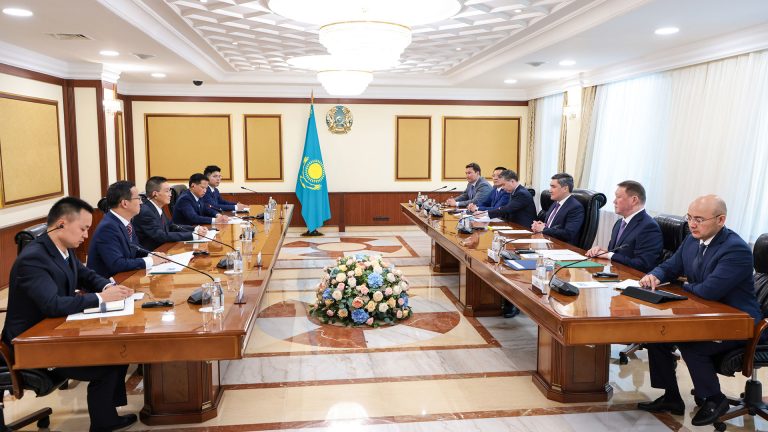
    Kazakhstan has signed a landmark agreement to supply the European Union (EU) with critical raw materials, essential for modern industries and technologies. The deal was finalized during a visit by European Commissioner for International Partnerships Jutta Urpilainen to Kazakhstan, as reported by the EU Representation in the country.

    The agreement includes a €3 million contract aimed at fostering cooperation between the EU and Central Asia in the field of critical raw materials. Funding will be provided by the European Bank for Reconstruction and Development (EBRD), with a focus on joint projects to establish reliable supply chains for these resources. Critical raw materials, such as rare earth metals, copper, aluminum, uranium, phosphorus, and potassium, are vital for sectors like technology, energy, defense, and transportation.

    Urpilainen emphasized the importance of the partnership, stating, “Europe needs reliable access to critical raw materials to modernize its economy. We are committed to mutually beneficial cooperation with Kazakhstan in their extraction and development. This partnership supports all Central Asian countries, boosts Kazakhstan’s economy, strengthens its industrial potential, and creates new opportunities for businesses, innovation, and high-quality jobs.”

    In addition to the raw materials agreement, the EU and Kazakhstan signed a €200 million loan deal between the European Investment Bank (EIB) and the Kazakhstan Development Bank. The EU will provide an €18 million guarantee for the loan, which Kazakhstan plans to allocate toward developing transport infrastructure and renewable energy sources.

    During the visit, Kazakh President Kassym-Jomart Tokayev also met with Urpilainen at the Akorda Presidential Palace, underscoring the growing partnership between Kazakhstan and the EU.

  • Kazakhstan’s Solidcore Resources Invests in Renewable Energy with Bank Loan

    Kazakhstan’s Solidcore Resources Invests in Renewable Energy with Bank Loan

    Solidcore Resources plc, a gold mining company, has announced a significant investment in renewable energy projects. The company has secured a seven-year loan from Kazakhstan’s CentreCredit Bank to fund several renewable energy initiatives.

    The funds will be used to launch renewable energy projects at the Bakyrchik and Varvarinskoye deposits. At Bakyrchik, a 17 MW solar power plant will be constructed, while at Varvarinskoye, a 23 MW solar plant will be built alongside a 40 MW gas piston unit to ensure energy supply during periods of low sunlight.

    Approval for infrastructure related to the Kyzyl project is expected to take place this year, with alternative energy generation expected to begin in 2026.

    This deal marks the first debt financing transaction after Polymetal International plc was rebranded and its key development strategy was updated. Going forward, Solidcore plans to collaborate with CentreCredit Bank and other local banks.

    The mining company estimates that atmospheric emissions will be reduced by 27% compared to 2023 levels. The renewable energy projects are expected to reduce dependence on external energy sources, particularly coal-fired power plants, and mitigate the impact of rising energy costs.

  • Kazakhstan Takes the Lead in Global Sustainability Efforts

    Kazakhstan Takes the Lead in Global Sustainability Efforts

    Kassym-Jomart Tokayev, President of Kazakhstan, participated in the inauguration of Abu Dhabi Sustainability Week, highlighting a bold new development paradigm during his speech on 14 January. The president emphasized Kazakhstan’s commitment to addressing global climate challenges, including desertification, biodiversity loss, water scarcity, and food insecurity.

    As 2025 unfolds, Kazakhstan is actively aligning with European climate standards, implementing both national and international policies to combat global warming. Tokayev underscored Kazakhstan’s strategic importance, with its critical raw materials essential for the global energy transition. These materials include chrome, lead, zinc, and uranium, vital for achieving net-zero greenhouse gas emissions.

    Kazakhstan is also advancing its renewable energy sector, with 148 active projects totaling 2.9 GW of capacity and ambitious plans for 26 GW by 2035. Notably, companies have committed to 43 GW of green energy projects, supporting Kazakhstan’s goal of carbon neutrality by 2060. The country is exploring nuclear energy, with plans for its first nuclear power plant, and boasts one of the largest wind farms near its capital.

    President Tokayev also addressed environmental priorities, such as biodiversity conservation and reviving the Aral Sea. Additionally, Kazakhstan is positioning itself as a critical transport hub, connecting Asia and Europe via the Trans-Caspian Middle Corridor.

    With growing vulnerability to climate change in Central Asia, Kazakhstan is advancing policies to protect ecosystems and promote international cooperation. Tokayev’s leadership signals a proactive approach to renewables, food security, and climate resilience.

  • Germany’s Energy Transition Slows Amidst Sectoral Challenges

    Germany’s Energy Transition Slows Amidst Sectoral Challenges

    Germany’s progress in reducing greenhouse gas emissions slowed in 2024, with a 3% reduction compared to 10% in 2023, as reported by Agora Energiewende. The country achieved an 18-million-ton CO₂ reduction, exceeding its climate targets primarily due to the energy sector’s strong performance. Renewables accounted for 59% of electricity production, and coal’s share fell below 23%.

    However, transport and buildings showed no significant improvement, while industrial emissions rose slightly by 2%. A 44% drop in heat pump sales and a 26% decline in EV registrations highlighted challenges in decarbonization. Political debates over funding sustainable solutions add uncertainty, with upcoming elections intensifying the discourse.

    Despite a 48% emissions reduction since 1990, Germany must accelerate efforts to meet the EU’s 2030 target of 55%. Experts warn that delays in reforming key sectors could jeopardize strategic goals.

  • Germany Supports Savannah Resources’ Barroso Lithium Project with $270 Million Loan Guarantee

    Germany Supports Savannah Resources’ Barroso Lithium Project with $270 Million Loan Guarantee

    Germany’s export credit agency, Euler Hermes, has signed a non-binding letter of interest for a loan guarantee of up to $270 million to support Savannah Resources in developing the Barroso lithium project in northern Portugal. The guarantee covers 80% of a loan, making it an attractive proposition for Germany’s KfW IPEX-Bank and other financial institutions. KfW IPEX-Bank, a key development partner, has played a pivotal role in facilitating this process.

    This initiative reflects Germany’s and the European Union’s urgency to establish a domestic lithium supply chain and reduce dependence on imports, primarily from China, which currently supplies 97% of Europe’s lithium. Emanuel Proença, CEO of Savannah Resources, highlighted the importance of the move, linking it to the recently enacted European Critical Raw Materials Act. The legislation mandates that 10% of the EU’s critical raw materials must be sourced domestically and 40% processed within Europe by 2030.

    Savannah’s Barroso project, situated about 145 km from the deep-water port of Leixões near Porto, is a cornerstone of Europe’s efforts to bolster its lithium supply. A 2023 scoping study revealed the project’s potential to produce 26,000 tonnes of lithium carbonate equivalent annually over a 14-year lifespan, with an after-tax net present value of $953 million and a robust internal rate of return of 77.3%.

    Despite current lithium market oversupply and plummeting prices, Proença predicts a market rebound by the time Barroso begins production in 2027. He noted a likely deficit in lithium supply from 2027 onwards, supported by strategic developments such as the opening of AMG Critical Materials Group’s lithium hydroxide refinery near Berlin.

    The loan guarantee follows Savannah’s strategic partnership with AMG, which secured a 15.8% stake in the company and an annual offtake of 45,000 tonnes of spodumene concentrate for five years, with potential extensions.

    The Barroso project aligns with Europe’s broader commitment to building a sustainable battery value chain, as evidenced by similar initiatives across Serbia and the U.S., including significant funding for Lithium Americas’ Thacker Pass-project in Nevada.

  • Greenpeace Protests in Poland: “Coal Is Finished, Stop Deceiving!”

    Greenpeace Protests in Poland: “Coal Is Finished, Stop Deceiving!”

    On Wednesday, December 4, Greenpeace activists staged a bold protest at the Ministry of Industry in Katowice, unfurling a large banner reading, “Coal is finished, stop deceiving!” The protest, coinciding with Barbórka, a traditional miners’ celebration, calls on Prime Minister Donald Tusk’s government to adopt a more realistic timeline for mine closures and prioritize a fair transition for the mining sector.

    Greenpeace demands the government redirect billions of zlotys in subsidies for mining companies toward renewable energy investments, job re-skilling programs, and energy-efficient housing projects. The NGO highlights that coal-fired power stations are set to shut down by 2035, based on updated analyses, and calls for urgent action to prepare miners for new opportunities.

    “Poland’s energy policy is based on the lie that coal has a future,” stated Marek Józefiak, Greenpeace Poland’s spokesman. He criticized the government for propping up unprofitable mines with PLN 18 billion (EUR 4.5 billion) in state aid this year and PLN 137 billion (EUR 34 billion) over the coming decades, as outlined in the 2021 social agreement on mining.

    The Polish Industrial Development Agency reported a PLN 9.2 billion (EUR 2.1 billion) loss in the coal mining sector in the first three quarters of 2024. Meanwhile, the share of hard coal in power generation is rapidly declining, with exports becoming unfeasible due to high prices. A Greenpeace report, The Last Decade of Coal, predicts that most coal-fired plants in Poland will close before 2030, with the last closures by 2035.

    Greenpeace’s Anna Meres, a climate campaign coordinator, warned that failing to invest in renewables like onshore wind could result in Poland relying on expensive, imported natural gas, jeopardizing the country’s energy security. She emphasized the need for a strategy that provides clean electricity and creates new employment opportunities for miners, citing potential job growth of 50,000 to 100,000 roles in renewables by 2030.

  • Islands Decarbonization Fund Launched in Greece with €1.6 Billion Financing

    Islands Decarbonization Fund Launched in Greece with €1.6 Billion Financing

    The Islands Decarbonization Fund was officially launched on the island of Naxos, supported by the European Investment Bank (EIB), the Greek government, and the European Commission. This initiative, described as a smaller-scale version of the European Union’s Recovery and Resilience Facility (RRF) by Deputy Minister of Environment and Energy Alexandra Sdoukou, is focused on advancing green development across Greek islands.

    The fund, with contributions from EIB and public resources, is expected to total €1.6 billion, with an aim to mobilize investments of €3 billion to €5 billion. The government plans to fund its share by gradually selling 25 million carbon allowances (EUAs) under the European Union Emission Trading System (EU ETS).

    During the launch ceremony, Prime Minister Kyriakos Mitsotakis emphasized the initiative’s dual benefits, stating, “We are making lives better through this initiative. At the same time, we improve our economy and strengthen our energy security.”

    Key projects include:

    • €550 million for interconnecting the Dodecanese islands and islands in the northern Aegean Sea to the mainland grid, as part of a €2 billion project by the Independent Power Transmission Operator (IPTO).
    • €135 million for renewable energy self-consumption projects, including battery systems for households, businesses, municipalities, and farmers.
    • €140 million for solar and wind farms with battery systems in connected islands, offering grants covering 40% of costs.
    • €210 million for hybrid renewable energy plants with batteries on non-interconnected islands such as Rhodes, Kos, and Lesbos, covering 42% of costs.

    These initiatives aim to replace diesel power generators, meeting 30% to 40% of electricity needs with renewable energy. Additionally, €260 million is allocated for an offshore wind farm, €100 million for water supply and pumped-storage hydropower plants, €30 million for a car charging network, and €100 million for providing green electricity to ships in harbors.

    The projects are projected to reduce CO2 emissions by one million tonnes annually and save consumers €3.8 billion in energy costs over 25 years. Minister of Environment and Energy Thodoros Skylakakis noted the initiative’s impact on tourism, stating, “This effort will send a green message with great importance when it comes to our tourism as well.”

  • World Leaders at COP29 Advocate for Nuclear Power as Key to Global Climate Goals

    World Leaders at COP29 Advocate for Nuclear Power as Key to Global Climate Goals

    At COP29 in Baku, world leaders emphasized that nuclear power is crucial to meeting global climate goals by providing a clean and safe energy alternative. Czech Prime Minister Petr Fiala, speaking at the High-Level Segment, stressed nuclear power’s role in the energy transition and offered his country’s expertise in this field, given its 50 years of nuclear experience. “Nuclear power is essential to meet our climate goals, as it produces extremely clean energy and is also very safe,” he stated. The Czech Republic intends to phase out coal in favor of renewables and nuclear energy and is ready to assist other nations in similar efforts.

    Italian Prime Minister Giorgia Meloni echoed Fiala’s call for a unified global effort to combat climate change. She emphasized that new technologies, including nuclear power, are essential to reach ambitious goals, such as tripling renewable energy by 2030. Meloni advocated for “technology neutrality” to allow a diverse energy mix during the transition away from fossil fuels.

    Greek Prime Minister Kyriakos Mitsotakis highlighted Greece’s achievements in reducing emissions by 45% since 2005 and transitioning nearly 50% of its electricity generation to wind and solar. Mitsotakis acknowledged Europe’sglobal leadership in green energy but warned that the continent must increase resources to counteract “unprecedented climate shocks.” His four priorities for Europe include greater regulatory flexibility, a unified energy market, and enhanced industry support for climate adaptation.

    Croatian Prime Minister Andrej Plenkovic underscored Croatia’s commitment to decarbonization and rapid renewable energy adoption, affirming that economic growth and environmental sustainability can coexist.