Tag: renewable energy

  • Romania Plans to Phase Out Coal Power Plants by 2026

    Romania Plans to Phase Out Coal Power Plants by 2026

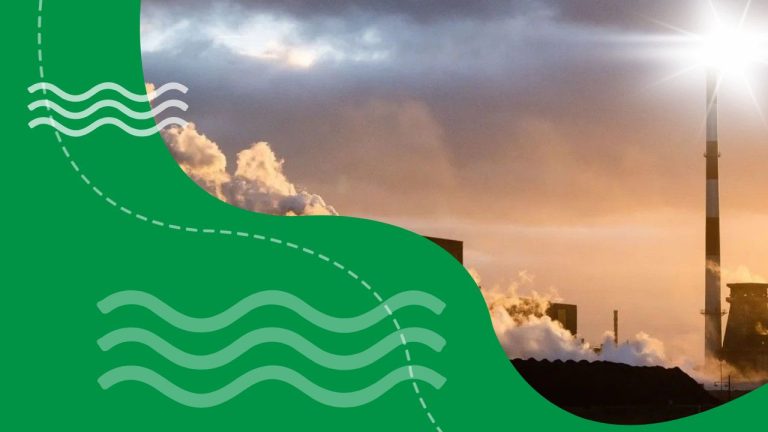
    Transelectrica reportedly doesn’t see coal power plants having any share in Romania’s transmission system in 2026and beyond. The official phaseout deadline is 2032.

    Romania’s electricity transmission system operator Transelectrica is working on a ten-year plan through 2033. According to media reports, the draft shows coal power gone already in 2026. A similar announcement has just emerged in Greece, while Bulgaria is struggling even to keep its sole state-owned facility online.

    Until a few years ago, the three countries were hesitating to determine coal phaseout dates or delaying them. Now even newer or reconstructed plants of the kind across Europe are reducing capacity utilization or abruptly shutting down. For instance, the ContourGlobal Maritsa East 3 coal-fired power plant in Bulgaria recently fired almost all its employees.

    Expenses are high because of the allowances that producers must buy via the European Union’s Emissions Trading System (EU ETS). They also face ever stricter environmental requirements, making coal power uncompetitive.

    On the other hand, an uncontrolled collapse of the sector could jeopardize the security of energy supply. The rapid cut in coal power capacities makes the region’s energy consumers vulnerable to cold spells in the winter.

    Romania leans on gas power to cover the 2026 coal exit. The market has decimated coal plant production. In Romania in particular, it is evident from the forced transformation of state-owned coal miner and power plant operator Complexul Energetic Oltenia (CE Oltenia).

    Active coal plants had an overall 1.9 GW in April, compared to 5.3 GW in 2012. CE Oltenia plans to replace them with gas power facilities in Ișalnița and Turceni by 2026. With projects of other Romanian energy companies like Electrocentrale Bucharest (ELCEN), the new capacity is seen at 4.5 GW.

    Romania is officially planning to complete its coal phaseout in 2032.

    Minister of Energy Sebastian Burduja recently said Transelectrica’s report would determine the parts of the national electricity system that are in deficit. The last heat wave disturbed the wholesale trade in the region and catapulted power prices.

    Burduja insisted that the situation would have been much worse without renewables. The authorities want to eliminate coal by 2026 because Romania will double its interconnection capacity with neighboring countries to 7 GW next year, according to Radu Miruță, a member of parliament from the opposition Save Romania Union (USR) and its head in Gorj county, a major coal hub. The country is upgrading the interconnections to buy, not to sell, in Miruță’s view.

    The fate of coal industry workers and entire communities hangs in the balance. The implications are serious for national economies as well. The European Union’s just transition programs seem to need a boost.

  • Solvay to Supply Europe with Rare Earth Metals for EVs and Wind Turbines from French Plant

    Solvay to Supply Europe with Rare Earth Metals for EVs and Wind Turbines from French Plant

    Belgian chemicals group Solvay has announced plans to supply Europe with rare earth metals for permanent magnetsused in electric vehicles (EVs) and wind turbines, as part of a strategy to reduce reliance on China. The company plans to commence regular production at its refurbished plant in La Rochelle, France, by early 2025, aiming to meet 30% of Europe’s needs for permanent magnets by 2030. This facility is unique in Europe for its ability to process both light and heavy rare earth materials at an industrial scale. Solvay’s CEO, Philippe Kehren, highlighted the strategic shift toward European production, anticipating a tripling in demand for these materials by 2035. Solvay is in discussions with major European car manufacturers and turbine makers, as well as the French government, to secure support across the entire value chain. This move aligns with new EU regulations that aim to bolster the continent’s self-sufficiency in critical materials, targeting a reduction in dependence on Chinese supplies, which currently cover about 95% of the EU’s rare earth needs. Solvay intends to source 30% of the materials for its La Rochelle plant locally, by recycling end-of-life rare earth metals from motors in Europe.


  • Vestas and LEAG Collaborate on 105 MW Wind Energy Project in Germany

    Vestas and LEAG Collaborate on 105 MW Wind Energy Project in Germany

    In a significant step towards Germany’s renewable energy goals, Vestas and LEAG have announced a 105 MW order for the wind energy project “Forst-Briesnig II” in the Lausitz region. The project will feature 17 V162-6.2 MW wind turbines from Vestas, encompassing the supply, delivery, and commissioning of the turbines. Upon completion, Vestas will maintain the turbines under a 20-year Active Output Management 5000 (AOM 5000) service agreement, ensuring optimal performance and longevity.

    Located on a former brown coal mining site, this project marks a pivotal moment for LEAG, representing their first foray into wind energy through their subsidiary, LEAG Renewables GmbH. This initiative is part of a broader transformation of the Lausitz region into a renewable energy hub under the GigawattFactory project. “Securing the second-largest building permit for an onshore wind farm in Germany and finalizing this contract are key milestones for the successful realization of the Forst-Briesnig II wind farm,” said Dominique Guillou, CEO of LEAG Renewables GmbH.

    Jens Kück, Senior Vice President Sales Onshore of Vestas Northern and Central Europe, highlighted the project’s significance, describing it as a “lighthouse onshore wind project” that exemplifies the transition from fossil fuels to renewables. Thorsten Kramer, CEO of LEAG, emphasized the strategic importance of partnering with Vestas to advance the GigawattFactory, aiming to establish one of Germany’s largest onshore renewable energy networks.

    Tomáš David, senior executive at EP Corporate Group, the controlling shareholder of LEAG, remarked on the investment’s transformative nature, positioning it as a crucial component of their strategy to shift from conventional to sustainable power generation. Turbine delivery is expected to begin in the fourth quarter of 2025, with commissioning slated for completion by the third quarter of 2026.

  • KazMunayGas to Develop Renewable Energy Sources at Tengiz Field

    KazMunayGas to Develop Renewable Energy Sources at Tengiz Field

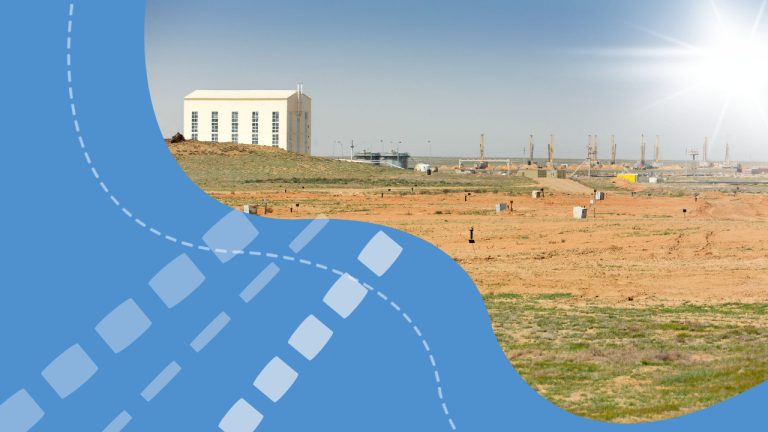
    The management of KazMunayGas (KMG) has announced plans to develop renewable energy sources at the Tengizfield. This initiative was discussed by the head of the national company with Derek Magness, managing director of the American energy corporation Chevron.

    According to KMG’s press center, producing green energy will help reduce harmful emissions into the atmosphere and increase the additional energy supply. Moreover, these measures will allow significant volumes of natural gas to be freed up for domestic consumption. The company also highlighted that additional gas supplies are needed for petrochemical projects.

    Leaders from Chevron and KMG also discussed the development prospects of the Karachaganak field and Tengiz, as well as the support the corporation can provide in achieving the national company’s petrochemical ambitions.

  • Leag Secures €1.75 Billion for Early Coal Phase-Out in Eastern Germany

    Leag Secures €1.75 Billion for Early Coal Phase-Out in Eastern Germany

    Eastern German lignite mining and power plant company Leag has received approval for up to 1.75 billion euros in state support to facilitate the “early” phase-out of coal-fired power production in eastern Germany. This follows an agreement between the European Commission and the German government, confirming that the compensation payment aligns with EU subsidy regulations. The funds will help Leag transition from fossil fuels and create new jobs in the Lusatia region ahead of the coal exit’s final deadline in 2038.

    The Commission’s decision came after a review that started in 2021, prompted by local policymakers and the German government. “This is an important step for the people in this region,” said Germany’s economy minister Robert Habeck. The compensation will fund social support programs for coal workers and the restoration of former mining areas.

    Habeck emphasized that the payments to Leag are part of broader government measures to support the region’s shift to climate-neutral energy generation and industrial production. With targeted support for innovative transformation technologies, the government aims to foster a thriving economy in Lusatia. Leag CEO Thorsten Kramer welcomed the agreement, calling it “an essential element for our further successful transformation to being a green powerhouse.”

    The deal with the Commission and the initial plan from Germany’s previous government includes a gradual release of the funds. The estimated cost of phasing out coal is around 1.2 billion euros, which Leag will receive as a minimum. Additional funds of up to 550 million euros depend on the potential profitability of closed coal plants and the foregone profits due to the phase-out. The economy ministry stated that this process ensures Leag is not “overcompensated” for its role in the coal phase-out.

    Assessing Leag’s compensation was more complex than for its western counterpart RWE, which agreed to close its plants well before the 2038 deadline. The Commission will continue to review the scheme and release a formal decision in the coming months.

    Christian Ehler, from the conservative Christian Democrats (CDU) representing the region in the European Parliament, said the agreement brings clarity after three years of negotiations. “Leag can continue on its path of renewable power, hydrogen-ready power plants, and energy storage,” Ehler said. He added that the decision shows “the EU isn’t abandoning East Germany,” marking a milestone in Lusatia’s ambition to become Europe’s first Net Zero Valley.

    The agreement did not specify an end date for coal before 2038. However, Bernhard Herrmann, a member of the government committee for climate and energy from the Green Party, noted that the expansion of renewables will naturally phase out coal plants as they become less profitable. He argued that the deal would reduce taxpayers’ costs for the phase-out, with coal companies likely to take their plants offline voluntarily due to decreasing profitability.

  • ArcelorMittal Warns of Possible Halt to German Decarbonisation Plans Without Cheap Renewable Energy

    ArcelorMittal Warns of Possible Halt to German Decarbonisation Plans Without Cheap Renewable Energy

    Steelmaker ArcelorMittal has issued a warning that it may not proceed with its plans to decarbonise its steel plants in Germany unless it secures cheap electricity and a sufficient supply of renewables and hydrogen. On Friday, Thomas Buenger, head of the steelmaker’s German division, stated that without internationally competitive energy prices and adequate green electricity and hydrogen, there is an increased risk of industrial production capacity leaving the country.

    Buenger emphasized that these conditions need to be met by mid-2025, the deadline for ArcelorMittal’s final investment decision on its €2.5 billion ($2.7 billion) decarbonisation plan for its German steel mills. Out of this total, around €1.3 billion are expected to be covered by German government subsidies, similar to the decarbonisation projects of peers Thyssenkrupp and Salzgitter, which also rely on public support.

    Buenger mentioned that detailed planning and the review of the economic viability of the transformation plans are currently underway.

  • Australia and EU Sign Agreement to Enhance Supply of Critical Minerals and Technology

    Australia and EU Sign Agreement to Enhance Supply of Critical Minerals and Technology

    A new agreement between Australia and the European Union (EU) aims to bolster the supply of critical minerals and technology, marking a significant step toward comprehensive free trade negotiations. Signed by Australian Trade Minister Don Farrell and Resources Minister Madeleine King, alongside EU Trade Commissioner Valdis Dombrovskis and Internal Market Commissioner Thierry Breton, the memorandum of understanding (MoU) focuses on several key areas of collaboration.

    The agreement outlines the establishment of talks between officials from both sides and enhanced information sharing, with a roadmap to be developed within six months. One of the primary goals is to attract European investment into Australian renewable energy projects. Senator Farrell emphasized the need for international capital to help Australia extract, process, and add value to its mineral resources.

    Key objectives include identifying and developing projects together, enhancing business links in the critical minerals sector, and fostering closer cooperation on research. The partnership is designed to strengthen Australia’s domestic critical mineral sector and help the EU diversify its suppliers for materials necessary for the green and digital transition.

    A significant aspect of the agreement is its aim to reduce over-reliance on China, aligning with broader efforts by the United States, Australia, and Europe to increase domestic manufacturing and reduce dependency on China, which currently dominates the critical minerals supply chain. Critical minerals such as lithium, nickel, and cobalt are essential for producing batteries and renewable energy technologies, crucial for achieving net-zero emissions by 2050. These minerals are also vital for manufacturing microchips and advanced technologies, including defense capabilities.

    Australia holds significant deposits of critical minerals, including 52% of global lithium production, making it a key player in the global supply chain for low-emission technologies.

    The MoU is seen as a positive step towards resuming free trade agreement negotiations, which had stalled over agricultural product discussions. Senator Farrell noted that this agreement reflects the EU’s understanding of the importance of the Australia-Europe relationship, particularly concerning the decarbonization of economies. The agreement underscores the pivotal role of Australia’s critical minerals in the clean energy transition, helping both Australia and its export partners meet climate commitments.

  • Britain – Kazakhstan rare earth relations

    Britain – Kazakhstan rare earth relations

    In March, Kazakhstan and the United Kingdom signed a Roadmap for Cooperation in the field of critical minerals. This initiative aims to strengthen the partnership by establishing joint ventures within Kazakhstan. Kazinform’s correspondent investigates the benefits that Kazakhstan stands to gain from this collaboration with the UK.

    As the world rapidly moves towards a “green” future, the demand for critical minerals is steadily increasing. These minerals, including rare elements and certain metals, are crucial for the economic prosperity and national security of leading nations. The creation of sustainable supply chains and access to these elements’ deposits are at the heart of the UK’s strategy for critical minerals, adopted in July 2022 and updated in March last year.

    “We are moving towards a world based on critical minerals: we need lithium, cobalt, and graphite for electric vehicle batteries; silicon and tin for our electronics; rare earth elements for electric vehicles and wind turbines,” states the UK strategy document.

    The document emphasizes that critical minerals will become even more significant in the future, with expectations that by 2040, the world will need four times more of these minerals for clean energy technologies.

    Participants at the “Energy Transition 2023” conference at the Chatham House in the UK reported that wind generators and electric vehicle manufacturers urgently need neodymium and praseodymium, while suppliers of high-voltage power lines require cobalt and aluminium.

    Of the 18 critical minerals identified by the British Geological Survey, eight are already produced in Kazakhstan, with raw material bases for the other eight available in the country. This positions Kazakhstan among the top 10 key partners for the UK in this sector.

    Kazakhstan and the UK approved a Roadmap for Strategic Partnership in the field of critical minerals in March 2024. The British side emphasizes “sharing experience in mineral extraction and processing with support for the full lifecycle of raw material extraction,” viewing London as a financial and trade hub. Kazakhstan’s Ministry of Industry and Construction aims to create production with added value for critical raw materials, parts, or components for subsequent delivery to consumer countries.

    Deputy Minister of Industry and Construction, Iran Sharkan, noted that the minimum raw material processing threshold for investors matches the intermediate level, meaning goods of low technological complexity or semi-finished products. Specific projects include collaborative work on advanced international practices and modern technology for geological mapping, as well as promoting best practices in regional exploratory and mapping work for critical minerals between the Geological Survey of Kazakhstan and the British Geological Survey.

    One existing example of cooperation is the joint venture between MaritimeHouse and “Zhezkazganredmet” for rhenium processing in Kazakhstan. Rhenium is a rare metal mainly used as an alloying addition in the production of heat-resistant alloys essential for high-temperature installations like aircraft engines, industrial gas turbines, and rocket engines.

    According to Kazakhstan’s Ministry of Industry and Construction, beryllium, tantalum, vanadium, copper, titanium, and phosphorus are already being supplied to the UK market. However, the ministry did not comment on the degree of processing or the form of the exported products in response to Kazinform’s inquiry.

    Experts highlight that cooperation with Kazakhstan is vital for the UK to achieve its goals of securing access to mineral resources. Jeff Townsend, founder of the British Critical Minerals Association, stated that about 40% of Kazakhstan’s territory has been fully explored, making it an incredible opportunity to build a continuous supply chain from initial exploration and extraction to early processing stages and subsequent processing and marketing in the UK.

    Political changes in Kazakhstan over recent years have made the country more attractive to British companies. However, Townsend noted three challenges: the lack of understanding of Kazakhstan’s business environment among British companies, logistical difficulties in delivering goods to the UK, and competition with Chinese companies. Despite these challenges, the British believe that their technological advantages and expertise will help them overcome these obstacles and maintain their competitiveness.

  • Gravitricity to Develop Underground Gravity Energy Storage Projects in Europe

    Gravitricity to Develop Underground Gravity Energy Storage Projects in Europe

    Edinburgh-based company Gravitricity has announced its plans to develop underground gravity energy storage projects for deep mine operators in Slovenia, Germany, the Czech Republic, and Finland. This innovative approach repurposes end-of-life mine shafts, which would otherwise face expensive infilling and decommissioning costs.

    Gravitricity’s energy storage system, known as GraviStore, utilizes heavy weights—up to 12,000 tonnes—suspended in deep shafts by cables attached to winches. During periods of excess electricity, such as on windy days, these weights are winched to the top of the shaft, ready to generate power when needed. The weights can be released in less than a second, with the winches acting as generators to produce electricity either in a quick burst or more gradually, depending on demand.

    The company highlighted that GraviStore offers many advantages similar to pumped storage hydro and lithium-ion batteries, but without the performance degradation that affects batteries over time. This system can operate for decades with consistent efficiency.

    Gravitricity’s current clients include the Velenje coal mine in Slovenia, owned by the government-run Premogovnik Velenje; First Quantum Minerals’ Pyhäsalmi mine in Finland, Europe’s deepest zinc and copper mine; the former Darkov mine in the Czech Republic, managed by the state enterprise DIAMO; and the Geiger Group’s Grube Teutschenthal mine in Germany.

    “Gravity energy storage presents a powerful green opportunity for mine operators, extending the life of mines beyond material extraction,” said Martin Wright, founder and executive chairman of Gravitricity. “This alternative to decommissioning provides economic and employment opportunities in communities facing the decline of traditional jobs. Our engagements with mine operators demonstrate significant interest in our technology, and we are working with both mine owners and public sector organizations to transform these plans into operational realities.”

    Gravitricity has already demonstrated its GraviStore technology with a 250kW above-ground prototype, successfully raising and lowering two 25-tonne weights to generate power and verify the system’s rapid response capabilities. The £1-million, 12-meter-high test rig proved the system can achieve full power in less than a second, making it highly valuable for frequency response and backup power markets, with the flexibility to adjust power output based on demand.

  • Report Reveals Human Rights Abuses in Race for Energy Transition Minerals

    Report Reveals Human Rights Abuses in Race for Energy Transition Minerals

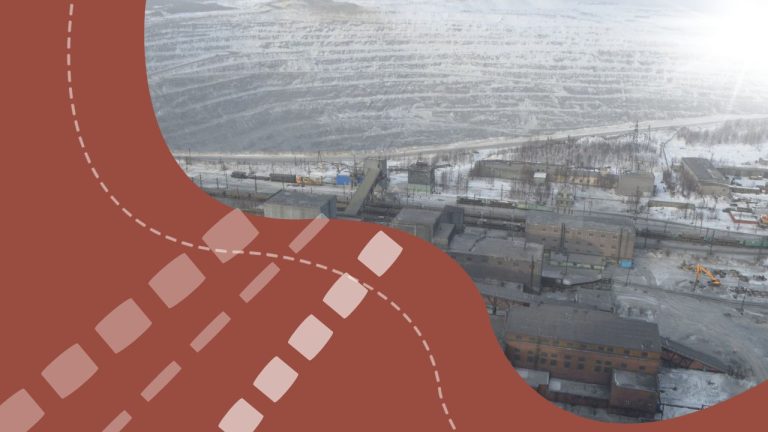
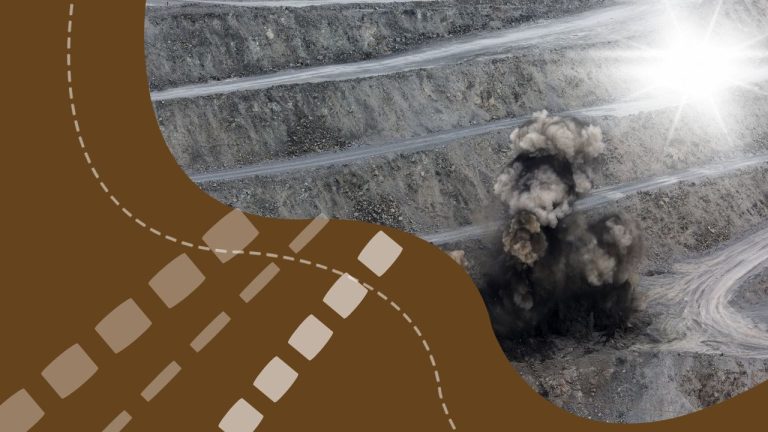
    A recent report from the U.K.-based Business and Human Rights Resource Center sheds light on a concerning trend accompanying the global push for low-carbon technologies. As nations like the United States and Europe increasingly pivot towards renewable energy sources, the demand for critical minerals used in electric vehicles, wind turbines, and solar panels has surged. However, this transition is not without its consequences. The report highlights over 400 allegations of human rights abuses across 16 countries in Eastern Europe and Central Asia over the past five years. These allegations are linked to the extraction, smelting, and refining of metals and minerals essential for the energy transition, such as copper, zinc, uranium, and iron.

    The surge in demand for these minerals has led to a market worth $320 billion in 2022, according to the International Energy Agency. To meet the ambitious goal of net-zero greenhouse gas emissions by 2050, production of these materials will need to increase six-fold by 2040. Many of these resources are located in some of the world’s least-developed countries, where environmental regulations and labor protections may be lax.

    The report identifies numerous cases of alleged abuses, ranging from health and safety concerns for workers to environmental pollution. In Russia, which holds significant reserves of rare-earth minerals, over 100 allegations were recorded, including instances of workplace accidents and toxic pollution. Similar issues were reported in other countries like Armenia, Ukraine, and Kazakhstan, where inadequate safety measures and environmental contamination have sparked community protests.

    One concerning trend highlighted in the report is the close ties between extractive companies and political elites. In several countries, oligarchs with political connections own or control major mining operations, potentially influencing regulatory oversight and accountability mechanisms.

    Despite the gravity of these findings, the report suggests that the documented allegations may only scratch the surface due to repression and censorship in some of the countries studied. Independent journalists and human rights defenders face obstacles in investigating and reporting on abuses, leading to underreporting of incidents.

    The report’s authors call for increased transparency, community consultation, and respect for human rights in the extraction and processing of energy transition minerals. They emphasize the importance of ensuring that the transition to renewable energy promotes shared prosperity and fair treatment of workers and communities.