Tag: renewable energy

  • EBRD Finances Romania’s First Hybrid Solar and Battery Storage Project

    EBRD Finances Romania’s First Hybrid Solar and Battery Storage Project

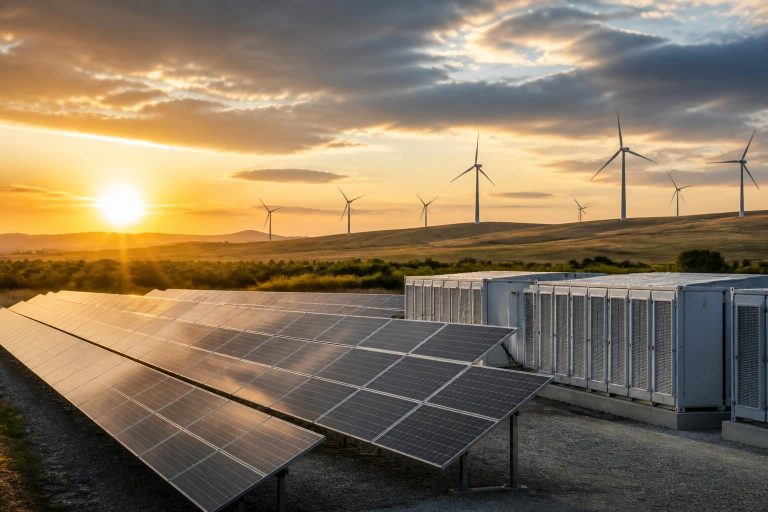
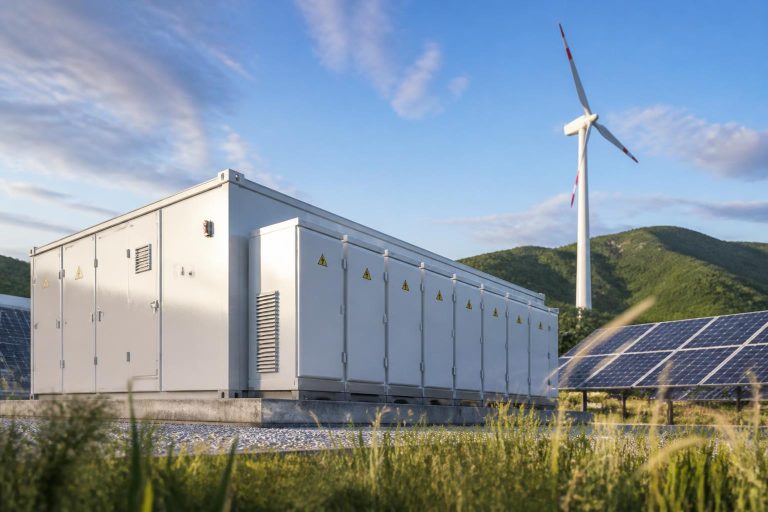
    The European Bank for Reconstruction and Development (EBRD) is making significant strides in Romania’s clean energy transition by financing the Părău 2 project, a pioneering hybrid solar photovoltaic and battery storage initiative. This project, developed by Econergy, combines 342 MW of solar capacity with a 150 MW/300 MWh battery energy storage system located in Brașov. The EBRD has committed up to €120 million to support the development, construction, and operation of this innovative project, marking the first instance of the bank financing a hybrid renewable energy project in Romania.

    The financing package consists of an EBRD A loan of up to €57 million and an EBRD B loan of up to €63 million, which includes a €3.6 million debt service reserve facility provided by commercial banks. The total debt financing for the project amounts to €229 million, with additional support from the Black Sea Trade and Development Bank, OTP Bank, and Exim Banca Românească. The European Union is also backing this initiative through the InvestEU programme, which provides a first-loss guarantee to mitigate risks associated with the project’s exposure to merchant revenue.

    Georgios Gkiaouris, the EBRD’s Head of Energy Europe, highlighted the significance of the Părău 2 project in enhancing Romania’s energy security and promoting a more resilient electricity system. The project is expected to increase renewable energy generation, improve grid flexibility, and reduce reliance on fossil fuels. Eyal Podhorzer, CEO of Econergy, expressed that securing €229 million for Părău 2 is a milestone for both the company and the Romanian market, showcasing the confidence of international lenders in their operational capabilities.

    The project is further supported by Romania’s Contract for Difference scheme, which aims to unlock 5 GW of solar and onshore wind capacity. The solar plant has already secured a 125 MWac allocation at a competitive strike price for 15 years, while the remaining capacity will operate on a merchant basis. Additionally, Intesa Sanpaolo and Exim Banca Românească will provide facilities to support the project’s Contract for Difference requirements.

    By integrating solar generation with battery storage, the Părău 2 project will facilitate the incorporation of more variable renewable energy into Romania’s electricity system. The battery storage component will enable the shifting of solar output to meet higher demand periods, thereby enhancing the grid’s flexibility and reducing dependence on fossil fuels for peak capacity. This investment underscores the EBRD’s commitment to supporting Romania’s green transition and energy security, having invested over €12.7 billion in the country through more than 600 projects to date.


  • CATL Signs 2 GWh Sodium-Ion Battery Storage Deal with Eastern European Renewable Energy Company Solarpro

    CATL Signs 2 GWh Sodium-Ion Battery Storage Deal with Eastern European Renewable Energy Company Solarpro

    CATL, the world’s largest battery manufacturer, has signed a significant cooperation agreement with Solarpro, an Eastern European renewable energy company, for 2 GWh of Tener Sodium energy storage systems. This deal represents CATL’s second major sodium-ion energy storage order in Europe within a single month, underscoring the accelerating adoption of next-generation energy storage technology across the continent. The companies plan to jointly deploy Central and Eastern Europe’s first large-scale sodium-ion energy storage project this year, marking a pivotal moment in the region’s transition towards advanced battery technologies.

    The Tener Sodium energy storage system demonstrates impressive technical specifications that make it particularly suitable for Eastern European climates. The system boasts a cycle life of up to 15,000 cycles and can operate reliably for 25 to 30 years, providing exceptional longevity for energy storage applications. Notably, the system retains 92% of its capacity at temperatures as low as minus 20 degrees Celsius, enabling it to withstand the harsh winter conditions experienced in Eastern European countries such as Lithuania. This cold-weather performance represents a significant advantage over traditional lithium-ion systems in regions with extreme seasonal temperature variations.

    CATL’s European expansion strategy reflects the company’s broader commitment to sodium-ion battery technology as a transformative force in the global energy storage market. Just one week prior to the Solarpro agreement, CATL signed a memorandum of understanding with European new-energy integrator Alfen NV to deploy 5 GWh of sodium-ion energy storage systems in Western Europe beginning in 2027. The partnership with Solarpro builds upon an existing relationship that commenced in 2024, when the companies deployed a 150 MWh EnerC+ liquid-cooled energy storage system in Bulgaria. Subsequently, in May 2026, a 602 MWh Tener lithium-ion energy storage system jointly developed by the companies was connected to Bulgaria’s power grid, increasing the country’s total energy storage capacity by 10%.

    CATL’s sodium-ion battery initiative represents a strategic response to growing global demand for cost-effective energy storage solutions. The company unveiled the Tener Sodium energy storage system on 22 June, positioning it as the world’s first field-validated sodium-ion battery energy storage solution. The system features a rated capacity exceeding 30 MWh and supports energy storage applications lasting between 1 and 8 hours, whilst maintaining compatibility with existing lithium-ion battery system dimensions, enabling seamless technology transitions. CATL plans to commence initial deliveries in China in September 2026, with shipments expected to reach 1 GWh by year-end, whilst global commercial deliveries are scheduled to begin in June 2027. Founder and chairman Robin Zeng has previously stated that low-cost sodium-ion batteries could eventually replace 30% to 40% of the existing battery market, reflecting the company’s confidence in this technology’s transformative potential.


  • Google Partners with Energy Dome to Scale Long-Duration CO₂ Battery Storage

    Google Partners with Energy Dome to Scale Long-Duration CO₂ Battery Storage

    Energy Dome has announced a global commercial partnership with Google to deploy its long-duration CO₂ Battery technology in support of Google’s goal of operating on 24/7 carbon-free energy by 2030. As part of the agreement, Google has also made a strategic investment in the Italian energy storage company.

    The partnership aims to accelerate the deployment of Energy Dome’s technology across Europe, the Americas and the Asia-Pacific region. A pipeline of projects has already been identified, with several sites currently in the development and contracting stages.

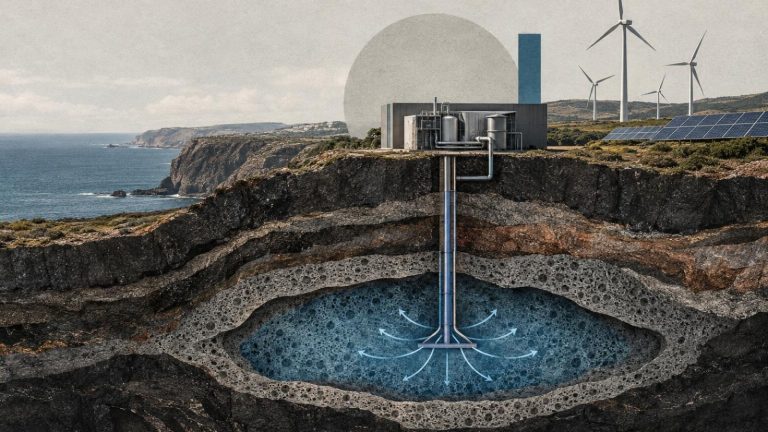
    Energy Dome’s CO₂ Battery is designed to store renewable electricity and deliver power continuously for 8 to 24 hours, helping overcome the intermittency of solar and wind generation. Unlike lithium-ion batteries, the system relies on a patented thermomechanical process using carbon dioxide and is built from commercially available components, avoiding supply chain constraints associated with critical minerals and rare earth elements.

    The technology also contributes to grid stability by providing mechanical inertia through rotating equipment, helping compensate for the decline in system inertia as conventional fossil-fuel power plants are retired.

    Google said the agreement marks its first commercial deployment of long-duration energy storage technology and forms part of a broader strategy to secure reliable, clean electricity for its growing operations, including data centres supporting artificial intelligence.

    “Energy Dome’s proven and scalable long-duration energy storage solution can help us unlock rapid progress,” said Maud Texier, Director of EMEA Energy at Google. She added that wider deployment of the technology could improve access to reliable and affordable electricity while supporting greater integration of renewable energy.

    Energy Dome founder and CEO Claudio Spadacini described the agreement as an important milestone in demonstrating that continuous carbon-free electricity can be achieved through commercially viable long-duration storage technologies.

    Google’s investment comes as Energy Dome enters a commercial growth phase. The company already has contracted projects with Alliant Energy in the United States, Engie in Italy and NTPC in India, reflecting increasing global interest in long-duration energy storage as power systems integrate larger shares of renewable generation.

  • EBRD Considers €55 Million Loan for Bulgaria’s Asarel Medet Copper Mine

    EBRD Considers €55 Million Loan for Bulgaria’s Asarel Medet Copper Mine

    The European Bank for Reconstruction and Development (EBRD) is reviewing a proposal to provide a loan of up to €55 million to Bulgarian copper producer Asarel Medet to support a major sustainability and renewable energy project.

    According to documents published on the lender’s website, the financing is expected to be considered for approval on 11 March. The funds would partially finance a €109.5 million investment programme focused on the development of captive solar power installations and the implementation of more sustainable copper mining practices at the company’s operations.

    The project also aims to bring the mine’s environmental and social standards in line with international best practices, reinforcing its long-term operational resilience and ESG performance.

    Part of the loan is expected to be backed by the InvestEU Fund, the European Union’s financial instrument that consolidates multiple centrally managed EU funding mechanisms, including the European Fund for Strategic Investments.

    Asarel-Medet operates near the town of Panagyurishte in southern Bulgaria and is the country’s leading open-pit copper mining company. The group employs around 1,200 people directly, along with an additional 400 staff in subsidiary companies.

    Ownership of the company is concentrated in VA Copper Invest Limited, a Malta-based investor holding a 63% stake as of September 2025, according to Trade Registry data.

    Financial results for 2024 show that the Asarel Medet Group generated revenues of 929.8 million levs, equivalent to approximately €480.8 million, and recorded an after-tax profit of 223.9 million levs. During the year, the company extracted 45.8 tonnes of ore mass and processed 15.03 tonnes of ore.

  • Kazakhstan’s mining majors step up decarbonization with renewables and waste recycling projects

    Kazakhstan’s mining majors step up decarbonization with renewables and waste recycling projects

    In 2025, Kazakhstan’s leading mining and metals companies continued to expand environmental programmes focused on emissions reduction, waste processing and biodiversity protection, while also completing several major renewable energy projects.

    In December, Solidcore Resources announced the completion of a solar power plant at its Varvarinskoye gold mine. The facility has an installed capacity of 22.6 MW and is expected to generate around 28.5 million kWh of electricity annually. The project, which includes more than 36,000 solar panels and a supplementary gas piston power plant to cover periods of low solar output, required investments of about 29 billion tenge. Solidcore estimates that switching Varvarinskoye to renewable energy will cut indirect greenhouse gas emissions by approximately 50%.

    Another major producer, Eurasian Resources Group (ERG), reported in September that all 24 wind turbines had been installed near its Donskoy Mining and Processing Plant. Once operating at full capacity, the wind farm is expected to generate more than 500 million kWh of electricity per year. The project will allow ERG to save over 300,000 tonnes of coal annually and reduce emissions by up to 440,000 tonnes.

    Alongside renewable energy investments, ERG also launched processing of accumulated tailings at the Donskoy plant. Chromium is now being recovered from technogenic mineral raw materials using flotation technology, supporting both waste reduction and resource efficiency.

    Another notable initiative is the gasification of the Qarmet metallurgical plant. In July, the company began pressure testing and commissioning a new gas pipeline. Partial replacement of fuel oil and coke with natural gas is expected to significantly reduce atmospheric emissions from steel production.

    Together, these projects highlight a broader shift by Kazakhstan’s mining and metals sector toward cleaner energy, circular resource use and lower environmental impact.

  • EU Sets Up “Special Channel” with China to Secure Rare Earth Supply

    EU Sets Up “Special Channel” with China to Secure Rare Earth Supply

    The European Union has established a special communication channel with Chinese authorities to ensure the continuous flow of rare earth materials essential for European industries, EU Trade Commissioner Maros Sefcovic said on Wednesday.

    The move comes after China imposed export controls on rare earths earlier this year, triggering alarm in Europe over possible disruptions to the supply of critical materials used in electric vehicles, wind turbines, and permanent magnets — key components for clean energy and high-tech manufacturing.

    Speaking at the 2025 GCC–EU Business Forum in Kuwait, Sefcovic told Reuters that he had held multiple discussions with Chinese Commerce Minister Wang Wentao, emphasizing that bureaucratic delays in export procedures could have a “very negative impact on production and manufacturing in the EU.”


    Fast-Track Cooperation Mechanism

    Brussels and Beijing have agreed to prioritize export permit applications from European companies. Through the newly established channel, EU and Chinese officials are jointly reviewing and fast-tracking export approvals for rare earth shipments.

    According to Sefcovic, European companies have submitted about 2,000 applications since the controls were introduced, with just over half already approved. He said the EU was urging China to accelerate the remaining cases while pursuing broader supply chain diversification.

    “We continue to press for faster processing,” Sefcovic said, adding that Europe is simultaneously developing alternative rare earth sources, including new mining and magnet production projects in Estonia.


    Wider Context

    The announcement follows months of tension between Europe and Beijing after China’s export restrictions on rare earths and related technologies. Although subsequent deals with the EU and the United States helped ease the immediate supply squeeze, both regions have intensified efforts to reduce dependence on Chinese critical materials.

    On Tuesday, the European Commission confirmed that EU and Chinese officials discussed introducing general export licenses to simplify rare earth shipments — similar to arrangements reportedly secured by the United States.

  • Uzbek President Mirziyoyev Meets U.S. Business Leaders in Washington to Deepen Economic Partnership

    Uzbek President Mirziyoyev Meets U.S. Business Leaders in Washington to Deepen Economic Partnership

    At the conclusion of his working visit to Washington, D.C., President of Uzbekistan Shavkat Mirziyoyev met with representatives of major U.S. corporations, investment funds, and financial institutions to discuss expanding economic cooperation between the two countries.

    The meeting was attended by U.S. Secretary of Commerce Howard Lutnick, Special Assistant to the President Ricky Gill, Special Envoy Paolo Zampolli, and Deputy Secretary of Agriculture Stephen Vaden. Senior executives from leading American companies — including Traxys, FLSmidth, McKinsey, Meta, Google, Amazon, Boeing, Air Products, Axiom Space, Cove Capital, Freeport-McMoRan, Orion CMC, Cargill Cotton, John Deere, Honeywell, Valmont Industries, and Flowserve Corporation — also took part in the discussions.

    President Mirziyoyev highlighted that trade turnover between Uzbekistan and the United States has quadrupled over the past eight years, with more than 300 American companies now operating in Uzbekistan. He emphasized that this growth marks only the beginning of a new stage in bilateral cooperation, and that specific projects would be further discussed during his upcoming meeting with U.S. President Donald Trump.

    The Uzbek leader outlined priority areas for strategic partnership, including renewable energy, critical minerals, and digital transformation. By 2030, Uzbekistan aims to build a next-generation energy system with 18–20 gigawatts of renewable capacity, generating more than half of its electricity from solar and wind sources.

    In partnership with the United States, Uzbekistan plans to develop extraction and advanced processing of uranium, copper, tungsten, molybdenum, and graphite, establishing secure supply chains and adopting U.S. technologies in resource processing.

    The President also highlighted Uzbekistan’s ambitious transport infrastructure modernization program, with $12 billion in planned investments by 2030 to upgrade roads, railways, terminals, and airports.

    Digital cooperation is also expanding through joint initiatives with Google, Meta, and NVIDIA, including the launch of Apple Pay and Google Pay, the creation of a Digital Academy, and a nationwide startup hub network.

    Financial support for these initiatives will involve the U.S. International Development Finance Corporation (DFC) and the U.S. Export-Import Bank (Exim Bank).

    Concluding the meeting, President Mirziyoyev reaffirmed Uzbekistan’s commitment to support American investors and maintain the country’s reputation as a reliable and stable partner.

    “Uzbekistan remains a dependable partner and a guarantor of success for foreign investors,” the President said.

  • Bulgaria to Invest Over €1.38 Billion in Green Transition for Coal Regions

    Bulgaria to Invest Over €1.38 Billion in Green Transition for Coal Regions

    Bulgaria’s coal regions are set to receive BGN 1.58 billion (€808 million) through the European Union’s Just Transition Fund (JTF) to support projects in renewable energy, green hydrogen, and the redevelopment of former mining areas. Combined with an existing €598 million program, total investment in Bulgaria’s post-coal transformation will reach €1.38 billion, according to the Ministry of Regional Development and Public Works.

    The funds will target the coal-producing regions of Stara Zagora, Kyustendil, and Pernik, along with municipalities such as Nova Zagora, Yambol, Simeonovgrad, Harmanli, Topolovgrad, Dimitrovgrad, Haskovo, Elhovo, Sliven, and Tundzha. The JTF grants aim to help communities close coal mines and coal-fired power plants, rehabilitate degraded land, promote energy efficiency, and support a shift toward a climate-neutral economy while reducing energy poverty.

    Deputy Minister Yura Vitanova announced that three new grant procedures will be launched by the end of the year:

    • €153.4 million for energy efficiency and energy communities in public buildings,

    • €72.6 million to help small and medium-sized enterprises install solar panels and energy storage systems, and

    • €242.9 million for socio-economic transformation projects, including converting former mining areas into business and industrial zones.

    In addition, €134.5 million will support the development of green hydrogen infrastructure in Stara Zagora. The initiative includes a hydrogen production complex, charging stations, hydrogen vehicles and trailers, and supporting photovoltaic and energy storage systems.

    The current JTF program is already funding the renovation of residential buildings, industrial and logistics park development, and training and retraining programs for workers affected by the energy transition. It also supports production investments in large enterprises to diversify regional economies.

    “Bulgaria’s coal regions are poised to become hubs for clean energy and sustainable industry,” said Deputy Minister Vitanova. “These investments will not only reduce emissions but also create new opportunities for local businesses and communities.”

  • President Tokayev Outlines Kazakhstan’s Energy Strategy at Turkic States Summit

    President Tokayev Outlines Kazakhstan’s Energy Strategy at Turkic States Summit

    Kazakhstan’s President Kassym-Jomart Tokayev outlined the foundations of his country’s energy strategy during his address at the 12th Summit of the Organization of Turkic States (OTS), emphasizing the central role of the energy sector in Kazakhstan’s economic and strategic development.

    Tokayev highlighted that energy remains “the backbone of the economy and a vital element of our strategic partnerships,” stressing the need for greater regional cooperation on infrastructure and transport routes for energy resources.

    “We are implementing joint infrastructure projects and forming secure and efficient routes for the transportation of energy resources,” he said. “A great example of fruitful cooperation in this area is the Green Energy Corridor project, being developed by Kazakhstan, Azerbaijan, and Uzbekistan.”

    The president called for a stronger focus on renewable energy, particularly solar power, proposing the establishment of a Council of Best Practices on Energy Efficiency under the framework of the OTS.

    At the same time, Tokayev reaffirmed that the development and efficient use of oil, gas, uranium, coal, and rare earth minerals remain the cornerstone of Kazakhstan’s long-term energy policy.

    The initiative reflects Kazakhstan’s broader efforts to balance traditional resource extraction with a gradual transition to clean energy.

    Earlier, President Tokayev arrived in Gabala to take part in the OTS summit, where he was welcomed by Azerbaijani President Ilham Aliyev.

  • Phenogy Launches Europe’s Largest Sodium-Ion Battery Installation in Germany

    Phenogy Launches Europe’s Largest Sodium-Ion Battery Installation in Germany

    Swiss energy storage company Phenogy has unveiled its first commercial-scale sodium-ion battery deployment, marking the largest installation of its kind in Europe. The single-container system, located near Bremen Airport in northern Germany, delivers 400 kW of power with nearly 1 MWh of storage capacity. Paired with a 50 kW solar array, the unit operates in island mode, powering electric vehicle chargers and optimizing on-site energy consumption.

    One of the challenges for sodium-ion batteries at scale has been inverter compatibility due to their broader voltage range. To address this, Phenogy integrated eight Sunny Island X 50 inverters from SMA into its 20-foot PHENOGY 1.0 container. These pre-production inverters, designed for flexibility beyond lithium iron phosphate (LFP) systems, enable efficient voltage matching with the sodium-ion chemistry.

    While sodium-ion is often seen as a cheaper and more sustainable alternative to lithium-ion due to sodium’s abundance and lower extraction costs, the technology has yet to achieve mass-market maturity. China currently leads global deployment, with 100 MW-scale projects by companies such as CATL, BYD, and Huawei.

    Phenogy CTO Max Kory emphasized the strategic value of sodium-ion technology for Europe and North America, noting that reliance on Chinese lithium-ion precursors could pose long-term risks. “Lithium prices will rise again – with mine closures in China, the market is nearing a breaking point. As prices climb, alternative chemistries become more attractive, and sodium-ion is the prime candidate for building localized supply chains,” he told ESS News.

    Key to scaling production will be local cathode and anode manufacturing, particularly hard carbon derived from agricultural waste. While production costs remain higher than LFP today, Phenogy believes strategic buyers seeking supply chain independence will drive early adoption.

    Founded in 2019, Phenogy employs about 60 people across Europe and the US, with operations in South Carolina and research collaborations with the University of South Carolina, Exentis Group, and Fraunhofer Institutes. The company is positioning itself as a vertically integrated manufacturer to strengthen local supply chains and support the global energy transition.