Tag: rare earth metals

  • Solvay to Supply Europe with Rare Earth Metals for EVs and Wind Turbines from French Plant

    Solvay to Supply Europe with Rare Earth Metals for EVs and Wind Turbines from French Plant

    Belgian chemicals group Solvay has announced plans to supply Europe with rare earth metals for permanent magnetsused in electric vehicles (EVs) and wind turbines, as part of a strategy to reduce reliance on China. The company plans to commence regular production at its refurbished plant in La Rochelle, France, by early 2025, aiming to meet 30% of Europe’s needs for permanent magnets by 2030. This facility is unique in Europe for its ability to process both light and heavy rare earth materials at an industrial scale. Solvay’s CEO, Philippe Kehren, highlighted the strategic shift toward European production, anticipating a tripling in demand for these materials by 2035. Solvay is in discussions with major European car manufacturers and turbine makers, as well as the French government, to secure support across the entire value chain. This move aligns with new EU regulations that aim to bolster the continent’s self-sufficiency in critical materials, targeting a reduction in dependence on Chinese supplies, which currently cover about 95% of the EU’s rare earth needs. Solvay intends to source 30% of the materials for its La Rochelle plant locally, by recycling end-of-life rare earth metals from motors in Europe.


  • Cove Capital Explores Rare Earth Metals in Kazakhstan’s Kostanay Region

    Cove Capital Explores Rare Earth Metals in Kazakhstan’s Kostanay Region

    The American investment firm Cove Capital is actively exploring potential rare earth metal deposits in Kazakhstan’s Kostanay region. The project is partnered with the Kazakh company Kazgeology, which is part of the “Tau-Ken Samruk” structure. The geological exploration is being funded by Cove Capital, according to an interview with Pini Althaus, managing partner and founder of the company, published in the Kazakh outlet “Kursiv.”

    “The site contains a variety of rare earth metals, with a primary focus on four elements used in the production of permanent magnets: neodymium, praseodymium, dysprosium, and terbium,” said Mr. Althaus. The deposit also has significant reserves of yttrium, for which supply and demand are yet to be fully assessed.

    The project is currently in the early stages of implementation, with preliminary feasibility studies indicating the presence of 380,000 tons of rare earth metals. Mr. Althaus noted, “The project looks promising, which is why we invested in it, and we hope it becomes a major rare earth project.”

    However, the profitability of the mining operation remains uncertain, as partners need to confirm the feasibility of extracting these high-value materials. “It will take several years to develop the resource, ensure the metals can be processed, and verify our reserves before we start considering mining scenarios and profitability,” explained the managing partner of Cove Capital.

    Cove Capital holds 11 concessions for the development of critical materials such as lithium, beryllium, tantalum, rhodium, cesium, rubidium, and tin in Eastern Kazakhstan. Represented by its subsidiary, KAZ Critical Minerals, Cove Capital relies on data from Soviet-era geological surveys, refined with modern technologies and research methods.

    Additionally, Cove Capital is in discussions with the Kazakh government regarding the construction of a rare earth metals processing plant, with capital investment potentially reaching $500 million. This facility could serve as an industrial hub and an alternative to exporting these metals to China.

    Founded in 2016, Cove Capital invests in the mining industry, with projects focused on critical minerals, precious metals, and base metals in North America, Australia, Argentina, and other countries.

  • Uzbekistan Aims to Tap into Mining Potential, President Urges Action

    Uzbekistan Aims to Tap into Mining Potential, President Urges Action

    Main Body: The domestic geological sector receives an annual allocation of one trillion sums, with last year’s implementation of targeted programs pushing the production volume in the mining industry to nearly $11 billion. However, the bulk of this output is directed towards precious and non-ferrous metals, despite a vast untapped potential for minerals crucial to industry. Thirty-two such valuable minerals have been identified in the country. In response, during a presentation on January 15th, the head of state issued directives to harness opportunities in this sphere. Measures, plans, and proposals were discussed at today’s meeting. With technological advancements driving global developments, there’s a growing demand for rare earth metals in industries like electric vehicles, green energy, and electronics. Consequently, prices for molybdenum, tellurium, selenium, and graphite have surged in recent years. The President emphasized the significant prospects emerging and underscored the need to expand exploration of existing and new deposits of critical raw materials. Currently, six types of such materials are extracted in the country, with the potential to derive high-value-added products from platinum group metals, indium, vanadium, as well as minerals containing tungsten, molybdenum, rhenium, zinc, and manganese. For instance, the production of previously non-existent powder metallurgy products worth $300 million annually and equipment and components worth $100 million annually could be organized. A critical raw material agreement with the European Union has recently been reached, opening access to this vast market. In light of this, officials have been tasked with formulating, with the involvement of foreign experts and investors, a program of promising projects worth $500 million for rare earth metals. Emphasis is placed on developing this direction with a scientific approach, establishing a project office for this purpose, and engaging leading institutions and research centers. The meeting also addressed increasing the production of precious metals at the Navoi Mining and Metallurgical Combine. Responsible officials reported on opportunities for further increasing both reserves and gold production volumes. The President instructed to reduce production costs at the combine by 10-15%, expand industrial cooperation and localization. A directive was issued to establish a Scientific Center for Advanced Technologies in Precious Metals.

  • President Shavkat Mirziyoyev Addresses Priorities in Geological and Mining Industries

    President Shavkat Mirziyoyev Addresses Priorities in Geological and Mining Industries

    President Shavkat Mirziyoyev convened a meeting on April 29 to discuss objectives within the realm of geology and the mining-metallurgical industry in Uzbekistan. The domestic geological sector receives an annual allocation of one trillion sum, with last year’s production volume in the mining industry reaching nearly $11 billion through the implementation of targeted programs, as outlined in a recent report. However, the majority of this volume pertains to precious and non-ferrous metals, indicating significant untapped potential in critical industrial minerals. Notably, the country has identified 32 such valuable minerals. Given this context, directives were issued during a presentation on January 15 to harness opportunities in this sphere. Measures, plans, and proposals were deliberated during the recent meeting. Global technological advancements have led to increasing demand for rare-earth metals in electric vehicle, green energy, and electrical industries, consequently driving up prices for molybdenum, tellurium, selenium, and graphite on the global market in recent years. President Mirziyoyev emphasized the burgeoning opportunities, stressing the need to expand exploitation of existing and exploration of new critical resource deposits. Currently, Uzbekistan extracts six types of such resources. However, there is potential to derive high-value-added products from platinum, indium, vanadium, as well as minerals containing tungsten, molybdenum, rhenium, zinc, and manganese. Efforts could lead to the establishment of previously non-existent powder metallurgy production worth $300 million annually and equipment and components sector worth $100 million annually. A recent agreement with the European Union on critical resources opens broad access to this significant market. Given these developments, officials have been tasked with formulating a program for prospective projects amounting to $500 million in rare-earth metals, involving foreign experts and investors. Emphasis was placed on developing this sector with a scientific approach, establishing a project office for this purpose, and engaging leading institutes and scientific centers. Additionally, discussions at the meeting encompassed strategies to increase precious metal extraction at the Navoi Mining and Metallurgical Combine. Officials presented opportunities for further increasing both reserves and gold production volumes. President Mirziyoyev instructed to reduce production costs at the combine by 10-15%, expand industrial cooperation and localization, and establish a Scientific Center for Advanced Technologies in Precious Metals.

  • Tau-Ken Samruk to Explore Lithium Deposits near the Aral Sea with Funding from EBRD

    Tau-Ken Samruk to Explore Lithium Deposits near the Aral Sea with Funding from EBRD

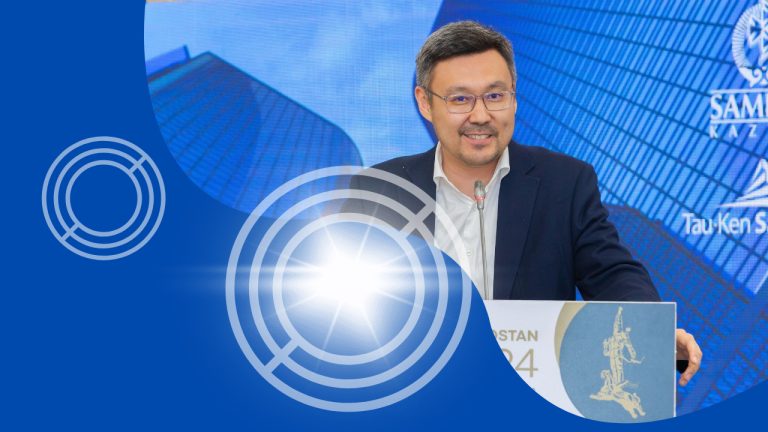
    Tau-Ken Samruk, the national mining company, is set to conduct exploratory research funded by the European Bank for Reconstruction and Development (EBRD) to assess the presence of lithium in the brines of salt lakes near the Aral Sea. This initiative was announced by the company’s Chief Business Development Officer, Nariman Absametov, during the MINEX Kazakhstan -2024 forum. Absametov highlighted the similarities between Kazakhstan and South American countries, particularly Chile, where lithium is extracted from salt brines. The project, initiated six months ago, aims to demonstrate the presence of sufficient lithium in the region for industrial development. The EBRD has granted 400,000 euros, equivalent to 190.7 million tenge, for a two-year research project in the Aral Sea region.

    Tau-Ken Samruk is actively engaged in over 50 mining projects, with 15 partner companies. Notably, the company recently absorbed another national entity, Kazgeology, promising comprehensive support to partners in negotiations with government bodies. Absametov highlighted gold as the primary metal of interest, citing Tau-Ken Altyn, a refining plant in Astana, which exceeded its initial capacity of 25 tons of gold and 50 tons of silver annually since 2019, refining 55.6 tons of gold in 2022. Additionally, copper and rare earth metals are among the company’s areas of interest.

  • Meeting of Kanat Shralapayev with the leadership of the Kazakhstan-American Business Council at the US Chamber of Commerce

    Meeting of Kanat Shralapayev with the leadership of the Kazakhstan-American Business Council at the US Chamber of Commerce

    As part of strengthening the multifaceted partnership between Kazakhstan and the United States, Minister of Industry and Infrastructure Development of the Republic of Kazakhstan Kanat Shralapayev participated in a roundtable with members of the Kazakhstan-American Business Council (USKZBC) and representatives of American companies. The event took place at the US Chamber of Commerce, where key representatives of the business community gathered, such as Bechtel, BHP, Brownstein Hyatt Farber Schreck, Chevron, Morgan Stanley, Turkish Airlines, the U.S. Chamber of Commerce, as well as USKZBC.

    The US Chamber of Commerce, the leading business association in the country, represents the interests of over 3 million companies, advocating for the American business community at national and international levels. Acting within the framework of the Chamber of Commerce, USKZBC promotes the development of trade and investment relations between Kazakhstan and the United States, opening up new opportunities for both countries.

    During the roundtable, Kanat Shralapayev emphasized the importance of the longstanding and successful partnership between Kazakhstan and the United States, focusing on the strategic potential of cooperation in the field of rare earth metals extraction, as well as industrial cooperation development. The Minister highlighted key areas for investment and technological cooperation, emphasizing the significance of creating a cluster in Kazakhstan for battery raw materials production, including nickel, cobalt, manganese, and lithium. Particularly noting the key reforms in the field of subsoil use aimed at attracting investments, the Minister invited US mining companies to participate in upcoming auctions for subsoil use and emphasized the key role of the Investment Council under the chairmanship of the First Deputy Prime Minister of the Republic of Kazakhstan as a guarantee for project support.

    This event opened a new chapter in the history of bilateral relations, confirming both sides’ readiness for deep and fruitful cooperation. The roundtable served as a vivid testimony to mutual interest in further expanding industrial and trade ties, contributing to the strengthening of economic partnership between Kazakhstan and the United States.

  • Kazakhstan has developed a comprehensive plan for the development of  rare earth metals for five years

    Kazakhstan has developed a comprehensive plan for the development of rare earth metals for five years

    The Ministry of Industry and Construction has developed a Comprehensive Plan for the Development of the Rare and Rare Earth Metals Industry of the Republic of Kazakhstan for 2024–2028, Zakon.kz reports .

    The comprehensive plan provides for the expansion of the resource base and the introduction of technologies for the complex extraction of rare metals, the modernization of existing production facilities, the development of standards regulating the industry and the lifting of the secrecy regime for certain metals.

    Rare and rare earth metals are critical raw materials in demand by leading sectors of the world economy. They are necessary for the transition to green energy, the development of digital technologies, defense, aerospace, medical and other high-tech areas.

    The document includes non-ferrous metals as rare and rare-earth metals, with the exception of rare radioactive metals:

    • rare refractory metals (zirconium, hafnium, vanadium, niobium, tantalum, molybdenum, tungsten, titanium), rare light metals (lithium, rubidium, cesium, beryllium), rare trace metals (gallium, indium, thallium, germanium, hafnium, selenium, tellurium, rhenium);
    • rare earth metals (scandium, yttrium, lanthanum and lanthanides).

    The existing problems of the industry are:

    • deterioration of main capacities;
    • lack of access to secret information of existing fields;
    • lack of access to critical extraction and processing technologies;
    • low level of assessment and commercial exploitation of solid mineral waste;
    • outdated industry regulations related to pricing and standards.

    The document contains an analysis of limiting factors and necessary initiatives for the effective development of the industry in the following areas:

    1. Modernization and expansion of existing facilities, development of production of new types of products;
    2. Increasing the resource base, including by attracting investment for the commercial exploitation of deposits, including the processing of technogenic mineral formations;
    3. Reform of the regulatory framework for the industry.

    Main goals of the Comprehensive Plan:

    • expansion of the resource base and introduction of technologies for the complex extraction of rare and rare earth metals;
    • modernization of existing production facilities, mastering the production of new types of RM and REM, as well as products made from them and their alloys;
    • development of standards regulating the industry;
    • lifting the secrecy regime for certain types of RM and REM.

    The document notes that the country has the opportunity to involve in the development of at least 10 deposits of RM and REM. To provide the industry with raw materials, it is necessary to attract investment in the exploration of deposits, in the extraction and enrichment of the most promising types of rare and rare earth metals at deposits and industry facilities.

    It also talks about the advisability of introducing a mandatory requirement for all subsoil users to assess the content of rare and rare earth metals at deposits and facilities.

    The document also indicates the need to attract investment in the modernization of existing and creation of new production facilities, encouraging businesses to comprehensively process their own waste to extract RM and REM, systemic support for research organizations that deal with the problems of ore enrichment and processing, from the research stage to commercialization and scaling the results of scientific work.

    It is planned to introduce at least 3 national standards in the field of RM and REM, to remove rare and rare earth metals from the list of information classified as state secrets.

    Financing of the Comprehensive Plan will be carried out from the state budget, as well as other sources not prohibited by the legislation of the republic. The planned cost of implementing the project is 11.79 billion tenge.

    The document is posted on the Open Legal Regulations website for public discussion until November 13.

    The domestic production of rare and rare earth metals is represented by several enterprises. Among them: Ulba Metallurgical Plant JSC, Ust-Kamenogorsk Titanium-Magnesium Plant JSC, RSE Zhezkazganredmet, Kazzinc LLP, Kazakhmys Smelting LLP, Kazakhmys Progress LLP, Aluminum of Kazakhstan JSC.

    At the end of 2022, the production of RM and REM in Kazakhstan amounted to 134.3 billion tenge. The industry’s share in the manufacturing industry of the Republic of Kazakhstan is 0.6%, in metallurgy – 1.5%.

    The main problem of the industry is its dependence on imported raw materials.


  • Korean companies are interested in projects related to engineering, mining, and nuclear energy

    Korean companies are interested in projects related to engineering, mining, and nuclear energy

    The President of Kazakhstan recently engaged in negotiations with the President of the Republic of Korea, Moon Jae-in, as reported by the Akorda press service. The discussions centered around the future prospects of the strategic partnership between Kazakhstan and South Korea.

    Kassym-Jomart Tokayev, the President of Kazakhstan, emphasized the friendly relations shared between the two nations and highlighted the significance of the dynamic development of their economic ties. The President noted that bilateral trade turnover has consistently shown growth, surpassing 6 billion dollars last year. Furthermore, Korean companies have made substantial investments in Kazakhstan’s economy, totaling over 8 billion dollars, positioning them as one of the top 10 major investors in the country.

    The President also drew attention to the presence of more than 700 Korean companies and joint ventures currently operating in Kazakhstan, including prominent names such as KIA, Hyundai, Samsung, LG, and others. During the negotiations, Kassym-Jomart Tokayev outlined promising areas of economic cooperation, particularly in the extraction of rare earth metals and the development of nuclear energy.

    President Moon Jae-in of Korea expressed his country’s keen interest in further enhancing mutually beneficial cooperation with Kazakhstan. He emphasized that Korean companies exhibit a special interest in expanding existing projects and undertaking new ventures in machinery manufacturing, mining, and nuclear energy sectors.

  • Kazakhstan, a land rich in natural resources, is set to put up 12 plots containing rare earth metal deposits for auction

    Kazakhstan, a land rich in natural resources, is set to put up 12 plots containing rare earth metal deposits for auction

    The Department of Subsoil Use of the Ministry of Industry and Construction, under the guidance of Chairman Erlan Akbarov, announced this exciting development. Akbarov clarified that the plots currently do not hold any reserves of rare earth metals. The selection of these plots was based on a comprehensive analysis conducted by the government in 2016, and exploration work is currently underway. Once the exploration is completed, an auction will be held, allowing interested parties to become subsoil users.

    Private companies, supported by state funding, have been responsible for carrying out the exploration work. The 12 plots, including Rzhavaya Sopka, Aktobe Quartz, Kuneoy, Mirolyubovsky, Bokay, Brusilovsky, Kuyrektykol, Khorgos, Kenkuduk, Chulaktau, Keltemshatsky, and Akbulak, are predominantly located in eastern Kazakhstan.

    Akbarov also pointed out that Kazakhstan does not have purely rare metal or rare earth deposits. Instead, these metals are found in combination with other solid minerals. The chairman cited Ahmirovo, Novo-Ahmirovo, and Bakenno as examples of such deposits, where the primary useful mineral is accompanied by secondary rare earth metals.

    The Bakenno rare metal deposit, situated in the Ulan district of the East Kazakhstan region, is expected to resume underground mining operations. The project aims to extract the maximum possible reserves over a 25-year period, with an estimated annual ore processing capacity of 350 thousand tons. The tantalum-rich deposit, located 60 km from Ust-Kamenogorsk, is owned by Dinara Ospanova, Zhalyin Kabiken, and Ayaulym Kasymkhan.

    Another notable rare earth deposit, Novo-Akhmirovo, is located near Ust-Kamenogorsk. CREADA CORPORATION, owned by Erlan Issekesh and Daniar Aubakirov, is engaged in the exploration of this deposit. The company plans to drill eight vertical wells from 2022 to 2026, covering an area of 4.42 square kilometers. The extracted rare metals will be processed at the Ulbinsky Metallurgical Plant, a subsidiary of “Kazatomprom.”

    Furthermore, German company HMS Bergbau AG has expressed a keen interest in lithium mining in Kazakhstan. With an investment of $700 million, they have partnered with a private company to exploit lithium resources at two deposits. This collaboration will enable the Kazakh partner to acquire valuable expertise, and the success of lithium-ion battery production will depend on the availability of lithium resources.

    The European Union is also actively seeking alternative sources of critical materials, including lithium, to reduce its dependence on China. As part of this effort, the EU has entered into an agreement with Kazakhstan, aiming to replace some of its Chinese imports with products from the Republic.

    President Tokayev has emphasized the importance of expanding geological studies in Kazakhstan, particularly in the search for rare and rare-earth metals. The government aims to increase the area of geologically studied land to 2.2 million square kilometers by 2026. Currently, 1.25 million square kilometers are available for subsoil use, and state-funded geological exploration receives an annual budget of approximately 7.5 billion tenge, significantly less than countries like Uzbekistan, Australia, and Canada.

    To facilitate geological research, Kazakhstan has launched the unified subsoil use platform minerals.gov.kz. This platform allows potential investors to access geological reports and submit applications for plots and licenses electronically. The platform initially focuses on uploading secondary geological reports, with the primary reports expected to be digitized and uploaded by 2026. Additionally, the National Geological Service plans to obtain unique geological reports on Kazakhstan’s areas from Rosgeolfond, which were previously sent to Moscow during the Soviet era.

    In light of the decreasing reserves of various solid minerals over the past three decades, the Committee on Geology has proposed measures such as abolishing the value-added tax on geological exploration work and allocating a portion of the mineral extraction tax for state geological exploration.

    Kazakhstan’s commitment to exploring and harnessing its natural resources, particularly rare earth metals, paves the way for economic growth and potential partnerships with international investors.

  • Toqaev considers the priority to be the search for rare and rare-earth metals in Kazakhstan

    Toqaev considers the priority to be the search for rare and rare-earth metals in Kazakhstan

    “The government should increase the area of geologically surveyed land in Kazakhstan to at least 2.2 million square kilometers by 2026, with one of the priorities being the exploration of rare and rare-earth metals, essentially transforming them into the ‘new oil,’ according to President Kasym-Zhomart Tokayev.

    ‘The government’s task is to increase the area of geological-geophysical exploration from the current 1.5 million to no less than 2.2 million square kilometers by 2026. One of the priority tasks should be the development of rare and rare-earth metal deposits, which have essentially become the ‘new oil.’ Countries that can realize their potential in this sphere will determine the vector of technological progress worldwide,’ he said in an address to the people of Kazakhstan at a joint session of the parliament.

    According to him, the government should grant investors conducting geological exploration at their own expense a priority right to subsoil use. Moreover, by implementing comprehensive state expertise and fully digitizing the process, project approval timelines and procedures are expected to be reduced by half.

    The President believes that a comprehensive vision for the industry’s development should be developed by the end of this year.

    ‘In order to support the processing industry, foreign and domestic investors should be exempt from taxes and other mandatory payments for the first three years. This is a fundamental point that should give a serious impetus to the processing industry,’ he said.

    In his opinion, the geological legislation passed in 2018 has yet to fully come into force. As a result, Tokayev believes that there have been no significant geological discoveries in the resource-rich country for a long time. Therefore, he instructed the modernization of the mining sector management system to be carried out as soon as possible.

    On July 4, the EU Ambassador, Kestutis Jankauskas, told journalists that the Trans-Caspian International Transport Route (TMTM) via the Caspian Sea, Azerbaijan, and Georgia to Europe will be used for importing critical materials (lithium, titanium, cobalt, and others) from Kazakhstan. He stated that for six months following that day, the EU will focus on developing the functionality and investing in infrastructure along the Trans-Caspian International Transport Corridor to make cargo delivery more predictable, cost-effective, and easy.

    Jankauskas noted the riskiness of the traditional route to Europe through Russia and Belarus due to both countries being under different sanctions. In addition, he believes that these sanctions will persist for a long time.

    Therefore, the ambassador deems it necessary to move away from dependence on one country or route for the supply of goods and raw materials. Specifically, this concerns the EU’s 90% dependence on China for critical materials. Practically all of them are delivered through Russian territory.

    The ambassador assured the EU’s readiness to compete with China and other countries for critical materials from Kazakhstan. In Kestutis Jankauskas’s opinion, the EU will transfer new technologies to Kazakhstan for the extraction of rare and rare-earth metals in the country, reminding that the European Union is Kazakhstan’s largest trading partner. The ambassador believes that Kazakhstan is also interested in supplying its products to different countries.”