Tag: rare earth metals

  • Kazakhstan Registers 54 New Mineral Deposits, Boosting Resource Reserves

    Kazakhstan Registers 54 New Mineral Deposits, Boosting Resource Reserves

    In a significant development for Kazakhstan’s mining sector, the government has announced the registration of 54 new mineral deposits between 2024 and 2025. This move has resulted in a notable increase in the country’s mineral resources, including an additional 157.2 tonnes of gold, 9,400 tonnes of silver, and 122,700 tonnes of copper. The Ministry of Industry and Construction reported that 35 deposits were registered in 2024, comprising 23 solid minerals, six hydrocarbon resources, and six underground water sources. In 2025, a further 19 deposits were added, including 17 solid minerals, one hydrocarbon resource, and one underground water source.

    The increase in mineral reserves is significant, with notable additions across various minerals. The updated figures include 927,000 tonnes of chrome ore, 171,900 tonnes of zinc, 114,800 tonnes of lead, and 262.2 million tonnes of iron ore. Additionally, the country has identified 199 million tonnes of oil and 22 billion cubic meters of gas, alongside 104,148 cubic meters per day of underground water. Overall, Kazakhstan now has approximately 10,000 registered mineral deposits, with 935,400 tonnes of forecasted rare earth metal resources identified in prospective areas.

    The search for critical and strategic minerals, essential for industrial development and new technologies, has become a key focus for the government. Among these minerals are gold, copper, polymetals, lithium, tungsten, molybdenum, as well as rare and rare earth metals. Kazakhstan possesses a resource base for several of these materials, with significant lithium deposits located at Karagailyaktas, Akhmetkino, and Akhimirovskoye. The largest molybdenum deposits are found in the Karaganda region, including Koktenkol, Verkhne-Kairaktinskoe, and Northern Katpar, while the Aбай region features the notable Aydarly deposit.

    Rare and rare earth metals play a crucial role in modern technologies and prospective industries. Their development is important not only for the raw materials sector but also for the broader industrial advancement of the country. Currently, research has been completed on 11 sites included in the exploration programme, with the Kuyraktykol site in the Karaganda region identified as particularly promising. High forecasted concentrations of rare earth metals such as La, Ce, Nd, and Y have been reported, with total forecasted resources across the sites amounting to 935,400 tonnes. Additionally, reserves in the C2 category have been estimated at 795,800 tonnes in the Irgyz area, with further potential identified at sites like Kenkuduk, Rzhavaya Sopka, Mirolubovsky, Bokai, and Kuneoy.

    The government-funded geological works are part of a budget programme aimed at ensuring the rational and comprehensive use of subsoil resources and enhancing geological knowledge of the territory. For the years 2024-2026, the state budget allocation for these activities totals 62.4 billion tenge, with 6.6 billion tenge earmarked for 2024, 7.9 billion tenge for 2025, and 47.9 billion tenge for 2026. The programme encompasses regional geological surveys, exploration and assessment works, which are expected to improve the quality and completeness of geological information necessary for both state management of subsoil resources and the activities of subsoil users.

    As part of these efforts, data from paper records is being digitised. A unified subsoil use platform has been established, featuring a map of Kazakhstan’s subsoil use, which currently hosts 66,100 initial geological report volumes, linked to 109,500 study contours. Furthermore, over 4.8 million units of primary geological information have been digitised, including approximately 4.3 million sheets of paper records, 355,000 graphic applications, 97,000 magnetic tapes, and 62,000 cartridges. This digitisation effort significantly enhances the accessibility of geological materials for users, allowing investors and subsoil users to access reports and evaluate the potential interest of specific areas without solely relying on paper archives.


  • Azerbaijani Companies Expand Gold and Rare Earth Mining Ventures in Uzbekistan

    Azerbaijani Companies Expand Gold and Rare Earth Mining Ventures in Uzbekistan

    Uzbekistan is broadening its international partnerships in the mining sector, with recent agreements signed with Azerbaijani companies focusing on gold and rare earth metals (REMs), hydrocarbon exploration, and the processing of silver-containing ores, as reported by Gazeta.uz, citing the Ministry of Investments of the Republic.

    AzerGold, an Azerbaijani gold mining company, has gained access to the Akba deposit in the Kashkadarya region. According to Uzgeologiya, over 13 tonnes of extractable gold reserves were added to the state balance last year, with the site’s potential estimated at an additional 50 tonnes. Concurrently, AzerGold will conduct geological studies in promising areas of the Navoi region.

    In the Namangan region, a joint venture will be established for processing silver-containing ore, with processing facilities to be built based on the deposit in the Pap region. Sur Gold and Silver Project will be the partner in this initiative.

    Collaboration with NEQSOL Holding in the field of REMs will cover the Navoi, Tashkent, and Jizzakh regions. This partnership is a continuation of a broader agreement signed in June at the Tashkent Investment Forum, which involves the joint extraction of strategic minerals, including titanium.

    Additionally, the Azerbaijani state oil and gas company SOCAR will undertake exploratory works as part of the ‘Ustyurt’ project, which encompasses six blocks: Terengkuduk, Boyterak, Birkori, Kharoy, Kulboy, and Karakalpak, located in Karakalpakstan. This expansion of Azerbaijani companies into Uzbekistan’s mining sector signals a significant step towards enhancing regional cooperation and resource development.

  • Azerbaijani Companies to Explore Gold and Rare Earth Deposits in Uzbekistan

    Azerbaijani Companies to Explore Gold and Rare Earth Deposits in Uzbekistan

    Azerbaijani companies are set to engage in the exploration and development of gold deposits in Uzbekistan, as reported by Gazeta.uz, citing the Uzbek Ministry of Investments, Industry and Trade. The initiative includes geological exploration, processing of silver-containing ores, and the extraction of rare earth metals. Notably, AzerGold is planning to participate in the development of the ‘Akba’ gold deposit located in the Kitab district of the Kashkadarya region. The company will also conduct geological surveys in promising areas of the Nuratin district in the Navoi region.

    In 2025, ‘Uzbekgeologorazvedka’ reported that over 13 tonnes of industrial gold reserves at the ‘Akba’ deposit had been accounted for and placed on the state balance. Further geological exploration in the area could potentially reveal an additional 50 tonnes of gold. This significant find underscores the potential for increased gold production in Uzbekistan, which is becoming an attractive destination for foreign investment in the mining sector.

    Another project involves the extraction of rare earth metals in the Navoi, Tashkent, and Jizzakh regions, with Neqsol Holding acting as the Azerbaijani partner. This collaboration highlights the growing interest in rare earth elements, which are critical for various high-tech applications and are increasingly in demand globally.

    Additionally, in the Namangan region, a partnership with Sur Gold and Silver Project aims to establish a processing plant for silver-containing ores. This project not only signifies the diversification of mining activities in Uzbekistan but also reflects the country’s commitment to enhancing its mining infrastructure and capabilities.

    Overall, these developments indicate a strengthening of economic ties between Azerbaijan and Uzbekistan, particularly in the mining sector, as both countries seek to leverage their natural resources for mutual benefit.


  • Kazakhstan’s Strategic Focus on Critical Materials Amid Global Competition

    Kazakhstan’s Strategic Focus on Critical Materials Amid Global Competition

    Kazakhstan is positioning itself as a key player in the global competition for critical materials, particularly rare earth metals, which are essential for high-tech industries. President Kassym-Jomart Tokayev highlighted the country’s significant resource and production potential during a recent Security Council meeting, as reported by Exclusive.kz. He emphasized that Kazakhstan must leverage its advantages in Central Asia to benefit the nation amidst rising global competition for access to these vital resources.

    Tokayev noted that the current global landscape presents unique opportunities for countries with substantial reserves of critical materials. He underscored the strategic importance of these resources for the development of high-tech sectors and acknowledged the intensifying competition among nations for access to them.

    In light of this, Kazakhstan is urged not only to focus on raw material extraction but also to enhance its competencies in processing and developing high-value production chains. The meeting included presentations from government members regarding the current state of the industry, prospects for resource base development, and existing barriers to progress.

    Following the discussions, the government and relevant state bodies were tasked with creating a comprehensive vision for the industry’s development. This includes improving regulations, boosting geological exploration and processing, integrating technogenic mineral formations into the economic turnover, and developing laboratory and human resources. Additionally, efforts will be made to eliminate administrative barriers that hinder progress in this critical sector.


  • Kazakhstan’s Strategic Position in the Global Critical Minerals Market

    Kazakhstan’s Strategic Position in the Global Critical Minerals Market

    Kazakhstan is poised to strengthen its position in the global supply chains of critical minerals amid rising worldwide demand. The country’s rich resource base is becoming increasingly significant for high-tech industries, energy, IT, aerospace, and defence sectors. The desire of major economies to diversify their supply sources opens up additional opportunities for attracting investment and developing processing capabilities. This strategic importance was highlighted during a Security Council meeting chaired by President Kassym-Jomart Tokayev, who noted the intensifying competition for rare and rare earth metals. He emphasised the need to effectively utilise the country’s resource and production potential while developing local competencies and creating higher value-added products.

    The discussion on Kazakhstan’s prospects in this market, the development of geological exploration, attracting technology and investment, and transitioning to deeper processing was led by industry expert Telman Shuriyev. He pointed out that while Kazakhstan remains a resource-rich country, with a significant portion of its exports comprising oil, gas, and metals, there is a growing trend towards developing the mining and metallurgical complex. The increasing demand for critical minerals from Europe, China, and the USA provides a strong impetus for Kazakhstan to leverage its capabilities in this sector.

    Kazakhstan currently holds a leading position in Central Asia, but neighbouring Uzbekistan is also developing rapidly and offering its metals to Chinese, European, and American markets. To maintain its competitive edge, Kazakhstan must not fall behind in this race. The country has substantial geological potential yet to be unlocked, necessitating an increase in geological exploration and the attraction of new technologies. Cooperation with China, particularly in technology transfer, is seen as essential for accessing other markets.

    The President has tasked the nation with moving away from a raw material model to producing higher value-added products. However, Kazakhstan still predominantly exports metals in the form of concentrates or raw materials, with fewer projects focusing on high-value production. The next step involves producing finished metal products and utilising rare earth metals in high-tech components. The government is gradually regulating this transition, including limiting the export of certain concentrates to encourage domestic processing.

    Geological exploration plays a crucial role in this strategy. Historically, many deposits were discovered based on the most obvious and in-demand raw materials, such as copper and gold. However, there is now a growing interest in tungsten, molybdenum, and rare earth metals. To better understand its critical material reserves, Kazakhstan must enhance the accessibility of geological information for investors and stimulate the arrival of new technologies.

    Kazakhstan’s significant stock of technogenic mineral formations (TMOs) presents another opportunity. With over 58 billion tonnes of TMOs accumulated, there is potential for these to serve as a new raw material base. Recent tax incentives introduced in 2024 have already increased interest in this area, particularly from Chinese companies looking to invest in Kazakhstan’s industrial projects. By effectively processing TMOs, Kazakhstan can extract valuable metals while addressing environmental concerns.

    The elevation of critical materials to the level of the Security Council underscores their strategic importance. This move signals to industrial companies, small and medium businesses, government bodies, and investors that Kazakhstan is serious about diversifying its economy and enhancing its technological sovereignty. With the right investments, technology transfers, and a well-thought-out tax incentive system, Kazakhstan can carve out a niche in the global market for critical minerals, contributing to the diversification of supply chains for the USA, Europe, and beyond. The country has the potential to become a significant player in this field, provided it acts swiftly to develop its resources and capabilities.


  • Germany and Brazil Forge Strategic Partnership on Raw Materials and Defence as Berlin Seeks to Break Asia’s Rare Earth Grip

    Germany and Brazil Forge Strategic Partnership on Raw Materials and Defence as Berlin Seeks to Break Asia’s Rare Earth Grip

    Germany and Brazil have agreed to significantly deepen their strategic partnership, with rare earth metals, defence contracts and supply chain diversification at the heart of a new bilateral framework unveiled following government consultations in Hanover.

    German Chancellor Friedrich Merz said he hoped to double the volume of trade with Brazil in the coming years, describing the relationship as a critical hedge against global supply chain vulnerability at a moment of fundamental geopolitical change. “The closeness between our two countries is more necessary than ever at a time when the world order is changing so fundamentally,” Merz said at a joint press conference with Brazilian President Luiz Inácio Lula da Silva.

    Rare earth metals — essential inputs for laptops, mobile phones and the electric motors used in wind turbines — are a central pillar of the agreement, as Germany and the broader European Union seek to reduce a deep dependency on Asian, and particularly Chinese, supply chains. The two governments also agreed to expand cooperation in artificial intelligence, energy, the circular economy, environmental technologies, agriculture and the defence sector.

    Lula was emphatic that the partnership would not replicate historical patterns of resource extraction without industrial benefit for Brazil. “We will not accept models that reduce our country to resource extraction simply to satisfy foreign demand,” he said, framing the agreement as a bidirectional industrial partnership rather than a supplier-client arrangement. The Brazilian president’s remarks reflect a broader posture among resource-rich emerging economies that are increasingly seeking to capture processing and manufacturing value from their natural endowments rather than exporting raw materials alone.

    Both leaders welcomed the EU-Mercosur free trade agreement, an interim version of which enters into force on 1 May ahead of full ratification of the main deal — a framework that provides the commercial scaffolding for the expanded bilateral relationship. The German economy ministry and European wind industry developed a roadmap last year for reducing the bloc’s reliance on rare earth metals in wind turbines, and Brazil’s resources position it as a potentially significant contributor to that effort. Canada has also moved to position itself as a rare earth supplier to Europe, intensifying competition for the supply agreements Germany is now actively pursuing across multiple continents.

  • Kazakhstan Faces Tough Road to Deep Processing as Critical Minerals Forum Highlights Technology and China Competition Challenges

    Kazakhstan Faces Tough Road to Deep Processing as Critical Minerals Forum Highlights Technology and China Competition Challenges

    Kazakhstan’s mining sector stands on the threshold of transformation, but turning ambition into reality will require overcoming significant technological, financial and competitive hurdles — a frank assessment that emerged from discussions at the mining and geology forum in Astana, where the path from raw material extraction to high-value processing was the central theme.

    The forum’s focus on critical and rare earth metals reflects a global reality: demand for these materials is rising rapidly, driven by the energy transition, defence needs and advanced manufacturing. For Kazakhstan, the logic is clear — selling unprocessed ore generates far less revenue than supplying refined or intermediate products. The country possesses the resource base; what it still lacks, participants agreed, is the technology and investment required to move up the value chain.

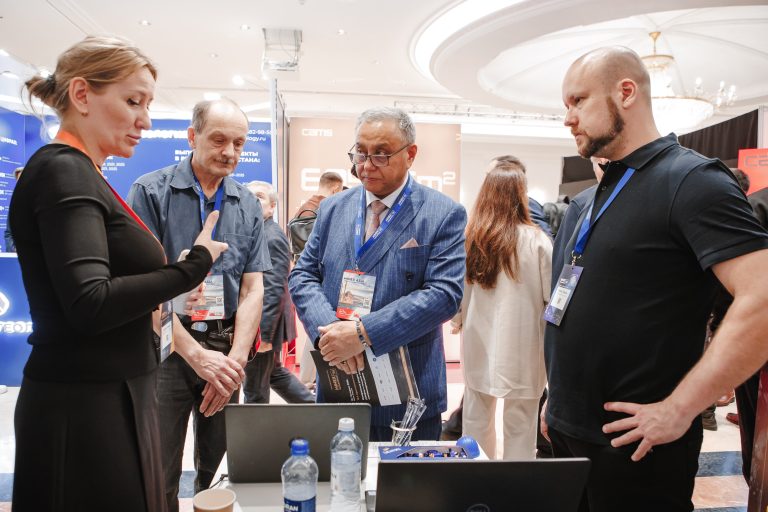
    New portable analytical equipment on display at the forum illustrated how technology is already beginning to change fieldwork. Vasily Makeyev, a representative of a equipment distribution company, demonstrated devices capable of performing on-site chemical analysis of ore and rock samples without the need to wait for laboratory results. “A geologist, right in the field or underground in a mine, can immediately assess the chemical composition of material on the spot,” he said, “rather than waiting for laboratory data that can take several hours or even several days to process.”

    On the broader challenge of building a domestic deep processing industry, participants were candid about the obstacles. Ros Lund, chief executive of the Eurasian Critical Minerals Organisation, acknowledged that while Kazakhstan has the intent and policy mechanisms, competing in processing is far from straightforward. “Next door is China with enormous capacity,” he said. “The key question is how to motivate companies to build processing facilities in Kazakhstan. Tax incentives are already in place and the process is moving. New plants should appear within the next five years.”

    The forum comes as Kazakhstan intensifies efforts to position itself as a critical minerals hub, backed by subsoil use reforms, increased state geological funding and new frameworks for attracting strategic investors committed to domestic value-added production.

  • Uzbekistan’s mining sector marks a year of major discoveries, expansions and digital upgrades

    Uzbekistan’s mining sector marks a year of major discoveries, expansions and digital upgrades

    The past year brought several landmark developments for Uzbekistan’s extractive industry, ranging from new discoveries to large-scale industrial expansion and digital transformation.

    In September, President Shavkat Mirziyoyev announced the discovery of a giant gas deposit on the Ustyurt Plateau. For the first time in the country’s history, exploration drilling in the area reached depths of 6.5 km. While technical details of the find have not yet been disclosed, exploration work in the region is being carried out by Uzbekneftegaz in partnership with Azerbaijan’s SOCAR.

    Industrial expansion was led by Almalyk Mining and Metallurgical Complex, one of the country’s largest resource producers. In October, the company launched the first processing line of its new MOF-3 concentrator. Once all lines are commissioned by 2026, the facility is expected to process up to 60 million tonnes of ore annually, producing 894,000 tonnes of copper concentrate and 1,500 tonnes of molybdenum concentrate. AMMC says MOF-3 will become the largest copper production facility in Central Asia.

    The company also commissioned its own emulsion explosives plant with a capacity of 90,000 tonnes per year, supporting expanded drilling and blasting operations at the Yoshlik I deposit. In addition, AMMC became the first producer in Uzbekistan to introduce an automated fleet management system at the Kalmakyr and Yoshlik I open pits.

    Another key milestone came in April, when Navoi Mining and Metallurgical Company put into operation a new mine shaft at the Zarmitan gold deposit. The “Skipovoy” shaft, 6.5 meters in diameter and 1 km deep, will increase ore transport to Hydrometallurgical Plant No. 4 by 1.4 million tonnes per year.

    At the policy level, the government also announced plans to implement 76 projects focused on rare and rare earth metals, with total investments estimated at $2.6 billion.

  • Rare-Earth Metals Move to the Center of Global Tech Competition as Kazakhstan Emerges as a Major Future Player

    Rare-Earth Metals Move to the Center of Global Tech Competition as Kazakhstan Emerges as a Major Future Player

    Rare-earth metals, long overshadowed by more familiar raw materials, have become the backbone of the global technological race, according to BAQ.KZ citing Energyprom. These 17 elements, found in nature in dispersed form, are essential to modern economic resilience. They are critical for manufacturing microchips, lasers, batteries, electric vehicle magnets, and key components of military electronics.

    Surging demand—driven by the rapid expansion of electric mobility, the growth of renewable energy, and increasing defense budgets—has turned rare-earth elements into one of the world’s most strained and politically sensitive commodity markets. Supply growth continues to lag behind demand, intensifying geopolitical tensions especially given that China controls over 70% of global mining and nearly 90% of processing.

    Over the past two decades, the industry has undergone several drastic shifts, ranging from declining output in the early 2010s to a strong production boom between 2018 and 2023. Global output rose from 101.5 thousand tonnes in 2004 to 379.9 thousand tonnes in 2024—nearly a fourfold increase. China remains the dominant producer with 270 thousand tonnes annually, followed by the United States with 45 thousand tonnes, Australia and Thailand with 13 thousand tonnes each, and Russia with just 2.5 thousand tonnes.

    Beijing continues to leverage its vast production capacity and near-total processing dominance as both an economic and geopolitical tool. In recent months, China has expanded export controls on multiple rare-earth elements. The U.S. has accused China of market manipulation and exerting “economic pressure.” While a recent meeting between leaders of the two nations helped temporarily reduce tensions—China agreed to delay some restrictions and the U.S. softened select tariffs—the underlying rivalry persists.

    China’s share of global production has fluctuated sharply. It dropped from 85.7% in 2014 to 57.3% by 2020, before rebounding to 71.1% in 2024. Despite global efforts to diversify, China remains the central pillar of the supply chain.

    Global rare-earth reserves are estimated at 90–91 million tonnes. China holds roughly half—44 million tonnes—followed by Brazil (21 million), India (6.9 million), Australia (5.7 million), and Russia (3.8 million). In comparison, the U.S., Madagascar, and Thailand possess only minor reserves.

    A new major player, however, is rapidly emerging. Kazakhstan, according to the State Committee on Geology, holds an estimated 28.2 million tonnes of rare-earth reserves, placing it second in the world behind only China. Experts emphasize that true competitiveness depends not just on resources but on processing capacity. While Brazil has vast reserves, it produces only about 20 tonnes per year due to limited processing capabilities. China, in contrast, combines large reserves with unmatched technological strength.

    Recognizing the sector’s strategic importance, Kazakhstan’s President Kassym-Jomart Tokayev has ordered the launch of at least three rare-earth processing and deep-refining enterprises within the next three years. At the same time, Kazakhstan is actively expanding international partnerships, including signing a Memorandum of Understanding with the United States on critical minerals. This move may play a key role in diversifying global supply chains and strengthening Kazakhstan’s position in the emerging resource architecture of the future.

  • Tau-Ken Samruk Begins Exploration of Rare and Rare-Earth Metals in Rwanda and Afghanistan

    Tau-Ken Samruk Begins Exploration of Rare and Rare-Earth Metals in Rwanda and Afghanistan

    Kazakhstan’s state-owned mining company Tau-Ken Samruk has launched geological exploration efforts for rare and rare-earth metals in Rwanda and Afghanistan, according to Nurlan Zhakupov, Chairman of the Board of Samruk-Kazyna. The initiatives are viewed as strategically important for strengthening Kazakhstan’s resource security and expanding its processing capabilities.

    In Rwanda, the national company has already signed a cooperation agreement that will pave the way for establishing a joint venture with the country’s state enterprise. Once the joint company is formed, exploration activities will begin, eventually leading to the extraction of strategic minerals.

    Work in Afghanistan remains at an early evaluation stage. Specialists collected and analyzed geological samples in July and reported promising results. However, joint mining is not yet under consideration, as licensing and resource assessment procedures still need to be resolved.

    Zhakupov noted that these international exploration projects will help Kazakhstan develop deeper processing of raw materials sourced from third countries. The government has declared its intention to process rare and rare-earth metals domestically, and the Ministry of Industry and Construction has prepared a development program for the sector covering 2024–2028.

    Tau-Ken Samruk continues to focus on gold, copper, and lead-zinc deposits while also identifying strong potential in the extraction of strategic resources, including rare and rare-earth elements.