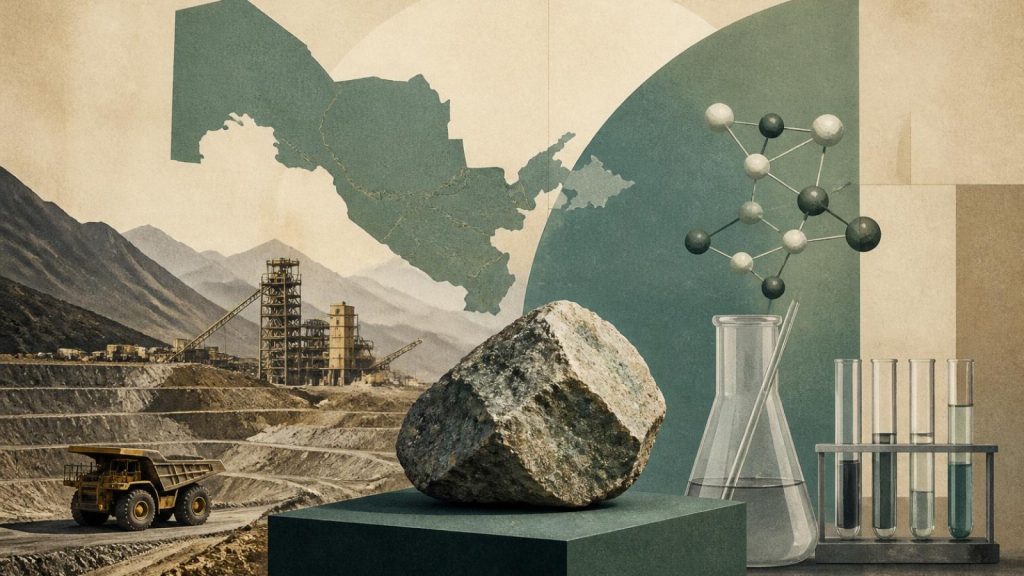
In a significant development for Uzbekistan’s mining and metallurgy sector, a recent visit by representatives from SIM2 KU Leuven and SOLVOMET R&T Centre has led to the establishment of a joint Hydrometallurgy Research Centre in collaboration with the Uzbekistan Technological Metals Complex (UzTMK) and Tashkent State Technical University. This initiative, which aims to leverage Uzbekistan’s vast uranium deposits for rare-earth co-production, marks a pivotal step in enhancing the country’s critical raw materials sector and fostering long-term research capacity.
The collaboration began with a courtesy visit to SIM2 KU Leuven’s hydrometallurgical labs in Belgium, facilitated by Coen de Vos Vos from EIT RawMaterials during the EU Raw Materials Week 2025. The successful discussions led to the signing of a major contract research project with UzTMK, which has set a record for the time taken to reach an agreement. This partnership not only signifies a commitment to advancing hydrometallurgical solutions but also sparks a broader debate on Europe’s role in securing critical raw materials from Central Asia.
During their visit to Tashkent and Chirchiq, the team laid the groundwork for the new research centre, which will be located in UzTMK’s state-of-the-art R&D TechnoPark facilities. The centre will be equipped with advanced analytical and hydrometallurgical infrastructure valued at tens of millions of euros, focusing particularly on solvent extraction techniques, an area where the SOLVOMET team has achieved global recognition.
The initiative aims to develop innovative solutions for Uzbekistan’s critical raw materials sector while simultaneously building local research capacity and providing training opportunities. The collaborative effort is expected to enhance the country’s position in the global rare-earth market, which is increasingly vital for various high-tech industries.
The visit also highlighted Uzbekistan’s vibrant culture and modern advancements, with the capital city of Tashkent showcasing a dynamic atmosphere and a growing number of electric vehicles, indicating a shift towards sustainable practices. The hospitality experienced by the visiting team further underscored the warm and welcoming nature of Uzbek culture.
As the collaboration progresses, the involved parties express optimism about future developments and the potential for further partnerships in the region. The journey towards establishing a robust critical raw materials sector in Uzbekistan is just beginning, with plans for continued engagement and exploration of opportunities in the mining and metallurgy fields.