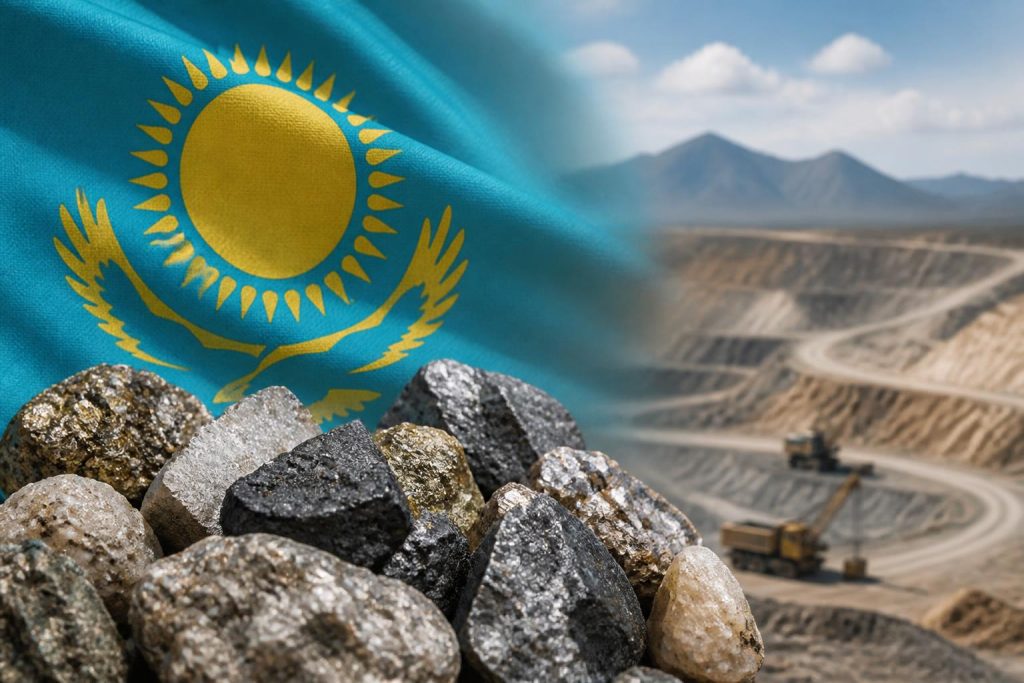
The global rare earth metals (REM) market exceeded $7.2 billion in 2025 and, according to World Bank analysts, is projected to reach $12.6 billion by 2035—and this is not the most optimistic forecast. Over just five years, from 2020 to 2025, global demand for rare earths grew by nearly half (46%). China accounts for the lion’s share of this demand. China’s long-term strategic successes, which have elevated it to the status of a key player in global supply chains for this critical raw material, are motivating lithium- and lanthanoid-rich Kazakhstan and other Central Asian countries to take decisive action.
Playing to Win: Which Critical Minerals Projects in Kazakhstan are Attracting Investment?
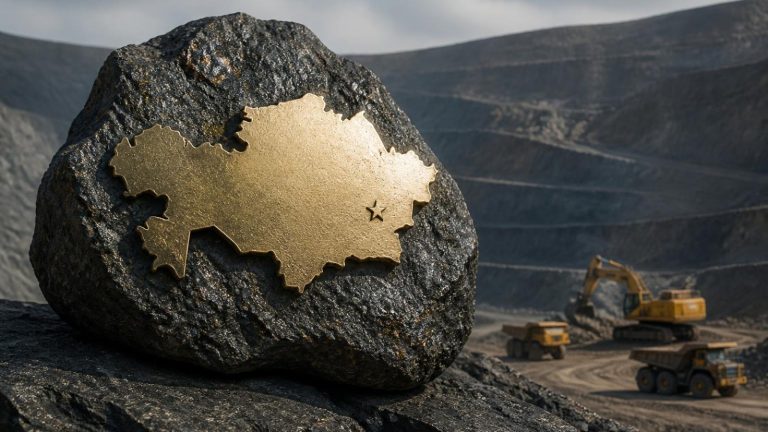
According to the State Committee for Geology, Kazakhstan’s forecasted reserves of rare earth metals total approximately 28.2 million tonnes, though much of this resource base remains to be refined or confirmed. The state balance sheet includes more than 9,000 mineral deposits, of which around a hundred contain rare and rare earth elements.
An extensive raw materials base represents good potential, but realising it amid fierce global competition whilst lacking the necessary technologies and capital is challenging. What is required is not simply isolated steps or breakthroughs, but a well-orchestrated mechanism in which all stages and links—exploration, investment attraction, state support measures, scientific research, extraction and processing—are carefully balanced.
“Critical minerals are becoming one of the key resources of a new industrial era. Kazakhstan possesses significant mineral and raw materials potential and is capable of securing a worthy place in these processes. We view the development of this sector as a strategic priority within the country’s new industrial policy,” said Kazakhstan’s Prime Minister Olzhas Bektenov, speaking in June at the XVI International Mining and Metallurgy Congress Astana Mining & Metallurgy—2026 (AMM).
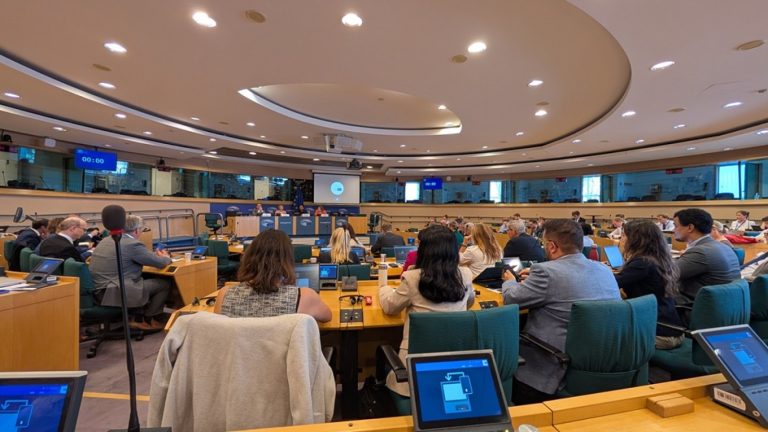
Two months earlier, experts had discussed how Kazakhstan could extract maximum benefit from growing international interest in critical minerals, China’s experience, and strategic proposals from investors in other countries at another significant industry platform—the Minex Kazakhstan—2026 mining and geology forum.
China’s Experience and Its Significance for Kazakhstan
China made deliberate preparations for the global rush surrounding rare earths well in advance. The Middle Kingdom became the world’s key supplier of REM by the early 2000s and consolidated that position by 2010. By strategically deploying the world’s largest confirmed reserves of this raw material, Chinese authorities employed tax incentives, budgetary financing and state control over production and exports, created conditions for scientific research and high-tech manufacturing development, whilst simultaneously building expansive logistics networks.
By 2020, China was independently conducting up to 90% of rare earth processing operations and producing alloys for magnets utilising neodymium and other lanthanoids. To this day, the government finances state corporation China Rare Earth Group, subsidising up to 70% of rare earth production costs, which keeps prices in check. Such is the path of industry champions.
This experience, along with Chinese investment, has traditionally held significance for Kazakhstan. In 2025, the republic became a record holder for funds attracted under the “Belt and Road Initiative,” receiving up to $25.8 billion, of which approximately 35% represented investments in mining and metals. However, since 2025, China has introduced restrictions on the export of technologies related to rare earth extraction, smelting and separation, production of magnetic materials, and the processing and use of secondary resources. The moratorium also extends to installation, commissioning, servicing, repair and modernisation of corresponding production lines. All of this can only be obtained by partners from other countries through special permission (essentially “manual” regulation).
The specificity of Kazakhstan’s raw materials base lies in the fact that the predominant share of rare and rare earth elements is obtained as by-products during uranium, non-ferrous and precious metals extraction, which requires precisely calibrated extraction and separation technologies. This remains a bottleneck, as Kazakhstan currently lacks quality in-house expertise in this area. Meanwhile, these very processes determine production costs and investment project profitability.
Therefore, the question involves not only attracting foreign capital to develop the sector, but also technology imports. At the same time, the public and political elites advocate maintaining a balance of forces and national interests. The overall conclusion is clear: Kazakhstan’s critical raw materials industry must not become wholly dependent on foreign innovation and investment. To achieve this, internal state support institutions are necessary (the kind that works so effectively in China). Examples exist.
“In 2025, Baiterek invested more than $20 billion into the Kazakhstan economy, deploying various instruments: equipment leasing, concessional credit lines, share capital acquisition through subsidiary companies. Approximately 2.5% of this sum was directed towards mining. Since 2022, sector financing has increased tenfold.
In November 2025, Kazakhstan Development Bank launched a specialised five-year programme for critical minerals with total investment of $1 billion. For now, we are concentrating efforts and resources on exploration and extraction. However, in the long term, we aim to develop processing operations and ultimately produce finished goods in Kazakhstan,” explained Aidyn Akan, managing director of the national investment holding Baiterek, during a strategic session at the Minex Kazakhstan—2026 forum.
Foreign Investment and Strategic Partnerships
The comprehensive national development plan for rare and rare earth metals for 2024–2028, adopted in the country, accounts for various directions of strategic partnership, including the acquisition of the most effective foreign technologies. Kazakhstan has already established business relationships concerning rare metals extraction and processing with production companies from the European Union, the United Kingdom, the United States and the Republic of Korea. And in 2025–2026, Kazakhstan’s authorities convincingly demonstrated how multi-vector policy in the critical raw materials sector would function.
“Of course, we continue collaborating with China, but are keen to attract capital from other countries, which will allow us to diversify investments in the sector,” emphasised Azat Kabdrashitov, adviser to the chairman of Kazakh Invest, during the strategic session on critical minerals at Minex Kazakhstan—2026.
On the same platform, one of his interlocutors, Michael Weitz, head of the metals and mining division at IPEX-Bank (Germany), noted that agreements will only develop into real projects if certain conditions are met.
“Sustainability means we want to secure alternative sources for critical materials supply. To this end, the German government has established a special fund, which I represent. This programme is open to Kazakhstan and other Central Asian countries.
I believe expectations exist on both sides. We operate to international standards. This concerns not only geology, where we require data conforming to NI43 or JORC standards (Canadian and Australian geological information disclosure standards). On the technical side, we also need to know that everything is transparent from the outset, the project is sound and will generate returns. For this reason, we want to see audit reports, and we are prepared in turn to provide comprehensive information on financing details. We often meet with new clients from among junior companies. They are excellent geologists, but may initially lack understanding of our requirements,” considers the German expert.
American partners are prepared to introduce cutting-edge exploration and mining development technologies for rare metals and rare earth metals in Kazakhstan on their own terms.
“Capital fears not risk, but misunderstanding. Central Asia possesses first-rate resource bases, yet remains limited in access to the global investment market, which is reluctant to commit greater funds due to lack of systematisation. Kazakhstan and Uzbekistan have major national companies with successful cases of mining cluster creation.
However, comprehensive sector development requires a language investors understand, partnerships structured around specific supply chains, and infrastructure resilience. Only under such conditions can one assemble strong international teams and manage not individual projects, but portfolios of assets with deep expertise,” shared the view Vasily Starozhuk, managing partner of VSSC consultancy (USA), who presented a paper titled “From Local Champions to Global Players: The Next Stage of Central Asian Mining Company Development” at the forum.
Another strategic partner for Kazakhstan has become Saudi Arabia. Khalid ibn Saleh Al-Mudaifer, Deputy Minister of Industry and Mineral Resources of the kingdom responsible for mining, participated in a session titled “Strategic Dialogue on Developing Mining and Metallurgical Sector Cooperation,” which took place during the AMM congress. According to him, aluminium, steel, titanium and rare earth elements rank among the most promising areas for joint investment by Saudi Arabia and Kazakhstan. He also noted that both countries share strategically advantageous geographical positions, which will facilitate the development of global mineral supply chains and realisation of long-term joint initiatives in the mining sector.
The influx of foreign capital to Kazakhstan’s mining and metals sector since 2025 is well illustrated by statistics. Whilst foreign investment in mining contracted by nearly a third in 2024, it grew substantially in 2025 and proved the highest across Central Asian countries, partly through major transactions with foreign companies. In 2026, rating agency S&P confirmed the republic’s sovereign credit rating at “BBB-“, maintaining a positive outlook.
Key Extraction and Processing Projects
However, current results are not yet impressive: rare and rare earth metals account for merely around 0.3% of industrial production in the republic. Will this situation change within the next five years? According to forecasts, growth will not be dramatic.
Real prospects for launching new production facilities are particularly linked to collaboration between Cove Capital and JSC “National Geological Company ‘Tau-Ken Samruk'”. The American side has invested in geological surveys, supplied technology and equipment for these purposes, and is prepared to develop deposits in two regions of the republic and establish production with a closed-loop chain “Ore—Magnet—Technology”. Geological exploration of the Akbulak site in Kostanay Region has revealed the presence of neodymium, dysprosium and terbium. Forecasted reserves of this valuable material total 349,000 tonnes.
“With Cove Capital, besides Akbulak, we conducted exploration over several years on the Northern Katpar and Upper Kairakty sites in Karaganda Region. This is our second major joint project. Last November we signed an agreement to develop these deposits, which contain tungsten with ore reserves exceeding 410,000 tonnes. For both sites, reserve reports conforming to international JORC standards have already been prepared, and a feasibility study has been developed. Planned investment stands at $1.1 billion.
Our company has conducted geological surveys since its establishment in 2009. Over this period, we have created more than 20 joint ventures, including with foreign companies. We independently managed ten projects and, as a result, placed 8 solid mineral deposits on the balance sheet. Total investments amounted to 72 billion tenge,” explained Nariman Abasmetov, chairman of JSC National Geological Company Tau-Ken Samruk, during his presentation at Minex Kazakhstan—2026.
Exploration and Production Assets
Specialists at Tau-Ken Samruk have compiled a list of rare earth metals whose extraction and processing will, from a business perspective, yield positive economic returns, and have already identified a foreign partner for one of the projects. This concerns mineral resources in Rwanda and the search for rare and base elements, including tantalum, beryllium and niobium. An agreement has been signed with Ngali Holdings. According to Nariman Abasmetov, this represents entry at the international level and the opportunity to expand the mineral and raw materials base in the interests of the republic.
The Ust-Kamenogorsk Metallurgical Plant (UMP), a subsidiary of JSC National Atomic Company Kazatomprom, produces articles from tantalum, beryllium and niobium, yet has experienced a deficit in its own raw materials for several years. This full-cycle enterprise has, since 2023, received several licences for conducting geological surveys for rare and rare earth metals, including at the Kardzhal deposit in Abai Region and the Upper Irgiz deposit in Aktau Region.
“One of our primary tasks is the rational use of our resource base and its replenishment. However, any business is fundamentally about profit. Accordingly, in the near term we plan to develop all directions that can generate maximum returns. Any decisions, including those involving rare and rare earth metals, will be made based on economic viability and guaranteed markets,” explained Dastan Kosherbaev, chief director for strategy and international development at JSC National Atomic Company Kazatomprom, another Minex Kazakhstan—2026 speaker.
This national company operates its own scientific and technological development programme for rare and rare earth metals for 2022–2029, which envisages the creation of new product types, improvement of by-product recovery technologies at enterprises, and establishment of science-intensive manufacturing.
Besides the UMP, Kazakhstan has other enterprises capable of becoming a foundation for establishing the basic industrial infrastructure so necessary for producing rare and rare earth metals products.
The Ust-Kamenogorsk Metallurgical Combine specialises in titanium and magnesium production. The enterprise Zhezkazganredmet produces rhenium and osmium, which are used in high-temperature alloys and the chemical sector. However, as experts correctly noted at the MINEX Kazakhstan—2026 forum, attracting investors will require establishing a reliable system connecting all links, one that will secure Kazakhstan’s access to global capital and a position as a key player in global critical raw materials supply chains.
By Maria Kuznetsova