Tag: nuclear energy

  • China Discovers Major Uranium Deposit but Continues to Rely on Kazakhstan Supplies

    China Discovers Major Uranium Deposit but Continues to Rely on Kazakhstan Supplies

    China has announced the discovery of a significant uranium deposit in the Jingchuan area of Inner Mongolia, estimated to contain up to 30 million tonnes of uranium. This find could potentially bolster China’s domestic resource base for nuclear energy, reducing its reliance on foreign supplies in the long run. However, despite this promising discovery, China remains one of the largest purchasers of uranium from Kazakhstan, accounting for 44% of Kazatomprom’s revenue from natural uranium sales in 2025.

    Kazatomprom, Kazakhstan’s national atomic company, reported a revenue of 1.803 trillion tenge for 2025, showing little change from the previous year. The company experienced a decline in net profit, dropping from 1.13 trillion to 807 billion tenge, while the average selling price of uranium fell from $69.5 to $65.3 per pound due to a 14% decrease in the average annual spot price. However, the volume of natural uranium sales increased by 11%, with China being the primary buyer, contributing 797 billion tenge to Kazatomprom’s revenue.

    In comparison, uranium sales to the United States rose from 143 billion to 204 billion tenge, while sales to Russia decreased from 253 billion to 218 billion tenge. China’s interest in Kazakhstan’s uranium extends beyond mere purchases; Chinese entities are actively participating in several uranium projects within Kazakhstan, including the Zarichnoye and Khorasan-U projects, the latter located in the Kyzylorda region and notable for its Chinese involvement.

    Kazakhstan’s status as a leading global uranium producer with one of the largest resource bases makes it a crucial partner for China. Despite a decrease in net profit and average selling prices, Kazatomprom’s operational cash flow increased from 516 billion to 810 billion tenge in 2025. Shareholders received dividends of 1,264 tenge per share, up from 1,213 tenge the previous year, while capital expenditures rose from 190 billion to 256 billion tenge. Additionally, the uranium extraction tax in Kazakhstan increased from 6% to 9% as of January 2025, with a differentiated scale based on extraction volumes and uranium prices set to be implemented in 2026.


  • Kazatomprom Signals End of ‘Cheap’ Uranium Era Amid Rising Demand

    Kazatomprom Signals End of ‘Cheap’ Uranium Era Amid Rising Demand

    Kazatomprom’s CEO, Meirzhan Yusupov, announced during a financial results conference that the era of ‘cheap’ uranium is coming to an end, as global demand for nuclear energy accelerates. This shift is backed by a commitment from 38 countries, accounting for over 70% of the world’s GDP, to triple nuclear energy capacity by 2050. Yusupov noted that the demand surge is occurring within a disciplined commercial environment, with long-term uranium price indicators remaining stable and reaching an 18-year high. This creates a solid foundation for future long-term contracts, as market dynamics shift towards producers with confirmed large uranium reserves.

    Kazatomprom’s consolidated revenue for the first half of the year rose by 9% year-on-year to nearly 718 billion tenge (approximately $1.57 billion), reflecting financial discipline and a favourable uranium market. However, the industry faces rising production costs, and Yusupov acknowledged that the days of ‘cheap’ uranium are over. The fundamental need for reliable, low-carbon energy remains strong, and global energy companies are aware of this shift, ensuring robust long-term demand for uranium.

    In addition to its financial results, Kazatomprom announced agreements with China’s State Nuclear Uranium Resource Development Company Limited (SNURDC) for spot contracts for natural uranium concentrates, and with Uranium One Group JSC for the sale of uranium concentrates to the Siberian Chemical Combine in Russia. The details of these contracts are confidential but align with current market conditions.

    Recent amendments to Kazakhstan’s Subsoil Code, effective from September, will impact uranium mining licenses, requiring a minimum participation share for Kazatomprom in any organization receiving such licenses. Another amendment shifts the legal framework for uranium exploration from a licensing regime to a contractual one, allowing for a maximum combined term of 11 years for exploration agreements.

    Kazatomprom also reported a new processing plant with a capacity of 500 tonnes per year at the Zhalpak deposit, with plans to expand to 900 tonnes by 2027. However, the construction of a significant sulphuric acid plant is facing delays due to the discovery of potential paleontological finds at the site. Construction has been paused pending regulatory approval for excavation and analysis of the finds.

    The sulphuric acid plant is crucial for Kazatomprom’s uranium extraction operations, and uncertainties regarding its supply have impacted production plans. The total investment in the sulphuric acid plant project is estimated at approximately 113 billion tenge ($2.6 million). The expected commissioning date for the plant has been pushed back to between Q3 2027 and Q1 2028, a delay of 6-12 months, although Kazatomprom anticipates that this will not significantly affect its uranium production operations.


  • Central Asia’s Nuclear Ambitions: Kazakhstan’s Strategic Role in the Uranium Market

    Central Asia’s Nuclear Ambitions: Kazakhstan’s Strategic Role in the Uranium Market

    Central Asia is emerging as a pivotal player in the global nuclear energy landscape, with Kazakhstan at the forefront due to its substantial uranium reserves. Expert Iqbal Guliyev from MGIMO highlights the region’s pragmatic approach to nuclear energy, particularly in its interactions with the International Atomic Energy Agency (IAEA). The region’s nuclear projects are attracting international attention, as evidenced by frequent visits from IAEA Director General Rafael Grossi, who engages with regional leaders to discuss long-term cooperation and strategic roadmaps.

    The geopolitical context, marked by crises and sanctions, has disrupted traditional supply chains, making reliable nuclear fuel supply a critical concern for the United States and the European Union. For Central Asian countries, which are eager to move beyond their roles as mere raw material suppliers, this presents an opportunity to become full-fledged technological partners in nuclear energy. Kazakhstan, a global leader in uranium production, supplying about 40% of the world’s needs, is looking to not only export uranium but also participate in the entire nuclear fuel cycle.

    Guliyev emphasizes that while Kazakhstan’s potential as a full-cycle nuclear player is significant, the country has yet to establish this capability fully. He notes that while Kazakhstan has a robust uranium base and can develop processing and production infrastructure, the more complex stages of conversion and enrichment require international cooperation rather than complete technological autonomy. The ongoing sanctions and logistical challenges indeed compel market participants to diversify uranium supply routes, but Guliyev warns against conflating geopolitical assumptions with verified facts.

    The close collaboration with the IAEA serves as a means for Central Asian states to safeguard their national interests, with nuclear power plants (NPPs) seen as vital for economic survival amid acute electricity shortages. Kazakhstan and Uzbekistan are central to this competition, with various international corporations, including Russia’s Rosatom and China’s CNNC, proposing NPP projects in the region.

    Guliyev argues that the presence of the IAEA is not about pushing narrow geopolitical interests but rather about ensuring safety and compliance with international norms. The agency’s role is to provide oversight and guarantees rather than to dictate commercial partnerships. For Kazakhstan, this means international scrutiny and support for its nuclear projects, including those involving Rosatom, without political interference in the selection of technology partners.

    Beyond geopolitics, Grossi’s visits also have humanitarian implications, fostering cooperation in nuclear medicine and food security. Initiatives like the ‘Rays of Hope’ project aim to combat cancer, while agreements on using radiation technologies in agriculture are crucial for a region still haunted by the legacy of nuclear testing. These developments are essential for building public trust in nuclear technologies, especially in Kazakhstan, where historical memories of the Semipalatinsk test site linger.

    In conclusion, Central Asia is strategically leveraging its uranium resources, establishing itself as a key energy hub in Eurasia while fostering strong partnerships with the IAEA. This relationship not only enhances the predictability of the uranium market but also allows Central Asian nations, particularly Kazakhstan, to navigate the interests of major powers like Russia, China, and the USA while maintaining control over their energy independence. The IAEA’s involvement does not contradict Kazakhstan’s collaborations with Russia but rather reinforces trust in projects involving Russian technology, enabling Kazakhstan to develop its nuclear energy capabilities within a framework of international legitimacy.


  • Kazatomprom Announces Extraordinary Shareholders Meeting to Discuss Major Uranium Supply Contract

    Kazatomprom Announces Extraordinary Shareholders Meeting to Discuss Major Uranium Supply Contract

    Kazakhstan’s national atomic company, Kazatomprom, has announced an extraordinary general meeting of shareholders, with a significant agenda item concerning a major contract for the supply of natural uranium in the form of U3O8. While specific details of the agreement remain undisclosed, it has been confirmed that the deliveries are intended for the international group of companies, Uranium One, which is part of the Russian state corporation Rosatom. This move underscores Kazatomprom’s ongoing strategic partnerships in the uranium market, particularly with Russian entities.

    In addition to the contract with Uranium One, Kazatomprom has also disclosed the signing of a spot purchase agreement for natural uranium concentrates with the Chinese company, State Nuclear Uranium Resource Development Company Ltd. This dual engagement highlights Kazatomprom’s proactive approach in securing contracts with both Russian and Chinese firms, reflecting the growing demand for uranium in the global energy sector.

    Kazatomprom’s initiatives are crucial as the world increasingly turns to nuclear energy as a cleaner alternative to fossil fuels. The company’s ability to navigate and establish these international contracts positions it as a key player in the uranium supply chain, which is vital for the nuclear power industry. The upcoming shareholders meeting is expected to provide further insights into Kazatomprom’s strategic direction and its role in the global uranium market.


  • New Uranium Complex Launched at Zhalpak Mine in Kazakhstan

    New Uranium Complex Launched at Zhalpak Mine in Kazakhstan

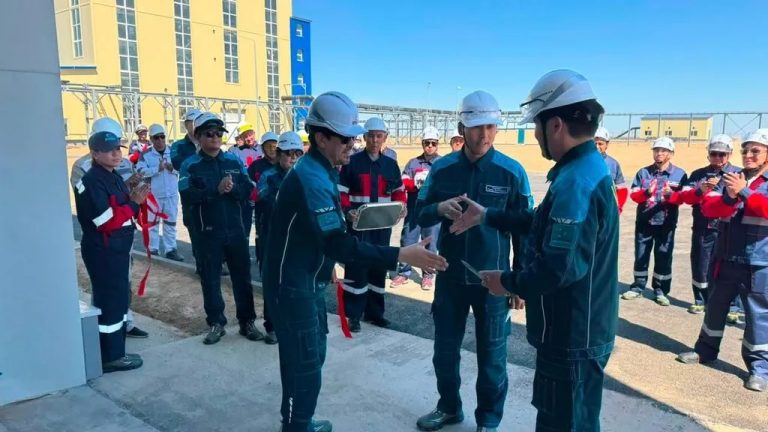
    The mining company ‘Ortalyk’ has officially launched a new uranium processing complex at the Zhalpak mine, with an initial capacity of 500 tonnes of uranium per year. This development is part of a broader project aimed at enhancing the production infrastructure, ultimately targeting a project capacity of 900 tonnes annually.

    Gumar Sergazin, Deputy Chairman of the Atomic Energy Agency, highlighted the significance of developing uranium mining enterprises and exploring new deposits to strengthen Kazakhstan’s mineral resource base. He expressed confidence that this new phase of the Zhalpak mine’s development will not only boost the company’s production capabilities but also contribute to the growth of the nuclear sector in Kazakhstan. Additionally, it was reported that Kazatomprom has added six new promising uranium sites to its portfolio, indicating a strategic move towards expanding the country’s uranium mining operations. This initiative aligns with Kazakhstan’s goals to enhance its position in the global uranium market, given its status as one of the leading producers of uranium worldwide.

  • Kazakhstan at the Centre of New Uranium Shortage Amid Rising Demand for Nuclear Energy

    Kazakhstan at the Centre of New Uranium Shortage Amid Rising Demand for Nuclear Energy

    Kazakhstan has emerged as a pivotal player in the global uranium market, currently facing a significant shortage of this critical mineral due to an upsurge in demand driven by renewed interest in nuclear energy. Anna Bryndza, Executive Vice President for International Affairs at the pricing agency UxC, discussed the complexities surrounding uranium extraction during a recent podcast with World Nuclear News (WNN). She highlighted that uranium mining remains one of the most challenging phases of the nuclear fuel cycle, compounded by supply disruptions, geopolitical risks, trade sanctions, construction delays, and rising production costs.

    Kazakhstan is responsible for approximately 40% of the world’s natural uranium oxide production, serving as a stable source of this energy resource for nuclear power plants in countries such as the USA, Russia, France, India, and China. Bryndza noted that the current deficit in uranium supply will not be resolved quickly, as new capacities are required across all sectors of the nuclear fuel market. The industry is responding to clear price signals, indicating a pressing need for timely operationalisation of new capacities to meet forecasted demand.

    Recent announcements from companies engaged in the nuclear fuel cycle, including Orano, Urenco, and Solstice, regarding major production expansion projects, have been viewed positively. However, there is a cautious approach to increasing supply, influenced by past experiences, particularly the long-lasting effects of the Fukushima disaster, which severely disrupted supply chains. Suppliers are now meticulously planning their expansion rates to ensure they align with actual demand rather than mere signals.

    Since the early 2010s, Kazakhstan has been ramping up uranium production, but the market faced a downturn following the Fukushima incident in 2011. Production levels from 2015 to 2024 fluctuated between 19,500 and 24,700 tonnes, with Kazatomprom and its affiliates aiming to produce between 27,500 and 29,000 tonnes this year, up from 25,800 tonnes last year. The peak of low-cost uranium production in Kazakhstan is expected to occur in the early 2030s.

    Bryndza also pointed out that recent geopolitical events have shifted the perception of nuclear energy and uranium supply towards national security concerns. This has led to government policies aimed at ensuring domestic capabilities, particularly regarding high-assay low-enriched uranium (HALEU), which is becoming increasingly important for the next generation of small modular reactors. Currently, there is no established market for HALEU, and significant gaps must be addressed to create a viable supply chain.

    UxC, known for its price information services, has been publishing uranium price indicators for over three decades. The agency’s approach to pricing aims to encompass a broad range of market participants, facilitating collective decision-making and enhancing the effectiveness of price indicators. Despite Kazakhstan’s status as a leading uranium producer, global prices for this critical mineral are set abroad, raising questions about how UxC’s pricing impacts Kazatomprom’s revenues and tax contributions to the state.


  • Americas Uranium Secures Frankfurt Stock Exchange Listing to Expand European Investor Access

    Americas Uranium Secures Frankfurt Stock Exchange Listing to Expand European Investor Access

    Americas Uranium has received approval to list its shares on the Frankfurt Stock Exchange under the ticker symbol WA7, expanding the Canadian uranium explorer’s market presence to three continents as investor interest in nuclear energy grows.

    The Frankfurt listing follows the company’s existing trading on the Canadian Securities Exchange and quotation in the United States, giving Americas Uranium access to European institutional and retail investors at a moment when uranium and nuclear power are attracting renewed attention as components of the global energy transition.

    CEO Nicholas Luksha described the development as an important milestone in the company’s international expansion. “Being publicly listed in Canada and quoted in the US, and now Germany, represents an important milestone for the company as we continue to expand our international profile and connect with investors who recognise the growing importance of uranium and nuclear energy in the global energy transition,” he said.

    Americas Uranium focuses on acquiring, discovering and advancing uranium projects across prospective jurisdictions in the Americas.

  • Kazatomprom to Invest up to 85 Billion Tenge in Uranium Exploration by 2030

    Kazatomprom to Invest up to 85 Billion Tenge in Uranium Exploration by 2030

    Kazakhstan’s national atomic company Kazatomprom is accelerating its exploration activities and expanding its mineral resource base, with planned investments of 75 to 85 billion tenge in geological exploration by 2030.

    The announcement was made by CEO Meirzhan Yussupov during a meeting with President Kassym-Jomart Tokayev. According to the company, six uranium exploration areas have already been identified across Kazakhstan, covering a total area of more than 1000 square kilometres.

    Kazatomprom reported that its group enterprises produced 25.8 thousand tonnes of uranium in 2024, with 13.5 thousand tonnes attributable directly to the company. Sales volumes increased by 11% in 2025, reaching 18.5 thousand tonnes, reflecting steady demand growth in global markets.

    As part of its development strategy for 2025–2034, the company is actively expanding its international presence. Over the past year, Kazatomprom has signed supply agreements with major global energy players, including Switzerland’s AxpoPower AG, Czech utility ČEZ Group and Japan’s Kansai Electric Power. In addition, negotiations are underway for a long-term uranium concentrate supply agreement with India.

    The company is also prioritising technological innovation, with a dedicated strategy focused on improving operational efficiency, reducing environmental impact and implementation solutions across its production processes.

    Industry forecasts support the company’s long-term outlook. According to the World Nuclear Association, global nuclear generating capacity could reach 746 GW by 2040, while uranium demand may rise to 150 thousand tonnes annually.

    Against the backdrop of anticipated supply shortages and growing reliance on nuclear energy, Kazatomprom is focusing on expanding its resource base and securing long-term contracts to maintain its leading position in the global uranium market.

  • Kazatomprom Reports Stable Operations Despite Geopolitical Uncertainty

    Kazatomprom Reports Stable Operations Despite Geopolitical Uncertainty

    Kazakhstan’s national uranium producer Kazatomprom has reported stable operations and financial performance despite ongoing geopolitical tensions, including conflicts in Ukraine and the Middle East.

    In its financial results for the year ended 31 December, the London-listed company stated that its production, exports and overall business activities remain unaffected. Uranium deliveries continue without disruption via both the Russian Federation and the Trans-Caspian International Transport Route, with no restrictions currently impacting shipments to customers.

    However, the company cautioned that broader geopolitical uncertainty and volatility in global capital markets could influence commodity prices and market conditions in the future.

    Chief Executive Officer Meirzhan Yussupov noted that the global nuclear energy sector is entering a more mature phase, with uranium increasingly recognised as a strategic resource within national energy security frameworks. According to him, major consumers are shifting focus from short-term price considerations to securing reliable long-term supply, entering contracts that extend well into the next decade.

    Despite this trend, Kazatomprom indicated that overall contracting activity in 2025 remained below actual demand levels, suggesting continued tightening in the uranium market.

    During the reporting period, the company expanded its international presence, adding Switzerland and the Czech Republic to its customer base, signing a supply agreement with a Japanese utility, and establishing a new long-term partnership with India.

    Kazatomprom also highlighted that the majority of its revenues and financing are denominated in US dollars, which provides a natural hedge against exchange rate fluctuations and supports financial stability.

    The company said it will continue to closely monitor global developments while maintaining operational resilience in a complex geopolitical environment.

  • Macron Calls for Reducing Europe’s Dependence on Russian Uranium

    Macron Calls for Reducing Europe’s Dependence on Russian Uranium

    French President Emmanuel Macron has called for Europe to reduce its reliance on Russian uranium supplies and diversify sources of nuclear fuel, pointing to several alternative producers including Uzbekistan.

    Speaking at an international nuclear energy summit in Paris, Macron said Europe remains significantly dependent on Russian uranium and must accelerate efforts to diversify supply chains. Among potential alternative suppliers, he mentioned Uzbekistan, Kazakhstan, Mongolia, Canada and Australia.

    Macron stressed that nuclear energy remains central to Europe’s long-term strategy for energy independence, economic decarbonisation and sustainable development.

    The French president also announced that France will soon hold a meeting of its Nuclear Policy Council in Paris, where new decisions regarding the development of the country’s nuclear energy sector are expected to be adopted.

    Uzbekistan has been increasing its uranium production in recent years. According to available data, the country produced about 7 000 tonnes of uranium last year, compared with around 4 000 tonnes in 2024.

    The country’s total identified uranium reserves are estimated at approximately 139 000 tonnes. Uzbekistan is also planning to expand production through the development of four additional uranium deposits.

    The renewed focus on alternative uranium suppliers comes amid growing concerns in Europe about the security of nuclear fuel supply as geopolitical tensions reshape global energy markets.