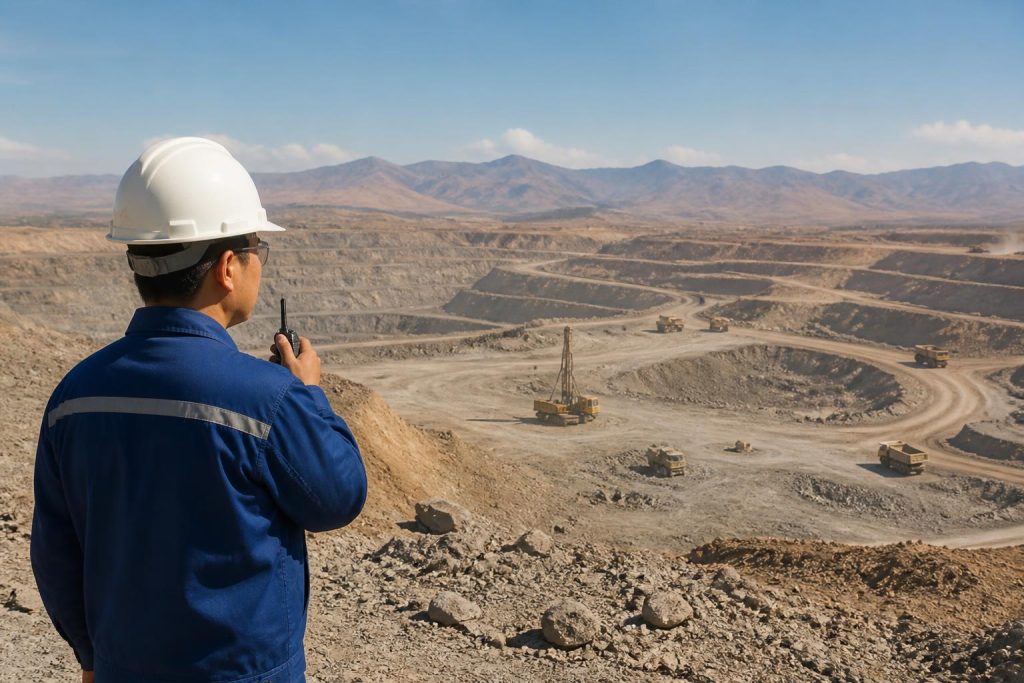
China has announced the discovery of a significant uranium deposit in the Jingchuan area of Inner Mongolia, estimated to contain up to 30 million tonnes of uranium. This find could potentially bolster China’s domestic resource base for nuclear energy, reducing its reliance on foreign supplies in the long run. However, despite this promising discovery, China remains one of the largest purchasers of uranium from Kazakhstan, accounting for 44% of Kazatomprom’s revenue from natural uranium sales in 2025.
Kazatomprom, Kazakhstan’s national atomic company, reported a revenue of 1.803 trillion tenge for 2025, showing little change from the previous year. The company experienced a decline in net profit, dropping from 1.13 trillion to 807 billion tenge, while the average selling price of uranium fell from $69.5 to $65.3 per pound due to a 14% decrease in the average annual spot price. However, the volume of natural uranium sales increased by 11%, with China being the primary buyer, contributing 797 billion tenge to Kazatomprom’s revenue.
In comparison, uranium sales to the United States rose from 143 billion to 204 billion tenge, while sales to Russia decreased from 253 billion to 218 billion tenge. China’s interest in Kazakhstan’s uranium extends beyond mere purchases; Chinese entities are actively participating in several uranium projects within Kazakhstan, including the Zarichnoye and Khorasan-U projects, the latter located in the Kyzylorda region and notable for its Chinese involvement.
Kazakhstan’s status as a leading global uranium producer with one of the largest resource bases makes it a crucial partner for China. Despite a decrease in net profit and average selling prices, Kazatomprom’s operational cash flow increased from 516 billion to 810 billion tenge in 2025. Shareholders received dividends of 1,264 tenge per share, up from 1,213 tenge the previous year, while capital expenditures rose from 190 billion to 256 billion tenge. Additionally, the uranium extraction tax in Kazakhstan increased from 6% to 9% as of January 2025, with a differentiated scale based on extraction volumes and uranium prices set to be implemented in 2026.