Tag: Kazakhstan

  • Kazakhstan’s jewellery industry posts strong growth backed by state support

    Kazakhstan’s jewellery industry posts strong growth backed by state support

    Kazakhstan’s jewellery industry is expanding rapidly, supported by a package of state measures aimed at strengthening domestic production and reducing costs for manufacturers.

    According to official data, jewellery production in the country increased by 41.3% year on year in the first ten months of 2025, reaching $4.1 million. Imports rose by 39.6% to $174.7 million, while exports jumped 7.3 times to $54.5 million. Domestic consumption also grew, up 3.2% to $124.3 million.

    Growth in the sector is closely linked to long-standing government support mechanisms. Since 2016, jewellery manufacturers have been entitled to annual quotas allowing them to purchase up to 300 kg of gold. Refined gold is sold primarily to the National Bank of Kazakhstan, which acquired about 74 tonnes in 2025. The same mechanism is applied through sales of granulated refined gold by Tau-Ken Altyn.

    Additional support was introduced in January 2023 with the abolition of VAT on the purchase of quota gold by jewellery producers operating in Kazakhstan. In 2025, manufacturers purchased 38 kg of gold under this exemption, compared with 34.3 kg a year earlier.

    The sector has also benefited from the inclusion of jewellery manufacturing in the list of priority activities within the Astana Special Economic Zone, as well as the removal of mandatory assay hallmarking for domestically produced silver jewellery.

    In total, Kazakhstan has 4,542 registered participants in the jewellery trade, including 445 manufacturers. The industry operates under the national law regulating precious metals and gemstones.

  • Kazakhstan to invest $500 million in high-resolution geological mapping to boost mineral exploration

    Kazakhstan to invest $500 million in high-resolution geological mapping to boost mineral exploration

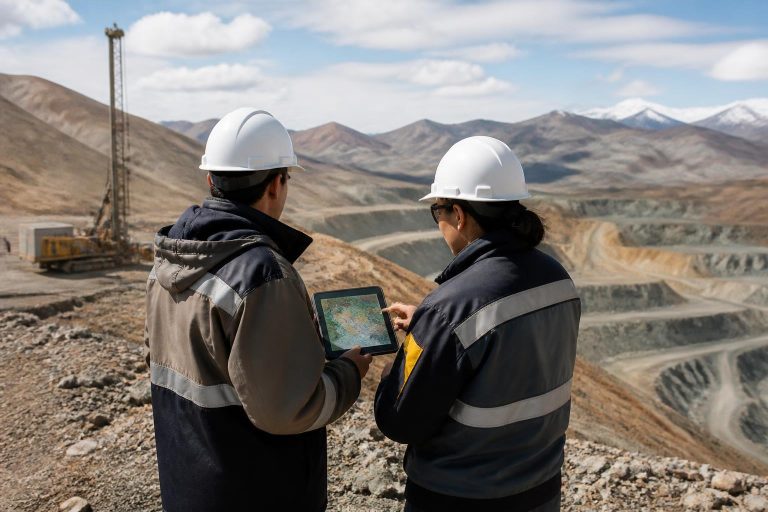
    Kazakhstan’s government is launching a new phase of subsoil exploration aimed at significantly expanding geological coverage using modern prospecting methods, in line with instructions from President Kassym-Jomart Tokayev.

    As part of this effort, 20 projects were developed last year to carry out geological mapping at a scale of 1:50,000 across a total area of 100,000 square kilometres, with plans to cover an additional 30,000 square kilometres of the most prospective areas each year. This represents a major increase in detail compared with the Soviet-era standard of 1:200,000 mapping.

    Over the next three years, the government plans to allocate 240 billion tenge, or around $500 million, to implement these projects, conduct seismic surveys in poorly studied sedimentary basins, and build modern geological infrastructure. By comparison, total investment in the sector over the past 15 years amounted to $469 million.

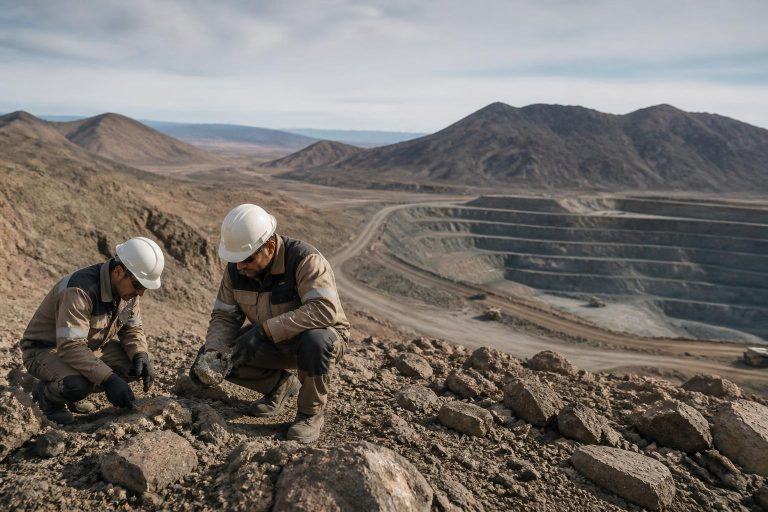
    The programme includes analysis of remote sensing data, aerogeophysical and geochemical surveys, and extensive fieldwork. Areas were selected based on factors such as reserve depletion, the absence or minimal presence of subsoil users, and potential for priority minerals. The identified zones show high prospects for discoveries of copper, gold, lead, zinc, rare earth elements, barite and bauxite.

    Seismic exploration is also planned in underexplored oil and gas basins, including the North Torgai, Shu-Sarysu and Syrdarya regions. In parallel, Kazakhstan intends to modernise its laboratory and analytical base and continue the digitalisation of geological data.

    According to the government, the shift to detailed geological mapping at this scale will significantly improve the accuracy of geological forecasts and align Kazakhstan with international best practice seen in the European Union, Canada, Australia and China. Detailed regional mapping is viewed as a foundation for identifying promising areas, reducing geological and investment risks, and attracting private investment into exploration and mining.

  • Kazakhstan launches large-scale programme to refine geological mapping and resource forecasts

    Kazakhstan launches large-scale programme to refine geological mapping and resource forecasts

    Kazakhstan will roll out a three-year programme of advanced subsurface studies aimed at improving the accuracy of geological forecasting, according to the Ministry of Industry and Construction. A central element of the initiative is the transition to geological mapping at a scale of 1:50,000, which is four times more detailed than the Soviet-era standard of 1:200,000.

    In 2025, authorities approved 20 projects covering a total area of 100,000 square kilometres. During the next stage, around 30,000 square kilometres of the most prospective territories are expected to be studied annually. Funding of 240 billion tenge, or about $500 million, has been allocated for geological exploration of 20 sites, seismic surveys in poorly studied sedimentary basins, and the creation of a digital geological data infrastructure. This represents the largest level of investment in the sector in the past 15 years.

    The programme includes analysis of satellite imagery, aerogeophysical and geochemical surveys, as well as extensive fieldwork. Areas were selected based on declining reserves, the absence of active subsoil users, and strong potential for key minerals. Priority targets include zones prospective for copper, gold, lead, zinc, rare earth metals, barite and bauxite.

    Special focus will be placed on oil and gas potential. Seismic surveys are planned in the North Torgai, Shu-Sarysu and Syrdarya basins, alongside upgrades to laboratory facilities and the digitisation of geological data.

    According to Ulzhabay Ismailov, генеральный директор GeoByte-Info, mapping at a 1:50,000 scale makes it possible not only to chart territories in detail but also to reconstruct geological history, identify ore distribution patterns and better assess exploration prospects. Refining forecast resources in the R3 and R2 categories will help more precisely select targets for subsequent exploration, he said.

  • Kazakhstan moves to define “underexplored areas” as part of subsoil use reform

    Kazakhstan moves to define “underexplored areas” as part of subsoil use reform

    Recent amendments to Kazakhstan’s Subsoil Code have given formal shape to the idea of designating so-called underexplored areas, where subsoil use rights could be granted under simplified conditions. The concept itself is not controversial: territories that are objectively complex, high-risk and poorly studied may justify more flexible terms for investors. However, experts say the success of the reform will depend on how “underexplored” is defined in practice.

    Industry specialists warn that relying on a purely formal or simplified definition risks creating new disputes, allegations of lobbying and inefficient decisions. Geological knowledge alone is not sufficient to determine the true level of exploration. Instead, the degree of exploration should be assessed through a combination of factors, including drilling history, certainty of petroleum systems, presence or absence of proven reserves, technological readiness, market interest and auction results.

    Kazakhstan offers clear examples of why a narrow approach can be misleading. Parts of the Pre-Caspian Basin are formally considered well explored, yet large areas have seen little or no modern exploration activity since Soviet times. Conversely, the Chu-Sarysu Basin is sometimes labelled underexplored, despite hosting multiple discovered and producing gas fields and attracting strong investor interest at recent auctions.

    Experts argue that underexploration should be understood as a lack of sufficient certainty to justify a reliable forecast of commercial reserves, rather than the absence of individual geological surveys. Even areas covered by seismic data may remain underexplored if drilling has not reached target horizons or failed to confirm industrial-scale hydrocarbons.

    The issue becomes more complex when considering unconventional resources such as coalbed methane and shale hydrocarbons. Although legally classified as hydrocarbons, these resources often remain underexplored due to the absence of proven technologies, economic models and successful commercial examples. Coal basins like Karaganda are well studied for coal mining, but industrial production of coalbed methane has yet to be established, making such resources effectively underexplored from an oil and gas perspective.

    Market behaviour is another critical indicator. Areas repeatedly offered at auctions without attracting bidders signal high risk and low certainty, while strong investor demand suggests that simplified access mechanisms may be inappropriate. Ignoring these signals could undermine fair competition.

    To reduce subjectivity, analysts propose an integrated scoring system that combines geological data, drilling results, technological readiness and market activity. Such a framework would allow regulators to justify decisions transparently, strengthen investor confidence and reduce legal and reputational risks. A clear, well-defined methodology, experts conclude, could become one of the most effective elements of Kazakhstan’s subsoil use reform, benefiting the state, investors and regulators alike.

  • Kazakhstan to study lithium potential near Caspian and Aral seas from 2027

    Kazakhstan to study lithium potential near Caspian and Aral seas from 2027

    Kazakhstan plans to launch large-scale geological studies between 2027 and 2029 to assess the potential for industrial lithium extraction in several regions of the country, the Ministry of Industry and Construction of Kazakhstan said in response to an inquiry from LS.

    The programme will focus on mineralized brines, saline lake waters and salt flats located near the Caspian Sea and the Aral Sea, as well as subsurface resources in the Bayankol ore district. The aim is to determine whether these areas are suitable for commercial lithium production. The work will be carried out under the state geological exploration programme, with 600 million tenge allocated from the national budget.

    In parallel, geological assessment continues in Central Kalba. By 2027, specialists are expected to complete studies of areas prospective for lithium, as well as rare and rare earth metals within the Kalba–Narym zone.

    According to the ministry, there is a high probability of discovering new rare metal deposits in several regions, including northern Kazakhstan’s Kokshetau rare-metal province, western Kazakhstan’s Mugodzhar province with lithium-fluorine type granites, and the southeastern part of the Chingiz–Tarbagatai rare earth metallogenic zone in eastern Kazakhstan.

    The ministry also noted that lithium occurrences have already been confirmed in salt flats in the Aral Sea region and in Betpak-Dala, indicating tangible exploration potential in southern parts of the country.

  • Kazakh MP questions state support for KazZinc and Glencore over exporter financing

    Kazakh MP questions state support for KazZinc and Glencore over exporter financing

    A debate over the allocation of state export financing has flared up in Kazakhstan’s parliament, after MP Erlan Sairov sharply criticized the national holding Baiterek and Swiss commodities giant Glencore, which owns around 70% of KazZinc.

    Speaking at a Mazhilis session on business support measures, Sairov said that about 35% of nearly 1 trillion tenge allocated under the exporter financing program went to KazZinc. He questioned why a company exporting semi-finished metal products and operating largely on a prepayment basis required state-backed loans. According to the MP, export support should primarily help domestic high-tech products enter international markets, not finance a multinational corporation.

    Sairov argued that during Glencore’s two decades of presence in Kazakhstan, the company had failed to create high-value, high-tech domestic production, raising concerns about the use of public funds to support foreign-controlled enterprises. His remarks were directed at Baiterek chief executive Rustam Karagoishin.

    In response, Karagoishin stressed that KazZinc is legally registered in Kazakhstan and therefore qualifies as a domestic client for Baiterek. He said the holding is obliged to assess and approve financing applications that meet its criteria, noting that exports remain a key source of foreign currency inflows and budget revenues. While acknowledging the priority given to high-tech sectors, Karagoishin said traditional exporters still play a crucial role, particularly as Kazakhstan’s metallurgical sector faces growing challenges on global markets.

    The discussion comes amid renewed uncertainty around KazZinc’s ownership. Bloomberg reported in mid-2024 that Glencore was considering selling its stake in the company, including the Vasilkovskoye gold asset, before later shelving the plan. Talks reportedly resumed in 2025, with Bloomberg sources naming businessman Shakhmurat Mutalip as a potential buyer. Mutalip is also said by the Financial Times to be pursuing a major stake in Eurasian Resources Group, despite not appearing on Kazakhstan’s Forbes rich list.

  • Kazakhstan tightens rules for subsoil use and mineral rights

    Kazakhstan tightens rules for subsoil use and mineral rights

    Kazakhstan has introduced stricter requirements for obtaining and retaining subsoil use rights after Kassym-Jomart Tokayev signed amendments to the Code “On Subsoil and Subsoil Use,” LS reports.

    Under the new rules, winners of subsoil auctions must pay signature bonuses before a license is issued. Companies that refuse to make the payment will be barred for five years from obtaining new subsoil rights or acquiring them from third parties.

    The amendments also prohibit concealed extraction of solid minerals under the guise of pilot or test production. Any such violations will result in the immediate revocation of exploration licenses.

    To prevent the emergence of inactive or stalled projects, higher investment requirements have been introduced. Investors must now confirm the availability of financing with supporting documentation before receiving rights to develop mineral resources.

    The changes were previously presented in the Mazhilis and are aimed at strengthening discipline among investors and ensuring more effective and transparent development of Kazakhstan’s mineral base.

  • Kazakhstan to explore new areas for lithium extraction with state-funded geological studies

    Kazakhstan to explore new areas for lithium extraction with state-funded geological studies

    Kazakhstan plans to expand its search for lithium resources by launching new geological studies across several regions of the country, the Ministry of Industry and Construction of Kazakhstan told LS Media.

    According to the ministry, state-funded exploration works are scheduled for 2027–2029 and will focus on mineralized brines, saline lake waters and salt flats in the Caspian and Aral Sea regions, as well as hard-rock formations in the Bayankol ore district. The objective is to determine whether these areas are suitable for commercial lithium extraction. The studies will be carried out as part of the national geological exploration program, with funding of 600 million tenge allocated from the state budget.

    In parallel, authorities expect to complete an assessment of Central Kalba in 2026. The work there is aimed at identifying areas prospective for lithium-bearing mineralization, as well as complex rare-metal and rare-earth mineralization within the Kalba–Narym zone.

    The ministry also highlighted significant potential for discovering new rare-earth deposits hosted in rare-metal granites and pegmatites. Promising targets include northern Kazakhstan near the Kokshetau rare-metal province, western Kazakhstan within the Mugodzhar rare-metal province, and eastern Kazakhstan at the southeastern end of the Chingiz–Tarbagatai rare-earth metallogenic zone.

    In addition, lithium occurrences have already been identified in salt flats across the Aral Sea region, Betpak-Dala and other parts of southern Kazakhstan, reinforcing expectations that the country could expand its role in the supply of critical battery minerals.

  • Kazakhstani university wins first-ever Horizon Europe project and joins EU critical minerals initiative

    Kazakhstani university wins first-ever Horizon Europe project and joins EU critical minerals initiative

    Kazakhstan’s higher education and research sector has reached a landmark milestone after a domestic university secured its first victory in a competitive call under Horizon Europe, the European Union’s flagship research and innovation programme. East Kazakhstan Technical University (EKTU) has become a full partner in the international TiBeRIUM project, marking an unprecedented step for Kazakhstani universities in EU-funded research cooperation.

    TiBeRIUM (Titanium and Beryllium for European Resilience and Innovative Utilization of Minerals) is coordinated by TU Bergakademie Freiberg in Germany and brings together a consortium of 25 partners from 12 countries, including Germany, Greece, Cyprus, the United Kingdom, Norway, Spain, Poland, Belgium, Bulgaria, Finland, Kazakhstan, and Uzbekistan. The project focuses on building sustainable supply chains for critical raw materials and advancing environmentally friendly technologies for the processing of titanium and beryllium. Its total budget is estimated at around €8 million.

    Kazakhstan is represented in the project by EKTU, Tenir Group LLP, and Ulba Metallurgical Plant JSC. According to the university, EKTU’s participation is the result of long-term, systematic efforts by its research teams. During the proposal preparation phase between May and September 2025, EKTU specialists held 18 formal coordination meetings, alongside dozens of technical sessions covering scientific pathways, industrial case studies, environmental impact, and data management. The process also included extensive consultations with industrial partners and in-person international meetings in Germany and Uzbekistan.

    As a result, EKTU joined TiBeRIUM as a full-fledged partner, with responsibilities considered strategically important for achieving the project’s objectives. University representatives noted that this outcome reflects the strength of EKTU’s research infrastructure, scientific management, and professional expertise.

    The achievement was also attributed to sustained support from the Ministry of Science and Higher Education of the Republic of Kazakhstan, which has been investing in the development of national research capacity. Project participants emphasized that participation in Horizon Europe is not an endpoint, but the beginning of a new phase in which Kazakhstani science and engineering aim to play a more active role in developing technologies, strengthening human capital, and contributing to global value chains in critical minerals.

  • RG Gold enters new growth phase after Zijin Mining acquisition and outlines major expansion plans

    RG Gold enters new growth phase after Zijin Mining acquisition and outlines major expansion plans

    Kazakhstan’s gold miner RG Gold has described 2025 as a turning point in its development following the acquisition of the Raygorodok deposit in Akmola region by global mining major Zijin Mining Group. The deal, valued at more than $1 billion, transferred 100% ownership of the asset to Zijin and marked one of the largest transactions in the country’s mining sector in recent years.

    According to the company, the entry of a new shareholder has provided access to international technologies, management standards and long-term strategic capital, while significantly raising the scale of future ambitions. RG Gold plans to invest around $500 million in the construction of a new processing plant, which would increase ore processing capacity by an additional 10 million tonnes per year. This would lift total annual throughput to more than 16 million tonnes.

    In 2025, RG Gold delivered record operating results, processing 6.5 million tonnes of ore and producing nearly 6.5 tonnes of gold. Metallurgical recovery at the processing plant exceeded 87%. The company emphasized that these results were achieved while maintaining high safety standards and protecting employee health.

    The Raygorodok deposit, first explored in the mid-1990s, remains one of Kazakhstan’s largest gold mining projects. Despite relatively low gold grades, the ore is considered easily recoverable, ensuring economic sustainability. Investments in exploration have significantly expanded reserves, while the launch of a CIP-based processing plant in 2022 boosted production efficiency. The mine’s operating life is currently projected to extend to at least 2040, even with higher processing volumes.

    Looking ahead, 2026 is expected to become a key investment year, with construction of the new processing facility forming the core project. RG Gold estimates that the expansion will create more than 1,000 new jobs and deliver broader socio-economic benefits for the region.

    Environmental management and workplace safety remain central to the company’s strategy. In 2025, RG Gold completed preparatory work for ISO 14001 certification, invested in environmental training, launched biodiversity research projects and carried out large-scale land restoration, including planting 100,000 pine seedlings. Safety initiatives introduced during the year contributed to a 38% reduction in workplace incidents.

    Company executives said that integration into Zijin Mining Group opens new opportunities for staff development, knowledge exchange and the adoption of global best practices. Over the next three to five years, RG Gold’s strategy will focus on efficiency improvements, production growth, resource base development and strengthened ESG performance, positioning the company as a benchmark for sustainable gold mining in Kazakhstan.