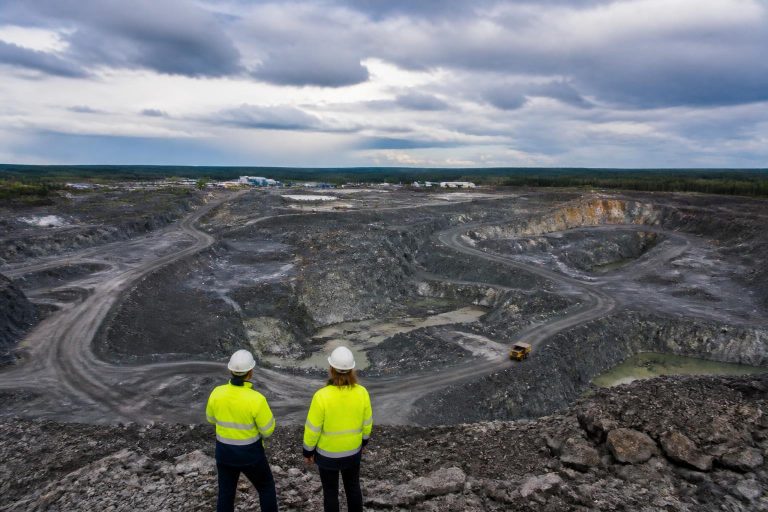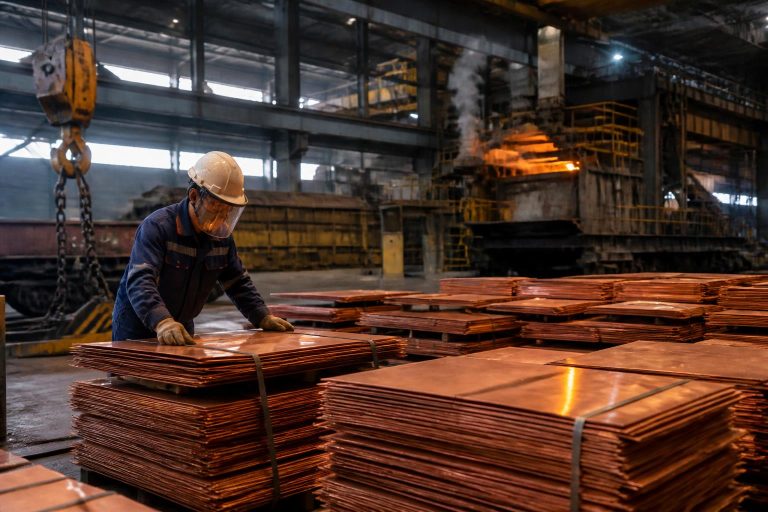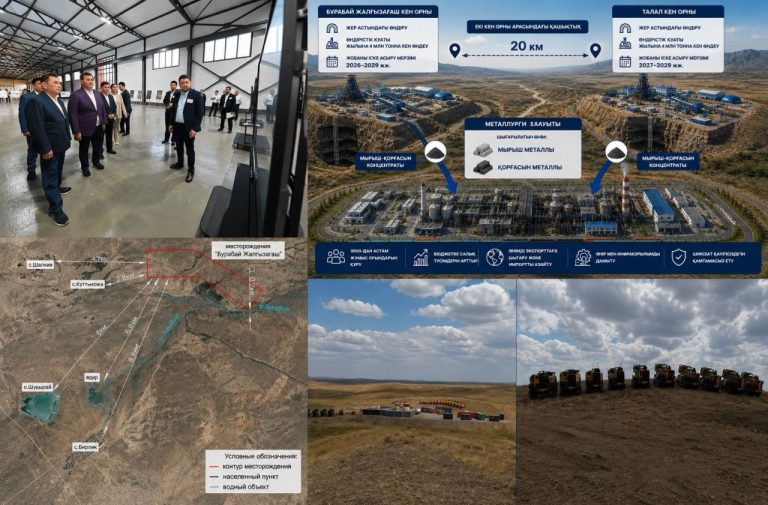
Uzbekistan has launched a new scientific center dedicated to critical minerals, established on the initiative of the Technological Metals Combine (TMK) and located inside the National Library. According to the company, this is the country’s first innovation hub designed to connect science with industrial development and serve as a national analytical platform for critical raw materials.
The center will operate as an open-access facility for researchers, students, and industry specialists. TMK plans to implement more than 50 projects related to strategic minerals between 2025 and 2027, including 13 new production facilities.
The Ministry of Mining and Geology reports that Uzbekistan holds deposits containing 28 types of critical minerals, including copper, lithium, graphite, germanium, tungsten, vanadium, tantalum, niobium, and rare-earth elements.
By 2028, the country aims to complete 70 projects focused on developing strategically important mineral resources, with a total investment portfolio exceeding $1.6 billion.
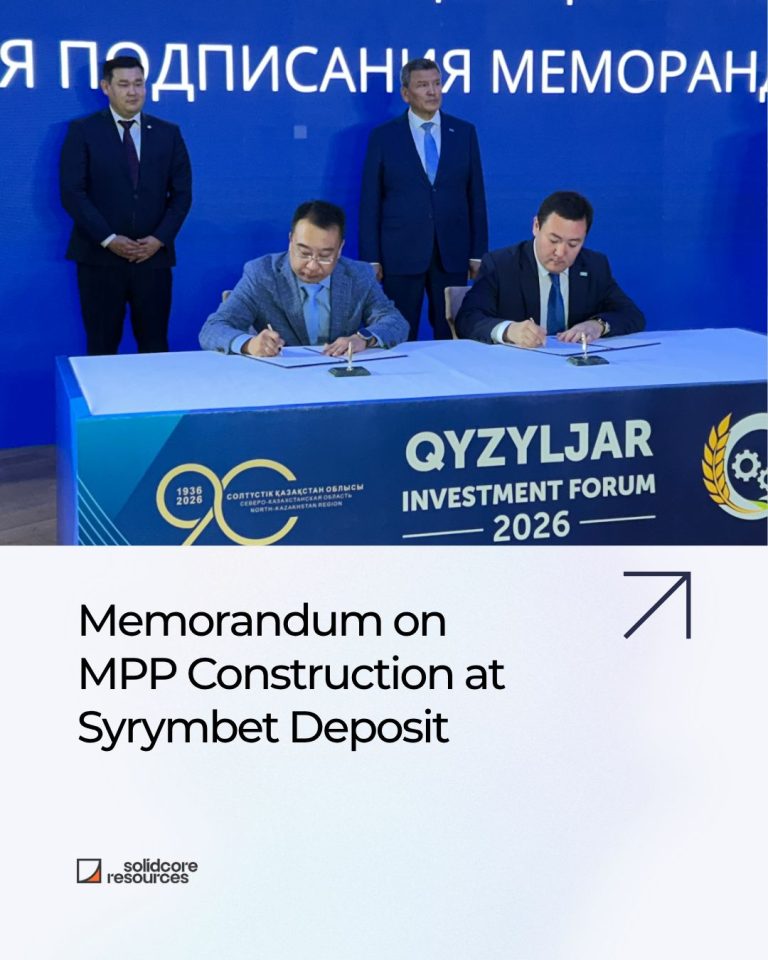
A new mining and processing plant will be built at the Syrymbet deposit in Kazakhstan’s Ayyrtau district, where Tin One Mining — part of Solidcore Resources — plans to produce up to 11,000 tonnes of tin annually. The investment project, valued at $227 million, was announced by regional deputy governor Kanat Duzelbayev during the North Kazakhstan–China Investment Business Forum.
Tin One Mining intends to commission the plant in 2028, creating around 600 jobs. The Syrymbet deposit, discovered by Soviet geologists in 1985, contains a complex mix of metals including tin, tungsten, tantalum, niobium, molybdenum, beryllium, bismuth, copper, and fluorite. Early studies identified tin-rich weathering crusts that formed a new industrial category of tin-bearing ore for the region.
The site’s resources were estimated under JORC standards in 2018 at 206,000 tonnes of tin and over 70,000 tonnes of copper. Following exploration in 2025, tin reserves were upgraded to 286,000 tonnes, while copper reserves were revised downward to 55,000 tonnes. Solidcore Resources acquired a 55% stake in the project operator for $82.5 million at the end of 2024.
The shifting sands of Kazakhstan’s mining sector were the focus of a recent British-Kazakh Society (BKS) webinar, bringing together legal experts, industry professionals, and policymakers to dissect the impacts of evolving government regulations. Held on 13 November 2025, the discussion revealed a concerning trend of increasing investor uncertainty, despite the country’s rich geological potential.
Land Barriers Continue to Hamper Investment
Kazakhstan’s crucial mining sector is undergoing significant changes, grappling with persistent land access issues and the introduction of new tax policies. A presentation by Almat Daumov, Partner at GRATA International in Almaty, shed light on these challenges and proposed solutions, highlighting both potential hurdles and opportunities for investors.
Despite seemingly swift issuance of exploration licenses for solid minerals (within 3-4 weeks), actual investment is frequently stalled by complex land-access barriers. Daumov emphasised that establishing servitude over private land for exploration can cause delays of 9-18 months. Even more critical, “akimats” (local executive bodies) are reportedly refusing compulsory land acquisition for mining projects deemed “non-state” in nature, citing budget limitations.
Drawing on international experience, Daumov pointed to successful models in Australia, Canada, and Mexico, where simplified (notification-based) land-access procedures for exploration and government expropriation of land for public necessity (including mine development) are common.
Proposed Solutions for Land Access:
To address these issues, Daumov proposed key solutions:
Exploration: Akimats should establish public servitudes on both state and private land, as permitted by Article 69 of the Land Code.
Mining: Mine development should be consistently recognised as a public need (Article 84). He stressed the need for unified interpretation and practice by akimats. Furthermore, to alleviate the state budget burden, Article 87 should be amended to ensure compensation is paid directly to the subsoil user, not the state.
New Tax Policies Introduce Volatility and Opportunity
Beyond land access, Kazakhstan’s mining sector is also navigating significant tax policy changes.
Higher Mineral Extraction Tax (MET) on Gold:
Starting in 2026, a new progressive MET scale will apply to gold. This change is expected to introduce additional fiscal volatility and increase the risk premium for investors, particularly those involved in low-grade and high-cost operations.
MET Reduction for Technogenic Mineral Ores (TMO):
In a more positive development, the MET on solid minerals extracted from technogenic mineral formations will be reduced tenfold. This reform aims to make the re-processing of tailings and waste economically viable. The benefits are twofold: addressing environmental issues and bringing significant metal residues, long excluded from economic turnover, back into circulation.
Introduction of Royalty Regime:
Effective for exploration projects starting in 2027, Kazakhstan will introduce a Royalty regime in parallel with the MET. Current proposed royalty rates are 7% for metals and alloys, 10% for concentrates, and 13% for ores, raising concerns among industry stakeholders.
Daumov’s analysis underscores a critical period for Kazakhstan’s mining sector. While the government aims to streamline processes and introduce new revenue streams, the effectiveness of these reforms will largely depend on clear implementation and a willingness to address investor concerns regarding both land access and fiscal predictability.
Kazakhstan on the Investment Attractiveness Index
Daniel A. Witt, President of the International Tax and Investment Center (ITIC), painted a picture of mixed signals for potential investors. While Kazakhstan has achieved its goal of being a top 50 most competitive country globally (ranking 34th in the 2025 IMD World Competitiveness Report), the micro-picture in the mining sector is less favourable.
Witt cited the Fraser Institute Annual Survey of Mining Companies (2024), noting a significant drop in the country’s Policy Perception Index (PPI) score—the metric heavily influenced by government control over tax, legal, and regulatory parameters.
“Kazakhstan came in 59 [on the Investment Attractiveness Index]. They fell… 59 is just barely passing,” stated Witt, stressing that the key challenge remains building a stable, predictable, and transparent fiscal and regulatory regime to attract large-scale international mining projects, similar to the success seen in the oil and gas sector. Specific concerns raised included the complexity of the tax system, difficulties obtaining VAT refunds, and the need for mechanisms to share risk between the state and investors.
Policy Trends and Regulatory Erosion
Timur Odilov, Founding Partner at Haller Lomax highlighted a worrying erosion of reforms designed to align Kazakhstan with international standards.
Odilov noted that following the adoption of the Western Australian-based Mining Code in 2017, subsequent years have seen the re-emergence of stricter rules and instability, particularly since 2023. Key changes discussed included:
Erosion of CRISCO Standards: Discussions in parliament have begun challenging the transition to international reporting standards, favouring a return to Soviet-era standards.
Resource Nationalism: Increasing pressure for mandatory domestic discount sales and forced processing, even for materials that cannot be domestically processed (such as certain rare earths).
Uncertainty and Lack of Strategy: The policy shifts are driven by a mix of socio-political agendas and a perceived lack of “institutional memory” or a holistic strategic vision for the sector’s long-term development.
Olga Petrova, Rio Tinto Exploration Kazakhstan Country Manager, affirmed this trend, stating that while the government continues to express interest in attracting investment, the actions—such as increasing land access costs for explorers—are “a little different,” appearing as a short-term win that ignores long-term losses.
Investment Opportunities and Future Outlook
Despite the challenges, the webinar underscored the vast potential of Kazakhstan’s mining sector. With abundant geology and a strategic location, Kazakhstan is well-positioned to become a global leader in critical minerals. However, to attract investment, the government must address policy risks, ensure property rights, and create a stable regulatory environment.
Kazakhstan’s Kazzinc JSC has announced plans to invest over $700 million to expand operations at the Vasilkovskoye gold deposit in the Akmola region. The project is operated by Altyntau Kokshetau JSC, a Kazzinc subsidiary, which currently extracts ore using open-pit methods.
Since the beginning of 2025, Kazzinc has produced 408,000 ounces of gold, down 9% compared to the same period in 2024. The decline is mainly due to lower ore grades as mining moves deeper into the pit, the company said.
Vasilkovskoye remains one of Kazakhstan’s largest gold assets. As of the end of 2024, its total ore reserves were estimated at 40 million tonnes, with an average gold grade of 2.1 grams per tonne, according to Swiss company Glencore, which owns 69.61% of Kazzinc’s shares. The sovereign wealth fund Tau-Ken Samruk holds another 29.8%.
In 2024, the mine produced more than 18.7 tonnes of gold, depleting high-grade ore reserves but delivering higher profits than in 2023.
The new investment project introduces a hybrid mining approach, combining open-pit and underground operations. The open pit will be deepened to 680 meters, with annual ore extraction of up to 6 million tonnes, while a new underground mine will produce up to 2 million tonnes of ore per year.
Austrian companies are exploring new opportunities to participate in Kyrgyzstan’s mining, industrial, hydropower, winter tourism, digitalization, and security technology sectors, the Kyrgyz Ministry of Foreign Affairs announced following high-level meetings in Vienna, Trend reports.
During the visit, Kyrgyz Deputy Foreign Minister Meder Abakirov held a series of discussions with senior Austrian officials, including Markus Hoffer, Head of the Austria–Central Asia parliamentary friendship group, and members of the Austrian Parliament. Talks centered on strengthening economic and technological cooperation between the two countries, as well as expanding dialogue within the Central Asia+ format.
Deputy Minister Abakirov also briefed the Austrian side on preparations for Kyrgyzstan’s parliamentary elections scheduled for November 30, 2025, and invited Austria to join as election observers. Hoffer confirmed that Austrian parliamentarians plan to participate as part of an OSCE monitoring mission.
Economic and Industrial Cooperation
In a separate meeting with Austrian Deputy Finance Minister Andreas Reichhardt, the two sides reviewed progress on agreements reached during Kyrgyz President Sadyr Japarov’s visit to Austria in November 2024. Key focus areas included finance, natural resources development, and digital transformation initiatives.
Both parties emphasized Austria’s technological expertise and discussed the involvement of Austrian firms in a range of Kyrgyz projects, including:
Mining and industrial production,
Hydropower development,
Winter tourism and skiing infrastructure,
Digital and security technology applications.
Strategic Dialogue and Regional Role
Deputy Minister Abakirov also met with experts from the Austrian Institute for European and Security Policy (AIES), where he provided updates on Kyrgyzstan’s reform agenda, current economic and political developments, and the country’s role in regional and global security.
The discussions were also joined by members of the Kyrgyz-Austrian Friendship Society, underscoring the growing diplomatic and cultural engagement between the two nations.
Following the announcement of the joint venture between US-based Cove Capital LLC and Kazakhstan’s National Mining Company, JSC Tau-Ken Samruk, further details have emerged regarding the development timeline and scale of the Northern Katpar and Upper Kairakty tungsten projects.
Cove Kaz Capital Group LLC (“Cove Kaz”), a portfolio company of U.S.-based Cove Capital LLC, will hold a 70 per cent interest, with Tau-Ken Samruk retaining 30 per cent ownership of Severniy Katpar LLP, which owns the Northern Katpar and Upper Kairakty tungsten projects.
Cove Kaz will oversee marketing of 100 per cent of project output and has entered into a Letter of Intent with the International Trade Administration at the U.S. Department of Commerce to prioritise supply for U.S. government and commercial needs.
The announcement was made in Washington, D.C., during the C5+1 Leaders’ Summit by U.S. President Donald J. Trump and Kazakhstan President Kassym-Jomart Tokayev.
Total development costs for the Northern Katpar and Upper Kairakty projects are estimated at USD $1.1 billion. The Export-Import Bank of the United States has issued a Letter of Interest for USD $900 million in financing, complemented by a similar commitment from the U.S. International Development Finance Corporation.
Cove Kaz’s project team will be led by Dominic Heaton, who previously oversaw development of the Nui Phao integrated tungsten mine and refinery in Vietnam – the world’s largest tungsten operation outside China. Preparatory work has already commenced to support a Definitive Feasibility Study for Northern Katpar, including the establishment of downstream refining capacity in Kazakhstan to produce ammonium paratungstate (APT) and other tungsten compounds.
Pini Althaus, Chief Executive Officer of Cove Capital and Cove Kaz Capital, expressed gratitude for U.S. and Kazakh government support:
“On behalf of Cove Capital and Cove Kaz, I wish to thank President Donald J. Trump, Secretary of Commerce Howard Lutnick, and the U.S. Trade Advocacy Center for their exceptional engagement. Their efforts have aligned financing, offtake pathways, and policy support to deliver a secure, allied tungsten supply for America’s industrial and defence needs.
“I also wish to thank President Kassym-Jomart Tokayev for his leadership and partnership. This collaboration is a win for both nations—strengthening U.S. supply chains while fostering investment and long-term prosperity in Kazakhstan.”
Tungsten – A Critical Industrial and Defence Mineral
Tungsten is ranked by the U.S. Defense Logistics Agency as a “material of interest” and by the European Union as the raw material of highest economic importance due to its unique physical properties: the highest tensile strength at high temperatures, the highest melting point of any metal, and exceptional corrosion resistance.
Its density and durability make tungsten indispensable in high-performance cutting and drilling tools, aerospace alloys, semiconductor contacts, and radiation shielding. In defence applications, tungsten is used in armour-piercing munitions, missile components, aircraft ballast, and other high-stress environments.
Currently, China controls over 80 per cent of global tungsten production and processing. In February 2025, China imposed new export restrictions on tungsten and tungsten-containing products to the United States.
Severniy Katpar LLP
Severniy Katpar LLP holds licences for two projects—Northern Katpar and Upper Kairakty—located approximately 30 kilometres apart in the established Karaganda mining district of central Kazakhstan, less than 160 kilometres south of the city of Karaganda.
Feasibility studies completed in April 2023 report total JORC-compliant mineral resources of 1.4 million tonnes of tungsten trioxide (WO₃), accounting for around 70 per cent of Kazakhstan’s total tungsten resources. For comparison, the U.S. Geological Survey estimates China’s reserves at 2.4 million tonnes.
Combined production from both projects is expected to reach 12,000 metric tonnes per annum (mtpa) of tungsten trioxide—approximately 15 per cent of current global output.
Cove Capital’s Broader Commitment in Kazakhstan
Cove Capital’s portfolio company, Kaz Resources LLC, became in 2023 the first U.S. entity to receive critical minerals and rare earth concessions in Kazakhstan. These include licences for 13 minerals such as lithium, tantalum, beryllium, niobium, and rare earth elements.
In 2024, Cove Capital and Tau-Ken Samruk formalised a joint venture for exploration of rare earths at the Akbulak project in the Kostanay region, with Cove holding 75 per cent and “Qazgeology” JSC 25 per cent. Cove is fully financing exploration activities until reserves are booked.
About Cove Capital LLC
Founded in 2015, Cove Capital is a mining-focused investment and development firm headquartered in New York and Melbourne. Since 2018, the company has focused on critical minerals projects that enhance U.S. and allied supply chains. Led by CEO Pini Althaus, Cove Capital brings extensive expertise across exploration, mining, processing, and offtake structuring.
About Tau-Ken Samruk
Tau-Ken Samruk, Kazakhstan’s national mining company, manages the sustainable development of the nation’s mineral wealth. Through partnerships with international investors, it aims to strengthen Kazakhstan’s mining sector and support the country’s long-term economic growth.
At the conclusion of his working visit to Washington, D.C., President of Uzbekistan Shavkat Mirziyoyev met with representatives of major U.S. corporations, investment funds, and financial institutions to discuss expanding economic cooperation between the two countries.
The meeting was attended by U.S. Secretary of Commerce Howard Lutnick, Special Assistant to the President Ricky Gill, Special Envoy Paolo Zampolli, and Deputy Secretary of Agriculture Stephen Vaden. Senior executives from leading American companies — including Traxys, FLSmidth, McKinsey, Meta, Google, Amazon, Boeing, Air Products, Axiom Space, Cove Capital, Freeport-McMoRan, Orion CMC, Cargill Cotton, John Deere, Honeywell, Valmont Industries, and Flowserve Corporation — also took part in the discussions.
President Mirziyoyev highlighted that trade turnover between Uzbekistan and the United States has quadrupled over the past eight years, with more than 300 American companies now operating in Uzbekistan. He emphasized that this growth marks only the beginning of a new stage in bilateral cooperation, and that specific projects would be further discussed during his upcoming meeting with U.S. President Donald Trump.
The Uzbek leader outlined priority areas for strategic partnership, including renewable energy, critical minerals, and digital transformation. By 2030, Uzbekistan aims to build a next-generation energy system with 18–20 gigawatts of renewable capacity, generating more than half of its electricity from solar and wind sources.
In partnership with the United States, Uzbekistan plans to develop extraction and advanced processing of uranium, copper, tungsten, molybdenum, and graphite, establishing secure supply chains and adopting U.S. technologies in resource processing.
The President also highlighted Uzbekistan’s ambitious transport infrastructure modernization program, with $12 billion in planned investments by 2030 to upgrade roads, railways, terminals, and airports.
Digital cooperation is also expanding through joint initiatives with Google, Meta, and NVIDIA, including the launch of Apple Pay and Google Pay, the creation of a Digital Academy, and a nationwide startup hub network.
Financial support for these initiatives will involve the U.S. International Development Finance Corporation (DFC) and the U.S. Export-Import Bank (Exim Bank).
Concluding the meeting, President Mirziyoyev reaffirmed Uzbekistan’s commitment to support American investors and maintain the country’s reputation as a reliable and stable partner.
“Uzbekistan remains a dependable partner and a guarantor of success for foreign investors,” the President said.
Chinese mining giant Zijin Gold International, a subsidiary of Zijin Mining Group, expects gold reserves at Kazakhstan’s Raigorodok deposit to exceed 200 tonnes, citing advanced recovery technology and favorable market conditions. The statement follows the company’s $1.008 billion acquisition of RG Gold, which owns the mining rights to Raigorodok — one of the largest active gold deposits in Kazakhstan’s Akmola region.
The deal was finalized in mid-October, according to reports by inbusiness.kz. Initially valued at $1.2 billion, the final amount was adjusted due to existing liabilities. Zijin Mining, which raised $3.9 billion through a Hong Kong IPO in September, confirmed plans to invest an additional $500 million to build a new processing plant capable of treating 6–8 million tonnes of ore annually. The project is expected to create over 1,000 new jobs.
Speaking at Kazakhstan Day, held during the China Mining 2025 exhibition in Tianjin, Liao Jiansheng, head of Zijin Eurasia Mining, said the company intends to make Raigorodok a model for green and high-tech gold mining. He emphasized that Zijin’s advanced extraction methods could increase gold recovery to more than 90%, significantly expanding proven resources.
“The current plant and management are good, and local employees are highly skilled,” Liao said. “We’ll introduce our technologies carefully, ensuring a smooth transition. For us, this project is a shared success — both for Kazakhstan and Zijin.”
Zijin plans to maintain compliance with Kazakh labor and investment laws, limiting the number of foreign specialists to the legal quota and prioritizing local employment. During the plant’s reconstruction phase, temporary Chinese technical experts will assist in modernization.
The company holds a mining license valid until 2035, with the potential for renewal. The Raigorodok mine will continue to operate as an open-pit site, with Zijin exploring opportunities to expand its resource base through additional exploration and acquisitions in the Akmola region.
Zijin also expressed interest in investing further in geological exploration in Kazakhstan, supported by Kazakh Invest and the Chinese Embassy, signaling its long-term commitment to the country’s mining sector.
Founded in 1993, Zijin Mining Group is the world’s sixth-largest metal producer and China’s largest gold miner. As of 2024, the company controlled 4,000 tonnes of gold, 110 million tonnes of copper, 13 million tonnes of zinc and lead, and 17.9 million tonnes of lithium globally. In the first half of 2025, Zijin reported $23.4 billion in revenue and $3 billion in net profit, with operations in 17 countries and a workforce of 55,000.
Government officials, business leaders, civil society representatives, and international experts gathered in the Kyrgyz capital for the “Dialogue on the Extractive Industry: Investment, Transparency, Development” forum, aimed at fostering an open exchange on the future of Kyrgyzstan’s mining sector.
The event, organized by the Ministry of Natural Resources, Ecology and Technical Supervision of Kyrgyzstan with the support of the World Bank, the Extractive Industries Transparency Initiative (EITI), and consulting firm Data Lab, focused on advancing reforms to make the country a competitive and sustainable hub for critical mineral investment.
According to the ministry, the forum’s main goal was to build a framework for cooperation grounded in transparency, accountability, and sustainability — principles vital for developing industries tied to the global energy transition.
World Bank representative Brian Land emphasized that Kyrgyzstan needs deep and sustained reforms to attract exploration and mining investments, while Arkady Rogalsky, a data consultant for the Bank, noted that the EITI standard remains essential for building trust between government, business, and citizens by promoting openness, anti-corruption measures, and equal rules for all participants.
At the conclusion of the discussions, participants adopted a resolution outlining future priorities:
The government was urged to continue reforms and strengthen coordination in preparation for the EITI 2027 validation.
The private sector was encouraged to enhance corporate responsibility and environmental transparency while promoting equal opportunities.
Civil society was called to engage more actively in public oversight and dialogue.
International partners were invited to support Kyrgyzstan in advancing transparency and sustainable growth.
Deputy Director of the Kyrgyz Geological Service Ruslan Kalilov stressed that citizen participation and transparency are the cornerstones of trust, adding that the mining industry can become a driver not only of economic growth but also of social development.
A dedicated session addressed gender inclusion in transparency practices. Data Lab presented a gender analysis of EITI implementation, highlighting the importance of women’s participation in decision-making and leadership roles. Gulnura Toralieva, head of Data Lab, noted that the goal is to foster a “culture of transparency” based on respect and openness, not merely to produce compliance reports.
The forum concluded with a joint commitment to prepare Kyrgyzstan for the 2027 EITI validation and to continue collaborative efforts to strengthen trust and sustainable development within the extractive industry. As participants agreed, when government, business, and civil society work in concert — the whole country benefits.
Tajikistan holds deposits of 10 out of 12 metals critical for the global energy transition, with six already being mined, Minister of Industry and New Technologies Sherali Kabir said at the Dushanbe 2025 International Investment Forum, according to Asia-Plus.
Kabir outlined the government’s vision for Tajikistan to become an active player in the global rare earth supply chain, emphasizing that the country was once a hub for rare earth production within the former Soviet Union. Of the three rare earth processing plants that existed in the USSR, two were located in Tajikistan and one in Russia.
Authorities are now in talks with international partners to modernize these facilities, with Kabir noting that the government expects “very good results” from these negotiations in the near future.
Tajikistan is also doubling down on antimony, one of its most abundant resources. The country ranks second globally in terms of antimony reserves. Four new processing plants are in the pipeline, at various stages ranging from feasibility studies to construction.
The minister also highlighted the growing copper industry, confirming that domestic production has already begun and that the government plans to significantly expand output by attracting foreign investment.
Kabir further revealed that Tajikistan has large deposits of nickel and lithium ores, adding that the country’s ambition is to become the first among CIS nations to launch lithium production — a crucial material for batteries and clean energy technologies.