Tag: investment

  • The Devil is in the Detail: Key Concerns of Kazakhstan’s Mining Sector Investors

    The Devil is in the Detail: Key Concerns of Kazakhstan’s Mining Sector Investors

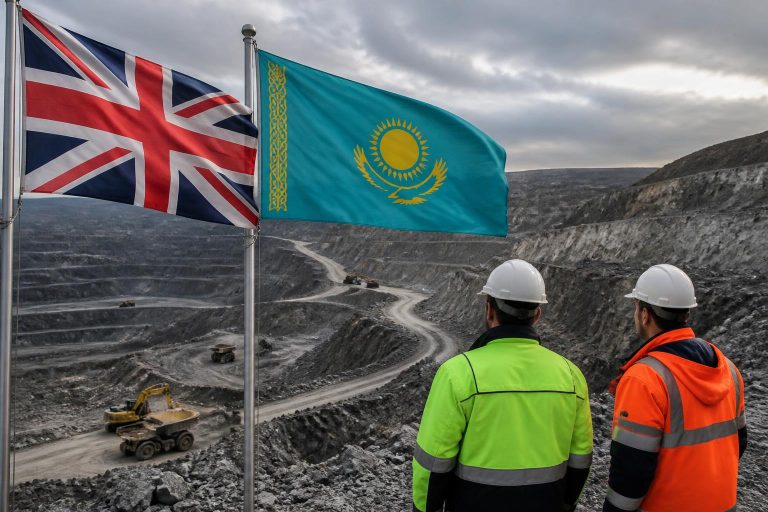
    While Kazakhstan has established itself as one of the most attractive jurisdictions for geological exploration investment, recent developments have unsettled international partners. Ruslan Baimishev, President of the Kazakhstan Mining Chamber, outlined these concerns during a panel discussion in Almaty, as reported by LS.

    Baimishev noted that major industry players invest with long-term horizons—often 10 to 15 years—making regulatory stability crucial. He acknowledged that reforms in 2018 had positioned Kazakhstan as a globally competitive mining jurisdiction. However, he warned against backtracking, citing attempts to reintroduce restrictive policies, such as stricter reserve reporting rules and restricted access to geological data.

    “During the last parliamentary session, several draft laws initially welcomed by MPs were later amended, effectively reverting to outdated practices and deviating from international standards,” Baimishev explained. Though these changes were ultimately halted, the mere attempt sent worrying signals to investors.

    Another pressing issue is tax reform. The new Tax Code, set to take effect in 2026, introduces higher land lease fees, which could discourage large-scale exploration. Baimishev argued that while the intent—to incentivise faster project development—is logical, investors need clarity on post-exploration taxation. He also criticised proposed royalty rates, which, despite being marketed as investor-friendly, may apply unevenly, disadvantaging existing license holders.

    On a positive note, Baimishev praised ongoing government-business dialogue and improvements in geological data accessibility. However, he urged further refinements, particularly in licensing procedures for restricted areas.

    Separately, Nikolai Radostovets of the Republican Association of Mining and Metallurgical Enterprises raised concerns over a proposed 1% R&D levy. While 30% would fund geological studies—a sector priority—he argued the remaining 70% should support industry-specific innovation rather than being absorbed into the state budget.

    Saken Shayakhmetov of Kazakhmys added that without strategic R&D investment, Kazakhstan risks falling behind technologically as mineral reserves deplete.

  • U.S. and Ukraine Earmark $150 Million for Minerals Deal

    U.S. and Ukraine Earmark $150 Million for Minerals Deal

    The United States and Ukraine have committed $150 million to establish a reconstruction investment fund designed to channel foreign capital into Ukraine’s natural resources sector.

    Announced on 17 September by Ukraine’s Economy Minister, Oleksii Sobolev, the fund will see Washington and Kyiv invest $75 million each, with the U.S. contribution provided through the International Development Finance Corporation (DFC). Ukraine will finance its share in two instalments, drawn from this year’s and next year’s budgets.

    “This is definitely enough to make the first proper large-scale investments,” Sobolev told journalists.

    The initiative forms part of a wider U.S.-Ukraine resources agreement, signed in April, granting Washington favourable access to projects in natural resources, infrastructure, and defence. The fund will operate on a project-by-project basis, with both parties contributing only once an investment is approved.

    DFC officials visited Ukraine earlier this month, inspecting potential starter projects such as titanium, zirconium, and hafnium deposits in Kirovohrad Oblast. Mateo Goldman, DFC’s Senior Vice President for Investments, said: “Our $75 million investment is a major step to activating the fund and opening the Ukrainian market to new investment opportunities.”

    The fund’s board is expected to finalise its structure by late November, including the appointment of an administrator and approval of investment guidelines.

    Prime Minister Yulia Svyrydenko described the initial funding as a demonstration of “trust and long-term commitment” from Washington, noting that reinvested profits over the next decade will bolster Ukraine’s economic recovery.

    With U.S. interest in Ukraine’s critical raw materials and gas reserves, Kyiv hopes the partnership will accelerate both energy security and post-war reconstruction.

  • Kazakhstan’s Critical Minerals in Focus at the BKS webinar

    Kazakhstan’s Critical Minerals in Focus at the BKS webinar

    Kazakhstan’s ambition to transform itself into a linchpin of the global critical minerals supply was in sharp focus at the British-Kazakh Society’s (BKS) latest webinar, “Critical Minerals – A Closer Look at Kazakhstan and the Resource Base.”

    Hosted online on 16 September, the event brought together government representatives, leading analysts, and industry insiders to scrutinise the nation’s mineral endowment, discuss its strategy for long-term sustainability, and evaluate opportunities for international partnership and investment.

    Geological Promise and Policy Drive
    In his welcome address, Yerlan Zeineshev, Economic Counsellor at the Kazakhstan Embassy in the UK, underscored the nation’s geological riches—including rare earths, lithium, copper, uranium, titanium, and vanadium—and signalled Kazakhstan’s determination to become “a key supplier for global critical mineral needs.” The country already produces 17 of the 34 critical minerals on the UK’s essential list, with potential to expand further given the right investment and technology.

    Mr Zeineshev highlighted March 2024’s UK-Kazakhstan critical minerals roadmap, emphasising mutual aims for research, private investment, and technology transfer. He pledged continued reform to ensure an open, investor-friendly environment—citing adoption of international best practice in mining codes, long-term investment agreements, and digitalisation of geological data.

    Supply Chain Resilience and Global Partnerships
    Speakers and panellists closely examined how Kazakhstan’s neutral geopolitical stance and its position on the Trans-Caspian International Transport Route position the country as a reliable partner for nations seeking to diversify supply chains. As Enzo Grazella, Senior Analyst at the Critical Minerals Association, noted, this offers both Europe and the UK an alternative source to mitigate risk and reduce overreliance on a handful of global producers.

    The UK government’s updated critical minerals strategy and increased focus on supply chain security were cited as drivers for stepped-up bilateral engagement, particularly in mining, refining, recycling, and advanced manufacturing. Initiatives backed by UK export finance, the European Bank for Reconstruction and Development (EBRD), and local reforms are fostering a more attractive investment climate.

    Resource Development and Value Addition
    Arkhat Kurmanbekov, Deputy Director General of Kazakhstan’s National Center for Technology Foresight, outlined the scale of Kazakhstan’s geological survey initiatives, with record levels of exploration funding and ambitious targets to increase the area surveyed to over 2.2 million km² by 2026. The nation aims not only to expand extraction but also to move up the value chain through domestic processing, production of battery materials, heat-resistant alloys, semiconductor materials, and recycling technologies. Industry success stories—such as providing titanium to Boeing and Airbus, or pioneering full-cycle beryllium plants—underline local expertise.

    Market Dynamics, Price Volatility, and Sustainability Challenges
    Caroline Messecar, Strategic Markets Editor at Fastmarkets Metals and Mining, discussed acute market vulnerability arising from concentrated global production—particularly for rare earth magnets vital to electric vehicles and wind turbines. China commands up to 89% of global magnet supply, and recent export controls have forced international markets to scramble for alternative sources, underscoring the strategic importance of new suppliers like Kazakhstan.

    The panel noted that establishing downstream industries (such as magnet manufacturing) requires more than raw materials: it needs multidisciplinary technical skills, transparent and sustainable production, and robust ESG standards. Both Kazakh and UK speakers reaffirmed their commitments to high environmental and social standards, clarifying that responsible development can coexist with commercial viability.

    Whatch the webinar recoding
    Video provided for the MINEX Forum readers by the British-Kazakh Society

  • Kazakhstan Targets Economic Growth with Rare-Earth Expansion and SEZ Reforms

    Kazakhstan Targets Economic Growth with Rare-Earth Expansion and SEZ Reforms

    Kazakhstan is launching a comprehensive strategy to boost economic growth by strengthening special economic zones (SEZs) and expanding rare-earth metal production, as announced by Industry and Construction Minister Yersayin Nagaspayev during a government meeting chaired by Prime Minister Olzhas Bektenov

    To improve SEZ efficiency, the government will conduct a comprehensive review of their performance and strengthen monitoring mechanisms to ensure investors fulfill their obligations. The country also plans to introduce a framework for foreign companies to manage certain SEZs, while local authorities will intensify efforts to attract new investors.

    In addition to SEZs, the government has identified rare-earth metal production as a key area for development. Kazakhstan plans to implement at least three major projects in this field, focusing on the production of battery materials, recycling and manufacturing heat-resistant alloys for jet engines, developing semiconductor components, and reprocessing permanent magnets.

    The country has already established strategic partnerships with leading players from the European Union, the United States, Japan, South Korea, and China. Upcoming projects include the launch of gallium production with an annual capacity of 15 tons, the manufacturing of high-purity manganese sulfate, and the production of graphite for battery components.

    Kazakhstan is also taking significant steps to modernize its geological exploration and mapping. A next-generation geological map will be developed using advanced digital tools, with project preparations already underway and fieldwork scheduled to begin in 2026. The government has allocated funding for new surveying methods, including aerogeophysics, geochemistry, spectral imaging, and high-resolution satellite data analysis.

    Furthermore, the country is introducing a unified digital platform to consolidate all processes related to construction and housing management. The platform will be introduced by the end of 2025 and is expected to enhance efficiency and transparency in the sector.

    The reforms are part of Kazakhstan’s efforts to diversify its economy and reduce its dependence on oil exports. The country aims to become a major player in the global rare-earth market and to attract foreign investment in its SEZs.

  • Kazakhstan’s Mining Industry Grows 8.5% in First Seven Months of 2025

    Kazakhstan’s Mining Industry Grows 8.5% in First Seven Months of 2025

    Kazakhstan’s mining industry recorded an 8.5% increase in output in January–July 2025, according to figures presented at a government press conference on the country’s socio-economic performance.

    The official website of the Prime Minister noted strong results from companies extracting hydrocarbon raw materials: oil production rose by 11.9%, while gas output increased by 14.3%. Coal enterprises also posted gains, with fuel production up 10.6% despite ongoing logistical challenges.

    The manufacturing sector also saw positive momentum, expanding by 6.1%. Minister of National Economy Serik Zhumangarin highlighted ongoing efforts to diversify the economy and deepen raw material processing. Over the reporting period, machinery production rose by 14%, oil refining by 8.6%, and chemical manufacturing by 6%.

    Investments in fixed capital increased by 16.1% overall, with particularly strong growth of 38.7% in manufacturing.

  • Ministry of Mining in Uzbekistan and CNUC Discuss Cooperation in Geology and Mining Sector

    Ministry of Mining in Uzbekistan and CNUC Discuss Cooperation in Geology and Mining Sector

    The Ministry of Mining and Geology, under the leadership of Deputy Minister U. Yusupov, held a meeting with representatives from China National Uranium Corporation Limited (CNUC). The discussions focused on potential cooperation in the fields of geology and mining, including plans for joint geological exploration projects and the implementation of innovative technologies.

    Both parties expressed interest in launching mutually beneficial initiatives and expanding investment opportunities. The CNUC delegation shared insights from their international experience and highlighted their achievements in global projects. The meeting also included an exchange of views on potential collaborative research and further development within the geological sector.

  • Vast Resources Signs MoU with Tajik Ministry at UK-Tajikistan Mining Forum

    Vast Resources Signs MoU with Tajik Ministry at UK-Tajikistan Mining Forum

    Vast Resources plc, an AIM-listed mining company, announced its active participation in the Tajikistan-UK Mining Forum held yesterday at the London Stock Exchange. The event served as a platform to reinforce bilateral ties between the United Kingdom and Tajikistan while spotlighting the investment potential within Tajikistan’s mining sector.

    During the forum, Vast Resources signed a non-binding Memorandum of Understanding (MoU) with the Ministry of Industry and New Technologies of the Republic of Tajikistan. The agreement outlines a framework for cooperation aimed at identifying both historical and greenfield exploration opportunities for non-ferrous and strategic mineral deposits.

    A notable element of the MoU includes plans to jointly develop a “Tajik Mineral Investment Fund” to facilitate growth in Tajikistan’s mining industry. The agreement remains in effect until 19 May 2026. Vast Resources confirmed that any material developments arising from the MoU will be disclosed as they occur.

  • Uzbekistan Explores Cooperation with Utah in Mining and Geological Sectors

    Uzbekistan Explores Cooperation with Utah in Mining and Geological Sectors

    On May 16, 2025, First Deputy Minister of Mining Industry and Geology, O. Nasritdinhojaev, along with representatives from the Ministry, met with delegation from the U.S. state of Utah.

    During the meeting, the parties discussed the ongoing reforms in Uzbekistan’s mining sector, the investment opportunities being created, and explored prospects for cooperation in investments, advanced technologies, and scientific research, considering Utah’s economic potential and its advanced expertise in the mining and geological fields.

    Additionally, both sides exchanged views on improving the qualifications of lecturers and students of the University of Geological Sciences under the Ministry of Mining Industry and Geology. Discussions also included the possibility of opening branches of Utah-based universities specializing in geology and mining—such as the University of Utah and Utah State University—in Uzbekistan.

  • China Deepens Grip on Uzbekistan’s Mineral Sector Amid Global Race for Critical Resources

    China Deepens Grip on Uzbekistan’s Mineral Sector Amid Global Race for Critical Resources

    As global powers intensify their pursuit of critical minerals, Central Asia has emerged as a strategic pivot. Among its nations, Uzbekistan stands out—not only for its rich deposits of copper, tungsten, molybdenum, and rare earth elements, but also for its increasingly central role in China’s mineral strategy.

    Already heavily involved in the region’s energy and infrastructure sectors, China has taken a proactive investment stance in Uzbekistan’s mining industry. In 2024, Limaomaoli Metal Company launched construction of the Syurenata mining complex in Parkent, aimed at processing 1 million tons of iron ore concentrate annually. Simultaneously, China Baoli Technologies is investing $200 million in a non-ferrous metal facility in the Ipak Yuli Free Economic Zone, targeting up to 45,000 tons of annual output with $18 million in export potential.

    Copper, a linchpin in global energy transition efforts, is another key focus. China Mining Energy Group is spearheading a $200 million copper mining project in Chust (Namangan region), expected to yield 30,000 tons per year and create 420 local jobs. Additionally, Boi Yi Da is planning a new copper processing plant in the same region, while a $2.7 billion project to tap copper and silver reserves in Bobotog is under negotiation.

    For Uzbekistan, these ventures promise significant job creation, technological transfer, and a move up the value chain—critical steps toward its goal of becoming a producer of value-added mineral products. They also reflect Tashkent’s broader push to localize mineral processing, boost exports, and attract FDI into downstream sectors.

    For Beijing, meanwhile, these deals help secure raw materials essential for its green economy and industrial resilience, while also reducing reliance on vulnerable maritime supply routes. The copper and iron ore flowing from Uzbekistan may soon become vital to China’s supply diversification strategy.

    Yet, the growing Chinese footprint is not without challenges. Concerns around environmental degradation and transparency in resource deals are mounting. Public unease over Chinese firms acquiring mineral rights is increasingly voiced in Uzbek media and civil society. Moreover, critics warn that unless Chinese investments support advanced processing, Uzbekistan risks becoming locked into the role of a mid-tier raw exporter.

    There’s also increasing Western interest. France has inked uranium deals with Tashkent, and the U.S. recently signed a critical minerals investment agreement. China’s accelerated moves may reflect efforts to edge out competitors and reinforce dominance over global mineral supply chains.

    Ultimately, China’s growing influence in Uzbekistan’s mining sector presents both a strategic opportunity and a test. A long-term, mutually beneficial partnership will require more than capital—it will demand transparency, environmental responsibility, and alignment with Uzbekistan’s industrial transformation goals.

  • Navoi Mining and Metallurgical Combine Produces Gold Worth $2.2 Billion in Q1 2025

    Navoi Mining and Metallurgical Combine Produces Gold Worth $2.2 Billion in Q1 2025

    In the first quarter of 2025, the Navoi Mining and Metallurgical Combine (NMMC) produced goods worth 27.8 trillion Uzbek soums (approx. $2.2 billion), according to the company’s press service.

    From January to March, NMMC extracted 753,500 ounces of gold. The combine also invested $118.4 million under its investment program and created nearly 700 new jobs. Through cost optimization efforts, the company managed to reduce production costs by 786 billion soums.

    During the reporting period, the combine completed the feasibility study for operations at the Muruntau deposit. This project aims to increase ore supply to the second hydrometallurgical plant to 60 million tonnes.

    In addition, over 100 units of equipment were acquired to support development at the Kokpatas and Daugyztau deposits.

    Previously, Kursiv Uzbekistan reported that NMMC received the highest rating for its anti-corruption performance.