Tag: EU

  • Including Western Balkans in the EU Value Chain Partnership aligned with Critical Raw Materials strategy

    Including Western Balkans in the EU Value Chain Partnership aligned with Critical Raw Materials strategy

    Nine years after the launching of Berlin Process in August 2014, the Heads of Government of Albania, Bosnia and Hercegovina, Kosovo, Montenegro, North Macedonia, Serbia, as well as the Heads of State or Government or representatives of Austria, Bulgaria, Croatia, France, Germany, Greece, Italy, Poland, Slovenia and the United Kingdom, Spain, Hungary, Romania and the Netherlands, the representatives of the European Union (EU), and of regional and international organizations and financial institutions met in person in Tirana on 16 October 2023 for the Summit Meeting of the Berlin Process.

    The participants acknowledged that with the current geopolitical situation, a Value Chain Partnership between the EU and the Western Balkans should be explored. They acknowledged the strategic importance of the Western Balkans region in the context of Critical Raw Materials and batteries, and its role in the EU Value Chain and industries. With the increasing global demand for these materials, the Western Balkans hold a significant potential that must be harnessed effectively to contribute to the EU’s security of supply.


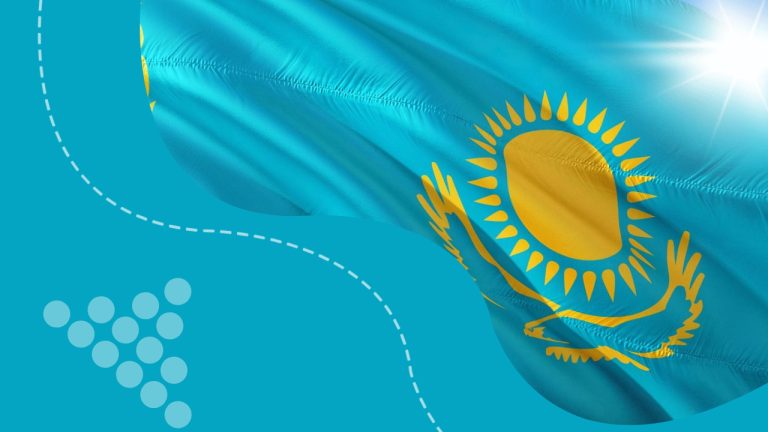
  • Kazakhstan and the European Union are expanding opportunities for the development of the critical raw minerals sector

    Kazakhstan and the European Union are expanding opportunities for the development of the critical raw minerals sector

    From October 25 to 26, 2023, Vice Minister of Industry and Construction of the Republic of Kazakhstan Iran Sharkhan and Chairman of the National Geological Survey JSC Erlan Galiyev took part in the Global Gateway forum in Brussels (Belgium).

    The event, which focused on green energy, education and research, critical raw materials, transport corridors, healthcare manufacturing and digital infrastructure, was opened by European Commission President Ursula von der Leyen.

    During the visit, the Kazakh delegation took part in a panel session dedicated to the problem of rare earth metals and discussed issues of joint cooperation with the parties. Also, I. Sharkhan and E. Galiyev held a number of bilateral meetings with the heads of European organizations.

  • How a junior mining company is bringing critical materials supply back to Europe

    How a junior mining company is bringing critical materials supply back to Europe

    Historically, the European Union (EU) has relied on countries like China for its supply of critical raw materials, but companies like Leading Edge Materials are moving to shift the focus back on its own soil.

    Case in point, the EU proposed the Critical Raw Materials Act (CRMA) in March 2023, which aims to boost supply of strategic raw materials that are crucial in advancing the EU’s move towards a sustainable, digital and sovereign future.

    This comes as a move to shift supply away from China, which currently processes almost all rare earth elements. It is estimated that the country currently produces roughly 70 per cent of global production of rare earth elements, however there are three facilities in Europe that are and will be able to produce the materials – in Sweden, France and Estonia – which will effectively reduce China’s overwhelming grip on the permanent magnet industry

  • Can Poland dismantle the EU Green Deal with legal challenges?

    Can Poland dismantle the EU Green Deal with legal challenges?

    For years, Poland’s right-wing government has been threatening to legally challenge the EU’s climate policy, and this summer it delivered on that threat. Climate and Environment Minister Anna Moskwa announced on 8 August the country has petitioned the European Court of Justice to strike down the recent revision to the EU’s Emissions Trading System (ETS) and the Carbon Border Adjustment Mechanism (CBAM), which is set to start levying a fee on climate-unfriendly imports on 1 October. Both are key components of the Fit for 55 package, the legislative toolbox designed to deliver on the goals of European Commission President Ursula von der Leyen’s Green Deal.

    “The introduction of CBAM fees will translate into an increase in the cost of imported products and electricity, as well as products manufactured in Poland for the end user,” Moskwa said in a statement. Regarding the ETS, Moskwa said Poland objects to the increase in allowances that will keep the price of carbon high, which “may reduce the level of energy security” of EU countries at a time when that security is being threatened by Russia.

    The substance of the laws was decided by majority votes of EU countries earlier this year, in which opposition by Poland and Hungary was overcome. Poland is not only challenging the substance of the laws based on their effects, but also the way the laws were adopted. Because the laws will affect the economy, they are “primarily of a fiscal nature”, Moskwa said, and therefore the ordinary voting system should not have been used but rather a special legislative procedure which requires unanimous approval by all EU member states. Were the EU’s high court to agree, the laws could be invalidated and sent back to the Council for another vote, at which time Poland and Hungary would veto them.

    Poland already challenged four other pillars of Fit for 55 earlier this summer: the ban on combustion engine car sales by 2035; the reduction of free allowances in the ETS; increased EU forest management; and the overall increase of the EU’s greenhouse gas emissions reduction target. Poland’s heavy use of coal and energy security concerns have made it the chief opponent of EU climate policy for two decades. They have tried and failed in the past to challenge EU climate policy with the high court. In 2016 they took the European Council and European Parliament to court for passing a law establishing a market stability reserve in the ETS to raise the price of carbon, which was drastically too low to be effective. They used the same argument – that the law needed to be decided by unanimity. This argument was rejected by the European Court of Justice.

    Uphill battle

    Legal experts say Poland’s chance of success at the European Court of Justice this time around is also not high – but there is a big question mark hovering over the CBAM legislation. “Such a justification, i.e. the protection of state interests presented as in the Polish government’s complaints, will not work – as confirmed by the court’s well-established previous jurisprudence in similar cases,” says Robert Grzeszczak, a professor of European law at the University of Warsaw.

    “Besides, it’s a double-edged weapon. If Poland managed to challenge EU law on the grounds of its state interests, so could any other state challenge any other arbitrary act, precisely on the grounds of protecting national interests. This is not sufficient on its own, specific infringements must be demonstrated which would cause the act to be annulled by the court.” He adds that Poland’s argument that the wrong voting method was used is also unlikely to hold water with the court since it is specifically taxation that needs unanimity votes, not all fiscal policy.


    Keep up with Energy Monitor: Subscribe to our weekly newsletter


    This is precisely why the Commission has been so insistent on not calling the levy a “carbon border tax” and rather using the cumbersome formulation of CBAM. A “tax” would have required unanimous approval, and the EU executive likely expected Poland to veto the proposal. That is what makes CBAM perhaps the most vulnerable of all the pieces of legislation challenged. If the high court were to rule it is in fact a tax and not an “adjustment mechanism”, it would be sent back to the Council, where Poland would kill it. Given that companies are already preparing for the start of the mechanism on 1 October, this could cause major disruption – especially if the court makes a ruling after CBAM has taken effect. A ruling before 1 October, or even by the end of the year, is unlikely.

    “Based on similar actions, it can take two years or more for a judgment to be rendered and the contested rules are generally not suspended during that period,” consultancy Ernst & Young said in a note to clients. “The action could have significant impact on CBAM and the EU’s Green Deal in the medium-term. Withdrawal of the CBAM Regulation, in full or part, could jeopardise the EU Commission’s plans for the EU economic zone’s competitiveness among industries that are subject to ETS regulations.”

    “Given the fast-approaching 31 January 2024 deadline for submitting the first CBAM report covering Q4 2023, businesses need to continue their efforts to prepare for their CBAM compliance obligations,” it added.

    Climate of hostility

    Although they do not believe Poland’s legal challenge will be successful, NGOs are warning that were the court to rule in Warsaw’s favour on CBAM, or the other pieces of legislation, it could cause the overall framework of the EU’s climate efforts to collapse. They say Poland is playing a dangerous political game.

    “Warsaw’s blanket opposition towards major Fit for 55 regulations should be mainly understood in the context of the quickly approaching parliamentary elections [in Poland],” says Michał Smoleń, head of the energy and climate programme at the NGO Instrat. “Hostility towards more ambitious EU climate policies have unfortunately become just another topic for the competition between different right-wing factions, both inside and outside the ruling coalition.”


    Read more from this author: Dave Keating


    This exploitation of anti-climate-laws sentiment is not limited to Poland’s far-right government. Europe’s centre-right has also been flirting with such populist messages ahead of the EU and UK elections next year. And this comes while the EU this week lost its green champion, Executive Vice President Frans Timmermans. On Tuesday, Timmermans officially resigned his post to run to become prime minister of the Netherlands in the upcoming Dutch election. He will be replaced by Maroš Šefčovič, the EU commissioner from Slovakia.

    Šefčovič, in charge of interinstitutional relations, has been a master at the art of compromise – the opposite of Timmermans’ sometimes hard-headed approach. Timmermans has been loathed by the Polish and Hungarian governments, and their domestic media, because of his actions against them for rule of law violations during the previous commission term of 2015–2019.

    The more compromise-minded Šefčovič, a neighbour of Poland and Hungary, could find a way to defuse the situation and convince Poland to drop its legal challenges – perhaps after the Polish election is over. But some worry that, with Timmermans gone and President von der Leyen looking ahead to her prospects of re-appointment next year, the Commission is now more likely to back down and weaken the remaining elements of the Fit for 55 package amid pressure from Europe’s right.

    It may be that Poland can succeed in at least partially dismantling the EU’s Green Deal without winning any of its legal challenges, simply by intimidating the EU executive against proposing and further ambitious legislation. Either way, these legal moves could have a major effect on the future of EU energy policy.

  • The EU needs domestic critical minerals supply so the wheels don’t fall off

    The EU needs domestic critical minerals supply so the wheels don’t fall off

    Blessed are the cheesemakers

    Truth. And so Europe was undoubtedly thrust into a state of shock recently after hearing that 74 yr-old cheese casaro Giacomo Chiapparini was crushed to death under the wheels of his own parmesan.

    The cheese wheels – weighing in at 40kg each – fell in their thousands from the top of his warehouse after a shelf broke and it took firefighters 12 hours to retrieve Chiapparini’s body underneath his beloved Grana Padano.

    But that’s not the only shock lately for Europe – it’s facing a domestic raw material production crisis for a range of critical minerals it requires for EVs, clean energy production and other technologies.

    Moves such as China’s recent export restrictions of its monopoly on gallium and germanium – critical components in semiconductor chips – and high global demand have sparked the EU to hastily pass legislation to make its region more self-reliant in the mining, processing and recycling of such minerals.

    34 of them in fact. The EU’s Critical Raw Materials Act was enacted earlier this year to secure future supply for downstream processing and manufacturing of critical metals and minerals as it largely imports most elements from third-party countries outside the EU. Let’s find out why:

    europe critical minerals (eur)
    Critical minerals the EU has mandated for domestic production and processing capabilities. Source: European Union.


    Don’t let the wheels fall off

    European mining is old. Centuries-old. Yet nowadays, its homegrown mining is largely based on fossil fuel extraction and traditional mining of meagre amounts of gold and silver – importing most other minerals that are increasingly in demand as we pivot to net-zero emissions technologies.

    Past colonialism by the majority of European powers – where they pillaged natural resources and brought them back home – has manifested into the necessary importation of a range of raw materials from places like China, Africa, Russia and more for far too long.

    Thus creating a dependency on third-party nation-states outside of the EU for high-demand critical minerals.

    It may sound cheesy to say this, but this lack of domestic critical mineral production could mean Europe gets economically crushed by its past successes.

    europe ev asx (eur)
    Europe is set to become the global leader in EV penetration. Source: Citi.


    Basically, if the EU doesn’t want the wheels to fall off its prestigious US$156bn (6.24% of total EU exports) car manufacturing sector and clean energy targets, it’s going to need to shore up stable supplies of these minerals in-house, otherwise OEMs are going to set up shop elsewhere.

    The good news is, they’re actually doing something about it.


    EU critical minerals mandate

    The Raw Materials Act sets these benchmarks along the strategic raw materials value chain and for the diversification of the EU supplies for:

    • at least 10% of the EU’s annual consumption for extraction
    • at least 40% of the EU’s annual consumption for processing
    • at least 15% of the EU’s annual consumption for recycling
    • and no more than 65% of the EU’s annual consumption from a single third country

    Lofty goals, as currently, China supplies the EU with 80% of its REEs and imports high percentages of other strategic minerals used in battery manufacturing, such as lithium, nickel, copper and cobalt.

    In March 2023, the European Union also proposed the Net Zero Industry Act, which aims to meet 40% of its needs for strategic net zero technologies using domestic manufacturing capacity by 2030.

    These technologies explicitly include battery and storage, and for batteries, the aim is for nearly 90% of the European Union’s annual battery demand to be met by EU battery manufacturers, with a combined manufacturing capacity of at least 550GWh in 2030, in line with the objectives of the European Battery Alliance.

    “The EU’s demand for base metals, battery materials, rare earths and more are set to increase exponentially as the EU divests from fossil fuels and turns to clean energy systems which necessitate more minerals,” the European Council says.

    “The EU green transition will require the build-up of local production of batteries, solar panels, permanent magnets, and other clean tech. Abundant access to a range of raw materials will be needed to address the corresponding demand.”

    Ergo, Europe is hungry to mine. And lucky for EU, there’s a bunch of ASX-listed explorers and mine developers looking to feed into its domestic supply chain.


    So who’s out there?

    In Austria, Battery Age Minerals (ASX:BM8) owns the Bleiberg project – once a major producer of zinc and lead; and at one point was among the largest primary germanium producers globally.

    The explorer’s now added germanium to its “to-do” list at Bleiberg, where gallium mineralisation has also been found through historical workings at the project, recently announcing an expansion of its tenements.

    “We are pleased to have secured additional ground adjacent to our existing Bleiberg Zinc-Lead-Germanium project,” BM8 MD Gerard O’Donovan said last month.

    Also in Austria, Tony Sage-backed European Lithium (ASX:EUR) is concentrating on its Wolfsburg hard rock lithium project, recently selling its non-core Australian tenement around the Mt Anketell iron ore deposit in the Pilbara, keeping it laser-eyed on battery commodities for the European market.

    Wolfsberg’s current MRE is 12.88Mt @ 1% Li2O and its DFS has highlighted the project’s economic viability – especially since it has an offtake agreement with BMW, a US$125m share subscription facility and an agreement with Saudi-backed Obeikan Investment Group.

    EUR is about ~65% financed, and is looking at finalising a funding package for infrastructure, the construction start and resource extension drilling at the Zone 2 prospect which is currently not included in the MRE.

    Exploring copper and gold at Sweden’s historic 1,000yr old Falun mine is Alicanto Minerals (ASX:AQI), which has recently received commitments to raise $3m to kickstart drilling at the project.

    Multiple high-priority targets have been identified, comprised of both copper-gold and zinc-copper-lead, especially along 3.5km of mineralisation where limited drilling was conducted last year.

    Alicanto has also been conducting step-out drilling at its Sala silver-zinc project, also in Sweden, which has a current resource of 9.7Mt, with recent re-assaying of historic cores showing 1.1m @ 1,326g/t silver, 0.8% zinc and 6.6% lead; as well as 3.9m at 737g/t silver, 1.2% zinc and 11.8% lead near the historic Bronäs mine.

    It seems like Sweden’s becoming a bit of a hotspot for mining again for ASX juniors looking to boost Europe’s green tech push.

    Zinc of Ireland (ASX:ZMI) has its eyes on zinc mineralisation at its Rathdowney project where it controls 75 prospecting licences across 2,500km2 with a trend that goes for a whopping 130km.

    Previously mined for zinc and lead, ZMI is looking to further exploration on the back of a 2020 MRE of 11.3Mt @ 9% Zn+Pb (7.8% Zn and 1.2% Pb) @ a 5% Zn equivalent cut-off.

    ZMI reckons it controls “arguably one of the most prospective land packages for high grade, large tonnage, Zn/Pb deposits in the world”.

    Samples are actively being taken at the Rathdowney trend and the explorer is assessing geochemical assays.

    Off to the Balkans now and precious metals explorer Adriatic Metals (ASX:ADT) is on a tear after releasing a 93% increase of the indicated and inferred MRE of its Rupice deposit – part of its Vares silver project in Bosnia and Herzegovina last month.

    It now stands at an impressive 21.1Mt @ 156g/t Ag, 1.2g/t Au, 4.3% Zn, 2.8% Pb, 0.4% Cu, 27% BaSO4 (reported above a cut-off grade of 50 g/t AgEq) for a contained 105Moz Ag, 789koz Au, 913kt Zn, 581kt Pb, 88kt Cu and 39kt Sb.

    The near-term producer says construction is 84% complete (as of June 30 this year) and first concentrate is expected in November.

    Based off the results, Adriatic is now raising US$30m to complete construction and prove up more resources.

    “Following a very successful exploration campaign and the recently announced MRE at Rupice and Rupice Northwest, we are pleased to announce an equity placing of US$30 million to fund an expanded and accelerated exploration programme in 2023 and 2024,” ADT MD Paul Cronin says.

    “Rupice and Rupice Northwest remain open and there are numerous regional targets such as Droskovac, SP1 and SP2 that have exciting prospects.

    “We believe this exploration programme will deliver impactful results by more aggressively testing priority targets across our emerging high-grade polymetallic district.”

    Finally – and staying in Bosnia and Herzegovina – Lykos Metals -LYK (ASX:) is making strides towards exploration approvals for its highly-prospective copper-gold tenements at the Sinjakovo project after being hamstrung by red tape.

    “After nearly two years of intensive negotiations, the Government of the Republic of Srpska has taken a decisive stance to protect foreign investments in geological exploration,” LYK CEO Milos Bosnjakovic says.

    “This represents a momentous step forward not only for our company but also for the economy of the Republic of Srpska, and the local municipalities where we have been actively engaged since listing and intend to conduct future exploration activities.”

    While Alicanto, European Lithium, Battery Age Metals and Zinc of Ireland are Stockhead advertisers, they did not sponsor this article.

  • EU sees ‘no immediate risks’ if Niger cuts uranium supplies

    EU sees ‘no immediate risks’ if Niger cuts uranium supplies

    BRUSSELS, Aug 1 (Reuters) – EU nuclear agency Euratom said on Tuesday it saw no immediate risk to nuclear power production in Europe should Niger cut its deliveries of uranium.

    Euratom told Reuters that Niger – a West African country where a junta seized power last week – was the second-largest supplier of natural uranium to the European Union last year.

    It said utilities in the bloc had enough uranium inventories to fuel its nuclear power reactors for three years.

    “If imports from Niger are being cut, there are no immediate risks to the security of nuclear power production in the short term,” said Euratom.

    France – a leading nuclear power producer in Europe and Niger’s former colonial power – said on Tuesday it would evacuate French and European citizens after the overthrow of the country’s democratically elected government.

    The EU’s executive European Commission also said the 27-nation bloc had “sufficient inventories of uranium to mitigate any short-term supply risks”.

    “Medium and long-term, there are enough deposits on the world market” to cover EU needs, a spokesman for the executive said.

    Euratom said that in 2022 Niger delivered 2,975 tU of natural uranium, or 25,4% of the EU’s supplies. Kazakhstan was the biggest supplier for the bloc, with Canada third.

    The agency said natural uranium equivalent in inventories owned by EU utilities last year totalled 35,710 tU, compared to average annual consumption of around 12,500 tU.

    It said the bloc could diversify imports in up to three years, including from currently idled production sites in Canada, Australia and Namibia, as well as from new deposits.

  • Mineral-rich African states to explore new markets after EU changes its buying rules

    Mineral-rich African states to explore new markets after EU changes its buying rules

    The European Union, the world’s largest single market, has introduced new measures to reduce their “dependency” on mineral imports from outside the bloc.

    The European Council adopted the Critical Raw Materials Act on June 30, a regulation that seeks to utilise the bloc’s Common Market and partnerships to “diversify critical raw material supply chains, which currently rely on imports from a handful of third countries.”

    A spokesperson of the European Commission told The EastAfrican that the bloc has taken this route because of the lessons they have learnt from the recent supply-chain disruptions that significantly impacted their supply and consequently costs of products associated with the raw materials.

    “The urgency of such measures is made clear by the recent Covid-related supply disruptions, Russia’s war of aggression in Ukraine, disrupting, for example, nickel and titanium markets, and the Chinese export restrictions on gallium and germanium introduced last week,” the spokesperson said.

    Under the new regulations, EU will source up to 65 percent of its annual consumption of critical and strategic raw materials from within the bloc, dealing a blow to countries in the region that have been exporting to the region.

    At least 10 percent of the minerals used in the bloc will now be extracted from countries in the union, 40 percent will come from processing, and 15 percent will come from domestic recycling of the critical and strategic minerals.

    According to the spokesperson, domestic extraction of the minerals in the EU has been low due to a number of factors, including “long permitting procedures, local opposition, high energy costs, high labour costs, and high costs of regulatory compliance.”

    The Act now seeks to address most of these hurdles.

    “By prioritising strategic projects and setting binding timelines, domestic extraction projects should be approved more quickly; by requiring companies to engage with local communities, social acceptance should be improved, and by promoting supply diversification by private businesses, EU projects should be able to become competitive despite higher production costs,” the spokesperson told The EastAfrican.

    The Act also seeks to spur recycling of the critical raw materials by addressing the key barriers to that, which include the lack of awareness by users on when recyclable products have come to their end of life and higher costs associated with products made from recycled raw materials.

    Ebba Busch, Minister for Energy, Business, and Industry of Sweden – the current President of the EU – said with the Act, the EU will gain the much-needed freedom in the exploration and supply of critical raw materials and will no longer have to depend on any countries outside the bloc.

    “When it comes to raw materials, Europe’s destiny is mainly in the hands of a few third countries,” she said.

    “With the Raw Materials Act, we want to recover our autonomy in a truly European way: extracting our minerals sustainably; recycling as much as we can and working in partnership with like-minded third countries to promote their development and sustainability, while ensuring our supply chains.”

    Critical to manufacturing

    The list of 34 critical and 17 strategic raw materials that will be affected by the new regulations includes copper, cobalt, titanium, manganese, natural graphite, platinum group metals, nickel, tantalum, vanadium and niobium.

    The minerals are crucial in the manufacture of electric vehicles’ batteries, wind turbines, solar photovoltaic systems, aircraft and spacecraft parts, laptop and mobile phone parts.

    They are crucial export commodities, providing foreign exchange needed for importation of other goods and services and debt repayment, and source of employment for millions of people in the region.

    In the Democratic Republic of Congo, copper and cobalt and their related products account for about 93 percent of their annual exports, majority of which goes to China and Europe, making the extractive sector the primary source of foreign exchange in the country.

    According to the World Bank, DRC’s exports to Europe stood at $992,105 in 2020, coming after the country’s exports to Sub-Saharan Africa and East Asia, where China – Kinshasa’s largest export market – is.

    With about half a million people in the DRC directly employed in the mining industry, the loss of the European market as an export destination could lead to massive job losses, in addition to a drop in forex, which is crucial for imports.

    Tanzania also earns a significant amount of foreign exchange from these raw materials and has the European Union as a key export market. World Bank estimates that Dar’s exports of minerals, excluding gold, silver and diamond, amounted to $562,735 in 2020, making it their third-leading export.

    Some of the minerals Tanzania exports include nickel, graphite, coal, and uranium, which have also been affected by the new regulations. Data firm Statista estimates that Dar’s mining sector employs some 310,000 people, who might be affected by the EU move.

    Ambitious goals

    As Europe is Dar’s second largest export market after Sub-Saharan Africa, the plan to reduce mineral imports from outside the bloc could significantly affect their foreign exchange earnings.

    Kenya might also be affected by the changes, should they trickle down to African mineral exporters. Minerals and metals account for about 8.9 percent of Kenya’s exports, with the main one being titanium ores, which contributed $156,804 of foreign exchange in 2020, according to the World Bank.

    Rwanda and Burundi may also be significantly affected by the EU’s change in regulations, as mineral exports account for about 12 percent of their individual total exports. Kigali and Bujumbura are exporters of niobium, tantalum and vanadium ores.

    In Uganda, the mining sector, other than gold mining, is a small performer, accounting for just about 4.5 percent of exports, having brought in $185,238 in 2020, based on World Bank’s statistics.

    Patrick Kanyoro, Chairman of the Kenya Chamber of Mines, a Nairobi-based lobby group for the mining sector, however, believes that the new regulations in Europe will not have a “serious impact” on the revenues from Africa’s extractive industry and on jobs in the sector.

    Continental free trade

    “I do not think this will have any major impact on mining in Africa in the next ten years. Even if they reduce their demand, we will still have other markets, particularly under the Africa Continental Free Trade Area,” Dr Kanyoro told The EastAfrican.

    According to him, the plan to source at least 15 percent of critical minerals used in Europe from recycling is “quite ambitious” and may not be met in the next ten years, hence they will continue relying on raw materials imported from other countries.

    Besides spurring intra-African trade, Dr Kanyoro says should EU’s demand for African minerals fall as projected, it will also encourage industrialisation on the continent, to have the raw materials processed here, which will still be a win for Africa and will safeguard jobs.

    “The truth is, the EU is not buying much of our minerals, but even if that were to drop, we will focus on selling to Asia and on industrialising our countries and we will still be good to go regardless,” he said.

    China is currently the leading buyer of African minerals and most of the manufacturing in the Asian economic giant relies on raw materials drawn from the DRC and other African countries.

    In most mineral-rich African countries, Beijing is among the leading single country export market, if not the leading, as is the case in Kinshasa.

  • EU already late for its 2030 raw materials targets, French experts warn

    EU already late for its 2030 raw materials targets, French experts warn

    Even if new mines were to be opened in the European Union today, experts in the French mining sector say it would be very difficult to achieve the EU objectives for extracting critical and strategic raw materials by 2030.

    Read the original French article here.

    To achieve its energy and climate goals, the European Union will need to electrify on a massive scale, which in turn, will require more raw materials for the manufacture of electricity-generating and storage equipment such as batteries, wind turbines and solar panels.

    To this end, the European Commission presented its proposal in mid-March for a Critical Raw Materials Act (CRMA), with a view to advancing the EU’s energy and ecological transition.

    Under it, EU countries must ensure that 10% of the extraction, 40% of the refining and 15% of the recycling of several dozen raw materials takes place on home turf by 2030.

    On top of that, the Commission proposes the EU should no longer be more than 65% dependent on a single non-EU country for a single raw material – a difficult task given to what extent the EU currently depends on imported minerals, notably from China, which accounts for up to 90% of the value chain for certain materials.

    Those targets have been at the centre of the debate ever since, with some lawmakers in the European Parliament opposed to their introduction and some EU countries like France and Germany prefering targets for individual minerals.

    “It would be absurd to set the same targets for cobalt, 80% of whose reserves are located in a single African country, as for lithium, for example, which can be mined in Europe,” explained French Industry Minister Roland Lescure.

    Unexplored subsoils

    The French mining industry also supports the idea of introducing sector-specific targets for individual raw materials, saying Europe “lacks sufficient production capacity and time to implement them” for certain metals listed in the CRMA, explained Christophe Poinssot, deputy director general of the French geological and mining research bureau.

    But beyond the difficulties of supplying certain minerals domestically, Poinssot also pointed to data gaps due to an unexplored geological potential in Europe.

    In France, “knowledge of subsoil resources is extremely patchy and covers only part of the country,” Poinssot said at a conference organised by the right-wing Les Républicains party in early July.

    “The inventory carried out 40 years ago was for a long time limited to the first 100 metres underground,” he explained.

    Resources in Europe’s subsoil could even be exported, the researcher also said.

    Norway, for example, recently discovered a phosphate deposit that could supply a considerable proportion of the EU’s needs. At the beginning of January, Sweden also announced the discovery a major deposit of rare earth oxides.

    Under these conditions, “we need to reinvest in learning more about our subsoil and reopening mines. To do this, we need to relaunch an inventory of the mineral resources present in all 27 EU member states,” Poinssot argues.

    Even if new mines were to be opened in the European Union today, experts in the French mining sector say it would be very difficult to achieve the EU objectives for extracting critical and strategic raw materials by 2030.

    Read the original French article here.

    To achieve its energy and climate goals, the European Union will need to electrify on a massive scale, which in turn, will require more raw materials for the manufacture of electricity-generating and storage equipment such as batteries, wind turbines and solar panels.

    To this end, the European Commission presented its proposal in mid-March for a Critical Raw Materials Act (CRMA), with a view to advancing the EU’s energy and ecological transition.

    Under it, EU countries must ensure that 10% of the extraction, 40% of the refining and 15% of the recycling of several dozen raw materials takes place on home turf by 2030.

    On top of that, the Commission proposes the EU should no longer be more than 65% dependent on a single non-EU country for a single raw material – a difficult task given to what extent the EU currently depends on imported minerals, notably from China, which accounts for up to 90% of the value chain for certain materials.

    Those targets have been at the centre of the debate ever since, with some lawmakers in the European Parliament opposed to their introduction and some EU countries like France and Germany prefering targets for individual minerals.

    “It would be absurd to set the same targets for cobalt, 80% of whose reserves are located in a single African country, as for lithium, for example, which can be mined in Europe,” explained French Industry Minister Roland Lescure.

    Unexplored subsoils

    The French mining industry also supports the idea of introducing sector-specific targets for individual raw materials, saying Europe “lacks sufficient production capacity and time to implement them” for certain metals listed in the CRMA, explained Christophe Poinssot, deputy director general of the French geological and mining research bureau.

    But beyond the difficulties of supplying certain minerals domestically, Poinssot also pointed to data gaps due to an unexplored geological potential in Europe.

    In France, “knowledge of subsoil resources is extremely patchy and covers only part of the country,” Poinssot said at a conference organised by the right-wing Les Républicains party in early July.

    “The inventory carried out 40 years ago was for a long time limited to the first 100 metres underground,” he explained.

    Resources in Europe’s subsoil could even be exported, the researcher also said.

    Norway, for example, recently discovered a phosphate deposit that could supply a considerable proportion of the EU’s needs. At the beginning of January, Sweden also announced the discovery a major deposit of rare earth oxides.

    Under these conditions, “we need to reinvest in learning more about our subsoil and reopening mines. To do this, we need to relaunch an inventory of the mineral resources present in all 27 EU member states,” Poinssot argues.