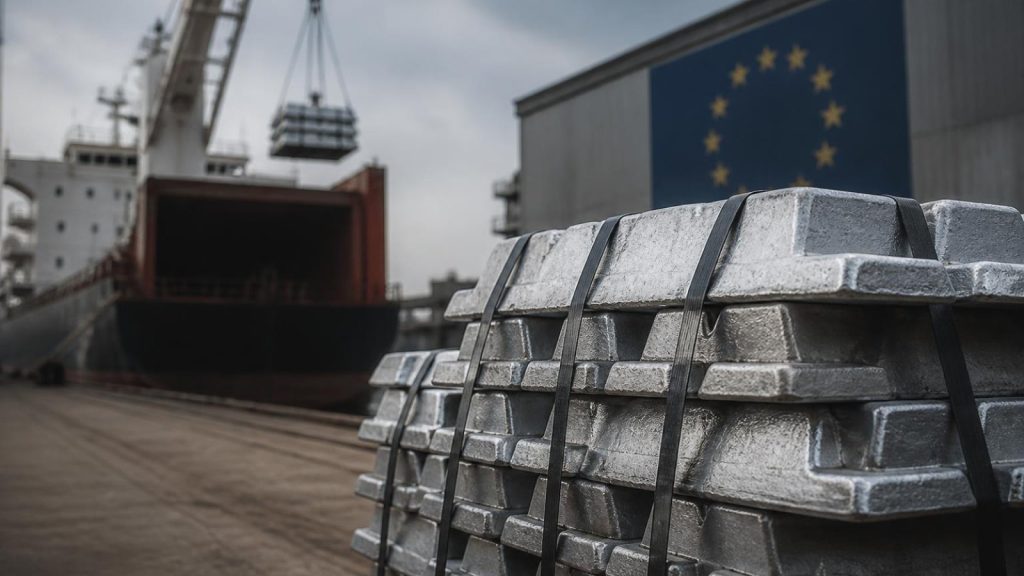
The European Union’s decision to ban the import of Russian aluminium by 2027 has raised significant concerns about the implications for the aluminium supply chain in France. In 2024, Russian aluminium accounted for 10% of France’s imports, but this figure is expected to plummet to nearly 0% by 2025. The primary goal of this ban is to diminish Moscow’s revenue streams amid ongoing geopolitical tensions. However, the situation is more complex than it appears on the surface.
Aluminium does not emerge fully formed from the earth; it requires a multi-step process that begins with the extraction of bauxite, which is then refined into alumina before being transformed into aluminium. Notably, the EU’s ban targets aluminium specifically, leaving alumina imports untouched. In France, half of the aluminium produced is recycled, while the other half is generated from two primary factories located in Dunkerque and Savoie, both of which rely on imported alumina.
Surprisingly, nearly half of France’s alumina supply comes from a single refinery in Ireland, owned by Rusal, the Russian aluminium giant. This refinery predominantly processes bauxite sourced from Guinea, where the mines are also under Rusal’s control. As a result, while the aluminium produced in French factories may not directly list Russia as a source, the country remains a critical player in the supply chain, albeit at a higher level.
The looming concern is that, given the current conflict in Ukraine, Rusal could prioritise its own operations in Russia, potentially cutting off the supply of alumina to French manufacturers. This dependency on a foreign entity, especially one embroiled in war, poses a significant risk to the stability of the aluminium production in France. The situation calls for a reevaluation of supply chains and a push towards diversifying sources to mitigate risks associated with geopolitical tensions.
In the next installment, we will explore the increasing trend of alumina being redirected from the Irish refinery to Russian facilities, further complicating the narrative of independence from Russian aluminium imports.