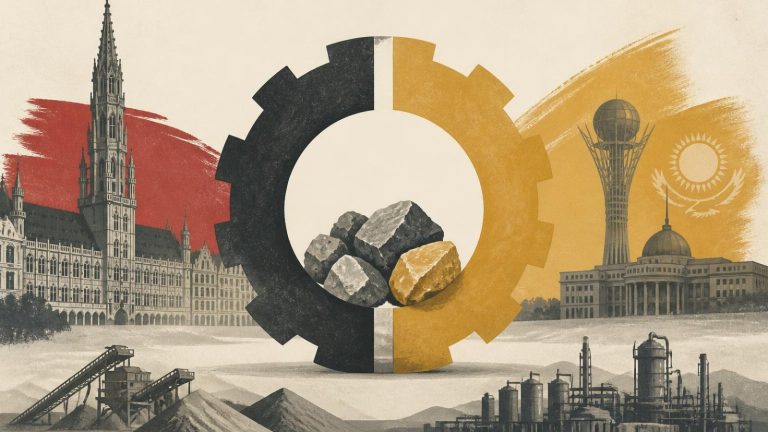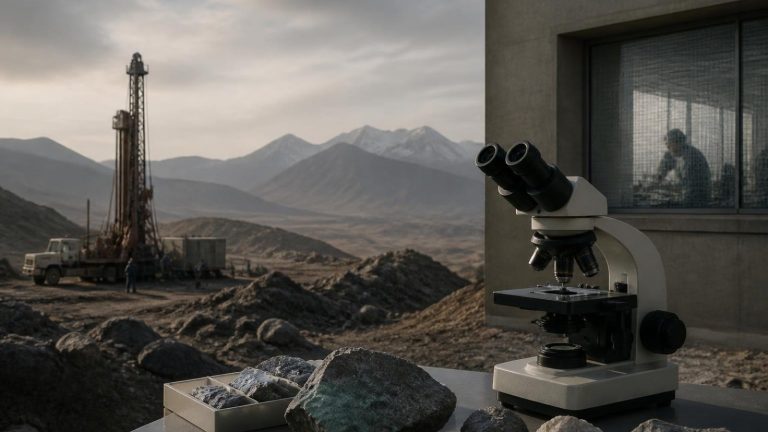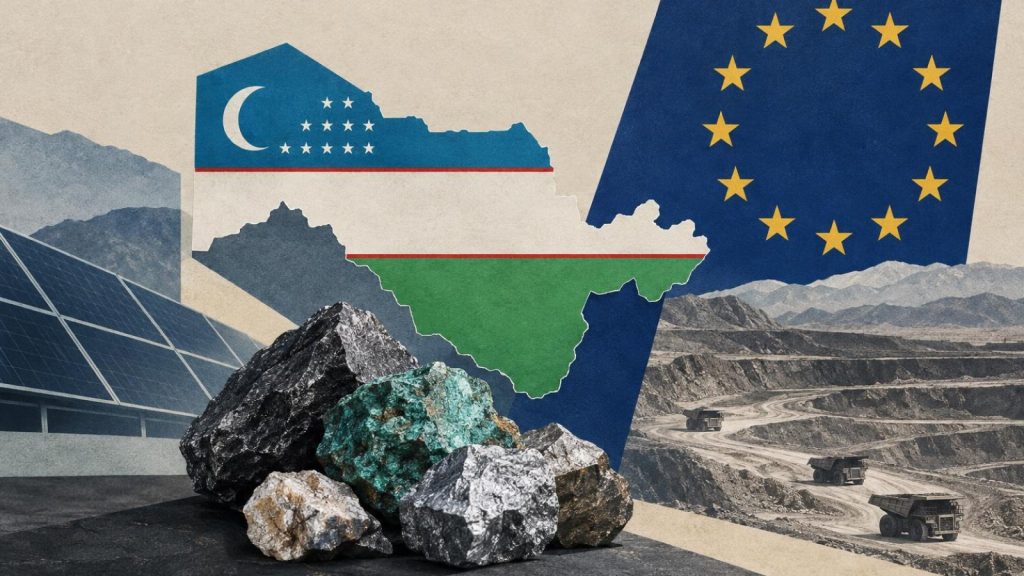
The European Union is intensifying its interest in the critical metals and minerals of Central Asia, viewing the region as a potential source of raw materials essential for its digital and green transformation. This interest is not solely focused on access to mineral deposits but also on establishing new production chains that encompass exploration, extraction, processing, and the production of high-value-added products. According to Shahnoza Kodirova, head of the Department at the Institute for Strategic and Interregional Studies under the President of Uzbekistan, the EU’s interest stems from a desire to diversify supply sources and reduce dependence on a limited number of providers.
For the European economy, this issue transcends trade; it is about the long-term sustainability of its industries. Critical minerals are vital for the development of digital technologies, energy, electric transport, and other sectors of the green economy. In this context, Central Asia is gaining new significance for Europe—not just as a source of mineral raw materials, but as a potential site for deep processing and the production of high-value-added goods.
The growing importance of critical mineral resources is also reflected in political agendas. Cooperation in this area is increasingly discussed at summits between the EU and Central Asia, as well as within the framework of the European initiative Global Gateway. Concurrently, political agreements are gradually transitioning into concrete investment projects. Notable examples include investments by the German company HMS Bergbau AG in lithium exploration in Kazakhstan and a partnership between the French company Orano and Uzbekistan’s state enterprise Navoiuran for uranium extraction.
European involvement in the region extends beyond mere extraction of minerals. Cooperation encompasses industrial, energy, and transport infrastructure, which are essential for forming complete production chains. For instance, German banks have allocated €146 million for a copper smelting plant project at the Almalyk Mining and Metallurgical Complex. The EU is also assisting in the modernization of energy and transport infrastructure in Kyrgyzstan and Tajikistan.
Uzbekistan’s challenge lies in ensuring that it does not remain merely a supplier of ore and concentrates but gradually transforms into a producer of products necessary for the global high-tech industry. To achieve this, the country is developing a production chain that covers the entire cycle—from exploration and extraction to processing and the release of finished products. Research centres and scientific parks are being established, aimed at implementing new technologies, fostering innovation, and strengthening the connection between science and industry.
Essentially, this represents an attempt to alter the economic logic of the raw materials sector: rather than just extracting resources and exporting them, the focus is on maximising the value of products within the country. This approach could provide Uzbekistan with a more advantageous position amid the growing competition for critical minerals. If the country successfully builds a complete production cycle, it could not only benefit from extraction revenues but also capture a larger share of the value created during subsequent stages—processing, production of materials, components, and finished products.