Tag: Central Asia.

  • Central Asia Emerges as a Strategic Critical Minerals Hub, but Investment, Governance and Long Timelines Remain Major Hurdles

    Central Asia Emerges as a Strategic Critical Minerals Hub, but Investment, Governance and Long Timelines Remain Major Hurdles

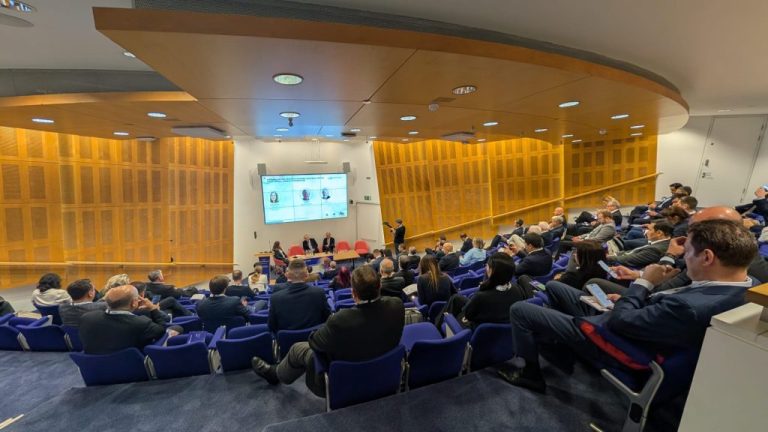
    The opening session of MINEX EURASIA 2025 — “The New Resource Frontier: Unlocking Central Asia’s Critical Minerals Powerhouse” — delivered a clear message: Central Asia has moved from a region of geological promise to a globally contested arena for critical minerals, but a substantial gap remains between ambition and execution. Speakers highlighted that while the region holds world-class deposits of lithium, tungsten, rare earth elements and other strategic minerals, underinvestment, governance challenges and slow project development continue to restrain advancement.

    The session began with a review of the region’s natural endowment. Kazakhstan — the world’s ninth-largest country — dominates regional exploration budgets, yet overall exploration spending across Central Asia remains modest compared with mature mining jurisdictions. Western participation is strikingly low, and despite a handful of standout projects, experts argued that far more risk capital is needed to convert geological maps into operating mines.

    A major theme was the mismatch between political urgency and the slow pace of mine development. Globally, the average time from discovery to commercial production now exceeds 16 years, and Central Asia is no exception. Speakers cautioned that “good geology” alone does not guarantee quick results. Long permitting timelines, regulatory uncertainty, environmental and social assessments and technical complexity remain significant barriers — all of which underscore the need for stable rules and predictable permitting systems to attract investors.

    Governance emerged as a decisive factor in Central Asia’s critical minerals trajectory. Kazakhstan was cited as a regional leader in implementing international-aligned mining reforms, including adoption of the KAZRC reporting code, a national register of qualified persons and a modernised mineral cadastre. Environmental and subsoil reforms are gradually shifting the sector away from legacy “pay-to-pollute” models toward best-available technologies and lower-impact mining. Uzbekistan, meanwhile, is rapidly implementing its own modern mining code and has expanded joint geological initiatives with Kazakhstan, signalling growing regional alignment.

    However, Kazakhstan and Uzbekistan are pursuing distinct strategies. Kazakhstan initially expected private investors to lead in critical minerals but found they instead focused on established copper and gold assets. As a result, the Development Bank of Kazakhstan has launched a multi-year, billion-dollar programme to directly support rare earth and critical mineral projects. Uzbekistan, in contrast, has adopted a state-anchored industrial model through its Technological Metals Company (TMK), which is developing more than 100 projects across 25 minerals. Its plans include large-scale tungsten development, lithium and graphite exploration and integrated upstream–midstream–downstream industrialisation.

    Both countries are shifting from exporting raw concentrates to capturing domestic value. Kazakhstan aims to seed new industries in semiconductors, batteries, permanent magnets and heat-resistant alloys, building on existing capacity such as the Ulba Metallurgical Plant. Uzbekistan’s TMK strategy links mining projects with processing plants, technology parks and industrial clusters — many in partnership with Chinese engineering and mining groups, whose turnkey project delivery capability remains unmatched.

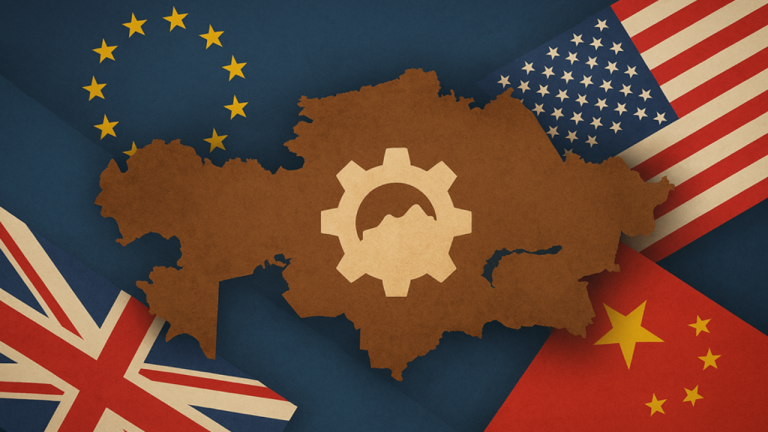
    The geopolitical landscape is increasingly crowded. China remains the dominant external player thanks to long-term planning, Belt and Road infrastructure, strong engineering capacity and patient capital. U.S. engagement is growing, primarily through offtake-driven agreements intended to secure supply for defence and energy industries. The EU is active but constrained by scale and speed of investment, while South Korea, Japan, Türkiye and the UK are carving out niches as specialised technology and standards partners.

    Presentations from the OECD stressed that unlocking Central Asia’s mineral wealth must go hand-in-hand with governance reforms, responsible business conduct and fair taxation frameworks. A multi-year regional programme is now under way to address environmental risks, reduce illicit financial flows and build due diligence systems, with final recommendations expected in 2026.

    The UK outlined its ambition to become a key partner in Central Asia’s critical minerals sector through new bilateral agreements, export credit tools and technical support for responsible mining. Case studies demonstrated British expertise across the full lifecycle — from exploration to mine rehabilitation.

    The session concluded with cautious optimism. Central Asia has firmly entered the global critical minerals spotlight, supported by geological potential, ongoing reforms and geopolitical attention from major economies. But speakers emphasised that turning opportunity into reality will require sustained investment, credible governance, transparent partnerships and a long-term view that balances foreign capital with local development and environmental protection.

  • US–Central Asia Summit Triggers Wave of Strategic Metals Deals Across the Region

    US–Central Asia Summit Triggers Wave of Strategic Metals Deals Across the Region

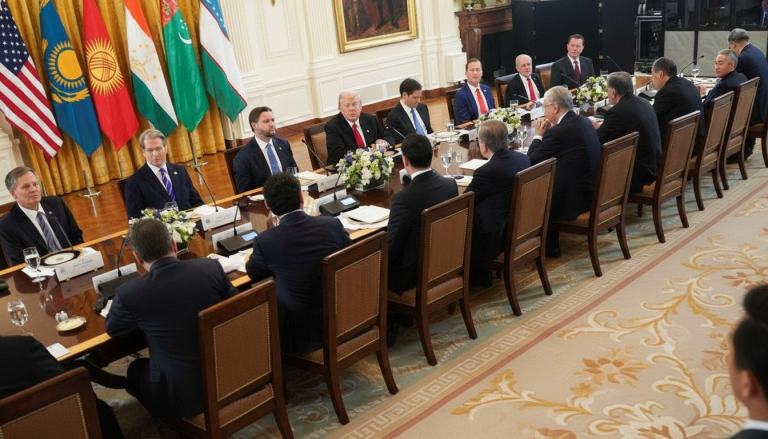
    A series of major announcements followed the recent US–Central Asia Summit in Washington, where American companies outlined plans to step up exploration and extraction of strategic minerals in Kazakhstan, Uzbekistan, and neighboring states. The push aligns with President Donald Trump’s call to secure critical materials for the United States amid efforts to reduce dependence on China, which currently dominates global supply chains.

    One of the largest initiatives involves a $1.1 billion joint venture between Kazakhstan’s Kazgeologia and US-based Cove Capital to develop the North Katpar and Verkhnee Kairakty tungsten deposits—assets holding roughly 1.3 million tonnes of tungsten oxide. This comes after reports that China attempted to outbid the US for the same project, highlighting growing strategic competition between the two powers. While American companies seek access to tungsten for defense applications, Chinese firms such as Jiaxin International Resources continue expanding their own footprint in Kazakhstan, including at the Boguty deposit.

    Uzbekistan also announced agreements with two US companies—Denali Exploration Group and ReElement Technologies—focused on rare earth elements. Earlier this year, Tashkent signed a separate memorandum with China National Gold Group, underscoring the region’s role as a battleground for critical mineral partnerships.

    Experts say the surge in US interest poses minimal risk to Russia, whose investment focus in Central Asia remains tied to oil, gas, and uranium via Rosatom and Kazatomprom. Analysts argue that Central Asian states are leveraging geopolitical competition to secure better investment conditions, diversify partners, and strengthen their bargaining power with Russia and China.

    At the same time, they caution that the new agreements carry risks for the region, particularly if they mirror the disadvantageous production-sharing contracts of the 1990s. Some deals involve large purchases of US-made goods, such as aircraft, rather than localised production, which could create long-term financial obligations.

    Still, specialists note that Donald Trump’s approach remains pragmatic: securing critical minerals for US industries while opening new export markets. For Central Asia, the challenge will be to balance relationships across the US, China, Russia, and the EU, extracting maximum benefit while avoiding overdependence on any single power.

  • Pipelines and Rare Elements: How Central Asia Became America’s New Geo-economic Frontier

    Pipelines and Rare Elements: How Central Asia Became America’s New Geo-economic Frontier

    The C5+1 summit held in Washington on November 6, 2025, marks a new chapter in U.S.–Central Asia relations, shifting the focus from energy pipelines to strategic mineral resources. Rare earth elements are now central to Washington’s strategy against China, which dominates mining and processing globally.

    Recent agreements—highlighted by substantial investments in Kazakhstan’s tungsten mines and commitments to Uzbekistan—illustrate a strategy that blends economic aims with national security, defense modernization, and leadership in green technologies. By partnering with Kazakhstan, Uzbekistan, and Turkmenistan, the U.S. seeks to counter China’s and Russia’s longstanding influence, establishing a “new resource-centered” framework for engagement. Rare earths are becoming tools of strategic power, supplanting traditional energy diplomacy and strengthening supply chains for renewable energy.

    This shift extends beyond resource access; mining investments are shaping political, economic, and diplomatic orientations across Central Asia, challenging China’s Belt and Road Initiative through economic means. The U.S. approach converts energy diplomacy into “mining diplomacy,” turning Central Asia into a global geo-economic crossroads.

    America’s renewed focus reflects a broader repositioning—building “strategic balancing” structures rather than pursuing mere economic or military dominance. The C5+1 format has become the central mechanism for promoting a model of regional integration that excludes Russia and China, offering a “third way” rooted in soft power, sustainable development, and technological partnerships.

    Strengthening transport routes like the Trans-Caspian corridor aims to liberate Central Asia from Russia’s logistical grip and curtail China’s influence over the Middle Corridor. Moscow and Beijing view these moves as containment strategies, intensifying geopolitical competition while granting Central Asian states greater autonomy through multilateral diplomacy.

    Ultimately, America’s strategy is about establishing a new Eurasian power architecture. Its success will depend on delivering sustainable investments and on Central Asian states maintaining independent balancing acts amid great-power competition.

  • Turkey’s Miryildiz Mining to Launch Gold and Copper Production in Kazakhstan by 2026

    Turkey’s Miryildiz Mining to Launch Gold and Copper Production in Kazakhstan by 2026

    Turkish mining company Miryildiz Mining plans to begin gold and copper production in Kazakhstan by late 2026, the company’s CEO Emrah Erdem announced at the Kazakhstan Global Investment Roundtable (KGIR).

    “We are engaged in gold and copper mining. Our plants in Turkey have been operating for nearly ten years. I hope that by the end of 2026, we will start gold production in Kazakhstan,” Erdem said.

    According to him, Miryildiz Mining is currently working in cooperation with the Development Bank of Kazakhstan (DBK), a subsidiary of the Baiterek Holding.

    The company operates in five countries, extracting gold, copper, chromium, and other metals, with Turkey remaining its primary market. It produces around 1 million tonnes of copper ore annually.

    “We have now set targets for copper mining in Kazakhstan,” Erdem said, adding that the company sees strong potential for copper extraction in East Kazakhstan, particularly in the Abai and Pavlodar regions.

    He also highlighted promising opportunities in the gold and rare earth metals sectors, noting Kazakhstan’s untapped mineral wealth.

    $482 Million Mining and Processing Project

    Earlier this year, Miryildiz Mining presented a $482 million project to construct a mining and processing complex (MPC) in the Zhanan-Boko-Zaisan gold ore zone to Abai Region Governor Berik Uali. The facility is expected to employ around 2,000 workers.

    The company has already completed geological exploration and purchased some of the necessary extraction and ore-processing equipment.

    Global Footprint

    Miryildiz Mining holds over 100 exploration and production licenses worldwide and is active in Central African Republic (CAR)Sierra Leone, and The Gambia, where it is also building a gold mining operation.

    In Kazakhstan, its subsidiary MIRYILDIZ KZ Ltd plans to conduct metal exploration at the Takyr site in the Zhetysu and Abai regions between 2025 and 2030.

    Market Context

    The company’s expansion comes amid record-high commodity prices — copper surpassed $11,000 per tonne, and gold exceeded $4,000 per ounce in 2025 — boosting investment in mining and geological exploration across the sector.

  • Kazakhstan Confirms Central Asia–U.S. Summit in Washington on November 6

    Kazakhstan Confirms Central Asia–U.S. Summit in Washington on November 6

    Kazakhstan’s presidency has confirmed that a Central Asia–United States summit will take place in Washington, D.C., on November 6, bringing together the leaders of the C5+1 format — the United States and the five Central Asian nations: Kazakhstan, Kyrgyzstan, Tajikistan, Turkmenistan, and Uzbekistan.

    According to the press office of President Kassym-Jomart Tokayev, the Kazakh leader sent a letter of gratitude to U.S. President Donald Trump for the invitation to participate in the summit. Tokayev described the initiative as both “timely and important,” emphasizing that he shares Trump’s key domestic and foreign policy principles, including the promotion of traditional values, common sense, and global peace and security.

    The upcoming gathering will coincide with the tenth anniversary of the C5+1 diplomatic platform, launched in 2015 to strengthen regional cooperation and deepen U.S.–Central Asia engagement in areas such as energy security, trade, counterterrorism, and sustainable development.

    Regional media have confirmed participation from other Central Asian heads of state. Uzbek outlet Gazeta.uz reported that President Shavkat Mirziyoyev has received an invitation, while Kyrgyz media stated that President Sadyr Japarov will also attend. Invitations have reportedly been extended to all five Central Asian leaders, according to Azattyq.

    The announcement follows recent visits to Kazakhstan and Uzbekistan by U.S. Special Envoy for South and Central Asia Sergio Gor and Deputy Secretary of State Christopher Landau, underscoring Washington’s renewed diplomatic focus on the region.

    President Trump met both Tokayev and Mirziyoyev during the U.N. General Assembly last month in New York, where several multi-billion-dollar business deals were announced. Analysts suggest the upcoming summit aims to counterbalance the influence of Russia and China in Central Asia amid heightened global competition for access to the region’s critical minerals and strategic trade routes.

    In an October 20 letter, members of the U.S. House Foreign Affairs Committee urged President Trump to host the C5+1 summit before the end of the year. The letter highlighted U.S. strategic interests in developing regional critical mineral supply chains—notably tungsten, antimony, lithium, and rare earth elements—as well as advancing trade liberalization through the repeal of the Jackson-Vanik amendment and bolstering counterterrorism cooperation against the regional branch of the Islamic State group.

    The Washington summit is expected to mark a major step in U.S. efforts to strengthen political and economic ties with Central Asia, promote regional resilience, and enhance collaboration in energy, defense, and raw materials security.

  • U.S.–China Trade Escalation Puts Spotlight on Kazakhstan’s Rare Earth Potential

    U.S.–China Trade Escalation Puts Spotlight on Kazakhstan’s Rare Earth Potential

    Global markets endured one of their most volatile days since the early stages of the U.S.–China trade war, after China expanded export controls on rare earth elements and U.S. President Donald J. Trump announced sweeping new tariffs and export restrictions in response.

    In a series of social media posts, Trump first suggested there was “no reason” to meet Chinese President Xi Jinping at the upcoming APEC Summit, before declaring that China would impose “large-scale export controls” on nearly all its products starting November 1. The White House later confirmed that the U.S. would respond with 100% tariffs on Chinese imports and new export restrictions on critical software “on or before November 1.”

    The escalation has injected new urgency into the global scramble for rare-earth supply chains, pushing attention beyond East Asia to Central Asia, particularly Kazakhstan — one of the few countries outside China with verified rare-earth reserves and a functioning mining sector.

    Kazakhstan’s Rising Role in Supply Diversification
    Kazakhstan’s mineral wealth is rooted in Soviet-era geological mapping, with modern surveys confirming vast deposits of neodymium, praseodymium, dysprosium, terbium, and samarium — all essential for electric vehicles, wind turbines, and advanced defense systems. The Zhana Kazakhstan deposit in the Karagandy region could become one of the largest rare-earth reserves globally, pending validation of resource estimates.

    According to U.S. defense classifications, these are “critical defense materials.” Both the Pentagon and the Defense Logistics Agency have begun building stockpiles and identifying non-Chinese refining partners, but the challenge lies not in geology — Kazakhstan’s resources are proven — but in processing and commercialization.

    Existing facilities such as the Stepnogorsk Chemical Plant and Ulba Metallurgical Plant could be adapted for rare-earth processing, while the SARECO joint venture has already demonstrated the recovery of magnet-critical elements from uranium residues. The Kuirektykol deposit, rich in neodymium and dysprosium, further strengthens Kazakhstan’s feedstock base. However, infrastructure remains tailored to uranium and base metals, not the precise requirements of rare-earth refining.

    Legal Reforms and Foreign Partnerships
    Kazakhstan’s Unified Code on Subsoil Use (2018) has made the country more attractive to Western investors by clarifying ownership and capital entry rules. Since then, over $40 billion in new foreign mining investment has entered the sector. European and Japanese firms are now exploring partnerships in refining, metallurgy, and supply-chain development.

    The government’s focus is shifting from raw extraction toward value-added production, aligning with global efforts to reduce dependence on Chinese processing. Still, sustained investment will depend on policy consistency, financing mechanisms, and export infrastructure.

    Strategic Context: Central Asia’s Balancing Act
    Kazakhstan’s push to develop its rare-earth potential reflects a regional strategy to manage interdependence with China while courting Western partnerships. While China remains a dominant trading partner, Kazakhstan’s access to the Caspian Sea and international capital markets gives it greater flexibility than most of its neighbors.

    Recent trade volatility and increased Chinese port fees have added pressure to diversify trade routes, not by abandoning China, but by building redundant corridors and risk-mitigated financing.

    The United States, meanwhile, views Kazakhstan not as a substitute for China but as a strategic component in a diversified supply network. The U.S. International Development Finance Corporation (DFC) is assessing refining feasibility studies under strict governance and environmental standards.

    At the C5+1 meeting in Dushanbe on September 4, U.S. and Central Asian officials discussed rare-earth cooperation as part of broader economic diversification efforts — signaling a shift from diplomatic rhetoric to working-level engagement.

    Outlook
    As export controls and tariffs deepen supply chain instability, Kazakhstan is emerging as a key analytical focus for policymakers and investors seeking long-term alternatives. Its rare-earth deposits and industrial base give it potential leverage in the global realignment of strategic materials — but realizing that potential will depend on its ability to scale processing, secure investment, and build reliable transport routes.

    Rather than serving as a replacement for China, Kazakhstan illustrates how mid-sized economies are positioning themselves as essential nodes in a fragmented, multipolar supply chain system.

  • Tajikistan Targets Role in Global Rare Earth Supply Chain, Eyes Lithium and Antimony Production Expansion

    Tajikistan Targets Role in Global Rare Earth Supply Chain, Eyes Lithium and Antimony Production Expansion

    Tajikistan holds deposits of 10 out of 12 metals critical for the global energy transition, with six already being mined, Minister of Industry and New Technologies Sherali Kabir said at the Dushanbe 2025 International Investment Forum, according to Asia-Plus.

    Kabir outlined the government’s vision for Tajikistan to become an active player in the global rare earth supply chain, emphasizing that the country was once a hub for rare earth production within the former Soviet Union. Of the three rare earth processing plants that existed in the USSR, two were located in Tajikistan and one in Russia.

    Authorities are now in talks with international partners to modernize these facilities, with Kabir noting that the government expects “very good results” from these negotiations in the near future.

    Tajikistan is also doubling down on antimony, one of its most abundant resources. The country ranks second globally in terms of antimony reserves. Four new processing plants are in the pipeline, at various stages ranging from feasibility studies to construction.

    The minister also highlighted the growing copper industry, confirming that domestic production has already begun and that the government plans to significantly expand output by attracting foreign investment.

    Kabir further revealed that Tajikistan has large deposits of nickel and lithium ores, adding that the country’s ambition is to become the first among CIS nations to launch lithium production — a crucial material for batteries and clean energy technologies.

  • Kazakhstan and Kyrgyzstan Sign Memorandum to Boost AI and Digital Development

    Kazakhstan and Kyrgyzstan Sign Memorandum to Boost AI and Digital Development

    The Ministry of Artificial Intelligence and Digital Development of Kazakhstan and the Ministry of Digital Development of Kyrgyzstan have signed a memorandum of cooperation aimed at advancing digital technologies and strengthening bilateral collaboration in IT and artificial intelligence.

    The agreement focuses on experience sharing, the introduction of innovative solutions, and the development of the digital economy in both countries. The partnership is expected to enhance digital services, foster integration in the field of tech startups, and improve infrastructure to create more efficient and secure solutions in IT and AI.

    Officials emphasized that strengthening this strategic partnership opens up new opportunities for the implementation of digital technologies across Central Asia, contributing to long-term regional growth and innovation.

  • CIS Nations Discuss Subsoil Management at Astana Meeting

    CIS Nations Discuss Subsoil Management at Astana Meeting

    The XXVIII Session of the Intergovernmental Council in Astana marked another step in ongoing efforts to strengthen cooperation among CIS countries in the field of geology and subsoil use. With delegates from Armenia, Belarus, Kazakhstan, Kyrgyzstan, Russia, Tajikistan, Uzbekistan and the CIS Executive Committee, the event reflected the region’s interest in consolidating expertise and maintaining a coordinated approach to mineral resource governance.

    The agenda addressed a broad range of issues, from modern methods of geological mapping and digitalisation of exploration processes to youth involvement and the preservation of geological heritage. This breadth indicates an awareness of the multiple challenges facing the sector, not only in economic terms but also in social and environmental dimensions.

    The 28th session of the Intergovernmental Council on Exploration, Use and Conservation of Mineral Resources (Межправительственного совета по разведке, использованию и охране недр) took place in Astana, Kazakhstan on 25September 2025, with representatives from seven post-Soviet states in attendance. The council’s primary objective is to promote cooperation and coordination among its member states in the field of mineral exploration, use, and conservation. However, the session’s proceedings also highlighted the challenges and tensions that arise from the extraction of Kazakhstan’s vast mineral resources.

    The council’s Chairman, Yerlan Esenaliuly Akbarov, emphasised the importance of strengthening cooperation and partnerships among member states to address the complex geological challenges facing the region. Marat Mammbetovich Jusupbekov, the Director of the Kyrgyz Geological Service, presented a report on the activities of the council during the 2024-2025 period, highlighting the progress made in implementing joint projects and promoting the development of modern geoscientific methods.

    While the council’s focus on cooperation and technology transfer is a positive step, concerns remain regarding the environmental and social impact of mineral extraction in Kazakhstan. The country’s extractive industries have faced criticism for their environmental record, and local communities have raised concerns about the lack of transparency and accountability in the decision-making process.

    The council’s discussion on modern methods and approaches to geological research and exploration suggests that the member states are aware of the need to balance economic development with environmental protection. However, the lack of concrete measures to address these concerns raises questions about the council’s commitment to sustainability.

  • China Tightens Grip on Tajikistan’s Antimony Industry

    China Tightens Grip on Tajikistan’s Antimony Industry

    In Tajikistan’s mountainous heartland, the Soviet-era Saritag antimony mine stands testament to China’s growing influence in Central Asia. Run by the joint venture Talco Gold, a collaboration between Tajik and Chinese companies, the mine produces over 5,000 tonnes of antimony concentrate daily, crucial for many industrial applications. The ore is crushed, ground in large drums, and then separated from the metal using chemical reagents before being dried and bagged as 30% pure antimony. This large-scale operation was made possible by a significant Chinese investment in 2022, which is now being followed by the construction of a new purification plant.

    Pictures of Tajikistan’s long-time President Emomali Rakhmon coexist with portraits of Chinese leader Xi Jinping on posters juxtaposing the country’s past with its present economic reality. While remnants of the Soviet era remain, China has overtaken Russia as the dominant power in the region’s crucial mining sector.

    The full potential of the mine is yet to be unlocked. China’s ambitious $359 million project aims to build a state-of-the-art purification plant on the site, allowing for even greater control over the antimony production chain.

    The Chinese investment, pouring in, signals a strategic move to secure access to vital resources and cement political ties. While offering much-needed economic boost to Tajikistan, it raises concerns about resource dependence and potential environmental consequences.

    This narrative paints a picture of delicate balance: economic prosperity coupled with increasing reliance on a single partner, leaving Tajikistan to navigate the complex landscape of China’s expanding geopolitical footprint in Central Asia.