Tag: Central Asia.

  • Uzbekistan Launches Major Copper Plant at AGMK to Boost Industrial Growth

    Uzbekistan Launches Major Copper Plant at AGMK to Boost Industrial Growth

    Uzbekistan has launched Copper Processing Plant No. 3 at the Almalyk Mining and Metallurgical Complex (AGMK), marking one of the largest industrial projects in the country’s mining sector.

    The $2.7 billion facility, built on a 196-hectare site as part of the development of the Yoshlik-1 deposit, is designed to significantly strengthen Uzbekistan’s industrial capacity and deepen domestic processing of mineral resources.

    🏗️ A megaproject in every sense
    The plant is capable of processing 60 million tonnes of ore annually and producing about 900000 tonnes of copper concentrate. This makes it not only one of the largest copper processing facilities in Central Asia, but also among the largest globally.

    The scale is almost cinematic:

    • Steel structures used equal roughly 10 Eiffel Towers

    • Reinforced concrete volume comparable to 2.5 Burj Khalifas

    International engineering leaders including Wood (Italy) and Worley (UK) were involved in the project, while technologies from Metso, FLSmidth, Weir Minerals and Siemens have been implemented.

    ⚙️ Smart factory powered by AI
    The plant is built as a fully digitalised operation:

    • Unified AI-based control system

    • 10% reduction in energy consumption

    • 15% lower production costs

    • 10% increase in labour productivity

    Daily copper concentrate output at AGMK will double from 2400 tonnes to 5000 tonnes once the plant reaches full capacity.

    🌍 Resource base for a century
    Uzbekistan’s leadership highlighted the long-term resource strength underpinning the project. The Yoshlik-1 and Kalmakyr deposits contain:

    • 45 million tonnes of copper

    • Over 5000 tonnes of gold

    These reserves are expected to support the industry for at least 100 years. The deposits also include valuable by-products such as molybdenum, selenium, tellurium and rhenium — metals critical for high-tech and emerging industries.

    📈 From raw materials to value chains
    President Shavkat Mirziyoyev emphasised a strategic shift from exporting raw materials to building full value chains.

    Today, Uzbekistan already processes about 100000 tonnes of copper domestically, with plans to reach 240000 tonnes in the near term and continue expanding through new projects.

    “Whoever builds a high value-added chain in copper will create the industry of the future,” the president said.

    🚀 What comes next
    The project is just one piece of a much larger industrial expansion:

    • A new $2.5 billion copper smelter is under construction

    • Copper cathode production will rise from 148500 to 300000 tonnes per year

    • Gold output will increase from 20 to 33 tonnes

    • Silver from 161 to 203 tonnes

    • Molybdenum from 850 to 1700 tonnes

    A fourth processing plant is already in early planning, which could boost these figures by another 50%.

    By 2030, Uzbekistan aims to reach:

    • 500000 tonnes of copper

    • 175 tonnes of gold

    • 500 tonnes of silver

    • 15000 tonnes of uranium

    💼 Economic and social impact
    The new plant alone will create over 6000 high-paying jobs, while the broader $22 billion pipeline of mining projects is expected to generate nearly 40000 jobs nationwide.

    At the same time, environmental measures such as green landscaping and drip irrigation systems are being implemented under the “Yashil Makon” initiative, aiming to balance industrial growth with sustainability.

    🎯 Big picture
    Uzbekistan is clearly shifting gears from a resource exporter to an industrial powerhouse — turning copper from a rock in the ground into a backbone of future industry, from energy grids to AI infrastructure.

  • Uzbekistan to Boost Copper Processing Capacity to 240000 Tonnes

    Uzbekistan to Boost Copper Processing Capacity to 240000 Tonnes

    Uzbekistan’s copper processing capacity is expected to reach 240000 tonnes this year, President Shavkat Mirziyoyev announced during the inauguration of Copper Processing Plant No. 3 at the Almalyk Mining and Metallurgical Complex (AGMK).

    According to the president, processing volumes are set to continue growing over the next two to three years as new investment projects in the mining and metallurgical sector are implemented.

    Mirziyoyev emphasised that global demand for copper is increasing rapidly as the metal becomes increasingly important for modern industry. Copper plays a critical role in sectors such as energy, electrical engineering, digital technologies, artificial intelligence and the development of green energy systems.

    “Those who create a high value-added chain in the copper industry will effectively create the industry of the future,” the president said.

    As an example of the country’s expanding mining potential, Mirziyoyev highlighted the Yoshlik-1 deposit. The project was previously considered technically complex and difficult to develop, but production is now rapidly ramping up.

    The president said the mine is expected to produce around 20 million tonnes of ore this year. Over the next two years, output from the deposit is planned to increase to approximately 60 million tonnes.

    The expansion of processing capacity at AGMK forms part of Uzbekistan’s broader strategy to strengthen its position as a major producer of copper and other strategic metals, while building higher value-added industrial supply chains.

    Earlier, Kursiv Uzbekistan reported that Mirziyoyev officially launched the new copper processing plant at AGMK as part of the country’s industrial development programme.

  • TMK Expands Industrial Cooperation with Kazakhstan’s Ulba Metallurgical Plant

    TMK Expands Industrial Cooperation with Kazakhstan’s Ulba Metallurgical Plant

    TMK has held high-level talks with representatives of Ulba Metallurgical Plant to expand industrial and technological cooperation in Central Asia. The meeting, which took place at TMK’s head office, focused on strengthening bilateral partnerships and exploring opportunities for joint projects in both Uzbekistan and Kazakhstan.

    Discussions centred on advancing deeper processing of critical raw materials, increasing production of high value-added products, and enhancing the integration of regional industrial value chains. Both sides emphasized the strategic importance of developing downstream capabilities in critical minerals to improve competitiveness and reinforce regional supply chain resilience.

    Ulba Metallurgical Plant is a key industrial enterprise in Kazakhstan, specializing in the production of uranium, beryllium, tantalum and niobium, as well as finished products based on these metals. The potential collaboration is expected to contribute to broader industrial development across Central Asia.

  • US Launches Project Vault to Secure Critical Minerals and Deepens Engagement With Central Asia

    US Launches Project Vault to Secure Critical Minerals and Deepens Engagement With Central Asia

    The United States has stepped up efforts to secure independent supply chains for critical minerals with the launch of Project Vault, a new initiative designed to establish a US Strategic Critical Minerals Reserve and reduce reliance on China. The project, formally approved on February 2 by the Export-Import Bank of the United States, is backed by up to $10 billion in long-term public financing and an additional $2 billion in expected private-sector participation.

    Project Vault will operate as a public-private stockpile, creating reserves of essential minerals and metals used in aerospace, defence, semiconductors, advanced manufacturing, renewable energy, and electric vehicles. Planned storage sites across the United States are intended to buffer domestic industries against global supply shocks, mirroring the role of the Strategic Petroleum Reserve in energy markets.

    The initiative reflects Washington’s broader strategy to diversify critical mineral supply chains away from China, which currently dominates global mining, refining, and processing capacity for rare earths. US officials have increasingly framed this dominance as a strategic vulnerability, citing past export restrictions imposed by Beijing as evidence of how mineral supply can be used as a geopolitical tool.

    While Project Vault focuses on domestic resilience, its success depends on diversified upstream supply. In this context, mineral-rich Central Asia has emerged as a key region in US policy thinking. Kazakhstan and Uzbekistan were invited to participate prominently in the 2026 Critical Minerals Summit, underscoring growing US interest in the region as an alternative source of strategic materials.

    Central Asia collectively hosts deposits of more than 25 minerals classified as critical by the United States Geological Survey, including rare earth elements, tungsten, antimony, manganese, chromium, and titanium. Despite Kazakhstan’s long-standing role as the world’s largest uranium supplier and the region’s significant reserves, much of Central Asia’s mineral output remains underdeveloped or exported as raw material, primarily to China and Russia.

    Washington has signalled a shift from purely diplomatic engagement toward commercially driven cooperation. Alongside the traditional C5+1 framework, the US has increasingly relied on business-focused mechanisms such as the B5+1 platform to connect private capital with Central Asian projects. This approach is supported by US agencies including the US International Development Finance Corporation, the US Trade and Development Agency, and EXIM, all of which are expanding financing and technical support for critical minerals projects in the region.

    US officials argue that stockpiling alone cannot resolve supply vulnerabilities without parallel investment in downstream processing and refining capacity, much of which remains concentrated in China. As a result, future cooperation is expected to focus not only on extraction but also on building value-added processing capabilities in partner countries.

    Taken together, Project Vault and the intensified engagement with Central Asia mark a decisive shift in US critical minerals policy. Washington now views the region not just as a geopolitical partner, but as a potential long-term contributor to diversified, market-based supply chains that underpin US economic and national security.

  • Why Central Asia Must Lead on Critical Minerals Cooperation

    Why Central Asia Must Lead on Critical Minerals Cooperation

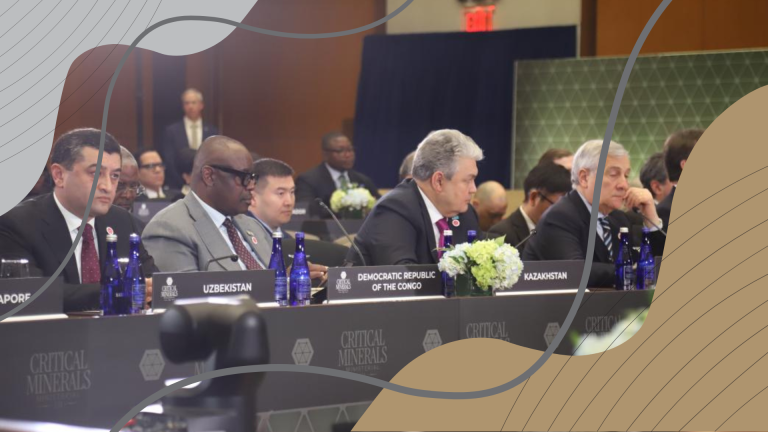
    Senior officials from more than 50 countries gathered at the White House on February 4 for the United States’ first Critical Minerals Ministerial, marking a symbolic moment for Central Asia’s engagement in global resource diplomacy. Delegations from Kazakhstan and Uzbekistan underscored the region’s long-standing “multi-vector” foreign policy ambitions, but the meeting also highlighted a persistent challenge: turning diplomatic visibility into tangible industrial outcomes.

    While Washington’s message focused on openness and coordination, the imbalance between intent and execution remains stark. China has consistently converted engagement into financed, operational mining and processing projects, typically combining contractors, concessional financing, and long-term offtake agreements. By contrast, Western engagement has largely taken the form of memoranda of understanding and strategic frameworks that signal political alignment but stop short of delivering mines, refineries, or downstream capacity.

    Uzbekistan offers a contrasting model of what project readiness can look like. In March 2025, Tashkent unveiled a $2.6 billion, three-year programme encompassing 76 projects across 28 minerals, with a clear objective of moving beyond extraction toward processing and finished products. The initiative is structured for partners capable of execution at scale, rather than symbolic cooperation.

    The evolving US approach further complicates expectations. Washington is increasingly pursuing techno-economic sovereignty, integrating supply chain security, energy systems, advanced manufacturing, and artificial intelligence into a tightly coordinated industrial policy. Dependencies are reframed as vulnerabilities, and resilience has become a central organising principle. In this context, US engagement abroad is likely to be selective, focusing on de-risked, compliant projects that directly support domestic resilience goals rather than driving industrialisation in partner regions.

    This creates both a constraint and an opportunity for Central Asia. High-level political gestures, including the first-ever C5+1 Presidential Summit in Washington in 2025, have raised the region’s profile. Yet momentum will not emerge automatically from diplomacy alone. To shape outcomes, Central Asian governments and companies must proactively present bankable, project-ready opportunities, particularly through direct business-to-business engagement with US firms.

    Developing midstream capabilities is critical. Exporting raw ore is capital-intensive, logistically exposed, and low-margin. By contrast, refined metals and intermediate products can anchor value locally, create skilled employment, and reduce vulnerability to external supply chain shocks. Without this shift, the region risks deeper path dependency and gradual absorption into China-centric production networks.

    Ultimately, the future of Central Asia’s critical minerals sector will not be decided in Washington or Beijing alone. Strategic autonomy depends on the region’s ability to define priorities, structure viable projects, and act as the primary driver of its own industrial transformation.

  • A Strategic Assessment of Promise vs. Reality in Central Asia’s Mineral Development

    A Strategic Assessment of Promise vs. Reality in Central Asia’s Mineral Development

    Central Asia’s role in global critical minerals took a decisive turn at the 4 February 2026 Critical Minerals Ministerial in Washington, where officials from more than 50 countries acknowledged the region as a strategic hub rather than a geopolitical buffer.

    While Washington presented an ambitious framework to advance mineral sovereignty, analysts caution that the region—not the U.S.—must drive implementation to avoid becoming a passive arena for major‑power competition.

    U.S. Strategy: A Vertical Integration “New Order”

    The U.S. vision, centred on the FORGE initiative and the concept of “Pax Silica,” positions minerals and energy as shared strategic assets among trusted partners and offers an alternative to dependency on China.
    Washington differentiates its value proposition in three areas:

    1. Market Stability Through Price Floors
      Proposed tariff‑backed price floors aim to counter predatory market dumping and protect investments in assets such as Kazakhstan’s rare earth reserves.
    2. Vertical Value Integration
      The U.S. framework prioritises domestic processing and refining over raw‑ore exports, enabling Central Asian states to capture more value across the supply chain.
    3. Connectivity Autonomy
      By incorporating the Middle Corridor into initiatives like TRIPP, the West presents routes that bypass Russia and China, reducing geopolitical transit pressures.

    Kazakhstan and Uzbekistan have responded quickly—Kazakhstan has declared critical minerals the “new oil” and joined the Abraham Accords to strengthen supply‑chain integration, while Uzbekistan has pursued strategic MOUs to modernise mining and secure battery‑metal supply chains.

    Reality Check: Gaps Between Intent and Implementation

    Despite strong rhetoric, Western engagement has largely taken the form of frameworks and MoUs—not operational projects.

    Three challenges persist:

    • Operational Disparity – China continues to deliver turnkey, financed projects backed by contractors and long‑term offtake agreements, while Western partners emphasise declarations.
    • U.S. Inward Focus – Washington’s drive for techno‑economic sovereignty favours selective, de‑risked engagements rather than proactive industrial development in the region.
    • Execution Gaps – Uzbekistan’s $2.6bn program covering 76 projects illustrates regional ambition, but real progress requires partners capable of building at scale.

    Strategic Imperative: Central Asian Agency

    Experts argue that relying on future U.S. demand is a strategic mistake.
    To convert high‑level dialogue into economic gains, Central Asia must prioritise:

    1. Midstream Capabilities

    Refining and producing intermediary products offer higher margins and reduce reliance on long‑distance transport of low‑value raw ore.

    2. Direct Private‑Sector Engagement

    Regional firms should proactively present project‑ready opportunities to U.S. companies rather than depending on government‑to‑government frameworks.

    Conclusion

    The U.S. “New Order” provides Central Asia with a potential pathway to diversify away from Beijing and Moscow while improving price stability and long‑term sovereignty.
    But success hinges on regional execution. Astana and Tashkent must convert diplomatic signals into tangible midstream capacity—and do so quickly—to secure their strategic autonomy before the current window closes.

  • Ending the ‘Extract-and-Export’ Era: How FORGE and Pax Silica Transform Central Asian Mining

    Ending the ‘Extract-and-Export’ Era: How FORGE and Pax Silica Transform Central Asian Mining

    The 2026 Critical Minerals Ministerial in Washington has signaled the definitive end of Central Asia’s era as a “landlocked” geopolitical afterthought. For decades, the five nations of the region were viewed through the narrow lens of the “Great Game”—a buffer zone between Russian security interests and Chinese infrastructure investments. However, the “New Order” proposed by the Trump administration, articulated by Vice President JD Vance and Secretary of State Marco Rubio, has repositioned Kazakhstan, Uzbekistan, and their neighbors as the indispensable pivot of a new Western-aligned industrial statecraft.

    The Mineral Sovereignty Pivot

    The strategic argument for Central Asian states to embrace the U.S.-led FORGE (Forum on Resource Geostrategic Engagement) initiative and the proposed Preferential Trade Zone rests on the promise of escaping “coercive dependencies”. For years, Central Asian producers have been vulnerable to the same market distortions Vance identified in Washington: a “foreign supply” (read: China) that floods markets to crash prices and kill domestic projects.

    By joining the new trading bloc, countries like Kazakhstan and Uzbekistan are being offered a “necessary foundation for private financing” and a “price floor” enforced by adjustable tariffs. This mechanism is a game-changer for the region. It essentially guarantees that if Kazakhstan develops its potentially world-class rare earth element (REE) reserves—estimated by some to reach 20 million metric tons—its investments will be shielded from predatory pricing strategies designed to maintain Beijing’s monopoly.

    Kazakhstan: The Vanguard of the New Order

    Kazakhstan has moved first and most aggressively to align with this reindustrialization doctrine. President Kassym-Jomart Tokayev’s branding of critical minerals as the “new oil” is not mere rhetoric; it is backed by a landmark memorandum of understanding (MOU) with the U.S. signed in November 2025, which focuses on technology transfer and processing capacity.

    Perhaps most significantly, Kazakhstan’s accession to the Abraham Accords in November 2025 serves as a profound geopolitical signal. While traditionally a Middle Eastern normalization framework, its expansion to Kazakhstan—the first member with preexisting ties to Israel—is being used to facilitate secure, tech-driven supply chains that reduce the region’s reliance on China. This “unorthodox” alignment places Astana at the heart of the Pax Silica vision, where silicon, minerals, and energy are treated as shared strategic assets among “trusted partners”.

    Uzbekistan and the C5+1 Renaissance

    Uzbekistan is rapidly following this blueprint. On February 5, 2026, during the Ministerial, Tashkent signed its own strategic MOU with the U.S. to secure supply chains for rare earths and critical minerals like lithium, magnesium, and indium. For President Mirziyoyev, this is a path to modernize a mining sector that has often relied on outdated Soviet-era surveys.

    The broader C5+1 diplomatic platform, now celebrating its tenth anniversary, has evolved from a symbolic talk shop into a “pragmatic, project-driven economic coordination framework”. This “renaissance of American influence” is evidenced by the $17 billion in investment projects agreed upon following recent summits and the integration of the Middle Corridor (Trans-Caspian International Transport Route) into the Trump Route for International Peace and Prosperity (TRIPP).

    The Argument for Central Asian Alignment

    The “New Order” offers Central Asia three structural advantages that neither Moscow nor Beijing can—or will—match:

    1. Vertical Value Integration: Unlike China’s “extract-and-export” model, the U.S. framework emphasizes domestic processing and refining. This allows Central Asian states to capture high-value segments of the supply chain rather than remaining mere “resource bases”.

    2. Market Stability: The Project Vault and price floor mechanisms provide a buffer against “market whiplash”. For a region where commodity price volatility can destabilize entire national budgets, this sovereign de-risking is a vital survival tool.

    3. Connectivity Autonomy: By backing the Middle Corridor/TITR, the U.S. and its partners are providing the region with its first viable route to global markets that does not pass through Russia or China. This reduces the ability of larger neighbors to use transit as a tool of political pressure.

    Central Asia is currently in a “hedging game,” and both Pakistan and Central Asian states have approached these initiatives with a degree of caution to avoid immediate Chinese retaliation. However, the message from the 2026 Ministerial is clear: in an economy of “real things,” those who control the minerals control the future. For Kazakhstan and Uzbekistan, the American proposal is not just about mining; it is about finally securing their economic and territorial sovereignty.

  • Wartime Disruptions Push Tungsten Market Toward China and Turn Central Asia Into a Strategic Alternative

    Wartime Disruptions Push Tungsten Market Toward China and Turn Central Asia Into a Strategic Alternative

    Tungsten has emerged as one of the focal points of today’s geo-economic competition, as the disruption of traditional supply routes has reshaped the global market and intensified the search for alternative sources. The full-scale crisis that began in 2022 exposed the fragility of critical mineral supply chains, particularly for metals essential to defence and advanced manufacturing.

    Before the war in Ukraine, a significant share of global tungsten supply came from Russia and China. Sanctions imposed on Moscow effectively halted Russian exports, forcing the closure of several mines and removing Russian material from Western markets. As a result, global supply became even more concentrated in China, deepening Western dependence on a single dominant producer.

    The conflict also triggered a surge in defence production across NATO countries, driving higher demand for tungsten used in ammunition and military equipment. In response, G7 states agreed in 2023 on a mineral security agenda aimed at diversifying supply and countering monopolistic practices in critical raw materials markets. The United States moved particularly quickly, setting regulatory targets to eliminate tungsten purchases from China and Russia for defence needs by 2027. Pentagon procurement plans alone envisaged demand exceeding 2,000 tonnes in 2025. At the same time, Canada’s Almonty Industries accelerated the restart of South Korea’s Sangdong mine to supply the U.S. market.

    China, which controls up to 83% of global tungsten production and more than half of confirmed reserves, has adjusted its strategy as relations with the West have deteriorated. After years of price dumping and oversupply that pushed competitors out of the market, Beijing tightened export controls. From February 2025, tungsten exports became subject to licensing by China’s Ministry of Commerce. While not a formal ban, the policy has increased supply risks. Chinese tungsten exports fell by nearly a quarter in the first half of 2025, while prices surged to record levels, with ammonium paratungstate exceeding $60,000 per tonne.

    These shifts have pushed investors and governments to look more closely at deposits outside China, particularly in Central Asia. Chinese companies, seeking to retain influence, have also stepped up overseas resource investments. In Kazakhstan, a new tungsten processing plant backed by Chinese capital began operations in mid-2025, with an annual capacity of around 3.3 million tonnes of ore. Despite this, nearly all of Kazakhstan’s tungsten concentrates continue to be exported to China.

    The return of Donald Trump to the White House in 2025 added fresh momentum to the scramble for strategic minerals. The new U.S. administration elevated critical metals to a foreign-policy priority and renewed its focus on Central Asia. In November 2025, Washington and Astana announced agreements to jointly develop the North Katpar and Upper Kairakty tungsten deposits in Kazakhstan’s Karaganda region. With resources estimated at 755 million tonnes of ore and around 854,000 tonnes of tungsten trioxide, Upper Kairakty is considered the largest tungsten deposit in the world.

    A joint venture was established in which U.S.-based Cove Capital holds a 70% stake and Kazakhstan’s Tau-Ken Samruk 30%. The project targets initial production of about 12,000 tonnes of tungsten per year, equivalent to roughly 15% of current global output, with a mine life exceeding 50 years. If fully realized, Kazakhstan could emerge as the world’s second-largest tungsten producer after China.

    Beyond Kazakhstan, other Central Asian states are also seeking to position themselves within new supply chains. Uzbekistan has begun engaging Western investors in rare earths and other critical minerals, while Kyrgyzstan and Tajikistan, though smaller in scale, hold geologically significant deposits. For the region, this represents an opportunity to diversify economies, attract capital and increase geopolitical relevance amid a global reconfiguration of mineral supply.

    Despite these developments, the tungsten market remains far from multipolar. China continues to dominate mining, processing and pricing, and Western economies are likely to remain partially dependent on Chinese supply in the near term. Nevertheless, the foundations of an alternative supply architecture are being laid, with Central Asia emerging as a key pillar in efforts to rebalance the global tungsten market.

  • Central Asia’s Uranium Endowment Turns Into a Strategic Test of Governance and Geopolitics

    Central Asia’s Uranium Endowment Turns Into a Strategic Test of Governance and Geopolitics

    Central Asia occupies a pivotal position in the global uranium market, combining vast geological resources with a legacy of extraction that continues to shape policy, public trust and international interest. The region holds one of the world’s largest concentrations of economically recoverable uranium, with Kazakhstan alone accounting for roughly 12–15% of known global resources and producing about 40% of annual world output. Uzbekistan ranks among the top ten global producers and holds the second-largest uranium reserves in the post-Soviet space, while smaller but sensitive deposits remain in Kyrgyzstan and Tajikistan.

    This resource wealth is inseparable from history. Uranium mining under the Soviet nuclear program was carried out with minimal environmental safeguards or community consultation. Sites such as Taboshar in northern Tajikistan and Mailuu-Suu in southern Kyrgyzstan remain contaminated decades after closure, with exposed tailings posing long-term health and environmental risks. These legacies continue to influence public attitudes toward new uranium projects, making transparency, safety and governance as critical as geology itself.

    As nuclear power regains prominence in the global energy transition, uranium has shifted from a technical commodity to a strategic asset. This transformation has intensified great-power competition in Central Asia, where Russia, China and Western actors pursue distinct strategies across the uranium and nuclear value chain.

    Russia remains the most deeply embedded external player. Through Rosatom, it offers a vertically integrated model that spans mining partnerships, reactor construction, fuel supply and long-term operation. In Kazakhstan, Rosatom is leading the consortium for the country’s first nuclear power plant, while discussions on a second plant could further entrench Russian technical standards. In Uzbekistan, agreements to build small modular reactors would significantly increase domestic uranium demand and lock in long-term reliance on Russian technology and fuel services. While this turnkey approach offers speed and financing, it also creates structural dependence and exposes projects to sanctions and governance risks.

    China has taken a more upstream-focused approach, prioritizing access to uranium resources rather than immediate reactor exports. Chinese state-owned firms hold stakes in Kazakh uranium ventures and maintain long-term offtake agreements to supply China’s rapidly expanding nuclear fleet. Beijing has also revisited uranium potential in Tajikistan, reflecting a patient, resource-first strategy tied to broader infrastructure investments. For Central Asian governments, Chinese involvement offers diversification and capital, but raises concerns over transparency, environmental oversight and debt exposure.

    Western engagement follows a different path. Rather than dominating mining or reactor construction, the United States and its allies focus on diversifying global supply chains, supporting high environmental and governance standards, and strengthening downstream and regulatory capacity. Companies such as France’s Orano and Japan’s ITOCHU have partnered with Uzbekistan’s uranium sector, emphasizing international safety norms. Western and allied reactor vendors have also participated in tenders and discussions in Kazakhstan and Uzbekistan, while broader cooperation extends to nuclear safety regulation, workforce training and remediation of legacy sites.

    For Central Asian states, this competition offers leverage rather than inevitability. By sequencing projects, maintaining competitive procurement and separating mining decisions from reactor build-outs, governments can avoid exclusive dependence and negotiate better terms. The primary risk lies not in geopolitical rivalry but in weak governance. Fragmented regulation, limited institutional independence, opaque licensing and underfunded remediation frameworks threaten to recreate the long-term liabilities of the past.

    Globally, uranium demand is rising as more than 60 reactors are under construction and over 100 additional units are planned. In this context, Central Asia is not a marginal supplier but a systemically important pillar of the nuclear fuel cycle. Kazakhstan’s low-cost in-situ leaching operations place it at the bottom of the global cost curve, while Uzbekistan’s expansion plans could further consolidate the region’s role.

    The economic upside, however, depends on moving beyond mining alone. International experience shows that the greatest benefits come from integrating across the value chain, supported by strong regulation and openness to high-standard investors. Without this, new projects risk repeating Soviet-era mistakes: environmental damage, social opposition and fiscal burdens that persist long after production ends.

    Ultimately, uranium development in Central Asia is a governance challenge as much as a geological one. Independent regulators, transparent licensing, enforceable financial guarantees for closure and remediation, and regional cooperation on transboundary risks are essential. Aligning national frameworks with international safety and ESG standards would not only protect communities and ecosystems, but also expand access to long-term, high-quality investment. In a sector where reputational risk is high and capital is mobile, governance quality is not a constraint on growth, it is the condition for sustainable participation in the global nuclear economy.

  • Kazakhstan–EU Gateway Launches New Platform for Strategic Critical Raw Materials Cooperation

    Kazakhstan–EU Gateway Launches New Platform for Strategic Critical Raw Materials Cooperation

    A new chapter in Kazakhstan–European Union cooperation on critical raw materials opened on 9 December 2025 with the inauguration of the Kazakhstan–EU Gateway’s cooperation platform and its first flagship event, titled “Strategic Partnership on Critical Raw Materials.”

    The event was hosted in Brussels at the premises of TÜSİAD, one of Turkey’s leading business associations, underscoring the Eurasia-focused and high-level nature of the initiative. Located in the EU quarter at Avenue des Gaulois 13, the venue provided a strategic setting for discussions at the intersection of European policymaking, industry and international cooperation.

    The launch brought together policymakers, industry executives, analysts and experts to explore avenues for strengthening collaboration between Kazakhstan and the EU in the sourcing, processing and integration of critical raw materials into European value chains. Participants discussed supply security, investment frameworks, governance standards and the role of Central Asia in supporting Europe’s industrial resilience amid growing geopolitical pressures.

    The Kazakhstan–EU Gateway platform is intended to serve as a permanent forum for dialogue and project development, positioning Kazakhstan as a key strategic partner for Europe as it seeks to diversify supply chains and reduce dependence on dominant external suppliers of critical minerals.